


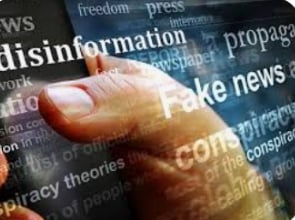
There is a moment, familiar to virtually every Ghanaian with a Smartphone that has become emblematic of this era. A message arrives on WhatsApp forwarded, often several times over, bearing the weight of apparent authority. It might claim that a prominent politician has died, that a new disease is spreading through a particular region, that a bank is about to collapse, that a celebrity has endorsed a lucrative investment scheme, or that election results are being manipulated.
By the time anyone with the means and the training to verify the claim has had the opportunity to do so, the message has already crossed thousands of screens, altered hundreds of decisions, and deposited its fragment of falsehood into the collective consciousness of a nation.
This is the age of the pocket-sized press and Ghana is living squarely inside it.
A NATION WIRED AND VULNERABLE
The scale of Ghana’s digital transformation in the past decade has been genuinely remarkable. Ghana had 41.8 million active cellular mobile connections in late 2025, equivalent to 119 per cent of the total population a figure reflecting the widespread practice of holding multiple SIM cards. Internet users reached 26.3 million, representing a 74.6 per cent penetration rate, while social media user identities totaled 8.59 million, accounting for 24.4 per cent of the population.
Facebook alone had over 10.8 million users in Ghana as of December 2025, accounting for nearly 31 per cent of the entire population. The majority of those users were young men aged 25 to 34. YouTube and Facebook dominate the platform landscape, while WhatsApp whose user numbers are difficult to formally track given its encryption architecture is widely acknowledged to be the single most consequential vehicle for the transmission of both news and falsehood in the country.
Data from 2025 indicates that more than half of internet users in sub-Saharan Africa regularly rely on platforms like Facebook, TikTok, and WhatsApp for news content. In those same regions, fact-checking infrastructure is thin and media literacy is uneven, creating a fertile environment for falsehoods to take root.
As President John Dramani Mahama himself observed, with remarkable directness, at a media encounter at Jubilee House in September 2025: “Anybody with a phone and a camera can report news or comment on national issues” and without appropriate regulation, this digital landscape could “lead this nation to war.”
The President’s warning was not hyperbole. It was recognition of a structural reality that Ghana’s institutions, its traditional media, its civil society, and its citizens are only beginning to fully reckon with.
UNDERSTANDING THE TERMS: NOT ALL FALSEHOOD IS THE SAME
Before examining the damage, it is worth establishing the distinctions that matter. Misinformation and disinformation are frequently used interchangeably in public discourse, but they describe meaningfully different phenomena with different causes and different remedies.
Misinformation refers to false or inaccurate information published without malicious intent a claim made in error, a rumor repeated in good faith, a statistic misread and misquoted. Disinformation, by contrast, is designed to mislead falsehood crafted and distributed deliberately, with strategic purpose.
There is a third category, misinformation, which involves true information deployed with harmful intent a private record leaked to destroy a reputation, or an accurate photograph stripped of its context to inflame passions.
In Ghana’s current information environment, all three are present simultaneously, and their effects are compounding. The citizen who shares a false health claim they genuinely believe is a vector of misinformation; the political operative who fabricates a quote and plants it in a WhatsApp group is engaged in disinformation; and the journalist who publishes a true but deliberately decontextualised photograph of election violence is trafficking in misinformation. The platforms that carry all three cannot readily distinguish between them and Ghana’s regulatory infrastructure has, until very recently, lacked the capacity to address any of them at scale.
THE POLITICAL WOUND: ELECTIONS IN THE AGE OF THE VIRAL LIE
Nowhere is the impact of Ghana’s information disorder more consequential than in the political sphere, where the integrity of democratic processes rests on the ability of citizens to make informed decisions based on reliable information.
During the 2024 Ghanaian general elections, false information ranging from manipulated images and videos to misleading narratives and outright fabrications inundated platforms. Disinformation was used to sow confusion among voters, erode trust in the electoral process, and amplify partisan divides.
It took many forms: fabricated news articles falsely attributing statements to political figures, deepfake and cheapfake videos were portraying candidates in compromising situations, viral rumors and hate speech designed to inflame ethnic and regional tensions, and coordinated campaigns to spread misinformation about voting procedures.
Research by NewsGuard uncovered a network of 171 AI-powered bot accounts on X, formerly Twitter, designed to influence political discourse in Ghana in favor of the ruling New Patriotic Party and its candidate Bawumia. The bots, active since February 2024, were timed to post during peak Ghanaian hours between 8 a.m. and 6 p.m., suggesting careful coordination to maximize reach. Users with blue verification badges supposedly markers of trustworthiness were found to amplify false or unsubstantiated claims, further enabling the spread of manipulated content.
The 2025 post-election review report by the Media Foundation for West Africa identified X, Facebook, and WhatsApp as the platforms on which most false information was spread during the 2024 election cycle. Disinformation targeted the main political actors and key institutions. The concern expressed in Ghana’s case echoes the finding of the 2024 Global Risk Report, which identified misinformation and disinformation as among the most critical risks in electoral contexts worldwide risks capable of disrupting the legitimacy of newly elected governments and potentially triggering violence.
Ghana’s democracy has been justly celebrated on the African continent as a model of peaceful transfers of power. But that reputation cannot be taken for granted in an information environment where, as deepfake technology improves and bot networks proliferate, the cost of fabricating a credible political scandal approaches zero.
THE HEALTH CATASTROPHE: WHEN FALSE CURES BECOME DEADLY PRESCRIPTIONS
The damage that misinformation inflicts on public health in Ghana is not theoretical. It has been measured in the avoidance of treatment, the rejection of vaccines, the consumption of dangerous unverified remedies, and the erosion of public trust in health authorities that took decades to build.
During the COVID-19 pandemic, misinformation spread widely across Ghana, particularly concerning the virus’s origin and treatment. Social media was filled with claims about herbal remedies or local concoctions that supposedly cured COVID-19. Messages circulated on WhatsApp and Facebook encouraging people to rely on unverified treatments instead of following health guidelines or seeking medical assistance. Many people avoided legitimate healthcare options, putting themselves and others at risk. The confusion and fear this created undermined efforts by health authorities to control the spread of the virus.
The pandemic was an extreme case, but it was not an isolated one. Health misinformation in Ghana flows continuously through social media channels on topics ranging from maternal health to tuberculosis treatment, from the safety of childhood immunizations to the alleged dangers of fluoride in water. Each false claim that circulates unchallenged represents a potential diversion from evidence-based care. In a country where access to healthcare infrastructure is already unevenly distributed and where trust in public institutions is a precious and fragile resource, the impact of health misinformation is not merely an inconvenience it is a public health threat in its own right.
THE ECONOMIC WOUND: THE SCAM IN YOUR POCKET
If the political and health dimensions of Ghana’s misinformation crisis are well documented, the economic dimension is arguably the one most directly felt at the level of the individual household and it is growing rapidly.
Financial scams involving fake endorsements from Ghanaian celebrities are a common form of misinformation in the country’s digital ecosystem. The pattern is predictable: a fabricated video or image presents a well-known Ghanaian personality an actor, a musician, a politician, an athlete enthusiastically endorsing an investment scheme or cryptocurrency platform. The celebrity has no knowledge of the endorsement. The scheme is fraudulent. But by the time victims discover this, their money is gone and the perpetrators have vanished into the anonymity of the digital network.
Between January and September 2025, Ghana lost more than GH¢19 million to cybercrime, representing a 17 per cent increase compared to the same period the previous year, according to the Cyber Security Authority. Reported cybercrime cases jumped from 1,317 in the first half of 2024 to 2,008 during the same period in 2025 an alarming 52 per cent increase. The most common types of incidents were online fraud at 36 per cent, cyber bullying at 25 per cent, and online blackmail at 14 per cent. Online fraud and impersonation alone accounted for over 90 per cent of total financial losses.
The same social media platforms that dominate in Ghana Facebook, WhatsApp, and Instagram account for the largest share of scam-related losses globally. Facebook alone accounts for more scam losses than text messages or email combined, and nearly 30 per cent of people who lost money to fraud said the scam originated on social media.
The deepfake dimension of economic fraud is accelerating at alarming speed. Deepfake-related scam and fraud schemes cost people approximately US$1.1 billion worldwide in 2025, three times the losses recorded in 2024, with more than 80 per cent of those losses occurring on social media platforms including Facebook, WhatsApp, and Telegram. Ghana, with its young, mobile-first, digitally active population and its nascent consumer protection infrastructure, is exposed to these trends at a level that far exceeds its current capacity to respond.
THE SOCIAL FRACTURE: WHEN LIES BECOME COMMUNAL WEAPONS
Beyond the political, the health, and the economic, there is a fourth dimension of Ghana’s misinformation crisis that is harder to quantify but perhaps most dangerous of all: the use of false information as a weapon of communal division.
Ghana is a society of extraordinary ethnic and religious diversity over 70 languages, dozens of ethnic identities, a population roughly evenly split between Christianity and Islam, and a history of managing that diversity with a degree of tolerance that has been the envy of the sub-region. That tolerance is not automatic. It requires cultivation, trust, and shared narratives. Misinformation and disinformation attack all three.
Research published in 2025 on social media misuse in Ghana, drawing on field data, identified a mean score of 3.64 out of 4 for the prevalence and ethical impact of social media misuse, a figure suggesting that the phenomenon is not marginal but mainstream. The study found that social media misuse in Ghana undermines national values of respect, integrity, and communal harmony.
President Mahama has been explicit about what he has witnessed. Describing scenes he encountered on WhatsApp platforms and TikTok commentary feeds, he identified hate speech and incitement to violence along tribal and ethnic lines as criminal conduct, noting that social media users had gone so far as to express happiness about a helicopter crash that killed eight people, wishing that different individuals had been aboard a level of dehumanization that he cited as urgent evidence of the need for regulatory intervention.
The President announced that the National Signals Bureau now has the technology to trace individuals through their IP addresses and committed to pursuing prosecution under existing criminal laws for those who incite violence. The announcement sparked its own controversy, with free speech advocates warning that the tools designed to combat hate speech could too easily be redirected against legitimate political dissent. It is a tension that admits no easy resolution.
AI, DEEPFAKES, AND THE COMING WAVE
The current state of Ghana’s information crisis must be understood not as an endpoint but as a prelude. The technologies of fabrication are advancing far faster than the technologies of detection, and the consequences for a country at Ghana’s stage of digital development are severe.
In 2026, deepfakes have crossed a critical threshold of realism. During elections in 2024 and 2025, cloned voices and visual persona deepfakes became a live feature of democratic politics including a deepfake video in Ireland that falsely depicted the eventual presidential winner withdrawing his candidature, released days before polling day. Evidence is growing that deepfakes negatively affect voters’ perceptions of targeted candidates even when the fabrication is later debunked.
In Ghana, the growing use of AI to generate and spread disinformation poses a real threat to the integrity of the country’s elections. Once celebrated for credible polls, Ghana’s democratic environment now confronts fabricated content that can circulate in a social media environment where millions of Ghanaians increasingly get their political news, often with no exposure to corrections or debunking.
The speed differential between the viral lie and the verified truth is a structural feature of current social media platforms, not a temporary technical glitch. Platform algorithms reward engagement, and outrage delivers engagement more quickly than accuracy triggering immediate sharing before fact-checking can occur. This is not an accident of platform design; it is a predictable consequence of business models built on maximizing time spent and content shared, regardless of that content’s veracity.
THE REGULATORY MOMENT: BILLS, DEBATES, AND THE BALANCE TO STRIKE
Ghana’s government have moved to address the misinformation crisis through legislative action, though the path is contested. President Mahama has assured Ghanaians that the Cyber security Amendment Bill, 2025, and the Misinformation and Disinformation Bill currently before Parliament are not designed to stifle free expression but to protect citizens and uphold truth in the digital space.
Speaking at the 29th Ghana Journalists Association Media Awards, the President stated that the same digital tools that democratize information now also enable hate, defamation, impersonation, and cyber bullying, and pledged to engage stakeholders transparently before the bills are passed.
He also announced plans to reactivate the Media Development Fund to support capacity building, investigative journalism, and digital literacy training.
Ghana has also committed to action through the Open Government Partnership. Under commitment GH0054, a Framework on Media Literacy, Public Education, and Fact Checking was to be piloted through 2025 and fully operationalized through 2026, alongside a Human Rights assessment of existing legislation on disinformation to ensure that laws are not used to stifle free speech. THE
MINISTER’S WARNING: SAM GEORGE SOUNDS THE ALARM
While President Mahama has set the political tone at the executive level, the operational architecture of Ghana’s response to information disorder has been led from the Ministry of Communication, Digital Technology and Innovations, under the stewardship of Hon. Samuel Nartey George Member of Parliament for Ningo-Prampram and one of the most technically fluent members of the Mahama Cabinet.
Hon. Sam George has issued his own series of escalating warnings about the cyber and information threat environment in Ghana, grounding the political rhetoric of the Presidency in hard institutional data. Speaking at the launch of the 2025 National Cyber Security Awareness Month, the Minister stated that Ghana is facing mounting cyber threats that have endangered not only businesses and state institutions but individuals and families as well, urging the public to treat online safety with the same urgency as physical security.
He disclosed that the Ministry was simultaneously processing amendments to the Cyber security Act, 2020, to keep pace with the accelerating pace of emerging threats.
The figures presented at that launch gave concrete weight to the Minister’s concerns. The Cyber Security Authority reported that cybercrime cases surged by 52 per cent in the first half of 2025 compared to the same period in 2024, with financial losses rising 17 per cent year-on-year to GH¢14.94 million with online fraud and impersonation accounting for over 90 per cent of total losses.
The 2025 National Cyber Security Awareness Month itself, launched under Sam George’s direction, was themed “Building a Safe, Informed, and Accountable Digital Space,” with a specific focus on combating misinformation, disinformation, and deepfake manipulation, while promoting responsible use of digital platforms by citizens and institutions alike. The choice of theme was not incidental it signaled a deliberate government decision to treat the information disorder crisis as a cyber security crisis, not merely a media regulation challenge.
By early 2026, the Minister had broadened his framing further still. At the 2026 Chief Information Security Officers Summit in Accra, Sam George warned that cybersecurity had moved beyond information technology departments and must now be treated as a boardroom-level priority for every organization in Ghana, stating that it now impacts revenue, operations, reputation, customer trust, and national security. He reported that Ghana’s national cybersecurity response team logged more than 3,500 digital incidents in the first quarter of 2026 alone, including malware attacks, ransom ware attempts, and intrusions targeting Critical Information Infrastructure across key sectors.
On the legislative front, Sam George has been the principal architect and advocate of the package of reforms that has generated both hope and controversy. Speaking at a ministerial press briefing in July 2025, he stressed that the National Misinformation and Disinformation Bill was designed to protect Ghana’s digital ecosystem, describing it as one of the government’s flagship digital governance interventions. He said the draft legislation would strengthen legal safeguards against the deliberate creation and spread of false or harmful digital content, providing a clear legal framework for enforcement enabling statutory bodies to act decisively while upholding freedom of expression.
By February 2026, the Minister confirmed at the launch of the 30th anniversary of the National Communications Authority that the government was undertaking one of the most comprehensive updates to the communications sector’s legal framework since 1996, working on a package of approximately 15 new and revised bills aimed at modernizing communications regulation, data governance, digital services, cybersecurity, and oversight of emerging technologies.
The Media Foundation for West Africa has welcomed the Ministry’s consultative approach while raising specific concerns. The MFWA noted that one provision of the Misinformation, Disinformation, Hate Speech and Publication of Other Information Bill introduces a licensing-based sanction system for media and content creators, which it argued contradicts Article 162(3) of Ghana’s Constitution, which prohibits control or censorship of the media through licensing a provision it said risks implicitly imposing the epistemic authority of the Executive on a politically pluralistic society.
That concern points to the fundamental dilemma that Sam George and the government must navigate: the same legal instruments that could protect Ghanaians from the violence of manufactured falsehood could, in the wrong hands or under future administrations of a different character, be turned into instruments of information control. The Minister has acknowledged this tension and pledged transparency in the legislative process. How that pledge is honored in drafting, in consultation, in parliamentary scrutiny, and ultimately in enforcement will determine whether Ghana’s response to the information disorder crisis becomes a model for the continent or a cautionary tale.
THE TRUTH DEFICIT AND THE DEMOCRATIC COST
At its deepest level, Ghana’s misinformation crisis is not primarily a technological problem. It is a crisis of epistemology of how a society agrees on what is true, who is trusted to tell it, and what consequences follow from the deliberate manufacturing of falsehood.
The traditional media institutions that once served as the primary gatekeepers of public information the Ghana Broadcasting Corporation, the Daily Graphic, Citi FM, Joy FM, and their peers still exist and still exercise a degree of authority. But that authority no longer operates in a closed system. It competes, daily and on unequal terms, with the WhatsApp group, the Facebook page, the TikTok account, and the Telegram channel each of which reaches its audience instantly, at zero distribution cost, with no editorial standards and no professional accountability.
The result is what communications scholars describe as an epistemic crisis: a state in which the shared factual basis necessary for democratic deliberation is continuously eroded. When a substantial portion of the population cannot agree on what is true about an election, a health emergency, or an economic policy, the machinery of democratic governance begins to seize up. Decisions cannot be made. Trust cannot be built. Accountability cannot be enforced. The political community fractures along the lines of its competing information bubbles.
Ghana is not yet at that point. Its democratic institutions remain functional, its press freedoms remain substantially intact, and its civil society continues to produce journalists, researchers, and activists of genuine courage and capability. But the trajectory is concerning, and the window for effective intervention is narrowing.
The pocket-sized press the Smartphone in the hand of every Ghanaian with a data connection is not going away. Its power to democratize information, to amplify marginalized voices, to hold power accountable, and to connect communities across geography and language is real and should not be sacrificed. But that same power, deployed without accountability, without literacy, and without consequence for the most egregious abuses, is corrosive to the very democracy it was supposed to serve.
President Mahama has warned that without action this technology could lead the nation to war. Minister Sam George has mobilized the institutional architecture of his ministry to build the legal and technical defenses that might prevent that outcome. Both are right about the scale of the threat. The question that Ghana and the rest of Africa watching closely must now answer is whether its democratic traditions are strong enough to build those defenses without sacrificing the freedoms they are meant to protect.
REFERENCES
DataReportal / We Are Social / Meltwater. Digital 2026: Ghana. Published November 2025. Available at: https://datareportal.com/reports/digital-2026-ghana
NapoleonCat. Social Media Users in Ghana December 2025. Available at: https://stats.napoleoncat.com/social-media-users-in-ghana/2025/
BNN Business. Digital 2026: Ghana DataReportal Global Digital Insights. November 2025. Available at: https://bnn.org/article/digital-2026-ghana-datareportal-global-digital-insights
Grokipedia. Social Media in Ghana. Updated February 2026. Available at: https://grokipedia.com/page/Social_media_in_Ghana
GhanaWebbers. 24.3m internet users, 7.95m social media users in Ghana, says report. October 2, 2025. Available at: https://www.ghanawebbers.com/GhanaHomePage/NewsArchive
ModernGhana.com. Disinformation Isn’t Just Noise, It’s a Global Strategic Weapon. March 27, 2026. Available at: https://www.modernghana.com/news/1481555/disinformation-isnt-just-noise-its-a-global.html
DeLaMichel. The Rise of New Media in Ghana: Misinformation and Regulation. September 15, 2025. Available at: https://www.delamichel.com/articles/the-rise-of-new-media-in-ghana-misinformation-and-regulation
Wikipedia. Misinformation. Available at: https://en.wikipedia.org/wiki/Misinformation
Media Literacy Development Foundation. Real-Life Examples of Misinformation in Ghana: Understanding the Impact and Staying Informed. November 7, 2024. Available at: https://medialiteracyafrica.org/2024/11/07/real-life-examples-of-misinformation-in-ghana
Penplusbytes. Youth and the Fight against Disinformation: The 2024 Ghana Elections. Available at: https://penplusbytes.org/youth-and-the-fight-against-disinformation-the-2024-ghana-elections/
Africa Briefing. Fake X Accounts Disrupt Ghana’s Election Campaign. November 15, 2024. Available at: https://africabriefing.com/fake-x-accounts-disrupt-ghanas-election-campaign/
Media Foundation for West Africa (MFWA). Disinformation and Elections: Here’s What We Learnt During Ghana’s 2024 Elections. February 19, 2025. Available at: https://mfwa.org/issues-in-focus/disinformation-and-elections-heres-what-we-learnt-during-ghanas-2024-elections/
ModernGhana.com. Disinformation and Deepfakes in Ghanaian Politics: An Emerging AI Threat. October 12, 2025. Available at: https://www.modernghana.com/news/1439662/disinformation-and-deepfakes-in-ghanaian-politics.html
International Journal of Research and Innovation in Social Science (IJRISS). Social Media Misuse in Ghana: Ethical Implications and Its Influence on National Values. March 20, 2025. Available at: https://rsisinternational.org/journals/ijriss/articles/social-media-misuse-in-ghana-ethical-implications-and-its-influence-on-national-values/
Rainbow Radio Online. Be Warned, We’ll Use Your IP Address to Locate and Prosecute You for Inciting Violence on Social Media Mahama. September 10, 2025. Available at: https://rainbowradioonline.com/2025/09/10/be-warned-well-use-your-ip-address-to-locate-and-prosecute-you
ModernGhana.com. The Rising Hate Speech and Misinformation in Ghana. September 29, 2025. Available at: https://www.modernghana.com/news/1436077/the-rising-hate-speech-and-misinformation-in-ghana.html
ModernGhana.com / DailyGuide Network / Ghanamma.com. Beyond IP Tracking: Why Media and Information Literacy Is Ghana’s Best Defence Against Disinformation. October 30, 2025. Available at: https://www.modernghana.com/news/1444765/beyond-ip-tracking-why-media-and-information-lite.amp
Ghana News Agency (GNA). Cybersecurity Bill Aims to Protect, Not Restrict Free Expression Mahama. November 9, 2025. Available at: https://gna.org.gh/2025/11/cybersecurity-bill-aims-to-protect-not-restrict-free-expression-mahama/
Adomonline.com. Cybersecurity, Misinformation Bills Meant to Uphold Truth, Not Gag Media — Mahama. November 8, 2025. Available at: https://www.adomonline.com/cybersecurity-misinformation-bills-meant-to-uphold-truth-not-gag-media-mahama/
Open Government Partnership. Combating Misinformation and Disinformation Commitment GH0054. Available at: https://www.opengovpartnership.org/members/ghana/commitments/GH0054/
GBC Ghana Online. Ghana Launches 2025 National Cyber Security Awareness Month with Call for Collective Action. September 4, 2025. Available at: https://www.gbcghanaonline.com/news/ghana-launches-2025-national-cyber-security-awareness-month
Daily Graphic / Graphic Online. Alert! Cyber Threats Increasing Minister Warns. September 5, 2025. Available at: https://www.graphic.com.gh/news/general-news/ghana-news-alert-cyber-threats-increasing-minister-warns.html
The Ghana Report. Cybercrime Cases Soar 52% in a Year — CSA. September 2025. Available at: https://www.theghanareport.com/ghana-loses-gh%E2%82%B514-94m-to-cyber-crime-in-2025-csa/
GBC Ghana Online. Ghana Lost More Than GH¢19 Million to Cybercrime Between January and September 2025 CSA. October 19, 2025. Available at: https://www.gbcghanaonline.com/general/cybercrime-ghana/2025/
ModernGhana.com. Cybercrime in Ghana: A Growing Digital Threat and What It Means for Citizens and the Economy. January 29, 2026. Available
Mustapha Bature Sallama.
Medical/ Science Communicator,
Private Investigator, Criminal investigation and Intelligence Analysis.
International Conflict Management and Peace Building.USIP
[email protected]
+233-555-275-880
