


Kenya is witnessing a fresh wave of infrastructure development, with major road, railway, sports and market projects progressing across the country as the government seeks to expand connectivity, stimulate economic activity and create jobs.
Among the flagship projects is the Rironi–Mau Summit section of the A8 corridor, which spans about 175 kilometres. The project is designed to improve one of Kenya’s key transport corridors through additional lanes, upgraded interchanges and improved road infrastructure.
The Ministry of Roads and Transport says the project is advancing under a structured implementation programme aimed at timely delivery and adherence to quality standards. The government has identified the corridor as part of the 6,000 kilometres of roads already contracted for construction or upgrading.
The road expansion is expected to improve the movement of people and goods between Nairobi and western Kenya, while easing congestion and reducing travel and logistics costs along the Northern Corridor.
North Eastern connectivity
In North Eastern Kenya, the government is implementing a major road programme linking the region to the rest of the country and neighbouring markets.
The Isiolo–Mandera corridor, officially described by the Ministry as approximately 740 kilometres, traverses Meru, Isiolo, Garissa, Wajir and Mandera counties. It is being implemented under the World Bank-funded Horn of Africa Gateway Development Project, with sections also receiving financing from the African Development Bank and other partners.
The project includes upgrading roads to bitumen standards, installing fibre-optic infrastructure and developing facilities such as bus bays and road furniture. The government says the corridor will improve trade with Somalia and Ethiopia, reduce transport costs and unlock economic opportunities in an area that has historically suffered from inadequate transport infrastructure.
The Ministry has also explored the development of roadside stations and a dry port along the corridor, signalling an ambition to turn the road into a broader trade and logistics network.
Roads funding unlocked
The government has sought to address one of the major obstacles that has slowed road construction — accumulation of pending bills owed to contractors.
The securitisation of the Road Maintenance Levy has been used to mobilise funds to settle certified obligations in the roads sector, with the government saying contractors have resources to continue works.
The Ministry has simultaneously directed contractors to accelerate implementation while maintaining quality, controlling costs, delivering the contracted scope and ensuring value for money.
The move is significant for the construction industry, which has faced delays in payments and stalled projects. The government’s broader infrastructure programme envisages thousands of kilometres of roads being upgraded during President William Ruto’s tenure. The Ministry reported that approximately 2,700 kilometres had been upgraded to bitumen standards over the preceding three years.
SGR revival
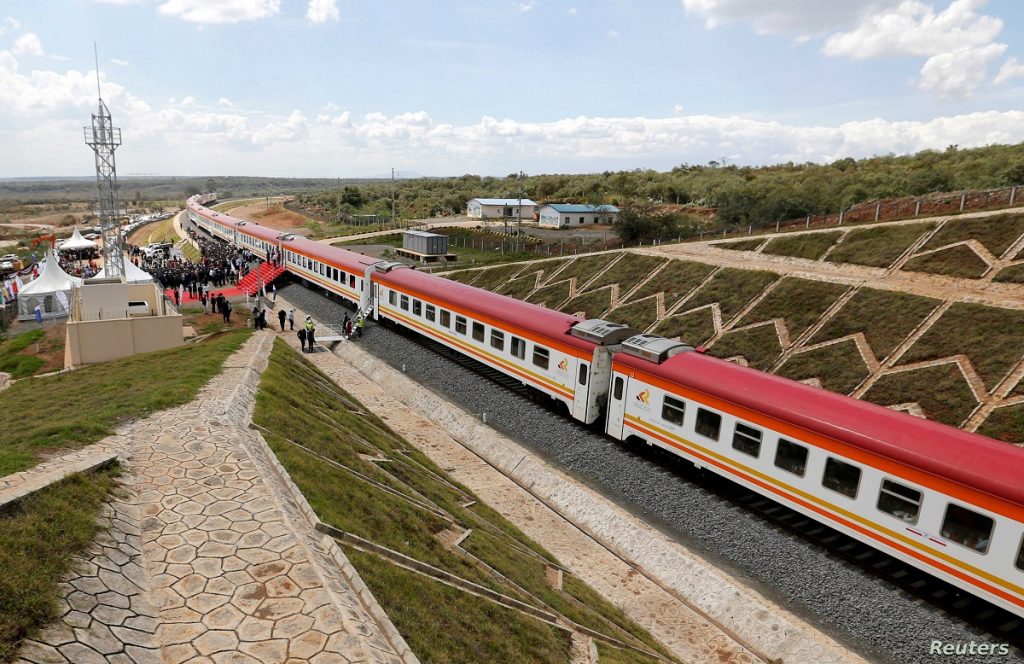
Railway infrastructure is also receiving renewed attention, with the government pushing ahead with the extension of the Standard Gauge Railway from Naivasha towards western Kenya and the Ugandan border.
President Ruto presided over the groundbreaking ceremony for the Naivasha–Kisumu–Malaba SGR in March 2026. The project is intended to extend the existing SGR network and strengthen Kenya’s transport and trade links with western Kenya and the wider East African region.
The railway extension forms part of a broader infrastructure agreement that also includes the expansion and dualling of the Nairobi–Nakuru–Mau Summit–Malaba highway.
The government has presented the transport investments as central to its economic transformation agenda, with improved roads and rail expected to lower the cost of moving goods while opening up markets and investment opportunities.
Stadium construction ahead of AFCON 2027
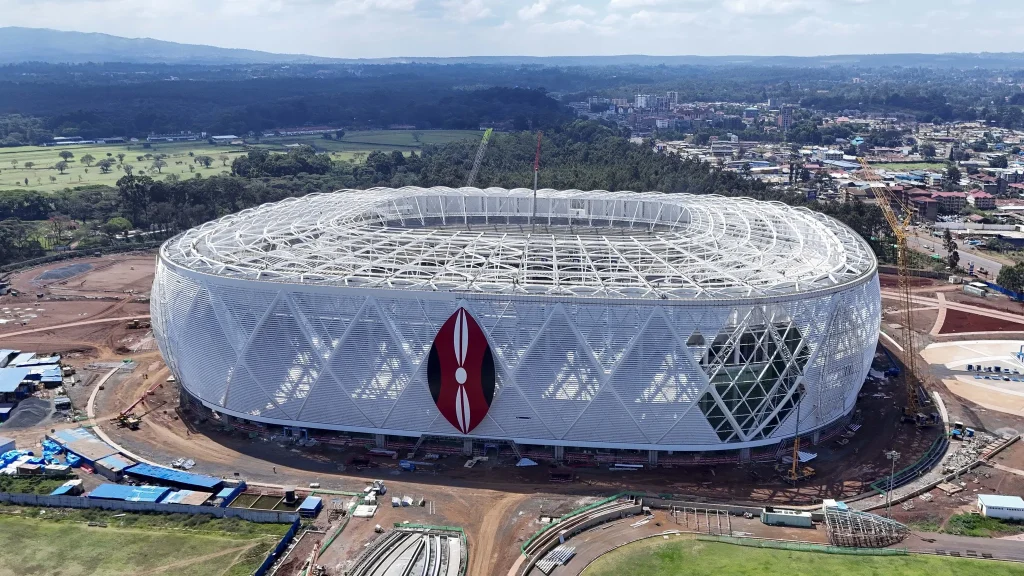
Infrastructure development has extended to sports, where Kenya is racing to complete facilities ahead of the 2027 Africa Cup of Nations, which the country will co-host with Uganda and Tanzania.
The Raila Odinga International Stadium, formerly known as Talanta Stadium, is a 60,000-seat facility at Nairobi’s Jamhuri Grounds. The Sports Ministry said in June that the stadium was about 91 per cent complete, with the main structure, seating bowl and roofing substantially finished and work continuing on ICT, broadcasting systems, spectator facilities, fencing and landscaping.
The government has also prioritised upgrades at Nyayo, Kasarani and Kipchoge Keino stadiums as part of efforts to ensure Kenya has facilities capable of meeting international sporting standards.
At the grassroots level, construction of a 10,000-seater stadium in Thika, Kiambu County, began in February. The Sports Ministry said the project, funded at KSh850 million, was expected to take 10 months and would support talent development while stimulating the local economy.
The development comes alongside the construction and upgrading of stadiums in other parts of the country, widening access to sporting facilities beyond Nairobi.
Modern markets for small traders
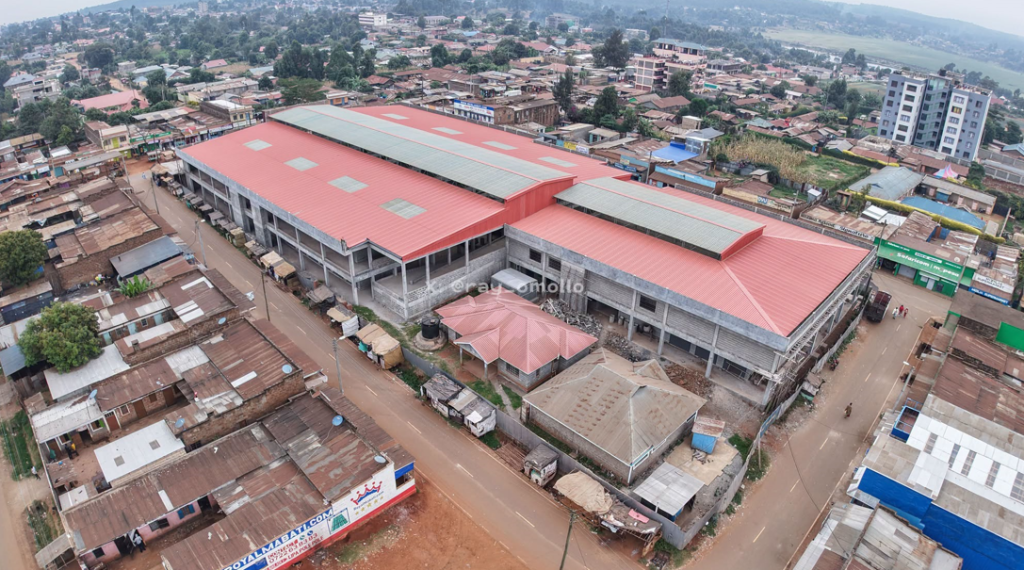
The infrastructure push also extends to markets, with the government constructing and upgrading modern trading facilities as part of its Bottom-Up Economic Transformation Agenda.
The projects are intended to provide small traders, including mama mbogas, with more organised and secure spaces to conduct business. Government plans include modern facilities with amenities such as stalls, sanitation, waste-management infrastructure, parking and other services.
The scale of the programme is evident from the number of markets being planned and tendered across counties. President Ruto has repeatedly linked modern markets to the creation of better business environments and increased earnings for small-scale traders.
In Nairobi, for instance, the government has also positioned modern markets alongside housing and economic hubs as part of efforts to create opportunities for low-income households and informal businesses.
Infrastructure as an economic strategy
The projects collectively form a central pillar of the Ruto administration’s economic strategy, with the government betting on infrastructure to reduce the cost of doing business, connect producers to markets, create employment and stimulate investment.
The scale of construction is visible across multiple regions — from the Northern Corridor and North Eastern road network to railway expansion, sports facilities and urban markets.
President Ruto has identified 2026 as a year of major infrastructure delivery, with the government targeting completion of flagship projects while accelerating construction of thousands of kilometres of roads.
The challenge, however, will be ensuring that the projects are completed within their projected timelines and budgets, while maintaining quality and delivering the economic benefits promised to communities.
Read: Farmers Credit Affordable Fertilizer and Better Infrastructure for Higher Yields
>>> Ruto @ 4: Cheaper Fertiliser Boosts Farm Output But Weather Remains A Challenge
