


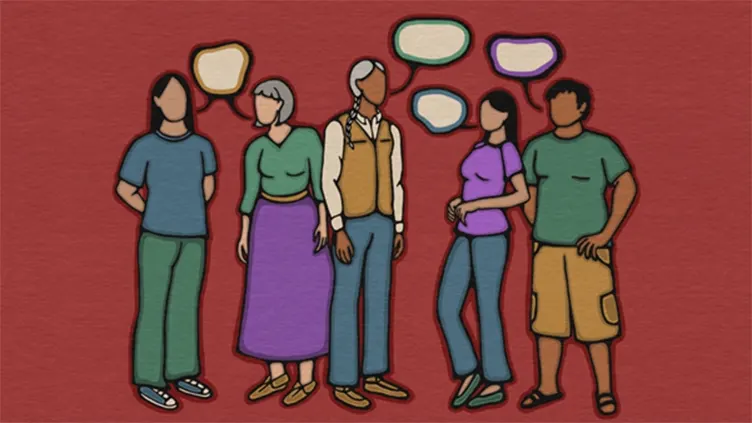
Ghana’s linguistic heritage is under siege. While the country boasts a rich tapestry of indigenous languages—each carrying centuries of history, culture, and identity—they are slipping away at an alarming rate. Experts warn that without immediate action, many of these languages could vanish within a single generation, erasing irreplaceable fragments of Ghana’s soul. The Executive Director of the Ghana Library Authority, Alhassan Betintiche Ziblim, has sounded the alarm, revealing that while a few Ghanaian languages have already succumbed to extinction, at least 40 others are critically endangered, teetering on the brink of disappearance.
The tragedy is not hypothetical. Boro, once spoken fluently in the Worawora and Tapa regions of central-eastern Ghana, was reduced to a single elderly speaker by the late 1800s. Today, only a handful of words remain in linguistic archives, a poignant reminder of what was lost. Similarly, Mprɛ (Mpra), the language of Butei village between Techiman and Tamale, faded entirely by the 20th century, though fragments were recalled by elders as recently as the early 2000s. Dompo, the tongue of hunter-gatherer communities in the Bono East Region, has been absorbed into Akan, leaving no native speakers behind.
Yet the most pressing concern lies ahead. Languages like Nawuri, Tuwuli (Bowiri), Chala, and the Anufo dialects (Chakosi) are hanging by a thread. If young Ghanaians fail to engage with these languages, they risk becoming linguistic fossils—preserved only in dictionaries and academic records. This is not an isolated African issue; dozens of indigenous languages across the continent have already vanished, a sobering reality that demands urgent attention.
The Debate Over Extinction: How Many Languages Have Already Gone?
Definitions of linguistic extinction vary, leading to discrepancies in reports. While the Ghana Library Authority documents several Ghanaian languages as lost, Ethnologue, the world’s most authoritative language database, adopts a stricter criterion. It classifies a language as extinct only when no native speakers remain, even if a few elderly individuals retain partial knowledge. This discrepancy highlights a critical question: How many languages have truly disappeared, and how many are merely fading?
For instance, some researchers argue that Mprɛ should still be considered a “sleeping” language, given the occasional recollections of its vocabulary by older generations. Others contend that Dompo is functionally extinct, despite its absorption into Akan. These nuances underscore the need for systematic documentation and revitalization efforts—not just to count languages, but to resurrect them.
Hausa: A Language of Migration, Trade, and Cultural Exchange
While the focus often remains on Ghana’s indigenous tongues, Hausa—a major West African language with roots in northern Nigeria and Niger—has deeply embedded itself in Ghana’s linguistic landscape. Though not traditionally classified as a Ghanaian language, its influence is undeniable.
Historical migration, trade routes, and colonial-era military recruitment from northern Nigeria introduced Hausa to Ghanaian society. Today, it serves as a lingua franca in Zongo communities and remains a vital tool for inter-ethnic communication. Even everyday Ghanaian slang reflects Hausa’s legacy. Words like “donkomi” (derived from Hausa rangwame, meaning “reduction” or “concession”) and “kafra” (from Hausa gaafara, linked to Arabic ghafara, meaning “forgiveness”) are now part of Ghanaian vernacular. Place names such as Kasoa, Adabraka, and Nima also bear Hausa and Arabic linguistic imprints, testifying to Ghana’s multilingual and multicultural heritage.
Yet, while Hausa’s survival is assured, the same cannot be said for many indigenous Ghanaian languages. Boro, Mprɛ, and Dompo did not vanish overnight—they died slowly, one unspoken conversation at a time, one generation that chose silence over transmission.
The Silent Killer: Generational Neglect
Language extinction is rarely sudden. It is a gradual erosion, fueled by societal shifts, urbanization, and the prioritization of dominant languages like English, Akan, and Hausa. When parents fail to pass down their mother tongue to their children, when schools ignore indigenous languages in favor of standardized curricula, when cultural practices that once reinforced linguistic identity fade—a language begins to die.
This is the fate now threatening Nawuri, Tuwuli, Chala, and other endangered tongues. Without conscious effort, they will join the ranks of Boro and Mprɛ—languages remembered only in history books.
A Call to Action: Speak It. Preserve It. Pass It On.
The good news is that every Ghanaian has the power to reverse this trend. Language revitalization is not the sole responsibility of linguists or policymakers—it is a collective duty. Here’s how we can act:
- Speak Your Language at Home
-
Make indigenous languages a living part of daily life. Use them in conversations, storytelling, and even humor. The more natural the usage, the stronger the transmission to the next generation.
-
Teach It to Your Children
-
Parents and caregivers must prioritize bilingualism (or multilingualism). Children who grow up hearing their mother tongue are far more likely to carry it into adulthood.
-
Use It Proudly in Public Spaces
-
Whether in the market, at religious gatherings, or in social media, normalizing indigenous languages reduces stigma and reinforces their cultural value.
-
Support Educational Initiatives
-
Advocate for the inclusion of indigenous languages in school curricula. Demand that local dialects be taught alongside English and Akan to ensure their survival in formal education.
-
Document and Celebrate
- Record elders sharing stories, proverbs, and songs in their native tongues. Publish dictionaries, create digital archives, and organize cultural festivals that highlight linguistic diversity.
The SPEAK LOCAL GH Campaign: A Movement for the Future
Recognizing the urgency, a social media-driven campaign called SPEAK LOCAL GH has emerged, urging Ghanaians to take action. The initiative emphasizes that development should be rooted in the people’s language—not imposed from above. When leaders, artists, and communities design programs that honor their own linguistic heritage, they become authors of their own progress, rather than passive recipients.
The campaign’s mantra—“Speak it. Preserve it. Pass it on.”—is a clarion call to action. By engaging with indigenous languages today, we save them for tomorrow.
Why This Matters: More Than Words
Languages are not just tools for communication—they are containers of worldviews, traditions, and collective memory. When a language dies, an entire cultural ecosystem is lost. The loss of Nawuri means losing the stories of its hunters and gatherers. The disappearance of Tuwuli erases the wisdom of its elders. Each vanished tongue is a silenced voice, a piece of Ghana’s identity forever gone.
Yet, the story does not have to end in tragedy. With determination, pride, and collective action, Ghana can reverse the tide. The question is not if we can save these languages—but how quickly we act.
The time to speak, preserve, and pass on Ghana’s indigenous languages is now. The future of these voices depends on us.
