


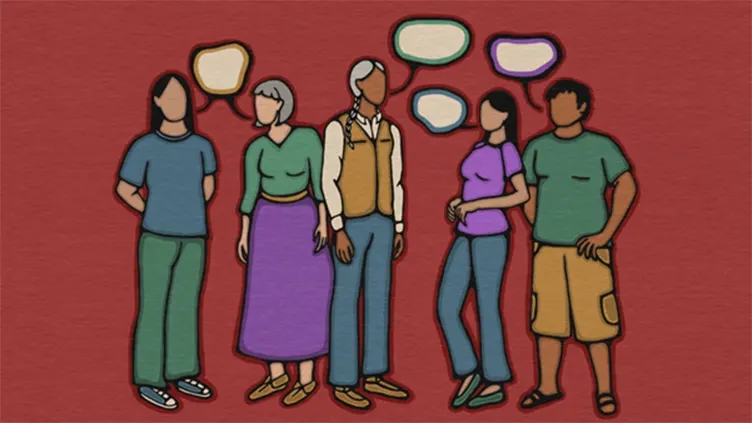
Ghana’s linguistic heritage is under siege. While the country boasts a rich tapestry of indigenous languages—each carrying centuries of history, culture, and identity—they are slipping away at an alarming rate. The decline is not just a cultural loss; it is a silent erosion of Ghana’s collective memory, passed down through generations. Experts warn that without immediate action, many of these languages could vanish within a single lifetime, leaving behind only fragmented records and fading memories.
The Silent Extinction: Languages Already Lost
The reality is stark. Some Ghanaian languages have already disappeared, their last speakers long gone. Boro, once spoken fluently in the Worawora and Tapa regions of the central-eastern part of the country, was reduced to a single elderly speaker by the late 1800s. Today, only about a dozen words remain in linguistic archives, a mere shadow of what was once a living, breathing language.
Similarly, Mprɛ (or Mpra), the tongue of the Butei people between Techiman and Tamale, met a similar fate. Though it persisted into the early 2000s in the memories of a few elderly villagers, the language itself had already faded by the 20th century. Dompo, the language of hunter-gatherer communities in the Bono East Region, has also been lost, its speakers now fully assimilated into Akan-speaking communities.
These are not isolated cases. The Ghana Library Authority (GLA) has sounded the alarm, stating that while a handful of languages have vanished entirely, as many as 40 more are critically endangered. Without concerted efforts to revive and sustain them, the list of lost languages will only grow.
The Looming Threat: Languages on the Brink
The most urgent concern, however, lies with the languages still clinging to survival. Nawuri, Tuwuli (Bowiri), Chala, and various dialects of Anufo (Chakosi) are among those teetering on the edge of extinction. These languages are spoken by communities that, if current trends continue, may see their last native speakers within the next generation.
The issue is not confined to Ghana. Across Africa, indigenous languages are disappearing at an unprecedented rate. The Ethnologue database, a leading reference for global languages, estimates that hundreds of African languages have already been lost, with many more at risk. The discrepancy between local researchers and global databases often stems from differing definitions of “extinct”—some languages may persist in the memories of a few elderly speakers, but without younger generations learning them, they are effectively doomed.
Hausa: A Language of Migration and Identity
While the focus is often on Ghana’s indigenous languages, Hausa—a major West African language with roots in northern Nigeria and southern Niger—holds a unique place in Ghana’s linguistic landscape. Though historically not classified as a Ghanaian language, Hausa has deep historical ties to the country through trade, migration, and colonial-era military recruitment.
Hausa’s influence is woven into Ghanaian daily life. Words like “donkomi” (derived from Hausa rangwame, meaning “reduction or concession”) and “kafra” (from Hausa gaafara, linked to Arabic for “forgiveness”) are now part of Ghanaian vernacular. Even place names such as Kasoa, Adabraka, and Nima reflect Hausa and Arabic linguistic influences, a testament to Ghana’s multicultural heritage.
Yet, the debate persists: Is Hausa truly Ghanaian? Some, like media personalities Alhaji A. R. Gomda and Alhaji Baba Sheriff, argue that centuries of settlement and widespread use have cemented its place in Ghana’s linguistic identity. Whether or not it is classified as indigenous, Hausa remains a vital tool of communication across ethnic lines, particularly in Zongo communities.
The Root Cause: A Generation of Silence
Languages do not disappear overnight. They fade gradually, one unspoken word at a time, one generation that chooses not to pass them on. Boro, Mprɛ, and Dompo did not vanish in a single day—they died because younger generations abandoned them in favor of more dominant languages like Akan, Ewe, or English.
Today, the same pattern threatens Nawuri, Tuwuli, Chala, and others. The shift is often driven by economic pressures, urban migration, and the perceived “superiority” of major languages. Schools prioritize English and Twi over local dialects, and parents may discourage children from speaking their mother tongue, fearing it limits their opportunities.
A Call to Action: Speak, Preserve, Pass On
The good news is that this decline is reversible. Every Ghanaian has a role to play in reversing the tide. Speaking indigenous languages at home, in markets, and in public spaces is not just a cultural duty—it is an act of defiance against erasure. When a language is spoken, it lives; when it is silenced, it dies.
This is the core message behind SPEAK LOCAL GH, a social media-driven campaign aimed at reigniting pride in Ghana’s linguistic diversity. The initiative encourages Ghanaians to:
– Speak their languages in everyday conversations, reinforcing their importance.
– Preserve them through documentation, recording, and archiving.
– Pass them on by teaching younger generations, ensuring continuity.
Development, the campaign argues, should be people-centered—spoken in the languages of the people, designed by the communities themselves. When leaders, artists, and educators embrace local languages, they honor the unique identities of Ghana’s diverse populations rather than treating them as passive recipients of change.
The Future Depends on Us
The loss of a language is more than a linguistic tragedy—it is a loss of worldviews, traditions, and wisdom passed down through generations. Nawuri, Tuwuli, Chala, and the countless other endangered languages are not just words; they are living histories waiting to be told.
The choice is clear: Will Ghana stand by and watch its linguistic heritage fade, or will it rise to preserve it? The answer lies in the actions of every individual—whether through speaking, teaching, or advocating for these languages in policy and education.
As the campaign urges: “Speak it. Preserve it. Pass it on.” The future of Ghana’s languages—and by extension, its cultural identity—rests in the hands of those who choose to keep them alive.
