


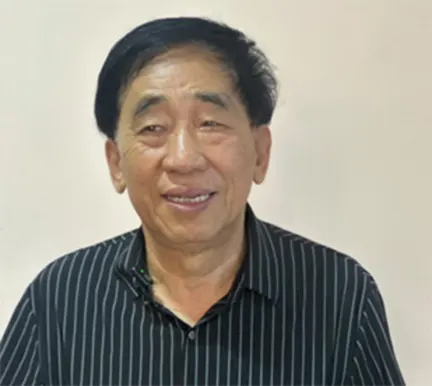
For a quarter of a century, Dai Mingsheng, a Chinese entrepreneur and visionary, has redefined Ghana’s mining landscape through relentless innovation, unwavering dedication, and a deep commitment to sustainable development. His journey—beginning in 2001 with two shipping containers and evolving into a transformative force—stands as a testament to how entrepreneurship, when rooted in purpose, can drive economic growth, create livelihoods, and foster lasting cross-cultural bonds.
From Humble Beginnings to Industry Leadership
Dai’s arrival in Ghana on June 18, 2001, marked the start of a mission to modernize the country’s small-scale mining sector. At the time, Ghana’s miners relied on manual labor-intensive methods, such as hammering rocks with chisels, carrying ore on their heads through treacherous shafts, and operating under hazardous conditions. Productivity was low, safety standards were nonexistent, and the industry was stagnant.
Recognizing the urgent need for change, Dai brought with him two shipping containers—one containing the components of a sand-pumping gold dredger, the other holding 30 sand-making machines. These were not mere imports; they were the foundation of a mechanization revolution that would reshape Ghana’s mining economy.
Today, Dai serves as the Managing Director of China Xinzheng-Ghana Friendly Development Company Ltd., a Ghanaian government-licensed enterprise specializing in mining support services. His company’s operations now encompass:
– Supply and installation of large-scale mining machinery
– Technical support and equipment maintenance
– Professional training for local operators
– Full-cycle mining solutions tailored to Ghana’s geological and economic needs
A Network of Progress: From Tarkwa to Nationwide Impact
The company’s most significant footprint lies in Tarkwa, the mining heartland of Ghana’s Western Region. Here, Dai’s firm has partnered with six community mining projects, deploying over 30 pieces of heavy mining machinery and critical production equipment. These initiatives have not only boosted extraction efficiency but also created stable employment, with each project sustaining an average of 2,000 workers.
Cumulatively, Dai’s ventures have generated tens of thousands of jobs, injecting sustained economic momentum into local communities. Beyond direct employment, his company has fostered long-term collaborations with mining cooperatives and corporate entities, ensuring that Ghana’s mining sector evolves in tandem with global best practices.
Innovation as a Cornerstone: Patents, Training, and Industry Transformation
Dai’s approach to innovation has been both groundbreaking and deeply practical. He was among the first in Ghana to introduce mechanized small-scale mining technology, adapting foreign designs to suit Ghana’s unique geological conditions. His most notable contribution was the development of a sand-pumping gold dredger, optimized for Ghana’s terrain.
This innovation earned him:
– A national mining technology patent from the Government of Ghana
– An African regional patent through Zimbabwe’s patent office
But Dai’s impact extends far beyond patents. He was also the pioneer of sand-making machines in Ghana, a technology that has since become ubiquitous across the country. Unlike many who merely imported equipment, Dai actively trained thousands of local miners in operation, maintenance, and troubleshooting—ensuring that Ghanaian workers could own their technological advancement.
Today, over 100,000 sand-making machines operate in Ghana, each representing a family’s livelihood and a worker’s stable income. Dai’s expertise spans mining engineering, machinery manufacturing, technical training, and full-service support, making him a one-stop solution provider for Ghana’s mining needs.
Green Mining: Balancing Progress with Environmental Stewardship
While mechanization has undeniably boosted productivity and safety, Dai has consistently championed responsible mining practices. One of his most significant contributions is the promotion of chemical-free gravity separation technology, a method that:
– Eliminates toxic chemical use, protecting waterways and ecosystems
– Reduces environmental degradation while maintaining high extraction yields
– Aligns mining development with sustainable ecological goals
By adopting this approach, Dai has demonstrated that economic growth and environmental conservation are not mutually exclusive—a principle that has earned him respect among policymakers, environmentalists, and industry peers alike.
Overcoming Adversity: A Life Dedicated to Ghana
Dai’s 25-year journey in Ghana has not been without personal hardship. He has endured:
– Four severe malaria episodes, a common but dangerous risk in Ghana’s climate
– A life-threatening cholera infection, requiring immediate medical intervention
– A near-fatal hypoglycemic coma, a reminder of the physical toll of his relentless work
Despite these challenges, Dai has never wavered in his commitment to Ghana. He has described the Ghanaian people as “kind, warm, and friendly,” and has made the country his second home. His family now resides in Ghana, and he has personally turned personal struggles into resources for others.
For instance:
– He compiled malaria prevention strategies into distributable booklets, sharing them with every new Chinese expatriate arriving in Ghana.
– He developed self-taught English learning cards, ensuring that Chinese workers could communicate effectively and integrate into local communities.
Beyond Business: A Philanthropic Vision
For Dai, entrepreneurship is not just about profit margins; it is a social responsibility. His philanthropic efforts include:
– Sponsoring local employees to pursue advanced studies in China, enhancing their career prospects.
– Establishing scholarships for the children of his employees, ensuring educational continuity across generations.
– Fully funding the education and living expenses of an employee’s children after the man’s untimely death—a gesture that underscores his belief in corporate accountability.
– Investing in infrastructure projects, such as road construction in Tarkwa and surrounding communities, to improve daily livelihoods beyond mining sites.
Colleagues and local leaders often cite Dai’s philosophy: “A company’s value is measured not only by its profits but by the tangible improvements it brings to people’s lives.” His actions reflect a holistic approach to development, where economic growth, education, and community welfare are inseparable.
A Blueprint for Cross-Cultural Collaboration
Dai Mingsheng’s story is more than an entrepreneurial success narrative—it is a case study in how international cooperation can drive sustainable development. His work embodies the principles of the Belt and Road Initiative, demonstrating that strategic investment, technological transfer, and cultural exchange can create lasting mutual benefits.
His philosophy—“The big things are for the state, the small things are for ordinary people. I just do the small things well—blaze a trail so that those who follow can walk more smoothly.”—resonates as a practical guide for global business ethics. By focusing on local empowerment, skill development, and environmental responsibility, Dai has ensured that his contributions extend far beyond his company’s operations.
A Lasting Imprint on Ghana’s Mining Future
From the manual hammers of yesteryear to the high-tech dredgers of today, Dai Mingsheng has revolutionized Ghana’s mining sector. His journey—from two containers in 2001 to a network of machines, skilled workers, and thriving communities—highlights the power of visionary leadership.
More than 25 years of partnership, Dai’s legacy is one of:
✔ Job creation—tens of thousands of livelihoods secured
✔ Technological advancement—patented innovations and widespread mechanization
✔ Educational upliftment—scholarships and training programs
✔ Environmental stewardship—green mining practices
✔ Cross-cultural friendship—a bond between China and Ghana built on trust and mutual respect
As Ghana continues to expand its mining capabilities, Dai Mingsheng’s contributions serve as a blueprint for responsible industrialization. His story is a reminder that true progress is measured not just in economic indicators, but in the lives it touches and the futures it secures.
