


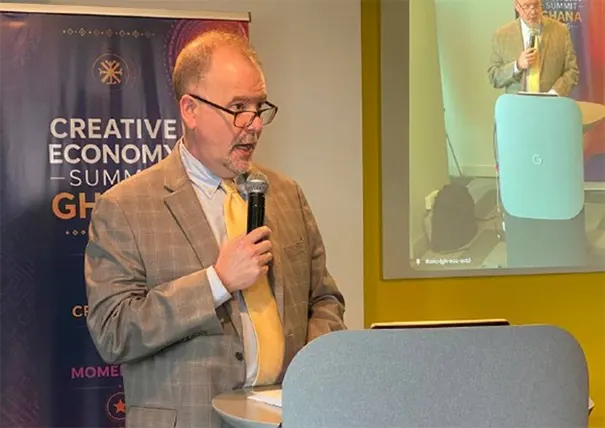
Ghana’s creative industry stands at a pivotal juncture, with immense potential to drive economic growth, job creation, and international recognition. However, realizing this potential hinges on strategic policy frameworks, robust infrastructure, and a supportive ecosystem. At the Creative Economy Summit held at the Google AI Community Center in Accra, the U.S. Embassy in Ghana emphasized the critical role of government intervention in fostering a thriving creative sector. Rolf Olson, the Chargé d’Affaires of the U.S. Embassy, underscored that Ghana’s ability to fully harness its creative economy depends on deliberate actions from policymakers, investors, and creatives alike.
The Role of Government in Unlocking Creative Sector Growth
Olson highlighted that government officials hold the keys to unlocking job opportunities, attracting foreign investment, and enhancing Ghana’s global competitiveness in the creative industries. Key areas where policy intervention is essential include:
- Tax Structures and Incentives: A well-designed tax regime can encourage both local and international investment in creative projects. Simplified tax processes for film production, music recording, and digital content creation could significantly boost sectoral growth.
- Intellectual Property (IP) Protections: Strong legal frameworks are necessary to safeguard the creative works of Ghanaian artists, writers, and filmmakers. Clear IP laws ensure that creators are fairly compensated for their contributions, both domestically and internationally.
- Production Financing: Access to funding remains a major challenge for many creative ventures. Government-backed financing mechanisms, grants, and low-interest loans could provide the necessary capital to scale productions and innovative projects.
- Contract Enforcement: Ensuring contract sanctity is vital to maintaining trust between creators, producers, and investors. A reliable legal system that enforces agreements will encourage foreign companies to invest in Ghana’s creative economy with confidence.
Olson stressed that without these foundational policies, Ghana risks leaving untapped value in its cultural exports, while international companies may hesitate to engage in partnerships that do not guarantee fair compensation and legal protection.
Global Demand for Authentic Storytelling: A Strategic Opportunity
The global appetite for diverse, culturally rich storytelling presents Ghana with a unique opportunity to expand its creative influence. The success of Nollywood films on platforms like Netflix, as well as international hits from regions like Denmark and India, demonstrates that high-quality, culturally authentic content resonates worldwide.
Olson pointed out that:
“Good storytelling transcends borders. Whether a show is set in Denmark, India, or Ghana, its universal appeal lies in its ability to connect with audiences globally. This presents an exciting avenue for Ghana to not only tell its own stories but also to collaborate with international partners in co-productions and content exchanges.”
Such collaborations could lead to greater revenue streams, skill development, and exposure for Ghanaian creatives. The summit served as a platform for dialogue on how to leverage these opportunities while ensuring that Ghanaian voices remain uncompromised and authentically represented.
Empowering Creatives and Investors for Long-Term Growth
Beyond policy, Olson called on creatives to take ownership of their narratives. He urged artists, filmmakers, and writers to “insist that their stories be told in their own voice”—avoiding homogenization that dilutes cultural identity. This emphasis on authenticity is crucial for building a distinctive brand for Ghana’s creative industry.
For investors, Olson advocated for early-stage capital deployment to build the infrastructure necessary for scalable growth. This includes:
– Digital platforms for content distribution and monetization.
– Training programs to upskill creatives in modern production techniques.
– Collaborative hubs where artists, producers, and technologists can innovate together.
Like any other sector, the creative industry generates jobs, fosters entrepreneurship, and drives innovation. By investing in its development, Ghana can position itself as a leading creative hub in Africa, attracting both local and foreign talent.
A Call for Bilateral Collaboration and Sustainable Development
The Creative Economy Summit was framed as a starting point for deeper bilateral cooperation between Ghana and the U.S. in the creative sector. Olson emphasized that the U.S. Embassy remains committed to supporting this partnership through:
– Policy dialogue between governments to align creative sector strategies.
– Investor forums to facilitate funding for Ghanaian creative projects.
– Cultural exchanges that promote mutual learning and collaboration.
This collaboration is not just about economic gains but also about preserving and promoting Ghana’s cultural heritage on a global stage. By fostering a stronger creative ecosystem, both nations can create sustainable economic opportunities for the people driving this industry forward.
Conclusion: Building a Future-Proof Creative Economy
Ghana’s creative sector is rich with potential, but its success will depend on proactive policymaking, investor confidence, and the active participation of creatives. The insights shared at the Creative Economy Summit underscore that systemic changes—in taxation, IP protection, financing, and contract enforcement—are essential for unlocking this potential.
As the global demand for diverse, high-quality content continues to grow, Ghana has a rare opportunity to carve out a distinctive niche in the international creative market. By strengthening its ecosystem, the country can not only boost its economy but also ensure that its stories are heard, valued, and celebrated worldwide. The path forward requires unity between government, investors, and creatives—a collective effort that will define the future of Ghana’s creative industry.
