


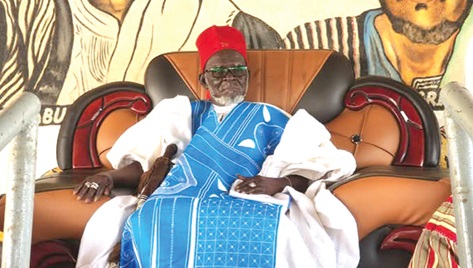
The Bawku Naba and President of the Kusaug Traditional Council, Zug-Raan Asigri Abugrago Azoka II, has called on the Nayiri and Overlord of Mamprugu, Naa Bohagu Mahami Abdulai Sheriga, to prevail on the Mamprusi community in Bawku to undertake customary reconciliatory rituals for lasting peace in the area.
He said the performance of traditional rites, including blood-cleansing rituals and the burial of the okro stalk, remained central to the restoration of harmony, healing and reintegration of the two communities affected by the long-standing conflict
The Bawku Naba made the appeal at a press conference in Bawku last Thursday, while responding to concerns raised by the Nayiri on May 19, 2026, alleging bias and abuse of power in the mediation process led by the Asantehene, Otumfuo Osei Tutu II, in the protracted Bawku chieftaincy dispute.
Customary rites
The Zug-Raan said peace in Bawku could not be achieved through dialogue and mediation alone, but must also include the performance of long-established customary rites that traditionally signified the end of hostilities between communities.
He explained that rituals such as blood-cleansing and the burial of the okro stalk were deeply rooted traditional practices that were performed to symbolise purification of the land from bloodshed, granting of forgiveness, reconciliation and signalled the formal reintegration of former factions in disputes for peaceful coexistence.
The Zug-Raan stated that those customary mechanisms had historically played a significant role in restoring trust, healing wounds and rebuilding social cohesion in communities that had experienced violence.
“In the interest of peace, reconciliation and the future of our people, I call on the Nayiri to prevail upon the Bawku Mamprusis to revisit the performance of the abandoned customary rituals, including blood cleansing of the land and the burial of the okro stalk,” he stated.
Abugrago Azoka stressed that there were relevant and inevitable activities that would seal the long-standing devastating conflict and pave the way for effective reintegration of both parties and the people of Kusaug in general.
Peace roadmap
The Bawku Naba indicated that the successful implementation of the peace roadmap of the mediation process led by the Asantehene would require the full commitment of all stakeholders, including traditional authorities, community leaders, residents, government institutions and security agencies.
He said the people of Bawku had endured years of insecurity, loss of lives, displacement, economic hardship and disruption of education, trade, and social activities.
Abugrago Azoka said those conditions had made it imperative for all parties to embrace holistic measures that promoted healing, reconciliation and sustainable coexistence.
He further emphasised that the conflict had not only affected Kusasis and Mamprusis, but also other ethnic groups living in the area, thereby underscoring the importance of collective responsibility in restoring peace.
“Violence against Kusasis must be condemned. Violence against Mamprusis must be condemned. Violence against any resident, regardless of identity, must be condemned,” he stressed.
Appeal for calm, restraint
The Zug-Raan urged all parties involved in the conflict to exercise restraint, lower tensions and avoid inflammatory rhetorics that could further escalate the situation in Bawku and surrounding communities.
He called on opinion leaders, youth groups, and traditional authorities to play constructive roles in promoting dialogue, understanding and peaceful coexistence.
Abugrago Azoka also appealed to the government and security agencies to continue enforcing the law in a fair, professional and impartial manner, while supporting initiatives aimed at restoring lasting peace and stability in the area.
The Bawku Naba indicated that trust between communities and state institutions remained essential for sustaining peace efforts, and that any perception of bias or injustice could undermine progress made through mediation.
Hope for lasting peace
The Zug-Raan expressed the hope that the performance of the customary rites, alongside continued dialogue and institutional engagement, would strengthen reconciliation efforts and pave the way for lasting peace in Bawku and its surrounding communities.
He stressed that peace remained a prerequisite for development, stressing again that education, trade, agriculture and economic activities could not thrive in an environment of insecurity.
Abugrago Azoka called on all stakeholders to work together in rebuilding trust, restoring normalcy and ensuring that future generations inherited a peaceful and prosperous Bawku.
“The ultimate goal must be to transform Bawku from a symbol of conflict into a model of coexistence, reconciliation and development,” the Bawku Naba emphasised.
