


The trailer had broken down in the middle of a major highway in the southern part of Ghana.
Drivers honked impatiently as traffic piled up behind it. Among those called to the scene was Agya Appiah (not his real name), a veteran mechanic who has spent nearly four decades working with vehicle batteries in one of Ghana’s busiest automobile repair hubs.
After inspecting the vehicle, he traced the problem to its two 24-volt batteries.
“The heads were torn,” he recalled.
He removed the batteries and transported them to his workshop for repairs, a routine task he has performed countless times over the years. Yet before touching any damaged battery, he follows a ritual born out of experience and fear.
“Before I open any battery, whether diesel or petrol, I first fetch water and put it beside me as a precautionary measure. I do this because some batteries can explode and burn your entire skin,” he said.
The scars of the trade are familiar to mechanics like him.
For years, Agya Appiah has earned a living repairing batteries. He has trained apprentices, hired workers, and helped young mechanics establish their own businesses. His knowledge has become a source of livelihood for many. But hidden within this trade is a practice that rarely attracts public attention.
When battery plates become damaged, he melts lead and uses it to replace worn parts. To reactivate batteries, he mixes distilled water with sulphuric acid.
The process keeps old batteries working longer.
But when asked what happens to the acid removed from old batteries, his answer comes quickly.
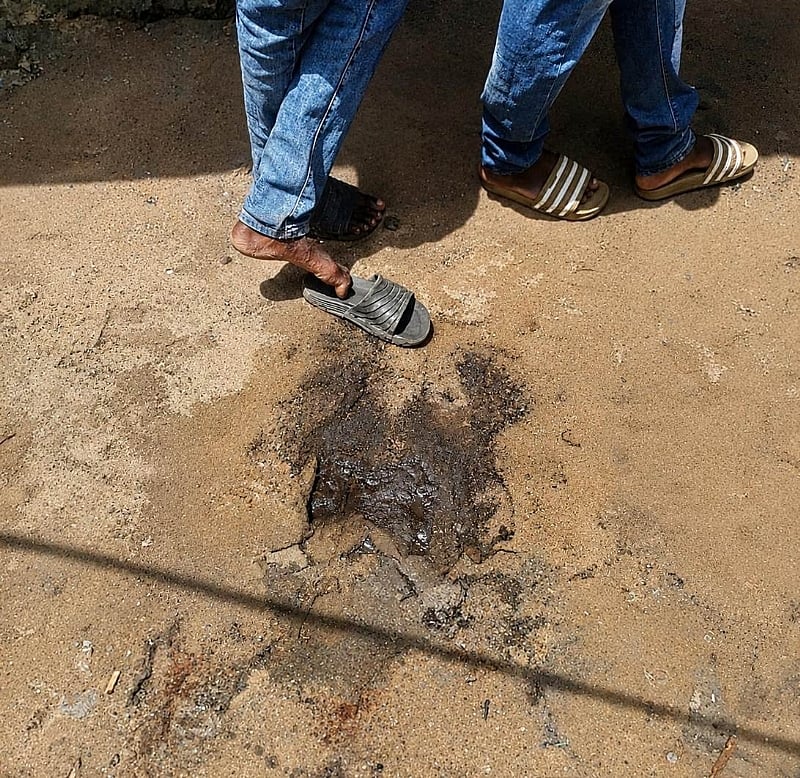
“I dig a hole behind my shop, pour the acid into it, and cover it with soil.”
For him, it is normal.
For environmental and public health experts, it is alarming.
Across many informal battery repair and recycling sites in Ghana, sulphuric acid and lead waste often end up in the ground. In some places, workers do not even bother digging holes. The liquid is simply poured directly onto bare soil and left to seep into the earth.
What appears to be a simple disposal method can leave behind contamination that lasts for generations.
Poison That Does Not Disappear
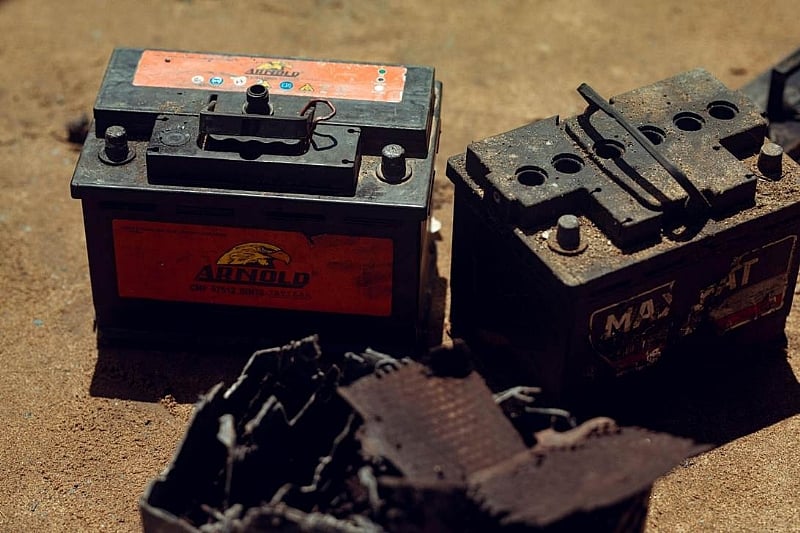
Lead-Acid Battery Before Repair
Used lead-acid batteries contain two dangerous substances: sulphuric acid and lead.
When released into the environment, the acid does more than damage the soil. It creates conditions that allow toxic metals to dissolve and spread more easily through surrounding land.
Lead can remain in soil for decades. It can contaminate crops, poison livestock, affect wildlife, and expose children through direct contact or through contaminated food and water.
“There are a lot of sources of lead that we keep discovering. We have done some work with the Environmental Protection Authority and discovered that some vegetables are being grown around these smelters, causing damage, especially to children and pregnant women,” said Esmond Quansah, Programme Director of Pure Earth Africa.
The danger is not limited to a few isolated workshops.
A recent study by the Centre for Global Development titled Beyond Hot Spots: Estimating Population Lead Exposure from Battery Recycling estimated that approximately 33 percent of lead exposure in low- and lower-middle-income countries may be linked to unsafe battery recycling activities.
The contamination often remains long after the source is gone.
“Once lead is deposited into soil, it remains there forever if it is not removed. It becomes a multi-generational poisoning site,” Mr. Quansah said.
His warning points to a troubling reality. While workshops repair batteries to extend their life, the pollution left behind can outlive several generations of the families living nearby.
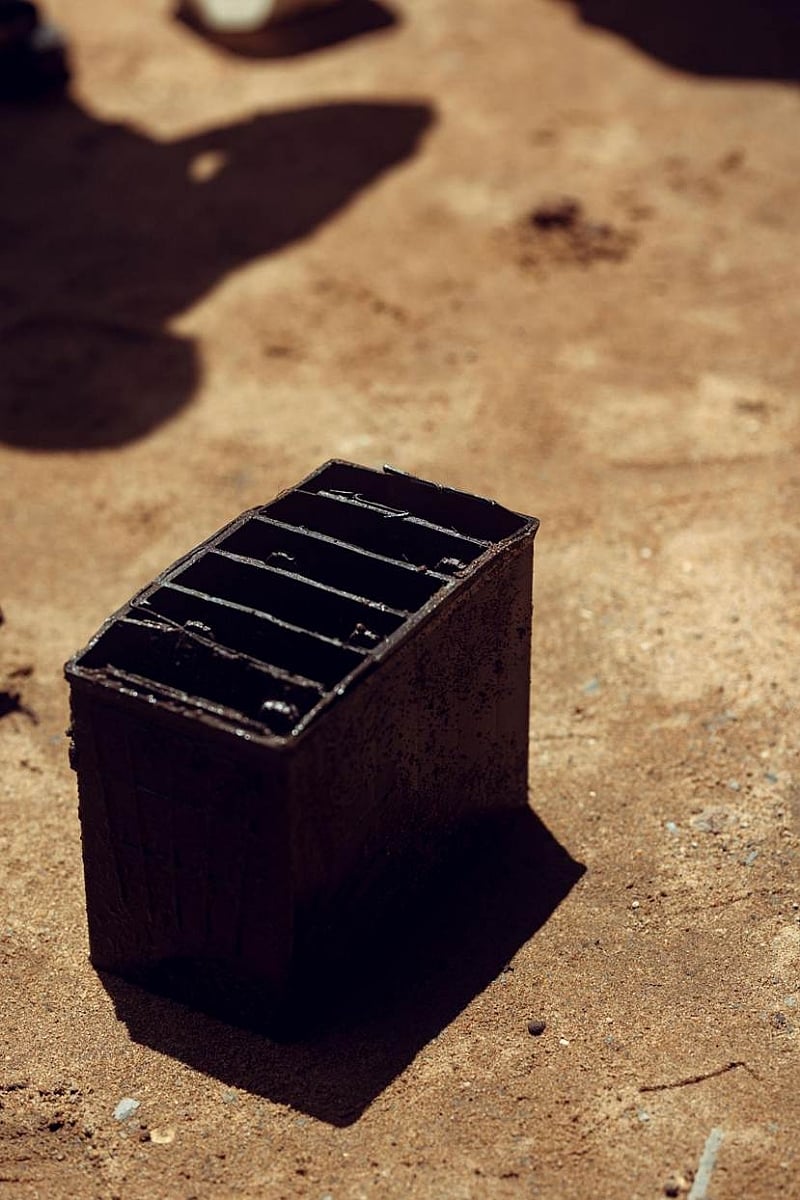
Discarded Battery Casing Remains
The Threat Beneath Our Feet
The contamination does not stop at the surface.
For many households that depend on groundwater for drinking, cooking, washing, and other domestic activities, polluted soil can become the starting point of a deeper crisis.
“Lead can travel deep into groundwater,” explained Dr. Sampson Atiemo, a private environmental consultant.
“The lead drains gradually until it reaches the water table. When it gets there, there is no technology to dissolve it. Unless you bring out all the water, you cannot treat it underneath. Also, with most of our water treatment systems, lead is able to escape.”
Once groundwater becomes contaminated, communities can be exposed for years without realizing it.
The consequences are already showing.
In 2021, more than four million children in Ghana were estimated to have unsafe blood lead levels. A blood lead survey conducted in 2022 across three regions found that over 53 percent of children tested had unsafe blood lead levels.
For many children, exposure begins long before symptoms become visible.
Lead attacks the body quietly. Even small amounts can interfere with brain development, learning ability, behaviour, and physical growth. The effects can last a lifetime.
To better understand the scale of the problem, health researchers conducted blood lead surveys between 2022 and 2023.
The findings shocked even the experts.
Children Paying the Price
Dr. Carl Osei, Programme Manager for Occupational and Environmental Health at the Ghana Health Service, described the results of the survey.
“In the Northern Region, the findings were interesting because the levels were elevated in both areas, irrespective of whether it was a contaminated site or a control site. We had a prevalence of about 79 percent in Yendi and 74 percent of children with elevated blood lead levels. This was very surprising because globally, we know that about 33 percent of children should have elevated blood lead levels.”
“In the Greater Accra Region, we realised that children staying near contaminated sites had a higher risk of elevated blood lead levels. Those staying around Ashaiman had levels around 56 percent, which is quite high.”
“We also looked beyond the informal industries and assessed facilities that were supposed to be operating under formal conditions. These were well-regulated factories recycling used lead-acid batteries. To our surprise, the children living near those facilities also had very high levels of lead exposure. In some communities, prevalence was around 89 percent, while others recorded levels between 70 percent and 79 percent.”
The findings reveal that exposure is not confined to informal recycling operations alone. Communities living close to both informal and formal recycling facilities may face significant risks.
According to the World Health Organization, elevated blood lead levels in children can cause irreversible brain damage, lower IQ, attention and behavioural problems, delayed growth, anaemia, hearing loss, kidney damage, stomach pain, and reduced earning potential later in life.
The damage often begins during the earliest stages of development.
“Lead poisoning affects how a child develops,” said Dr. Emmanuel Kyeremanteng Amoah, Public Health Physician and Environmental Health Specialist at UNICEF Ghana.
“For example, you give birth to a child and expect that by six months, the child should be crawling. At some point, the child should be able to sit by themselves and move from one chair to another. But in severe cases, you see that the developmental milestones of the child are seriously impaired.”
In many auto repair centres across the country, children can often be seen playing nearby, picking up objects from the ground or helping adults with small tasks. Without knowing it, they may be touching contaminated soil, dust, or battery waste.
Workers themselves can also carry lead particles home on their clothes, shoes, skin, and tools, creating another pathway of exposure for their families.
The Enforcement Gap
Experts say preventing contamination is possible.
Safer recycling methods exist. Protective equipment can reduce exposure. Hazardous waste can be collected and treated properly instead of being dumped into the ground.
The challenge, however, lies in ensuring that these measures are consistently followed.
Dr. Atiemo believes Ghana’s regulatory system faces significant capacity and enforcement challenges.
“There are capacity gaps in the system. People are employed to work in regulatory agencies, but the knowledge about these specific matters is not always there. Meanwhile, the older officers who have the expertise and experience are leaving the system and are not passing their knowledge on to the next generation,” he said.
His concerns point to a larger problem.
While battery recycling helps keep vehicles running and creates jobs for thousands of people, weak oversight can allow dangerous practices to continue unnoticed.
Behind many workshops are small patches of earth where sulphuric acid has been buried. To the naked eye, they appear harmless. Grass may grow over them. Dust may settle on them. Life may continue around them.
Yet beneath the surface, toxic substances can remain for decades, silently moving through soil, water, food, and human bodies.
The hole dug behind a workshop may take only minutes to fill.
The damage it leaves behind can last for generations.
The writer is a science journalist.
Email: [email protected]
