



Fleeing: Media is urged to stop calling white South Africans who relocated to United States ‘refugees’.
With the Trump administration planning to expand its assistance to Afrikaners, raising the limit to 17 500 from 7 500 and declaring an “emergency refugee situation”, the term “refugee” is being used once again. There is a difference between leaving and fleeing. The media should know that.
The increasing numbers of white South Africans relocating to the United States and elsewhere are being described in headlines, interviews and commentary as “refugees”.
The term is emotionally powerful. It evokes images of desperation, persecution and survival. But it is also a legal and historical category and its careless use matters.
According to the United Nations Refugee Convention, a refugee is someone unable or unwilling to return to their country owing to a well-founded fear of persecution based on race, religion, nationality, political opinion or membership of a particular social group.
Historically, the term has been associated with people escaping war, ethnic cleansing, authoritarian violence and state collapse.
South Africa is many things: unequal, violent, frustrated, politically volatile and economically strained. But it is not a war zone. Dissatisfaction with governance, fears about crime, frustration with taxation or discomfort with transformation policies do not automatically amount to persecution.
People have every right to emigrate. The issue is not that white South Africans are leaving. The issue is how parts of the media ecosystem narrate that departure.
This is not about all white South Africans. Many remain deeply invested in the country and its future. The critique is directed at a growing narrative ecosystem that reframes privileged migration as humanitarian displacement while erasing the structural realities that continue to shape South African life.
Complex societies are weakened when entire groups are reduced to singular political identities, whether through race, religion, nationality or ideology. Too often, the framing relies on an uncritical politics of white vulnerability. It presents white South Africans as uniquely endangered while ignoring the broader historical and structural realities of the country.
Crime becomes racialised through selective storytelling. Structural inequality becomes background noise. The enduring concentration of wealth and opportunity inherited from apartheid quietly disappears from the frame. And yet there is another irony beneath this narrative.
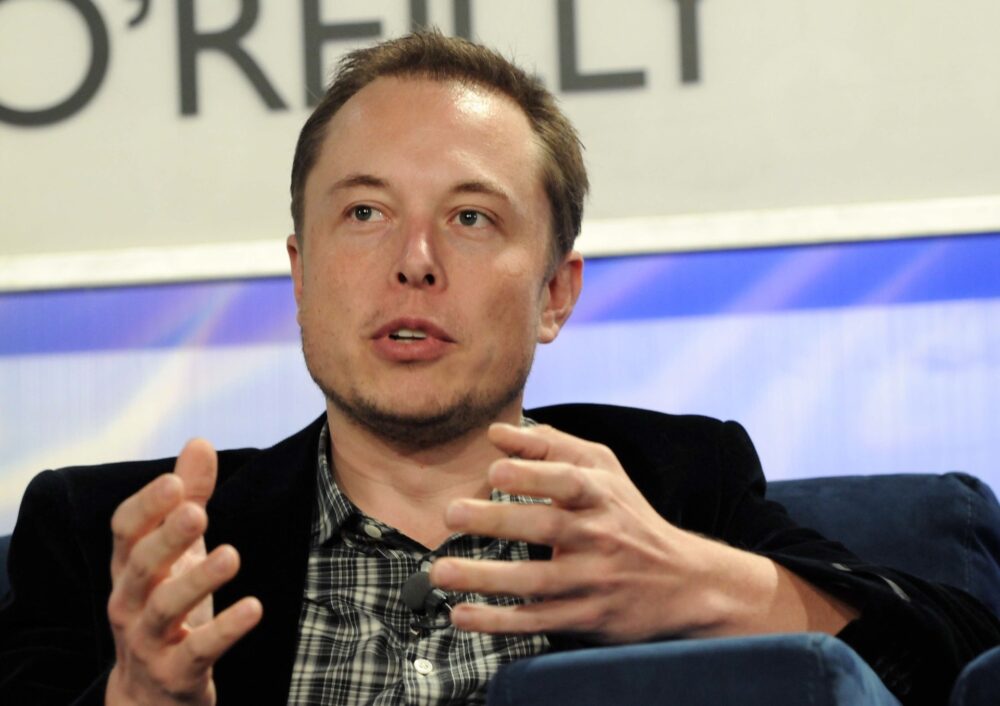
At the same time that some voices describe South Africa as a collapsing democracy from which people must “flee”, even billionaires such as Elon Musk continue to pursue commercial expansion into the country through ventures such as Starlink. That contradiction deserves scrutiny.
If South Africa is truly beyond redemption, governed only by violence and instability, then why the continued commercial interest?
Why pursue market access, infrastructure partnerships and long-term investment opportunities in a supposedly unviable state?
We know the answer is not patriotism. It is because, beneath the noise, South Africa remains economically significant, strategically positioned and commercially valuable. Investors understand this complexity better than ideology often allows.
They recognise risk but they also recognise opportunity. That is precisely what parts of the public discourse miss. South Africa is not reducible to either utopia or collapse. It is a deeply unequal democracy wrestling with the unfinished business of history while simultaneously remaining one of the most influential economies on the African continent.
But do not forget that South Africa’s inequality is structurally produced through generations of land dispossession, exclusion and concentrated economic opportunity. Our democracy inherited those fractures; it did not invent them.
The refugee narrative conveniently avoids this complexity. It transforms structural tension into personalised victimhood. It allows emigration to be framed not as mobility, preference or opportunity-seeking but as moral escape from an irredeemable society.
But most white South Africans emigrating to the United States are not arriving from refugee camps. They are not stateless. They are not crossing borders on foot after escaping civil war. Many leave with educational qualifications, financial resources, professional networks and access to mobility systems unavailable to much of the Global South.
That does not invalidate their experiences. But it places those experiences in a fundamentally different category from refugeehood. A deeper issue here is leadership.
Political leadership in South Africa has too often failed to build public trust, meaningfully reduce inequality or create a sense of collective national direction. Corruption, performative politics and institutional decay have hollowed out confidence across racial and class lines. But business leadership must also confront its own role in shaping the country’s trajectory.
Too often, corporate South Africa speaks the language of concern while operating through the logic of distance. Wealth is extracted from communities without meaningful reinvestment in social cohesion, education, dignity or long-term inclusion. The leadership we see is transactional rather than societal.
People will always move in search of opportunity, safety and alignment. But we should ask what influential sectors of society are willing to build, repair and contribute before concluding that withdrawal is the only rational response. Because nations are not sustained by markets alone. They are sustained by whether those with power, capital and influence still believe they have obligations beyond themselves.
Words matter because they shape public consciousness. And when the media casually labels relatively privileged emigrants as “refugees”, it weakens public understanding of what refugeehood actually means while distorting the realities of both South Africa and those facing genuine humanitarian displacement around the world. The media should stop using the word carelessly.
Professor Armand Bam is the Head of Social Impact and PGDip NPO Leadership Development at Stellenbosch Business School.
