
The Kenya Electricity Generating Company (KenGen) hopes to become a direct power retailer this year. KenGen’s move follows the Energy and Petroleum Regulatory Authority (EPRA)’s gazettement of new open-access rules on May 8.
If granted a license, Kenya’s main power producer will initially operate on a small scale, distributing to a single location. This appears to be a limited trial of the captive power distribution system before a full-scale rollout.
In a notice, KenGen stated, “Pursuant to the provisions of section 119 (3) of the Energy Act, 2019, we will, on the 2nd of June 2026, make an application to the Energy and Petroleum Regulatory Authority (the Regulator) for the Electric Power Transmission and Distribution Licenses for KenGen Green Energy Park.”
Open access laws grant large-scale electricity consumers the legal right to bypass the traditional distributor and buy power straight from generation companies through the national grid.
The Energy (Electricity Market, Bulk Supply, and Open Access) Regulations 2026 target large industrial and commercial users drawing at least 1 MVA from the distribution network or 10 MVA from the transmission network.
.
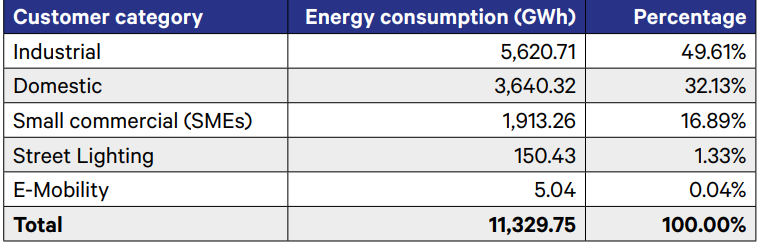
According to EPRA’s report of the financial year ending June 2025, these large commercial and industrial consumers utilised 49.6% of the electricity distributed in Kenya.
READ: A Look at KenGen Projects Set to Add 253 MW to Grid as Electricity Demand Keeps Growing
KenGen’s case is particularly significant because it supplied 59%, or 8,482 GWh, of the 14,472 GWh that Kenya Power and Lighting Company (KPLC) bought from producers in the year ended June 2025.
Its main qualms with KPLC are payment delays for the power it sells to them. KPLC owes the company KES 16.6 billion as of mid-2025. Supplying power directly to customers is meant to reduce the business risk of reliance on a single off-taker.
Kenya has other independent power producers (IPPs), but KenGen, if successful, will be the first to open up the local power transmission and distribution market.
It will effectively introduce competition into a market that has long been considered a Kenya Power monopoly.
