


When the Bank of Ghana (BoG) published its 2025 audited financial statements on April 30, 2026, revealing a net loss of GH₵15.63 billion, the loudest voices responding to the numbers came from the opposition, not from the man who spent years making BoG losses his signature political issue.
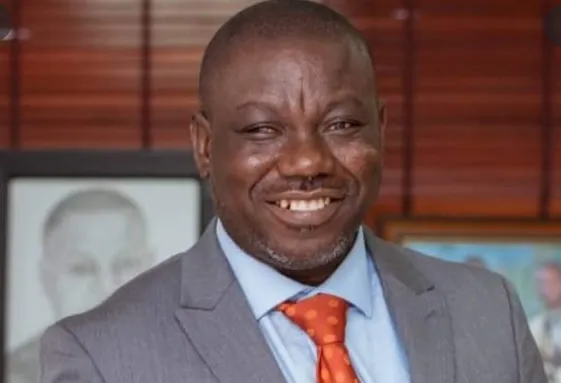
Isaac Adongo, Member of Parliament for Bolgatanga Central and Chairman of Parliament’s Finance Committee, was notably absent from the press conference called by NDC Majority MP Attah Issah to defend the central bank’s performance. That absence has attracted growing commentary, given that Adongo now sits on the Bank of Ghana’s Board as a non-executive director, appointed by President John Dramani Mahama in February 2025.
The juxtaposition is difficult to ignore. Under the previous Akufo-Addo administration, Adongo was among the most vocal critics of the Bank of Ghana’s financial management. He described BoG’s losses as evidence of poor economic governance, argued at length that the central bank was not complying with its own statutory requirements, and suggested that the economy was being criminally mismanaged. Those positions were made across press conferences, television appearances, and parliamentary platforms.
The GH₵15.63 billion loss for 2025 represents a 65 percent increase from the GH₵9.49 billion recorded in 2024, and marks the second-largest loss the central bank has posted since the cedi was redenominated in 2008. The Bank’s negative equity widened to GH₵93.82 billion from GH₵58.62 billion the previous year. At the Group level, inclusive of subsidiaries, losses rose from GH₵9.41 billion to GH₵15.29 billion.
Development economist Dr. Michael Ayamga-Adongo offered a defence of the results in a social media post, arguing that central banks can legitimately incur losses in pursuit of price and economic stability rather than profit. “Unlike in 2023 and 2024, we are seeing direct impacts from the losses, the cost of stabilisation,” he wrote. The Bank itself has attributed the results to the costs of aggressive monetary tightening, gold reserve accumulation, and the lingering accounting impact of the 2022 Domestic Debt Exchange Programme.
Political activist José Abonenga put the credibility question directly. Recalling Adongo’s prior posture, he asked whether the MP’s current silence represented caution, strategy, or a genuine shift in position.
The Bank of Ghana and a 2026-to-2032 recapitalisation agreement with the Ministry of Finance are expected to gradually restore positive equity. But the political accounting, of who said what about losses, and when, is being settled in real time.
