

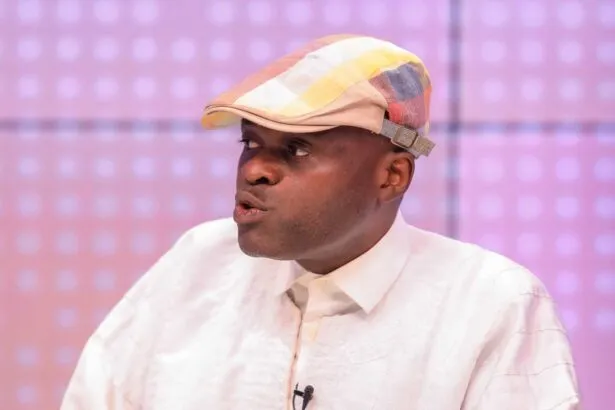
Private legal practitioner Martin Kpebu has raised concerns about the educational composition of political party delegates following revelations that 41 percent of New Patriotic Party (NPP) delegates hold Junior High School as their highest educational qualification, questioning whether this affects informed leadership choices in Ghana’s democracy.
Speaking on KeyPoints with Alfred Ocansey following the January 31, 2026 presidential primary, Kpebu argued that the educational profile of delegates poses challenges to effective decision making within internal party structures. The lawyer suggested that educational attainment levels among delegates merit consideration when evaluating the quality of political party democracy.
Data from Global InfoAnalytics revealed that Junior High School qualifications represented the highest educational level for a significant portion of NPP delegates who participated in selecting the party’s 2028 presidential flagbearer. The research firm’s Executive Director, Mussa Dankwah, disclosed these findings ahead of the primary.
The NPP primary on January 31 attracted over 211,000 delegates who cast ballots across more than 300 polling centres nationwide. Dr Mahamudu Bawumia emerged victorious with 110,645 votes representing 56.48 percent. Former Member of Parliament for Assin Central Kennedy Agyapong obtained 46,554 votes accounting for 23.76 percent, while Dr Bryan Acheampong secured 36,303 votes representing 18.53 percent.
Meanwhile, former Member of Parliament for Asante Akim North Andy Appiah Kubi has called on all NPP members to unite behind flagbearer Dr Bawumia ahead of the 2028 general elections. Appiah Kubi emphasized that the party now has a candidate who should receive support from every member irrespective of which aspirant they backed during the primary campaign.
The unity appeal reflects broader efforts within the NPP to consolidate support following a competitive five candidate race that exposed divergent views about the party’s direction. All four aspirants who contested Dr Bawumia have since pledged support, though questions remain about healing divisions within the party’s grassroots base.
Kpebu’s concerns about delegate education align with his broader advocacy for evidence based political decision making. He has consistently urged Ghanaians to prioritize data, research, and objective analysis over emotions, prophecies, or external political commentary when making electoral choices.
The lawyer previously argued that polling evidence overwhelmingly supported Bawumia as the NPP’s strongest candidate despite some party members favouring fresh leadership untainted by the Akufo Addo administration’s governance record. He maintained that strategic decisions must be grounded in electoral mathematics rather than wishful thinking.
Ghana’s political party structures rely on delegate systems where selected party members vote to choose flagbearers and parliamentary candidates. The NPP abolished its super delegates system in July 2025 as part of reforms aimed at strengthening internal democracy, expanding participation among ordinary party members.
Education levels among political party delegates have implications for how candidates campaign and the types of messages that resonate during internal contests. Aspirants must balance technical policy presentations with accessible communication that connects with delegates from diverse educational backgrounds.
Isaac Appiah Kubi, Chairman of NPP West London, separately congratulated Dr Bawumia and called for unity ahead of the 2028 contest. He stated that the tough campaigning period had concluded and party members must now work together toward recapturing power from the National Democratic Congress (NDC).
Dr Bawumia, in his victory speech, pledged to engage all party levels including reaching out to aggrieved members and elders to rebuild trust and cohesion. He described the youth as the backbone of the opposition NPP, stating that every voice matters and every opinion is worth considering when building electoral strategy.
The flagbearer emphasized that his election communicated broad based appeal across the party and that he must draw on that capital to unite members as a crucial step toward winning power in 2028. He paid tribute to fellow aspirants for what he characterized as a competitive but respectful contest.
Security personnel maintained order throughout voting, with no reports of violence or disturbances despite large gatherings at party headquarters and polling centres nationwide. Party executives and independent observers described the exercise as one of the most credible and well organised flagbearer primaries in NPP history.

