
MTN FA Cup Quarter-Finals Set For Explosive Weekend Peacefmonline.com
2027 elections: As politicians hollow out Nigeria’s democracy, by Ikechukwu Amaechi
I am gravely worried about the 2027 elections. Other well-meaning Nigerians, who want the best for the country, are worried too. And this is not about being an alarmist. No! It is realism. The augury is too stark that one needs not be endowed with the gift of clairvoyance to read the handwriting on the wall.
Whenever politicians hollow out democracy, as Nigerian politicians are doing right now, it ends badly. It happened in the First and Second republics. And unless these political merchants are reined in, the destination is already foretold.
Democracy operates on the basic assumptions that legitimate government authority stems from the people in an environment that guarantees political equality, protection of individual rights, credible elections, rule of law, and an informed, active citizenry. Without these fundamental principles, a governance system can be anything but democratic. In other words, the idea that government operates with the consent of the governed, and power can be transferred peacefully in credible elections held on multi-party paradigm, and where each of the three arms of government acts as a check on the other in order to create the necessary balances, are the very essence of democracy. They are the guardrails, without which democracy flounders. When they are lacking, rule of law retreats and governance becomes cultic, resulting in fundamental human rights taking a hit.
The violation of these basic principles led to the collapse of the First Republic and the tragic aftermath. The attempt by the then ruling National Party of Nigeria, NPN, to expand its hegemony without the people’s consent also led to the collapse of the Second Republic on December 31, 1983. In particular, the unconscionable falsification of election results in the old Western Region in 1965 led to violent protests dubbed Operation Wetie where many victims were killed by necklacing, a method of execution carried out by forcing a tyre drenched with gasoline around a victim’s neck, and setting it on fire.
So, why are Nigerian politicians refusing to learn from the past? Why are they making the same mistakes that left the country in the lurch for so long? Why is it that as we inch closer to the 2027 elections, it is all déjà vu? Long before the 2027 elections, the APC-led government has methodically dismantled most, if not all, the guardrails of democracy in Nigeria. The idea of a limited government where constitutional checks and balances exist to limit the power of government was guillotined. Under President Bola Tinubu’s watch, there is only one arm of government – executive. The other arms – legislature and judiciary – have been reduced to mere appendages to the presidency.
Consequently, we have a president who is above the law, and government officials who are no longer accountable for their actions. Yet, what is unfolding before us is even more troubling. Even when Tinubu has all institutions of state – Independent National Electoral Commission, INEC, police, military and paramilitary agencies, and the judiciary – that will make his reelection a fait accompli, he is not letting up on the destabilisation of opposition parties.
Today, the PDP, the same party which former chairman, the late Prince Vincent Ogbulafor, once predicted would rule for 60 years is in death throes, courtesy of the machinations of the ruling party. When Ogbulafor made that prediction in 2008, PDP, touted then as the largest party in Africa, was controlling 28 states, the National Assembly, and the presidency. Despite the 2015 political shellacking, the party still held sway in 13 states – Bauchi, Bayelsa, Adamawa, Akwa Ibom, Delta, Edo, Oyo, Plateau, Rivers, Taraba, Zamfara, Taraba and Osun – after the 2023 polls. But on the eve of the 2027 elections, the same party is left with two governors – Seyi Makinde of Oyo State and Bala Mohammed of Bauchi State. Except for Osun State Governor, Ademola Adeleke, who defected from the PDP to Accord Party, APC is the primary beneficiary of the defections. Thus, the ruling party that had about 21 governors in 2023, today has 31 state governors, 82 senators and 242 out of 360 members of the House of Representatives, all pledging allegiance to the Tinubu-orchestrated political hegemony.
But that is only one side of the toxic political coin. The other side is that with the state sponsored leadership crisis wracking the main opposition parties, they may not be able to present candidates for the 2027 elections. So, technically, the PDP as at today is dead and so is the Rabi’u Musa Kwankwaso-led New Nigeria People’s Party, NNPP. The Labour Party has been given a breather because its 2023 presidential candidate, Mr. Peter Obi, left. It is instructive that the judiciary finally got the courage to give a ruling on the leadership crisis rocking the party shortly after Obi’s exit.
With 31 state governors and comfortable majority in the two chambers of the National Assembly, any other president will go to sleep, if indeed democracy is a game of numbers. But not Tinubu with his scorched earth brand of politics. He is aware that in a free and fair election, where the people’s votes count, the statistics which the APC is parading as evidence of acceptance tell a lie. So, the president and his party have resorted to acts of brigandage aimed at ensuring that the African Democratic Congress, ADC, the only political party with a modicum of viability, neither campaigns nor carries out its civic obligations, including membership registration drive.
In August 2025, chaos erupted at the official inauguration of a transition committee jointly set up by opposition political parties in Kaduna State when hoodlums armed with dangerous weapons disrupted the proceedings. The committee brought together members of an APC faction opposed to the state leadership alongside the PDP, NNPP, LP, ADC and Social Democratic Party, SDP.
A month later, it was the turn of Lagos State when political thugs invaded a rally organised by the ADC, inflicting injuries on their victims. The rally, which held at the Lion Field in Alimosho Local Council to welcome Peter Obi and Gbadebo Rhodes-Vivour, the Labour Party 2023 governorship candidate in Lagos, was also aimed at mobilising youths for the 2027 elections. In February 2026, Obi and other leaders of the ADC escaped death by the whiskers in Edo State when they welcomed Olumide Akpata into the party’s fold. Last week, gunmen attacked the convoy of Rotimi Amaechi, former governor of Rivers State, when he visited his hometown of Ubima to register as a member of the ADC. They had earlier set the party’s ward office in Ubima ablaze. During the recently held Abuja AMAC election, ADC agent, Musa Abubakar, was brutally murdered while trying to defend his party’s vote at Gwagwa.
Interestingly, in all these cases, except in Edo where the DSS claims to have arrested one suspect linked to the attack on Peter Obi and ADC leaders, these apparently state-sponsored miscreants are walking about freely.
I am worried because these are early days. In the coming weeks and months, state governors, contrary to the well-known principles of democracy will decide who is allowed to campaign, where and how. Then it will be worse during the elections proper when party affiliation will determine “voters’ eligibility” in some quarters. The Federal Capital Territory Minister, Nyesom Wike, experimented it during the 2023 elections in Rivers State. Lagos State took a cue during the governorship poll.
In 2027, two things will happen. Disillusioned Nigerians, having concluded that democracy in Nigeria is a lost case, may decide to stay home on Election Day, thereby exacerbating the voter apathy, which is already at an all-time low. On the other hand, aggrieved politicians, aware that no one has the monopoly of violence, may decide to mobilise the electorate to resist the impunity of the ruling party.
Whichever way, Nigeria will be worse for it, just because the political elite, in their greed for power, have decided to hollow out the country’s democracy.
South Africa’s move to greener energy is creating new jobs, but benefits aren’t evenly spread
South Africa’s green transition is creating jobs. But not for everyone.
The country’s economy has historically been heavily reliant on coal. Around 70% of its energy is generated from coal. This makes it one of the world’s most carbon-intensive economies.
To reduce greenhouse gas emissions and modernise the energy system, the government is advancing a transition towards renewable energy, improved energy efficiency, and the development of low-carbon industries. This shift forms part of South Africa’s commitment to a just energy transition, supported by international partners through the Just Energy Transition Partnership.
The transition is unfolding in a context of persistently high unemployment. The official rate is 30%. Youth unemployment is particularly severe. In response, policymakers and international organisations have promoted green industrial development and investment in renewable energy as potential drivers of job creation and inclusive growth.
But the extent to which these opportunities will be equitably distributed remains an open question.
South Africa’s move towards a greener economy is often presented by policymakers, international development institutions and energy transition strategies as achieving two objectives: lower carbon emissions and more jobs.
But does the data support this claim?
We are economists working on labour markets, structural change and the just energy transition. In a recent research paper we set about answering the question. In the study we combined South Africa’s labour force survey data with occupational information that identifies environmentally related work activities – green occupations. This allowed us to track green employment trends over time and examine which sectors and workers benefit most from the transition.
Our research findings show that green employment is indeed growing. However, the benefits are uneven. Some sectors and groups of workers are gaining ground. Others risk being left behind.
South Africa’s commitment to a just energy transition implies that workers and communities affected by structural change should not bear disproportionate costs.
But justice is not only about protecting workers in declining sectors. It is also about ensuring that new opportunities are broadly accessible.
Where jobs are being created, and where they’re not
What counts as a “green job”?
One of the first challenges is defining what a green job is. According to the International Labour Organisation, green jobs are decent jobs that contribute to preserve or restore the environment. They can be in traditional sectors such as manufacturing and construction. Or they can be in new emerging green sectors such as renewable energy and energy efficiency.
In our research, we developed a method to classify green employment in South Africa. We combined South Africa’s occupational classification system, which groups jobs according to tasks and skills, with international data linking specific work activities to environmental sustainability.
These jobs include work directly connected to renewable energy, energy efficiency, environmental management, waste reduction and sustainable finance.
This approach allowed us to move beyond broad assumptions and measure where green employment is actually happening in the labour market.
Our findings showed that the share of green jobs has increased gradually over time from 12.4% in 2022 to 14.8% in 2024. That suggests the transition to a greener economy is underway. But it’s not happening evenly across the economy.
Green jobs are concentrated in a handful of sectors:
- utilities, particularly electricity and water
- mining, including environmental rehabilitation and renewable energy components
- construction, especially green buildings and energy-efficient infrastructure
- finance. Here jobs are being created through sustainability reporting and environmental, social and governance investment activities.
These patterns reflect where regulation, investment and policy signals have been strongest. Government-led initiatives act as major catalysts. Examples include:
- renewable energy procurement
- environmental compliance requirements – including stricter environmental governance – force firms to invest in greener technologies and compliance measures. This creates a direct demand for environmental, technical, and engineering roles.
- sustainable finance initiatives. These are shaping labour demand.
Other sectors show far less green penetration.
The demographic profile of green employment also reveals important patterns.
Green jobs are more likely to be:
- held by younger workers
- located in the formal sector; informal workers are underrepresented
- associated with moderate levels of education (including post-secondary or technical qualifications rather than highly specialised professional degrees)
- dominated by men. Gender disparities are noticeable.
This suggests that green growth does not automatically translate into inclusive growth.
Without deliberate policy intervention, existing inequalities may simply be reproduced within new sectors.
What needs to be done
Our findings highlight four policy implications.
Firstly, skills policy is central.
Many green jobs require specific technical or regulatory competencies. These range from renewable energy engineering and environmental auditing to sustainable finance and compliance expertise.
If the education and training system does not respond quickly enough, skill shortages could limit job creation. At the same time, workers without access to training may be excluded.
Active labour market policies, vocational training reforms and targeted upskilling programmes are therefore critical.
Secondly, the transition needs sectoral depth.
Green employment is concentrated in a few industries. Expanding the transition into manufacturing, services and small-scale enterprises could broaden employment effects.
This requires coordinated industrial, energy and trade policy. Localisation strategies in renewable energy value chains, for example, could deepen job creation beyond installation and maintenance.
Thirdly, informal workers must not be ignored. South Africa’s informal economy employs millions of people. Yet green employment, as currently structured, is largely formal.
Waste pickers, small-scale recyclers and informal repair services already contribute to environmental sustainability. Integrating and supporting these workers through policy and municipal systems could strengthen both environmental and social outcomes.
Fourthly, measurement matters.
Green transitions are often discussed in aspirational terms. But policy making requires evidence.
Developing robust methods to identify and track green employment allows government and stakeholders to monitor progress, assess distributional impacts and adjust policy accordingly. Without data, the idea of a just transition remains rhetorical.
A green economy can support employment – with the right choices.
South Africa’s statistical system could also improve measurement of green employment. Statistics South Africa could incorporate questions in the labour force survey that capture environmentally related work tasks, skills and training. It could also develop a national classification of green occupations and industries aligned with international standards. Better data would allow policymakers to monitor the employment effects of the transition more accurately.
Our findings do not undermine the case for green growth. On the contrary, they show that the transition is already reshaping South Africa’s labour market.
But the process is uneven and path-dependent. It reflects where incentives exist, where investment flows and where regulatory frameworks create demand.
If policymakers want the green transition to reduce unemployment and inequality, design matters. A greener economy will not automatically be a fairer one. Ensuring that it is requires deliberate, coordinated action.
Darlington Mushongera, manager for research and development at the South African Qualifications Authority, contributed to this article.
Authors: Jessika Bohlmann, Research Specialist, Faculty of Economic and Management Sciences, University of Pretoria; Getrude Njokwe, Postdoctoral Fellow, University of Pretoria; Kehinde Oluwaseun Omotoso, Research Fellow, DST/NRF SARChI Chair in Social Policy, College of Graduate Studies, University of South Africa, Pretoria, and Margaret Chitiga-Mabugu, Dean of the Faculty of Economic and Management Sciences, University of Pretoria
This article is republished from The Conversation under a Creative Commons license. Read the original article.
Nitiwul sounds alarm over Sokoto strike: Claims Ablakwa’s disclosure exposes Ghana to terror risk

A major rift has opened in Ghana’s security establishment after former Defence Minister Dominic Nitiwul issued a rebuttal to claims that the country served as a collaborator in a Christmas Day military strike against ISIS targets in Nigeria.
Speaking on Wednesday, 11th March 2026, Mr. Nitiwul warned that recent disclosures by Foreign Affairs Minister Samuel Okudzeto Ablakwa regarding the trilateral operation in Sokoto State have placed Ghanaian citizens at “serious risk” of retaliatory terrorism. He further suggested that if such an operation took place from Ghanaian soil, it may have occurred without the necessary legal framework or parliamentary oversight.
Mr. Nitiwul, who said he signed the country’s Defence Cooperation Agreement (DCA) with the United States in 2018, insisted that neither that document nor its predecessors from 1998, 2002, or 2015 permit Ghana to be used as a base for offensive military strikes.
“In all these agreements, at no point was the United States or any other country allowed to use the territory of Ghana as a launchpad to attack any individual, any nation, any group of persons or any organization,” Mr. Nitiwul asserted.
The former Minister clarified that under existing laws, the U.S. requires explicit permission to bring armed military aircraft into Ghanaian airspace.
Again, any launch of an attack from Ghana would require the “express permission” of the President of the Republic, and no current agreement exists that authorises the type of lethal intervention described by the Foreign Ministry, Mr Nitiwul disclosed.
The former Defence Minister expressed grave concern over the potential blowback from Mr Ablakwa’s public confirmation of Ghana’s involvement in the Sokoto mission. He argued that admitting to such a role invites the very “Venezuela situation” or “geopolitical matter” the Foreign Minister claimed to be avoiding.
“What he has disclosed to the world poses a serious risk to you, the citizens of Ghana and to Ghana as a whole… no government should be allowed to ask a foreign country without a formal agreement to use our territory to bomb, attack or kill anybody without our permission,” he added.
Mr. Nitiwul posed a pointed question to the current administration, asking if a “secret agreement” had been signed between 7th January 2025 and the present day that the public is unaware of.
While acknowledging the shared global goal of “quenching” terrorism, Nitiwul maintained that partnerships must be governed by the rule of law. He is now calling for an immediate summons for the Foreign Affairs Minister to brief the Committee on Defence and Interior.
DISCLAIMER: The Views, Comments, Opinions, Contributions and Statements made by Readers and Contributors on this platform do not necessarily represent the views or policy of Multimedia Group Limited.
DISCLAIMER: The Views, Comments, Opinions, Contributions and Statements made by Readers and Contributors on this platform do not necessarily represent the views or policy of Multimedia Group Limited.
AI enables culturally competent clinical decision support in Kenya
2025/26 Ghana Premier League: Augustine Okrah, Emmanuel Annor and others chase Attah Kumi for goal king award – Ghana Latest Football News, Live Scores, Results

Four players look set for a battle to the end in their quest to win the goal king award in the Ghana Premier League at the end of the 2025/26 football season.
At the end of Week 25, Bibiani Gold Stars talisman Samuel Attah Kumi tops the top scorers’ chart with 11 goals.
He is closely trailed by Bechem United veteran Augustine Okrah, Young Apostles star Richmond Opoku, and Emmanuel Annor, all on nine goals.
With just two goals behind the top scorer, all three players could snatch the award from Attah Kumi at the end of the season if they can consistently find the back of the net.
The current situation is expected to add spice to the goal king race in the last nine matches of the league campaign.

For now, the league has taken a short pause this weekend to pave the way for the quarter-final matches in the MTN FA Cup.
Week 26 matches will be played next weekend as clubs head into the final stretch of league games.
South Africa moves ahead with appeals on offshore oil exploration authorisations
- Environment Minister Willie Aucamp to proceed with appeals against offshore exploration approvals to avoid regulatory delays.
- Civil society groups challenge expanded appeal by the State and Shell in Block 5 6 7 drilling dispute.
- Western Cape High Court previously set aside environmental authorisation citing serious legal flaws in assessment process.
South Africa’s Minister of Forestry Fisheries and the Environment Willie Aucamp has confirmed that government will proceed with determining multiple appeals lodged against environmental authorisations for offshore oil and gas exploration projects along the country’s west and south coasts.
The Minister said the decision is intended to prevent further delays in regulatory decision making while maintaining government’s constitutional obligations to both environmental protection and economic development.
Aucamp explained that numerous appeals were submitted following the granting of environmental authorisations under the National Environmental Management Act 1998 for offshore activities including seismic surveys and exploration drilling. These appeals were lodged in terms of section 43 of the Act.
According to the Department of Forestry Fisheries and the Environment the appeals had previously been deferred pending the outcome of related court proceedings. The Minister said he reviewed the legality and implications of this deferral in light of the statutory framework governing environmental appeals including the National Appeal Regulations and the Promotion of Administrative Justice Act 2000.
He concluded that continuing to delay the appeals would not be procedurally fair and could create what he described as decision paralysis within the environmental governance system.
Allowing the matters to remain suspended pending lengthy litigation may stall critical decision making processes within the regulatory system, the Minister said.
To ensure an independent review an appeal panel will be appointed in terms of the National Appeal Regulations. The panel will assess the matters raised and provide recommendations to the Minister before a final decision is taken.
Aucamp emphasised that the appeals process remains a key safeguard within South Africa’s environmental governance framework as it allows environmental decisions to be scrutinised while ensuring that the rights and legitimate expectations of affected stakeholders are considered.
The Department said it will provide further updates as the appeal process progresses.
Block 5 6 7 dispute
At the same time the legal dispute surrounding offshore exploration in Block 5 6 7 has entered a new phase as civil society organisations intensify their opposition to expanded oil and gas development.
Environmental organisations The Green Connection and Natural Justice confirmed that they have filed an answering affidavit in the Supreme Court of Appeal opposing attempts by the State and Shell to broaden the scope of their appeal in the matter. The case relates to proposed offshore oil exploration about 60 km from Cape Point.
Neville van Rooy outreach ambassador for The Green Connection said the dispute extends beyond administrative procedure and raises wider issues of governance climate responsibility and the constitutional rights of coastal communities that rely on marine resources for their livelihoods.
Civil society groups first raised objections in 2022 to the environmental impact assessment prepared by TEEPSA for offshore drilling of up to five wells. Concerns focused on potential impacts on small scale fishers marine ecosystems and climate risks.
Despite these objections the Department of Mineral Resources and Energy granted environmental authorisation in 2023. More than 20 appeals were subsequently lodged by affected communities environmental organisations and subject matter experts. These appeals were later dismissed by the then environment minister.
The Green Connection and Natural Justice then initiated a High Court review in 2024 challenging the decision.
Although TotalEnergies later signalled its intention to withdraw from Blocks 11B 12B and 5 6 7 the litigation continued. In 2025 the Western Cape High Court set aside the environmental authorisation after finding that the environmental assessment process contained significant legal and procedural deficiencies.
The court granted limited leave to appeal on two of the five grounds presented in the case which relate to climate risk and transboundary environmental harm. Shell which subsequently took over the application from TEEPSA together with the State is now seeking to expand the appeal to include additional issues.
Civil society organisations argue that the High Court judgment already identified serious shortcomings in the approval process including inadequate assessment of socio economic impacts and insufficient consideration of coastal protection requirements under the Integrated Coastal Management Act.
They also point to the late disclosure of key oil spill and blowout contingency plans which they say prevented communities from meaningfully assessing potential environmental risks.
For small scale fishing communities along the West Coast through to KwaZulu Natal the potential impacts are significant. Stakeholders warn that offshore oil and gas exploration could affect marine ecosystems fish catch rates and the livelihoods of communities that depend on fishing for income food security and cultural heritage.
Civil society groups argue that damage to marine ecosystems cannot be addressed through financial compensation alone.
The dispute also intersects with South Africa’s broader climate commitments. The country is Africa’s largest carbon emitter and contributes roughly 1% of global CO2 emissions.
Environmental organisations argue that expanding offshore oil and gas exploration could undermine climate objectives while diverting investment away from renewable energy and community based energy solutions. They also highlight that methane emissions associated with fossil fuel production can be up to 86 times more potent than CO2 over a 20 year period.
The Supreme Court of Appeal will now decide whether the State and Shell can broaden the scope of their appeal to include additional grounds related to socio economic impacts coastal protection and emergency response planning.
For many stakeholders the Block 5 6 7 dispute has evolved into a national test case for environmental governance transparency and the application of precautionary principles in South Africa’s energy transition. At stake are issues ranging from constitutional rights and marine biodiversity to food security and the long term sustainability of the country’s coastal economy.
Author: Bryan Groenendaal
Adams Pledges Ministry Support for Stalled GOC Training Centre at Amasaman


Sports and Recreation Minister Kofi Adams has committed the Ministry of Sports and Recreation to working with the Ghana Olympic Committee (GOC) to complete the long-delayed OlympAfrica recreational and training centre at Amasaman, a project that has been repeatedly set back by illegal encroachment on the land.
Adams made the pledge during his visit to the GOC’s headquarters at Olympic House in Accra, where he met GOC President Richard Akpokavie and the full board to discuss athlete welfare, infrastructure and preparations for upcoming international competitions. “We are aware of your longstanding recreational and training centre project at Amasaman which is being encroached by squatters. I am happy to say that the Ministry of Sports and Recreation will work with the GOC on the OlympAfrica Project at Amasaman to ensure it is completed for use,” he said.
The OlympAfrica centre, which forms part of the International Olympic Committee’s (IOC) continental development network, is intended to serve as a dedicated training and welfare facility for Ghanaian athletes. Its completion has been delayed for several years due to land encroachment issues that successive administrations have failed to resolve.
Adams also assured the GOC that the Ministry would continue to support athletes currently enrolled on the Olympic Scholarship programme and expressed satisfaction with the board’s management of athlete development and international competition planning.
Akpokavie briefed the Minister on the GOC’s current programmes, including preparations for the 2026 Commonwealth Games in Glasgow and the upcoming Youth Olympics. He thanked Adams for what he described as a new spirit of genuine collaboration between the two bodies, and pledged the GOC’s full commitment to working with the government to address funding, infrastructure and welfare gaps across Ghanaian sport.
Two Ghanaians injured after drone attack in Dubai

The Ministry of Foreign Affairs has been informed by the relevant authorities in the United Arab Emirates that two Ghanaian nationals sustained injuries following a drone incident in the vicinity of Dubai International Airport earlier today, March 11, 2026.
Against this backdrop, the Government of Ghana has strongly condemned any act that endangers civilian lives and critical infrastructure.
In a statement issued by the Ministry of Foreign Affairs today, March 11, such incidents pose serious risks to public safety and underscore the importance of ensuring the protection of civilians and vital international transport hubs.
Ghana’s Ambassador in the United Arab Emirates has led a delegation of the Embassy in Abu Dhabi and Consulate in Dubai to visit the two injured Ghanaians in hospital.
Their injuries are not critical and are expected to fully recover soon.
“We therefore urge calm as we continue to extend consular assistance and collaborate closely with host authorities,” the statement added.
The Ministry has revealed that they are closely monitoring the situation and will continue to engage with the appropriate authorities as required.
The Government of Ghana expresses its concern over the incident and conveys its thoughts to the injured individuals and their families.
The Ministry of Foreign Affairs reiterates the Government of Ghana’s commitment to the protection and welfare of Ghanaian citizens wherever they may be.
The Government of Ghana is actively supporting ongoing consultations within the UN to pass a resolution seeking a cessation of hostilities.
According to the Ministry they are offering the necessary leadership and coordination with Ghana’s diplomatic Missions and will provide updates on the matter as and when the need arises.
Government has reiterated its call for Nationals in the Gulf region to always exercise heightened vigilance and comply with directives from Ghanaian Embassies and local authorities.
GSE Pushes Further Into Record Territory in Session 7170


The Ghana Stock Exchange (GSE) extended its record-setting run on Wednesday, March 11, 2026, with both benchmark indices closing higher as seven equities advanced and volume surged to its strongest level of the week so far.
The GSE Composite Index (GSE-CI) added 216.19 points to close at 15,401.68, building on Tuesday’s historic first-ever close above 15,000 points. The GSE Financial Stocks Index (GSE-FSI) rose 220.75 points to settle at 9,759.43. Market capitalisation reached GH₵282,909.83 million at the close of the 7,170th trading session, up from GH₵277,972.63 million recorded in Tuesday’s session.
Total turnover came in at 4,944,937 shares valued at GH₵29,043,604.70, a significant step up from Tuesday’s 2,503,371 shares worth GH₵24,014,498.26.
Standard Chartered Bank Ghana (SCB) was the session’s standout gainer, rising GH₵6.91 to close at GH₵76.05 on volume of 18,499 shares valued at GH₵1,406,848.95. Benso Oil Palm Plantation (BOPP) followed with a GH₵7.00 advance to GH₵86.00, with 500 shares changing hands. Enterprise Group (EGL) climbed GH₵0.98 to GH₵10.90, Ghana Oil Company (GOIL) gained GH₵0.66 to GH₵7.26, SIC Insurance Company (SIC) rose GH₵0.39 to GH₵6.37, Republic Bank Ghana (RBGH) added GH₵0.32 to GH₵3.58, and Ecobank Transnational Incorporated (ETI) edged up GH₵0.13 to GH₵2.04.
On the downside, Ecobank Ghana (EGH) slipped GH₵0.86 to close at GH₵56.14, while Access Bank Ghana (ACCESS) shed GH₵0.02 to GH₵46.62.
Scancom (MTNGH), the parent entity of MTN Ghana, remained the dominant force by volume, accounting for 3,220,676 shares valued at GH₵20,409,755.53, representing approximately 65 percent of the session’s total turnover value. Cal Bank (CAL) came second by volume at 1,207,043 shares, generating GH₵1,062,197.84 in value.
Since January 1, 2026, the GSE-CI has now advanced 75.61 percent while the GSE-FSI has gained 110.01 percent, maintaining Ghana’s position among the top performing equity markets in Africa this year.
The Ghana Alternative Market (GAX) recorded no trades, with all five listed counters, Samba Foods, Meridian Marshalls, Hords, Intravenous Infusions, and Digicut Production, seeing zero volume.
Trading resumes Thursday, March 12, 2026.
Wontumi Admits He Has No Certificate, Asks to Be Judged on Competency


Bernard Antwi Boasiako, the Ashanti Regional Chairman of the New Patriotic Party (NPP) who is seeking the party’s National Chairmanship, has publicly acknowledged that he holds no academic certificate, urging delegates to assess him strictly on his record of competence and grassroots service instead.
Addressing a gathering of supporters, Wontumi made the admission in candid terms. “Oh my God, don’t ask me about my certificate,” he said. “Because I don’t have a certificate. If you want to know, judge me or ask me about my competency.”
He added: “As for my competency, it’s a competency that I’m bringing, that’s it. So judge me about my competency.”
The remarks represent Wontumi’s most direct public acknowledgment yet on the certificate question, which has dogged him throughout his political career and resurfaced with renewed intensity since he declared his national chairmanship bid in February. A former Deputy Director-General of the Ghana Education Service (GES), Dr Kwabena Bempah Tandoh, offered testimony in late February that Wontumi attended Prempeh College in Kumasi, with the two sharing a dormitory in Form One, though that disclosure addressed attendance rather than academic completion.
Wontumi has consistently framed the NPP’s current situation as requiring tested leaders rather than holders of academic titles, telling Western Region executives that the party needs a national chairman ready to fight in opposition.
Wontumi has served as Ashanti Regional Chairman for an unprecedented three consecutive terms and points to his record of financing nomination forms for thousands of NPP aspirants and contributing funds to stabilise the party’s 2015 National Congress in Tamale as evidence of his commitment and capacity.
The NPP is expected to hold its national executive elections later in 2026 as part of its preparations for the 2028 general elections, following the party’s decisive defeat at the December 2024 polls. Other declared contenders for the chairmanship include former General Secretary John Boadu and former Vice Chairman Sammy Crabbe.
Wontumi’s campaign also runs alongside an active criminal trial, in which he faces six charges related to mining operations in the Western Region.
Deputy Trade Minister urges intensive state coordination against trade bottlenecks

By Issah Mohammed, GNA
Accra, March 10, GNA – Mr Sampson Ahi, the Deputy Minister of Trade, Agribusiness and Industry, has called on public institutions to intensify coordination to eliminate existing trade bottlenecks.
Delays at the ports, borders, and within the goods clearance process placed heavy financial burdens on importers, exporters, and manufacturers, with the impact eventually passed on to the ordinary Ghanaian, he said.
“For traders dealing in perishable goods, delay is not an inconvenience to be managed later. It is a direct threat to income, market access, and business survival.”
Mr Ahi said this at the opening of the 2026 first quarter meeting of the National Trade Facilitation Committee (NTFC) at Sogakope in the Volta Region.
He noted that the work of the NTFC was critical to ensuring the efficient operation of Ghana’s trade systems to inspire confidence among investors and the business community.
The Committee brings together representatives from ministries, departments and agencies, the private sector, and development partners to address challenges affecting trade.
In this round of meeting, the Committee would focus on developing an action plan to improve the movement of perishable goods such as fresh produce, fish, and meat, which are particularly vulnerable to delays.
The committee was established under an obligation of the World Trade Organization Trade Facilitation Agreement, which requires member countries to establish a national committee to improve trade procedures and coordination.
While acknowledging that some progress had been made in improving procedures and strengthening coordination among agencies, the Deputy Minister admitted that delays, duplication, and uncertainty still existed within parts of the trade clearance system.
He stressed that government’s efforts to expand production, exports, and investment must be supported by efficient and predictable trade procedures that made it easier for businesses to operate.
Mr Ahi noted that unnecessary delays forced importers to pay extra charges while exporters lost valuable time. Manufacturers who depended on imported inputs also faced uncertainty that could disrupt production.
“The business community does not judge government only by the policies we announce. It is judged by how our systems behave — the time it takes to clear goods, the predictability of procedures, and how well institutions work together,” he said.
Mr Ahi, therefore, urged members of the Committee to focus on practical solutions by identifying problem areas, assigning clear responsibilities to relevant institutions, and agreeing on timelines for implementing reforms.
He assured participants of the Ministry’s continued support to improve trade procedures, reduce delays, and build a more efficient and reliable trading environment for businesses in Ghana.
Mr Kwamina Ekremet, the Programme Manager, West Africa and AfCFTA, TradeMark Africa, highlighted the importance of strong trade facilitation systems in boosting Ghana’s competitiveness and supporting cross-border trade.
He explained that efficient trade systems helped to reduce transaction costs, improve transparency, and strengthen a country’s participation in regional and global markets.
Mr Ekremet reaffirmed the organisation’s commitment to supporting Ghana in implementing practical reforms to improve coordination among border agencies, streamline procedures, and facilitate faster movement of goods.
He noted that particular attention must be given to sectors dealing in perishable products, where delays in clearance could lead to significant financial losses.
GNA
Edited by Agnes Boye-Doe
Rochester high schooler competing in Ironman South Africa to raise money for endangered rhino – ABC 6 News
(ABC 6 News) — A Rochester high schooler is competing in an Ironman all the in the name of raising money for the Endangered Rhino Conservation.
18-year-old Adam Berg is a senior at Mayo High School and said he will be the youngest athlete at Ironman South Africa. He is raising money ahead of the race, and 100% of proceeds go towards an endangered rhino named Sweet Chili.
Berg said one of his main goals in heading to South Africa is meeting Sweet Chili and hopefully helping out with a rhino dehorning procedure.
“It costs about $1200 to dehorn the rhino. It costs $800 for a GPS collar, so we can kind of track them and make sure they are away from the poachers, and then it costs about $2000 for vaccines and medications,” Berg said.
The Ironman is on April 19 in Port Elizabeth, South Africa. Afterwards, Berg says he will take two weeks off to explore and enjoy South Africa with his dad.
If you would like to donate to Sweet Chili, you can do so here.
Maestro Kojo Antwi to entertain fans in Amsterdam after Paris

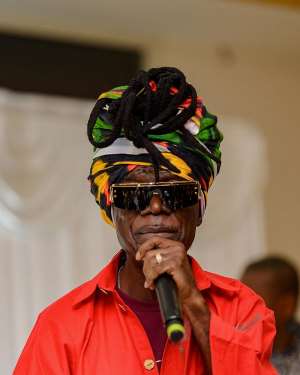
After headlining Ghana’s 69th Independence anniversary celebration in grand style in Paris, France, the legendary music icon, Kojo Antwi, is heading towards Amsterdam with another exciting and entertaining performance.
The performance formed part of celebrations commemorating Ghana’s 69th Independence Anniversary, bringing together members of the Ghanaian community and music lovers to celebrate the country’s history through music and culture.
The night of Saturday, March 7, 2026, was a memorable one for fans in the diaspora, as they trooped to the venue to catch a glimpse of the Maestro’s unrelenting performance.
Known for his timeless hits and captivating stage presence, Kojo Antwi thrilled the audience with a lively performance that blended nostalgia, rhythm and patriotic pride on the night.
Patrons at the Paris event expressed excitement about the performance, praising the musician for bringing vibrant energy to the celebration and creating an atmosphere filled with love, music and national pride.
Back in Amsterdam, the Maestro will be thrilling his fans as he does on every stage on Saturday, March 14, 2026.
Kojo Antwi, affectionately known as “Mr Music Man”, remains one of Ghana’s most celebrated musicians, with a career spanning over three decades and more than 13 albums.
A multiple award winner, including the Kora Award and All Africa Music Awards, Kojo Antwi recently announced an upcoming memoir titled “Mr Music Man”, further cementing his legacy in African music history.
Timothy Antwi-Otoo [Braa Timoo] Editor & Producer ‘at Large’, Media General
Ghana’s Antoine Semenyo makes history after making UEFA Champions League debut – Ghana Latest Football News, Live Scores, Results

Ghana international Antoine Semenyo has achieved a remarkable milestone in his career after making his UEFA Champions League debut.
After featuring in Manchester City’s clash against Real Madrid on Wednesday, the Black Stars striker has become only the second player to progress from non-league football through all four professional divisions in England before featuring in Europe’s elite club competition.
Former Republic of Ireland international full-back Steve Finnan is the only other player to have followed a similar path, having previously featured for Welling United, Birmingham City, Notts County, Fulham, Liverpool and Portsmouth during his career in English football.
Semenyo’s debut caps an impressive rise through the English football pyramid. Since joining Manchester City from Bournemouth in January, he has quickly settled at the Etihad Stadium, scoring seven goals in 13 appearances.
#UCL debuts coming up for @antoinesemenyo and @MarcGuehi13 🩵✨ pic.twitter.com/u3TxA2iE7Q
— Manchester City (@ManCity) March 11, 2026
Born in London, the Ghana international had to work his way up the ranks before breaking into professional football.
At the age of 17, he earned his first professional contract with Bristol City in the Championship.
His journey to the top included loan spells with National League South side Bath City, League Two outfit Newport County, and Sunderland in League One. These experiences helped shape his development as he gradually climbed through the divisions.
Semenyo established himself as a regular at Bristol City during the 2020/21 season before securing a move to Bournemouth in January 2023. His performances with the Cherries, particularly his goal scoring form during the first half of the 2025/26 campaign, eventually earned him a transfer to Manchester City.
Although Semenyo’s UEFA Champions League debut ended in a defeat as Real Madrid thumped Manchester City 3-0, it is a proud moment for the player who has now seen it all in English football.
South Africa’s largest airline adds temporary surcharge as Middle East conflict drives fuel prices higher
South Africa’s leading low-cost airline, FlySafair, will introduce a temporary fuel surcharge as it grapples with a sharp rise in global jet fuel prices triggered by escalating tensions in the Middle East.
The temporary surcharge will take effect from March 12 and will apply to flights departing on or before May 12, “reflecting the airline’s hope that this is a short-term crisis requiring a short-term response,”
South Africa relies heavily on imported refined petroleum products, including Jet A1 fuel, making it particularly vulnerable to global supply disruptions.
Fuel typically comprises about half of FlySafair’s direct operating costs, and it estimates an additional expense of about 35,000 rand ($2,158) per flight, per Bloomberg. It will reduce or remove the surcharge once market conditions improve.
Israel-Iran war
Concerns have intensified after the United States and Israel carried out airstrikes on Iran, prompting retaliatory attacks that have pushed crude oil prices above $100 per barrel for the first time in two years and disrupted shipping through the vital Strait of Hormuz.
“Instead of increasing fares across the board or hiding costs, we have chosen to introduce a clearly labelled, temporary surcharge,” said Kirby Gordon, chief marketing officer at FlySafair. “This approach gives customers full visibility into what they are paying for and allows us to remove the surcharge once prices stabilise.”
Jet A1 fuel prices at South African coastal airports have surged by about 70% in just one week, prompting the airline to adopt the surcharge to maintain operational sustainability, Gordon said.
According to the African Airlines Association, fuel typically accounts for between 30% and over 40% of operating expenses for African airlines—significantly higher than the global average of 20% to 25%.
Ghana midfielder Forson Amankwah scores to seal 2-1 comeback win for Norwich against Sheffield United – Ghana Latest Football News, Live Scores, Results

Ghana international Forson Amankwah scored the winning goal for Norwich City on Wednesday night when the team came from behind to defeat Sheffield United 2-1 in their English Championship Round 37 fixture.
The highly-rated midfielder missed out on a starting role on the matchday but came on in the 81st minute to replace Ali Ahmed.
Just three minutes after his introduction, Amankwah settled their contest after he was set up by Paris Maghoma. He found the back of the Sheffield United net with a fine strike to ensure Norwich City bagged all three points after a hard day’s work.
On the matchday, Jairo Riedewald equalised in the 21st minute to open the scoring for Sheffield United after he was assisted by Callum O’Hare.
Norwich City had to wait until the 68th minute to draw parity thanks to a strike from Jack Stacey after he was set up by Jacob Wright.
Amankwah’s winning goal on Wednesday has propelled Norwich City to the 15th position in the English Championship.
The fit-again midfielder will hope to hit top form in the coming months to earn a place in the Black Stars squad for the 2026 FIFA World Cup.
Minority condemns attack on Ghanaian peacekeepers in Lebanon, demands full investigation

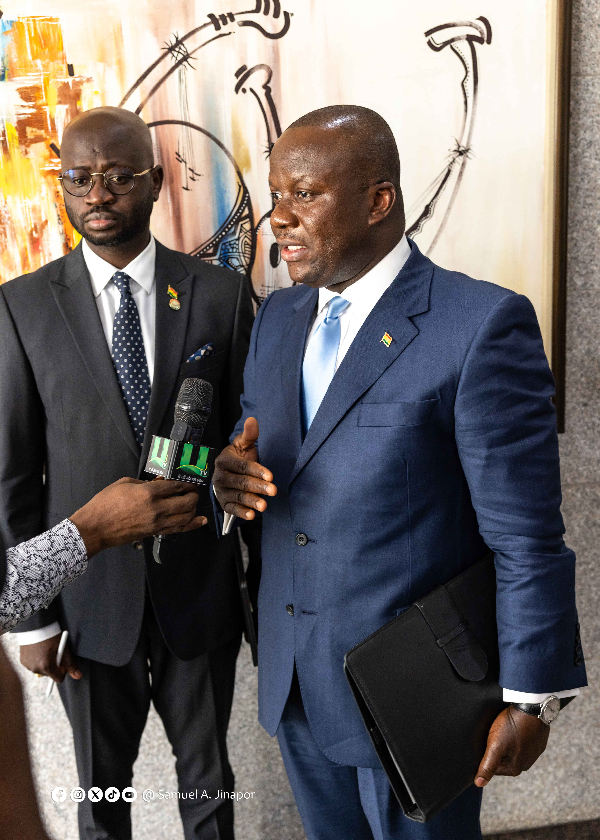
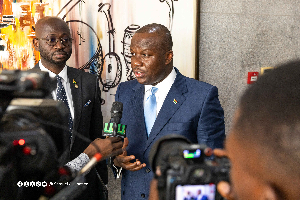 The Minority’s concerns were conveyed during a meeting with the Israeli Ambassador to Ghana
The Minority Caucus in Parliament has strongly condemned the recent missile strike reportedly carried out by Israeli forces on a base of the United Nations Interim Force in Lebanon (UNIFIL) that resulted in critical injuries to Ghanaian peacekeepers, describing the incident as deeply troubling and unacceptable under international law.
The attack occurred on 6 March 2026 when missiles struck the headquarters of the Ghanaian battalion serving under the UNIFIL mission in southern Lebanon.
The incident left two Ghanaian soldiers critically injured, while another peacekeeper reportedly suffered trauma.
The strike also caused significant damage to the base, including the destruction of the Officers’ Mess facility.
The Minority’s concerns were conveyed during a meeting with the Israeli Ambassador to Ghana, where members of the caucus condemned the incident and called for accountability.
They emphasised that Ghanaian troops serving in Lebanon are deployed under a United Nations mandate and are not parties to the hostilities in the region.
Addressing the media after the meeting, the Ranking Member on the Parliamentary Foreign Affairs Committee, Samuel A Jinapor, reaffirmed Ghana’s longstanding reputation in international peacekeeping operations.
He noted that Ghanaian soldiers have consistently demonstrated discipline and dedication in conflict zones across the world.
According to him, the presence of the peacekeepers in Lebanon forms part of a broader international effort to maintain stability, monitor ceasefire arrangements and protect civilian populations in a highly volatile environment.
“These are men and women who have left their homes and families to serve under the mandate of the United Nations in the interest of global peace and security. They are not combatants in the conflict but peacekeepers tasked with maintaining stability and protecting innocent civilians,” he stated.
The Minority stressed that attacks on United Nations peacekeepers undermine international peacekeeping efforts and threaten the credibility of multilateral security frameworks designed to manage conflicts around the world.
Under established principles of international humanitarian law, personnel engaged in peacekeeping missions are entitled to protection given to civilians, and any deliberate attack against them constitutes a serious violation of international law.
The UNIFIL has similarly emphasised that “Any attack on UNIFIL peacekeepers constitutes a grave violation of international humanitarian law and Security Council Resolution 1701 and may amount to a war crime”.
In light of these concerns, the Minority called for a full, independent and transparent investigation into the circumstances surrounding the strike.
They urged the United Nations and relevant international authorities to determine the source of the attack and ensure that those responsible are identified and held accountable.
The Minority also called for strengthened security arrangements around UN peacekeeping installations in Lebanon and renewed efforts by all parties to respect their obligations under international law, including the protection of United Nations personnel and facilities.
The lawmakers further urged the Government of Ghana and the Ghana Armed Forces to continue engaging with the leadership of the United Nations to ensure that adequate protective measures are in place for Ghanaian troops currently deployed in Lebanon and other conflict-affected areas.
Beyond the legal and security implications, the Minority emphasised the human cost of such incidents. They noted that every Ghanaian peacekeeper deployed abroad represents not only Ghana’s dedication to global peace but also families and communities back home whose wellbeing is tied to the safety of those serving overseas.
The caucus commended the courage and professionalism of Ghanaian soldiers serving in peacekeeping missions worldwide and reaffirmed its support for Ghana’s continued contribution to United Nations peacekeeping operations.
However, the Minority stressed that the safety, welfare, and dignity of Ghanaian troops must remain paramount.
They concluded by expressing solidarity with the injured peacekeepers and their families while urging swift international action to establish the full circumstances surrounding the incident and prevent similar occurrences in the future.
Did you know that there is a fort in Ghana that was not built for slavery? And did you know that it is in Elmina? Watch the story about Fort Jago here:
CDABI Ghana applauds SEC’s new regulatory sandbox guidelines for digital finance

The Ghana Chapter of the Chamber of Digital Assets and Blockchain Innovations (CDABI) has welcomed the release of new regulatory guidelines by the Securities and Exchange Commission Ghana aimed at strengthening innovation within the country’s capital market and digital finance space.
In a statement issued in Accra on March 10, 2026, the organisation described the Securities Industry (Regulatory Sandbox Licencing) Guidelines 2026 as a significant milestone for Ghana’s growing virtual asset and digital finance ecosystem.
According to CDABI, the new framework provides a structured pathway that allows innovative capital market products and services to be tested in a controlled regulatory environment. The group believes this approach will help support innovation while ensuring that appropriate safeguards are in place to protect investors and maintain market stability.
The Chamber noted that it was particularly encouraged by the introduction of a dedicated Virtual Asset Sandbox Track, which is linked to the Virtual Asset Service Providers Act, 2025 (Act 1154). It said this move reflects a more mature regulatory structure that recognises the unique risks and opportunities associated with virtual assets.
CDABI said aligning the sandbox framework with the country’s broader virtual asset regulatory regime demonstrates institutional coordination that could help boost investor confidence and attract responsible innovation into Ghana’s financial technology sector.
The organisation also praised the guidelines for incorporating strong consumer protection measures. These include mandatory key performance indicators, risk disclosure requirements and a 30 percent local participation threshold for foreign virtual asset service providers operating in the sandbox environment.
According to the Chamber, these provisions show that regulators have carefully balanced investor protection with the country’s economic interests.
CDABI further commended the SEC for providing a clear and transparent application process for firms seeking to participate in the sandbox programme. The framework outlines a phased approval process and detailed documentation requirements to guide prospective applicants.
As an industry membership and self-regulatory body within Ghana’s digital asset and blockchain sector, CDABI said it remains committed to supporting the successful implementation of the guidelines. The Chamber works closely with the Bank of Ghana, the Securities and Exchange Commission Ghana and the Virtual Assets Regulatory Office to promote a transparent and well-regulated digital asset market.
The organisation said it will continue to assist its member firms and other stakeholders in understanding the sandbox framework and navigating the application process.
CDABI also encouraged eligible firms, including capital market operators, fintech companies and virtual asset service providers, to study the guidelines carefully and engage with the Chamber for guidance.
The Chamber of Digital Assets and Blockchain Innovations Ghana Chapter is an industry association that promotes responsible innovation, regulatory compliance and capacity development within Ghana’s digital asset and blockchain ecosystem and across the wider West African region.
Read the CDABI media statement on SEC Sandbox 2026 here
Read also
Gov’t to publish list of individuals, firms that acquired public lands
Police arrest suspect for defilement, possession of child sexual abuse materials

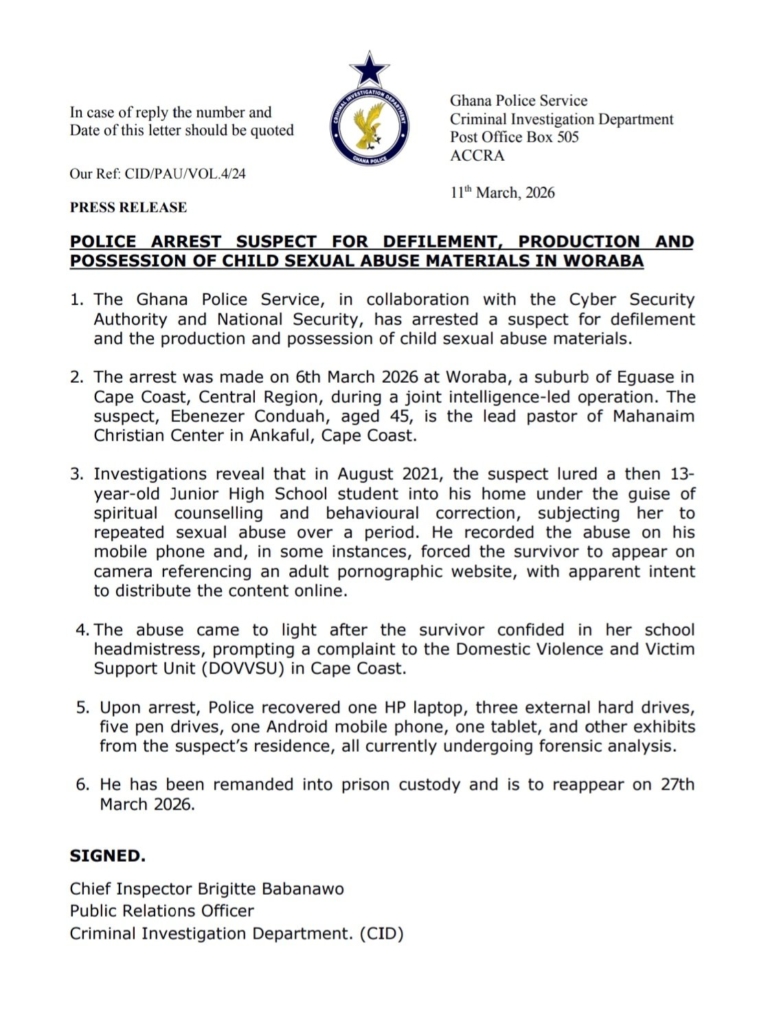
The Ghana Police Service, in collaboration with the Cyber Security Authority and National Security, has arrested a suspect for defilement and the production and possession of child sexual abuse materials.
In a statement issued on Wednesday, the police said the arrest was made on March 6, 2026, at Woraba, a suburb of Eguase in Cape Coast, Central Region, during a joint intelligence-led operation.
It said the suspect, Ebenezer Conduah, aged 45, is the lead pastor of Mahanaim Christian Center in Ankaful, Cape Coast.
According to the police, investigations reveal that in August 2021, Conduah lured a then 13-year-old Junior High School student into his home under the guise of “spiritual counselling and behavioural correction, subjecting her to repeated sexual abuse over a period.”
“He recorded the abuse on his mobile phone and, in some instances, forced the survivor to appear on camera, referencing an adult pornographic website, with apparent intent to distribute the content online,” the statement read.
The police stated that the abuse came to light after the survivor confided in her school headmistress, prompting a complaint to the Domestic Violence and Victim Support Unit (DOVVSU) in Cape Coast.
“Upon arrest, Police recovered one HP laptop, three external hard drives, five pen drives, one Android mobile phone, one tablet, and other exhibits from the suspect’s residence, all currently undergoing forensic analysis.”
The statement added that the suspect has been remanded into prison custody and is to reappear on March 27, 2026.
Read the full statement below
DISCLAIMER: The Views, Comments, Opinions, Contributions and Statements made by Readers and Contributors on this platform do not necessarily represent the views or policy of Multimedia Group Limited.
DISCLAIMER: The Views, Comments, Opinions, Contributions and Statements made by Readers and Contributors on this platform do not necessarily represent the views or policy of Multimedia Group Limited.
Nigeria Sports Community Celebrates SSA Adeboye On His 60th Birthday


The entire Nigerian sports community is agog with songs and dances in celebrations as the SSA to President Bola Tinubu on Grassroots Sports Development, Hon. Anthony Adeyinka Adeboye marks his 60th birthday, today.
READ ALSO: Youth Athletes Appreciation Tour: NSC Honours Young Athletes in Abuja and Asaba, as Tour Continues
When it rains, it pours. And it has been waves and continued outpourings of praises and prayers for with Renowned for the highly regarded and multiple awards winning sports administrator, who is renowned for his resourcefulness, experience and astuteness.
Hon. Adeboye, also fondly called Tripple Authority or Zulu, by friends and admirers, has been variously described as a blessing to grassroots sports development in Nigeria, as well as being a major player in the Renewed Hope Agenda of President Bola Ahmed Tinubu, to use sports, as a veritable tool for youth engagement and empowerment for the socio-economic betterment of Nigeria.
National Coordinator of Friends Of Nigeria Sports (FNS), Chief Diprieye Thompson, was full of praises and prayers for Hon. Adeboye, who he called the ‘Grandmaster’, of grassroots sports in Nigeria. He went ahead to pray that God continue to bless and protect him, for the benefits of Nigeria and humanity.
Ambassador (Rev). Samuel Ikpea thanked God for the life of Adeboye, saying the celebrated sports administrator is a blessing to sports in Nigeria.
Ikpea, who is the National Chairman of Nigeria Football Supporters Club, prayed that God in His infinite mercies continue to guard, guide and bless Adeboye, in all his doings.
New US ambassador to South Africa summoned over ‘undiplomatic remarks’
The South African government has summoned the new US ambassador after he made what they called “undiplomatic” comments about an anti-apartheid chant.
Leo Brent Bozell III, who started in the role last month, caused offence by disagreeing with a legal ruling about the chant Kill The Boer. Some say the chant amounts to hate speech, although the Constitutional Court has ruled previously that it does not.
A formal protest was issued – known as a demarche – by the government, which said it took Bozell’s comments “with a very dim view”.
He issued a clarification on Wednesday and a representative of the foreign ministry later said the ambassador had expressed regret and apologised for the remarks.
On Tuesday, Bozell addressed a business meeting in the coastal town of Hermanus, presenting five issues he said South Africa needed to fix.
One was an argument over the chant. Bozell said he did not care what the courts said – comments that were taken as showing a lack of regard for the country’s legal system.
He later retreated, saying he was ”willing to work with South Africa constructively” and that ”the US government respects the independence of South Africa’s judiciary”.
At a press conference on Wednesday, the South African government announced they had called the US ambassador to Pretoria, to explain his recent undiplomatic remarks.
Ronald Lamola added that the relationship between South Africa and the US was not one-sided. ”South African companies maintain a significant investment in the United States,” Lamola said.
“Mr Bozell expressed his regrets that these comments detracted from any impression that he wanted to work with us constructively,” Zane Dangor, the director-general of the Department of International Relations and Cooperation, said later.
Relations between the US and South Africa have deteriorated since US President Donald Trump took office last year, with the two sides clashing over trade, diplomacy and South Africa’s strategic partnerships.
Trump has been openly critical of South Africa’s President Cyril Ramaphosa’s government, accusing it of failing to protect the country’s white minority and criticising its land reform plans.
The South African government, meanwhile, has criticised the US decision to prioritise refugee applications from white Afrikaners, saying claims of a white genocide have been widely discredited and lack reliable evidence.
Tensions deepened last year when the US imposed the highest tariffs of any African country on South Africa.
More about South Africa from the BBC:

[Getty Images/BBC]
Go to BBCAfrica.com for more news from the African continent.
Follow us on Twitter @BBCAfrica, on Facebook at BBC Africa or on Instagram at bbcafrica
BBC Africa podcasts
Why risk protection is the unsung partner of growth for Ghana’s SMEs, households

In Ghana’s entrepreneurial story, ambition is rarely in short supply. From market women scaling family businesses to tech founders chasing regional relevance, growth is a shared aspiration. Yet, one quiet factor often determines whether that ambition endures or collapses at the first shock: risk protection.
Across households and small and medium-sized enterprises (SMEs), risk is not theoretical. It is the fire outbreak that wipes out inventory overnight, the illness that drains savings built over decades, or the accident that abruptly halts a promising enterprise. Growth without protection, in such an environment, is fragile.
Risk Is Inevitable
Risk is a constant companion to progress. What separates resilient individuals and businesses from those that struggle to recover is not the absence of risk, but preparedness.
For SMEs, especially, the margins for error are thin. A single unexpected event can disrupt cash flow, break supplier relationships, and erode customer trust. Without buffers, recovery often means debt, downsising, or closure. Risk protection, through insurance and structured financial planning, acts as that buffer—absorbing shocks so the business can keep moving.
For individuals and families, the story is similar. Income may be stable today, but health emergencies, accidents, or loss of a breadwinner can instantly reverse years of hard work. Protection ensures that setbacks do not permanently derail life goals such as education, home ownership, or retirement security.
When Delay Becomes Expensive
Many SMEs and households postpone risk protection, seeing it as an optional expense rather than a necessity. This delay is costly.
When risk materialses without preparation, decisions are made under pressure. Assets are sold at undervalued prices, businesses take on expensive short-term loans, and families exhaust savings meant for long-term goals. The cost of recovery often far exceeds what proactive protection would have required.
Risk protection, therefore, is not about pessimism. It is about realism. It acknowledges uncertainty while safeguarding progress.
Risk Protection Enables Growth
While many see insurance as a safety net, its real impact is as a catalyst for growth For SMEs, having adequate cover builds confidence—to invest in new equipment, expand operations, or enter new markets. Lenders and partners are also more willing to engage businesses that demonstrate sound risk management, seeing them as credible and sustainable.
For individuals, protection creates freedom. Knowing that health, income, or assets are safeguarded allows people to pursue opportunities—career changes, entrepreneurship, or investments—without the paralysing fear of total loss.
In this sense, risk protection is not defensive. It is strategic.
Why Protection Matters
Ghana’s economic landscape is dynamic, but also exposed. Climate-related events, urban fire outbreaks, road accidents, and health challenges continue to affect livelihoods. SMEs, which form the backbone of the economy, are particularly vulnerable because many operate informally or with limited reserves.
At the same time, households are navigating rising living costs while supporting extended families. One major shock can ripple across multiple dependents.
These realities make risk protection not just a personal choice, but an economic necessity. A society where businesses and individuals can recover quickly from shocks is one that sustains employment, preserves productivity, and maintains social stability.
Building a Culture of Preparedness
Effective risk protection goes beyond purchasing an insurance policy. It starts with understanding exposure—what is at risk, how likely loss is, and what the consequences would be.
For SMEs, this means asking practical questions:
- What happens if operations stop for a month?
- How would the business survive the loss of a key person?
- Are assets and employees adequately protected?
For individuals, it means reflecting on dependants, income sources, health needs, and long-term goals. Protection should be aligned with life stages, not treated as a one-time decision.
Education and guidance are crucial here. When people understand risk in relatable terms, protection becomes less abstract and more personal.
From Survival to Sustainability
The real value of risk protection lies in what it preserves: confidence, continuity, and dignity. It allows businesses to survive shocks without losing momentum, and families to recover without sacrificing their future.
Ambition drives growth, but resilience sustains it. Growth that lasts is growth that is protected.
For SMEs and individuals alike, the question is no longer whether risk will arise, but whether they are prepared to withstand it. Risk protection is not a footnote to growth — it is the foundation on which sustainable growth is built.
***
Author, Akosua Ansah-Antwi, is the Managing Director of Insurance at the Enterprise Group.
Akosua is a Lawyer from the Ghana Law School and a Chartered Insurer from the Chartered Insurance Institute, UK. With over 22 years of progressive insurance industry experience in various business and team leadership roles, she has a deep knowledge of the insurance value chain and has a proven track record of transforming and leading operational teams to deliver high performance. She is highly skilled at developing and maintaining strong business relationships that drive bottom-line results.
Her extensive technical knowledge and operational strategy experience has contributed significantly to quality assurance in all aspects of the business. Akosua also holds an MSC. in Global Management from University of Salford, UK. and an LLB Degree from the University of Hull, (UK).
DISCLAIMER: The Views, Comments, Opinions, Contributions and Statements made by Readers and Contributors on this platform do not necessarily represent the views or policy of Multimedia Group Limited.
DISCLAIMER: The Views, Comments, Opinions, Contributions and Statements made by Readers and Contributors on this platform do not necessarily represent the views or policy of Multimedia Group Limited.
Ghana to open cannabis licensing for industry and medicine

The Narcotics Control Commission (NACOC) has announced that it will soon be opening applications for licences for the cultivation and management of industrial and medicinal cannabis in Ghana.
The development follows the launch of the national licensing regime on February 26, 2026, by the Minister for the Interior, Muntaka Mohammed-Mubarak, marking a major step in implementing the Narcotics Control Commission Act, 2020 (Act 1019), as amended and Legislative Instrument 2475.
In a statement dated March 11, 2026, the Commission said the new regulatory framework aims to harness the economic and health potential of cannabis while maintaining strict regulatory oversight.
“This milestone marks a strategic shift toward harnessing the economic and health potential of cannabis while maintaining the highest regulatory standards,” the Commission said.
According to the NACOC, the licences will apply strictly to cannabis with a tetrahydrocannabinol (THC) content of not more than 0.3% on a dry weight basis.
The Commission explained that the programme is focused on two main areas: industrial use and medicinal development. Industrial cannabis will support the production of fibre and seeds, while medicinal cannabis will be used in the development of pharmaceutical and health-related products.
The licensing regime provides eleven categories of licences for interested individuals and corporate entities. These include cultivation, processing, breeding, research and development, laboratory and testing, storage, transportation, import, export, sales and distribution, as well as advertising and promotion.
The NACOC added that the application process has been streamlined through a digital platform to make it more accessible to prospective investors.
Applicants are required to visit the Commission’s official portal, complete the online forms and upload the required documentation, after which payment of a non-refundable application fee can be made via Visa card, Mobile Money, or through a payment voucher from NIB Bank.
“The Narcotics Control Commission is dedicated to building a fair, transparent, robust and accountable cannabis industry while safeguarding public health and safety,” the statement said.
Officials say the new framework is expected to promote lawful innovation and contribute to Ghana’s industrial development while positioning the country to participate in the growing global cannabis industry. 

My passion for technology began in childhood – Shatta Wale

Dancehall artiste Shatta Wale has disclosed that long before rising to fame in the music industry, he had a strong interest in technology and computing.
He revealed that his fascination with tech dates back to his childhood.
The musician made the revelation during an interview on the Ekosiisen programme on Asempa FM on Wednesday, March 11, where he spoke about his early experiences with computers and how they shaped some of the entrepreneurial ventures he pursues today.
According to Shatta Wale, his technological curiosity started at a very young age, long before he became known as one of Ghana’s most prominent dancehall performers.
“One thing that I have not put out publicly is my tech background,” he said. “I feel it started when I was a child.”
The artiste recalled that when he was about nine years old, he wrote an entire concept book describing a security gadget he had imagined.
He said the document was shown to his father and has been preserved by him ever since.
“I remember when I was about nine years old, I wrote a whole book for a security gadget and I showed it to my dad, and that book is still with him for safety,” he explained.
Shatta Wale also spoke about how his father’s professional environment exposed him to administrative and technical tasks at a young age.
His father, he noted, was involved in political work during the era of the late former President Jerry John Rawlings and former First Lady Nana Konadu Agyeman-Rawlings.
During that period, he said he frequently helped with basic computer-related tasks despite still being a teenager.
“Growing up, I started fixing my dad’s PCs and doing letterheads,” he said.
The musician explained that by the age of about 14 or 15, he was already designing complementary cards and other materials for professional use.
At a time when computers were still relatively new in Ghana, Shatta Wale said he was fortunate to have early access to one, even though his father did not know how to operate it.
“I had a computer at that time — that was when computers had just started coming up,” he said. “My dad himself didn’t even know how to use it.”
To execute some of his design ideas, he explained that he often visited a printing press in Adabraka, where technicians would help transform his digital templates into printed materials.
“I had this printing press in Adabraka that I always went to, and they would do the templates for me,” he said.
The dancehall artiste noted that these early experiences gradually nurtured his interest in technology and innovation.
Although his career eventually shifted towards music, he believes the foundation he built during those formative years still influences many of the projects he undertakes today.
“It has been in me for a long time,” he explained. “Growing up, until I discovered music, it gave me more interest.”
DISCLAIMER: The Views, Comments, Opinions, Contributions and Statements made by Readers and Contributors on this platform do not necessarily represent the views or policy of Multimedia Group Limited.
DISCLAIMER: The Views, Comments, Opinions, Contributions and Statements made by Readers and Contributors on this platform do not necessarily represent the views or policy of Multimedia Group Limited.
Bok legend Naas Botha swops South Africa for the States
In a move that has surprised the South African rugby community, legendary Springbok flyhalf Naas Botha has reportedly relocated to the United States.
According to various news reports, the 68-year-old icon and his wife, Karen, have settled in Kansas, marking the end of a long and storied chapter in South African broadcasting and coaching.
A family affair
Sources indicate that the primary driver behind the move is family. The couple’s daughters, Gaeby and Lee-Gre, are currently in the US pursuing their own sporting legacies through athletic scholarships for soccer.
Reports suggest that Naas and Karen chose to relocate to be closer to their children as they progress through the American collegiate system.Both daughters have inherited the “Botha athletic gene,” with Karen herself being a former Olympic long jumper and Naas widely regarded as one of the greatest tactical kickers in rugby history.
End of an era in SA
The relocation explains Botha’s recent absence from the public eye in South Africa:After decades as a staple on SuperSport, where his “rugby is not ice-skating” philosophy became legendary, Botha has reportedly stepped away from his regular analyst duties.Local Centurion reports confirmed that he has also concluded his tenure as Director of Rugby at Hoërskool Eldoraigne, a role he had held since late 2023.
Full circle in America
This move serves as a “full circle” moment for Botha. According to sports historians, he first captured American attention in 1983 when he traveled to the US for a high-profile trial as a placekicker for the Dallas Cowboys.
While his professional American football ambitions didn’t materialise then, his return in 2026 sees him back on American soil – this time as a supportive parent and elder statesman of South African sport.While he is officially “retired” from his South African roles, the “Kicking King” isn’t staying away from the field entirely. He is reportedly assisting local sports programmes in Kansas, sharing his world-class expertise in kicking and mental performance with a new generation of American athletes.
VEEP calls for stronger support systems to promote women’s contributions

By Rachel Quartey and Rukayatu Musah
Accra-Vice President Professor Naana Jane Opoku-Agyemang has called for stronger support systems and inclusive policies to recognise and promote the contributions of women across all sectors of national development.
She made the call during a programme organised for women at the Presidency to commemorate International Women’s Day, celebrated globally on March 8.
Professor Opoku-Agyemang emphasised the importance of mentorship, unity and equal opportunities to ensure that women are able to fully develop their talents and contribute meaningfully to national progress. “Recognising the contributions of women in every sphere of society is essential to building a more inclusive and equitable nation,” she said.
The Vice President noted that women play significant roles in both the formal and informal sectors, including unpaid care work and community leadership, which often go unnoticed. She encouraged women in public service to support and mentor one another to help break long-standing barriers. “When women support and uplift one another, we create stronger pathways for leadership and opportunity,” she added.
Professor Opoku-Agyemang also urged institutions to create enabling environments that allow women to realise their full potential and contribute to Ghana’s development.
Meanwhile, Deputy Chief of Staff (Administration), Nana Oye Bampoe Addo, called for stronger collaboration, mentorship and inclusive workplace policies to promote more women into leadership positions. “Creating opportunities and supportive environments will enable more women to break barriers and contribute meaningfully to national development,” she noted.
More stories here
Related
South Africa in New Zealand 2026
March
15 1st Twenty20 international, Mount Maunganui (d/n)
Play starts at 06:15 GMT
17 2nd Twenty20 international, Hamilton (d/n) (06:15 GMT)
20 3rd Twenty20 international, Auckland (d/n) (06:15 GMT)
Advertisement
22 4th Twenty20 international, Wellington (Sky Stadium) (d/n) (06:15 GMT)
25 5th Twenty20 international, Christchurch (d/n) (06:15 GMT)
NB Fixtures and start times are subject to change. The BBC is not responsible for any changes that may be made

HR Focus Africa honours 40 trailblazing Ghanaian women on International Women’s Day

HR and Marketing communication consultancy firm, HR Focus Africa has unveiled “The Give-to-Gain 40,” a prestigious list recognising 40 Ghanaian women making a mark in human resources.
The initiative, launched to coincide with International Women’s Day 2026, highlights women whose work combines professional achievement with mentorship and leadership.
In a statement dated March 10, the firm noted that across boardrooms, institutions, and consulting firms, these women have influenced organisational culture and helped shape the next generation of HR professionals.
“Although these trailblazers come from diverse sectors and professional backgrounds, they share one powerful common thread: an unwavering commitment to building workplaces that empower people to grow, perform, and lead,” HR Focus Africa said in part of the statement.
Among those recognised are Dr. Mrs. Ellen Hagan; founder of L’AINE HR, Angela Anyormisi; Head of HR at the Chartered Institute of Human Resource Management Ghana (CIHRM), Daphne Oppong; Head of HR at UMB Bank and Rachael Appenteng; HR Director at Telecel Ghana.
Other notable figures include Dr. Irene Stella Agyenim-Boateng, Vice Chairman of the Public Services Commission, Dzifa Romano-Mensah; Head of HR at MTN Mobile Money Limited; and Hilda Nimo-Tieku, CEO of Jobberman Ghana.
“The Give-to-Gain 40 stands as both recognition and reflection. It celebrates women who have given generously of their knowledge, time, and leadership to the profession and to the many people they have mentored along the way,” the statement added.
HR Focus Africa said the list aims to inspire other women and professionals in the HR sector to embrace mentorship, invest in human potential, and strengthen organisational development.
Ghana condemns drone incident near Dubai airport that injured two nationals

By Nana Karikari, Senior Global Affairs Correspondent
The government of Ghana has issued a stern condemnation following a drone-related incident near Dubai International Airport that left two Ghanaian nationals injured on Tuesday, March 11, 2026.
Regional Security Escalation
The Ministry of Foreign Affairs confirmed it was notified by United Arab Emirates (UAE) officials of the strike, which occurred in the vicinity of one of the world’s busiest aviation hubs. The incident comes amid a period of heightened regional volatility, following a series of military exchanges across the Gulf that have increasingly threatened civilian infrastructure.
Intensification of the US-Israeli War on Iran
The drone activity in Dubai coincides with what the Pentagon has described as the “most intense day” of US and Israeli strikes against Iran since the conflict began 12 days ago. Under “Operation Epic Fury,” the US military has reportedly struck nearly 2,000 targets, including Iranian naval bases and missile infrastructure. CNN reports that Tehran has responded by directing 60% of its firepower toward US “strategic interests” in neighboring Arab nations. This shift has turned the UAE into a primary target, with over 1,700 projectiles fired toward the country as Iran attempts to inflict “economic pain” on Western allies.
Condition of the Victims
In the wake of these strikes, the two injured Ghanaians are currently receiving medical treatment. Officials have described their condition as stable and not critical. “The Ministry is closely monitoring the situation and will continue to engage with the appropriate authorities as required,” the official statement said, noting that both individuals are expected to make a full recovery. The government added that the victims’ families and loved ones remain in their thoughts and prayers.
Emergency Consular Response
In a swift response, Ghana’s ambassador to the UAE led a delegation from the Abu Dhabi embassy and the Dubai consulate to visit the victims in the hospital. The Foreign Ministry is currently coordinating emergency consular assistance to ensure the victims receive comprehensive care. This proactive outreach reflects a broader strategy by Accra to protect its sizable expatriate workforce in the Middle East during times of crisis.
Missile Strike on UN Base in Lebanon
The drone incident follows a separate, grave security breach involving Ghanaian personnel earlier this month. Four Ghanaian UN peacekeepers are currently recovering after a missile attack struck a UNIFIL base in southern Lebanon. The Ministry of Defense confirmed that the headquarters of the Ghanaian battalion was hit during exchanges of fire, highlighting the growing risks faced by Ghanaian citizens serving in volatile regions.
United Nations Advocacy
Ghana is now actively engaged with international partners on a UN resolution urging immediate de-escalation. Officials indicated the government is supporting consultations aimed at passing a resolution for a cessation of hostilities linked to the broader security situation in the region. Analysts suggest this move signals Ghana’s intent to take a more vocal role in West Asian diplomacy to safeguard its interests and citizens.
Vigilance for the Diaspora
The Ministry has urged the Ghanaian community in the Gulf to remain calm while consular assistance continues. However, the tone from Accra remained cautious regarding future risks.
“Government wishes to use this opportunity to reiterate its call for our nationals in the Gulf region to always exercise heightened vigilance and comply with directives from Ghanaian embassies and local authorities,” the statement concluded.
A Delicate Diplomatic Balance
As Ghana navigates these twin crises in Dubai and Lebanon, the government faces the delicate task of ensuring the safety of its citizens without becoming a party to the complex geopolitical rivalries of the Middle East. By combining direct humanitarian support with a push for a UN-mandated cessation of hostilities, Accra is attempting to fulfill its domestic duty of care through a lens of international peace. The success of this strategy will depend on the continued cooperation of regional powers and the international community’s ability to de-escalate a rapidly widening conflict.
More stories here
Related
‘Move beyond memorisation’ — Dr Cudjoe proposes new approach to maths education

A Ghanaian Science, Technology, Engineering and Mathematics (STEM) educator, Manasseh Cudjoe, has proposed the adoption of a relational and learner-centred approach to improve the teaching and learning of mathematics in basic schools across the country.
The approach, known as Relational Conceptual Change (RCC), emphasises that students learn mathematics more effectively through interaction, dialogue and reflection rather than through the conventional method of memorisation.
Findings from a study conducted by Dr Cudjoe indicate that teachers who participated in a professional development programme gradually shifted from traditional teaching methods that emphasised procedural fluency and textbook exercises to more learner-centred practices.
Using the Common Knowledge Construction Model (CKCM) in the study, the research further revealed that teachers increasingly incorporated classroom discussions, real-life examples and collaborative learning activities into their lessons.
Changes in classroom practice
Teachers who took part in the study also reported changes in the way they assessed students’ understanding.
Instead of relying mainly on end-of-unit tests, they began using questioning, peer dialogue and classroom observation to monitor students’ conceptual development during lessons.
In an interview with the Daily Graphic, Dr Cudjoe explained that conceptual learning does not occur simply when teachers replace students’ “wrong” ideas with correct answers, but when learners gradually reorganise their understanding through engagement with mathematical concepts.
“Conceptual change is not about correcting students. It is about helping them reorganise their relationship with mathematical ideas. When students encounter variation, discuss their thinking and reflect on their reasoning, genuine learning takes place,” he said.
Role of teacher training
Dr Cudjoe stressed that subject-specific professional development was essential in helping teachers adopt the new instructional approach.
According to him, teachers involved in the programme participated in cycles of lesson planning, teaching and reflection, supported by mentoring.
“The Standards-Based Mathematics Curriculum calls for deeper learning, but deeper learning requires a shift in how we approach mathematics teaching. The CKCM gives teachers a practical structure to make that shift,” he said.
Some teachers who participated in the study also reported that introducing lessons with familiar everyday situations encouraged more students to participate actively in classroom discussions.
For instance, students who had previously remained quiet in class became more confident in explaining their reasoning and engaging their peers during group activities.
Reps Prescribe N10m Fine, Jail Term For Dual Party Membership – The Whistler Newspaper
The House of Representatives has passed an amendment to the Electoral Act, 2026 that prescribes a fine of N10m or a two-year jail term (or both) for any Nigerian who knowingly registers or maintains membership in more than one political party at a time.
The amendment inserts new subsections 8 to 10 into Section 77 of the Act, making dual party membership not only void but a criminal offence.
Under the new provision, “a person shall not be registered as a member of more than one political party at the same time.”
Where such dual registration is established, it “shall be void, and the person shall cease to be recognised as a valid member of any political party pending regularisation in accordance with the provisions of this Act and the constitution of the political party concerned.”
The amendment further states that “a person who knowingly registers or maintains membership in more than one political party at the same time commits an offence and is liable on conviction to a fine of N10,000,000 or to imprisonment for a term of two years, or both.”
The amendment also tightens regulations around party membership registers.
Political parties are now mandated to make their membership registers available to the Independent National Electoral Commission (INEC) not later than 21 days before the date fixed for party primaries, congresses or conventions.
Only members whose names appear on the register submitted to INEC shall be eligible to vote and be voted for in party primaries, congresses and conventions.
Political parties are equally barred from using any register other than the one submitted to the electoral umpire for such exercises.
The law further stipulates that any party that fails to submit its membership register within the stipulated timeframe “shall not be eligible to field a candidate for that election.”
Upon registration, each member is entitled to receive a membership card from their political party.
The Committee of the Whole recommended that the amendment to Section 77, as well as the provision recognising political parties as bodies corporate, be retained in the bill.
The legislation, when signed into law, is expected to curb the widespread practice of politicians holding simultaneous membership across multiple parties.

US Ambassador Called to Explain Critical Comments About South Africa Policies

South Africa’s foreign minister has summoned the new American ambassador after he made controversial remarks about the country’s affirmative action policies and diplomatic relationships. The diplomatic tensions reflect the deteriorating relationship between the two nations since President Trump returned to office.
JOHANNESBURG — Diplomatic tensions between the United States and South Africa have escalated after the country’s foreign minister called in America’s new ambassador to account for his controversial public statements, officials announced Wednesday.
Ambassador Leo Brent Bozell III faced official scrutiny following his Tuesday address to a gathering of business executives, where he questioned South Africa’s relationship with Iran and criticized domestic policies promoting opportunities for Black citizens over other racial groups.
The diplomatic relationship between these former allies has deteriorated significantly since Donald Trump resumed the presidency. Current relations have reached their most strained level since apartheid — the system of white minority governance — concluded in 1994. Trump has consistently criticized South Africa’s Black-majority leadership.
Bozell, a conservative political figure selected by Trump, began his duties in Pretoria just last month.
During his initial comprehensive public statements regarding US-South Africa relations since his arrival, Bozell argued that South Africa should modify certain affirmative action policies created to address inequalities stemming from decades of racial separation under apartheid. He drew parallels between these current laws and the discriminatory legislation that oppressed Black South Africans during apartheid.
The ambassador additionally advocated for changes to property legislation that permits the South African government to seize land without providing compensation under specific conditions.
“While South Africa welcomes active public diplomacy and the strengthening of bilateral ties, we emphasize that such engagements must remain consistent with established diplomatic etiquette and international protocols,” Foreign Minister Ronald Lamola stated during a news briefing. “In this regard, we have called in the ambassador of the United States, Ambassador Bozell, to explain his undiplomatic remarks.”
Zane Dangor, the foreign ministry’s director-general, revealed that Bozell held discussions with South African representatives on Tuesday, during which the ambassador “apologized and expressed regret.”
The US government has not yet provided any official response.
Trump’s primary accusation against South Africa’s government centers on his unsubstantiated assertion that white farmers from minority communities face targeted violence and murders. Even certain conservative white Afrikaner organizations have disputed the Trump administration’s allegations.
These claims became the focus of a tense White House encounter between Trump and South African President Cyril Ramaphosa last year, highlighting the deteriorating diplomatic relationship.
Bozell did modify one of his earlier statements on Wednesday. During Tuesday’s business leader gathering, he had criticized a South African judicial decision that determined an apartheid-era slogan used by an extreme-left political organization did not constitute hate speech, despite containing the words “kill the Boer.” The term Boer describes white farmers in South Africa.
The Trump administration has labeled this slogan as anti-white hate speech. Bozell reinforced this position Tuesday, stating: “I am sorry, I don’t care what your courts say, it’s hate speech.” However, he clarified on social media Wednesday that his remarks represented his personal opinion and “the U.S. government respects the independence and findings of South Africa’s judiciary.”
The Trump administration has implemented additional unprecedented measures against South Africa — America’s largest African trading partner — including removing its ambassador from Washington last year and excluding South Africa from Group of 20 meetings held in the United States this year.
46 cars set for Magical Kenya Safari Rally
A 46-car entry list has been confirmed for this year’s World Rally Championship Magical Kenya Safari Rally. This comes after a scrutineering exercise carried out today ahead of tomorrow’s event shakedown in Naivasha. This year’s event will feature a four-day, 218-mile route, which is shorter compared to last year’s total of 239 miles. We have more in this report.
Government urges practical action to back Ghana’s WTO obligation on trade facilitation

Deputy Minister for Trade, Agribusiness and Industry, Sampson Ahi has stressed that Ghana’s obligation to maintain a National Trade Facilitation Committee must translate into concrete results that improve the country’s trading environment.
He mentioned that Ghana is required under Article 23.2 of the World Trade Organization (WTO) Trade Facilitation Agreement to establish and maintain such a committee.
However, he emphasized that fulfilling the requirement should go beyond simply maintaining the structure on paper.
According to him, the committee must function as an active platform where government institutions and private sector actors openly discuss barriers affecting trade and agree on practical solutions to address them.
Mr Ahi explained that the work of the NTFC is critical because inefficiencies within the trade system—such as delays at ports, borders and within clearance processes—create extra costs for importers, lost time for exporters and uncertainty for manufacturers awaiting inputs.
He added that these challenges eventually affect ordinary citizens as the cost of doing business increases.
He further said that government performance is often judged by how efficiently its systems operate, including the speed of goods clearance, predictability of procedures and the level of coordination among institutions involved in trade processes.
Event
Mr Ahi made the remarks at the opening session of the 2026 first-quarter meeting of the National Trade Facilitation Committee (NTFC) at Sogakope in the Volta Region yesterday (March 9).
The three-day event is put together by the Ministry of Trade, Agribusiness and Industry (MoTAI) with support from TradeMark Africa (TMA).

The event has brought together representatives from government agencies and trade stakeholders to develop a clear roadmap and timelines for the development and implementation of Standard Operating Procedures for import and export processes, particularly for perishable goods.
The session will propose and implement mutually agreed and beneficial measures to address import-clearance and export related challenges for perishable goods. It will also validate a concept note for establishing and operationalising the NTFC Secretariat.
In attendance were Programmes Manager for West Africa and AfCFTA, TradeMark Africa, Mr Kwamina Ekremet and Vice Chair of NTFC, Brian Amaglo.
Progress
The Deputy Minister acknowledged that some progress has been made in improving procedures and coordination but admitted that persistent issues such as delays, duplication of processes and uncertainty still hinder smooth trade operations.
“We have come together for a serious national task. The work before this Committee is not routine administrative work. It goes to the heart of how smoothly trade moves in this country, how businesses survive unnecessary delay, and how confidently investors and traders deal with our systems.,” he said.
“So I want to begin by acknowledging the effort that each institution represented here continues to make. Your role in this Committee is not ceremonial. It carries real weight. The decisions taken here can ease pressure on businesses, reduce avoidable cost, and improve the way public institutions respond to the needs of trade,” he stressed.
Bottlenecks
While acknowledging that improvements have been made in certain procedures and institutional coordination, Mr Ahi admitted that many bottlenecks still persist.
He mentioned that the burden of these inefficiencies often falls hardest on smaller operators such as cross-border traders, agro-processors and exporters dealing with time-sensitive goods.
A key focus of the committee’s work this year, he said, will be addressing delays affecting perishable goods.
Traders dealing in fresh produce, fish and meat face severe risks when goods are held up in the clearance process, as delays can quickly destroy product value, damage buyer relationships and lead to financial losses.
Mr Ahi therefore, urged members of the committee — including representatives of ministries, departments, agencies, the private sector and development partners—to focus discussions on concrete outcomes.
He called for honest identification of bottlenecks, clear institutional responsibilities and practical timelines for reforms.
“We should admit that some progress has been made. Certain procedures have improved. Coordination in some areas is better than it was before. There has been movement.”
“But we should also admit, without hesitation, that there are still too many points where delay, duplication and uncertainty remain part of the experience of doing business and usually, those who suffer most are not the biggest operators. It is often the small trader, the cross-border businesswoman, the agro-processor, and the exporter working with time-sensitive goods who carries the heaviest burden when the system does not respond well,” he said.
Concluding his remarks, the Deputy Minister encouraged members to ensure the meeting produces tangible actions that will help remove unnecessary barriers and improve the efficiency of the country’s trading environment, ultimately making trade more reliable and accessible for businesses and citizens alike.
“Let us leave here with clear actions, clear responsibilities and a shared determination to make trade in Ghana faster, fairer and more predictable for the people and businesses who rely on it every day,” he added.
Boosting border efficiency
The Programmes Programmes Manager for West Africa and AfCFTA, TradeMark Africa, Kwamina Ekremet reaffirmed his organization’s commitment to supporting Ghana in improving trade efficiency, reducing the cost of doing business, and expanding regional and international market access.
He expressed appreciation to government institutions, border agencies and private sector partners for their continued commitment to advancing Ghana’s trade facilitation agenda.
He stated that TradeMark Africa has, over the years, collaborated closely with these stakeholders to implement reforms that strengthen border management systems and enhance the effective implementation of the World Trade Organization Trade Facilitation Agreement.
Mr Ekremet explained that the organization’s interest in the discussions stems from its long-standing partnership with Ghana to ensure that trade processes become faster, more transparent and more predictable, especially for sectors critical to economic growth such as agriculture and agro-processing.
According to him, efficiency at the border has become increasingly important in today’s global trading environment. Delays at ports and border points not only raise the cost of doing business but can also lead to major losses for products with limited shelf life, including fresh agricultural produce, seafood and pharmaceuticals.
“Our interest in today’s discussion, therefore, stems from our continued partnership with Ghana to ensure that trade processes become faster, more transparent, and more predictable, particularly for sectors that are critical to economic growth, such as agriculture and agro-processing,” he said.
“In today’s global trading environment, efficiency at the border is critical. Delays not only increase the cost of doing business, but lead to significant losses for products with limited shelf life, such as fresh agricultural produce, seafood, and pharmaceuticals. Thus, the effective implementation of Article 7.9 is essential to help reduce waste times, improve logistics efficiency, and strengthen coordination among border agencies and officials.”
Mr Ekremet therefore emphasized the importance of implementing Article 7.9 of the WTO Trade Facilitation Agreement, which focuses on the expedited handling of perishable goods. He noted that its effective implementation would help reduce waiting times, improve logistics efficiency, and strengthen coordination among border agencies.
‘Adeboye’s Impact on Nigerian Sports Cannot Be Overstated’ — NIS DG Philip Shaibu Celebrates Zulu Authority at 60
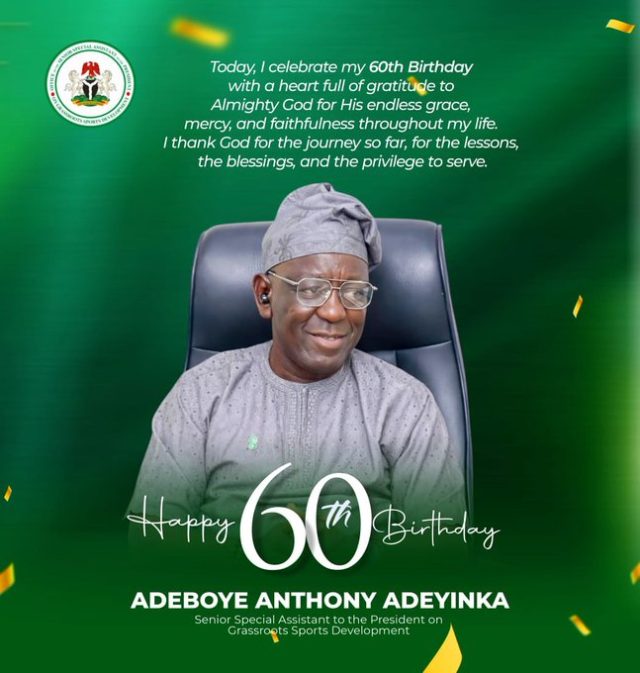
The Director-General and Chief Executive Officer of the National Institute for Sports (NIS), Philip Shaibu, has congratulated Hon. Anthony Adeyinka Adeboye, the Senior Special Assistant to the President on Grassroots Sports Development, as he celebrates his 60th birthday.
READ ALSO: NSC Celebrates SSA to the President on Grassroots Sports Development, Chief Adegboye Adeyinka Anthony
In a goodwill message, Shaibu described Adeboye as a brother, friend, and dedicated sports administrator whose decades of service have significantly contributed to the development of sports in Nigeria.
Shaibu expressed joy that Adeboye, popularly known as “Zulu Authority,” has reached the milestone age of 60 in good health and sound mind.
“It gladdens my heart to see my brother and friend, Hon. Anthony Adeyinka Adeboye, Senior Special Assistant on Grassroots Sports Development to President Bola Ahmed Tinubu, reach this milestone of 60 years in good health and sound mind,” Shaibu said.

The NIS boss noted that Adeboye’s commitment to grassroots sports development and youth empowerment over the years has played a vital role in strengthening Nigeria’s sports ecosystem.
According to him, Adeboye’s immense contributions to sports development earned him the confidence of President Bola Ahmed Tinubu, who appointed him as Senior Special Assistant on Grassroots Sports Development.
“Adeboye’s contributions to the development of sports in Nigeria cannot be overemphasized, considering the decades of service he has dedicated to the sports industry,” Shaibu added.
As Adeboye marks his Diamond Jubilee, Shaibu offered prayers for continued strength, wisdom, and divine guidance for the celebrant.
“I pray that on this auspicious occasion of your Diamond Jubilee, God in His mercies will continue to bless and protect you, and grant you more wisdom to continue contributing towards the growth of Nigerian sports,” he said.
Speaking on behalf of the management and staff of the National Institute for Sports, Shaibu wished the celebrant a joyful birthday and many more years of impactful service.
“On behalf of the Management and Staff of the National Institute for Sports, I say happy birthday to Hon. Anthony Adeyinka Adeboye,” he concluded.
GOC Board Members donate to Ghana Sports Fund

The Minister for Sports and Recreation, Hon. Kofi Iddie Adams has made a historic working visit to the office of the Ghana Olympic Committee at the Olympic House in Accra. In a significant reversal of traditional protocol, the Minister sought to meet the board on their own turf, signaling a deep respect for the autonomy […]
Ghana, South Korea expand partnership in maritime security and investment
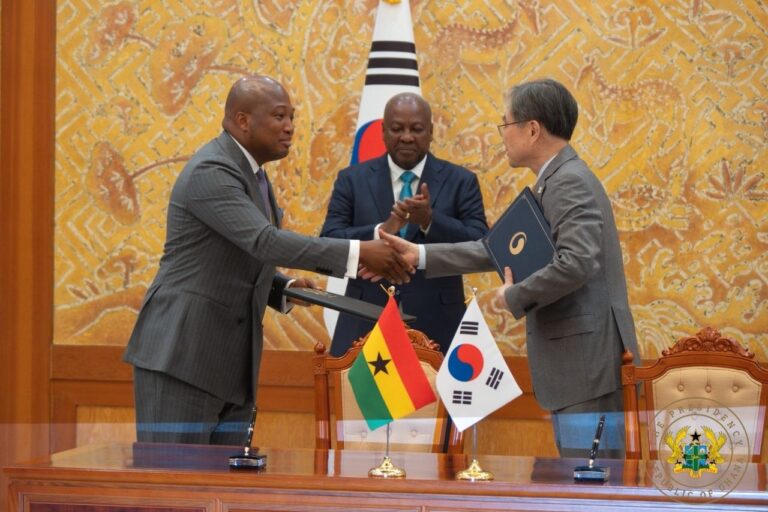
By Celestine Avi
President John Dramani Mahama has held bilateral talks with the President of the Republic of Korea, Lee Jae-myung, in Seoul as part of efforts to strengthen diplomatic and economic relations between Ghana and South Korea.
The high-level meeting focused on expanding cooperation in trade, agriculture, technology, security, and cultural exchange between the two countries.
Three strategic agreements signed
The two leaders also signed three Memoranda of Understanding on maritime security, climate change cooperation, and digital technology.
Historic Ghana–Korea relations

President Mahama highlighted the long-standing ties between Ghana and Korea, noting that both countries share similar historical experiences and a strong commitment to democracy, human rights, and good governance.
He said these shared values have made it easier for the two nations to collaborate on global issues, often taking similar positions at the United Nations and other international forums.
Growing cultural connections
President Mahama also pointed to the growing cultural exchanges between the two countries, particularly among young people.
He noted the increasing popularity of Korean culture in Ghana, including K-pop music and Korean cuisine such as Kimchi, which continue to strengthen people-to-people ties.
Agriculture and food security cooperation
Agriculture featured prominently in the discussions, with President Mahama highlighting Ghana’s cooperation with the Korea International Cooperation Agency under the K-Rice Belt initiative.
The project aims to increase rice production through improved seed varieties and modern farming techniques as Ghana works to reduce rice imports and strengthen food security.
AfCFTA and investment opportunities

President Mahama also emphasized the opportunities presented by the African Continental Free Trade Area, whose secretariat is based in Accra.
He said Ghana is positioning itself as a production and export hub for the African market of more than 1.4 billion people, encouraging Korean companies to take advantage of the trade opportunities.
Value addition in cocoa and minerals
The president reiterated Ghana’s commitment to adding value to its natural resources rather than exporting them in raw form.
He highlighted opportunities in cocoa processing as well as critical minerals such as lithium, nickel, bauxite, manganese, and gold, noting that Korea’s technological expertise could support Ghana’s value-addition agenda.
Maritime security and strategic cooperation
The two leaders also discussed maritime security cooperation, particularly efforts to combat piracy in the Gulf of Guinea.
President Mahama noted that one of the agreements signed focuses on strengthening maritime safety and cooperation between the two countries.
Economic recovery and future cooperation

President Mahama further briefed the Korean leader on Ghana’s economic recovery following recent financial challenges, noting that the country has successfully restructured its debt and is experiencing declining inflation and improving economic stability.
He expressed optimism that Ghana would once again benefit from the Economic Development Cooperation Fund to support key development projects.
Visa waiver and global governance reform
Both countries are also expected to sign a visa waiver agreement for diplomatic and official passport holders to facilitate easier exchanges.
President Mahama concluded by expressing Ghana’s commitment to working with Korea to support reforms at the United Nations aimed at improving global representation and cooperation.
More Stories Here
Related
Nigeria, Ghana, Sign Cooperation Agreement On Search, Rescue Operations – Independent Newspaper Nigeria
9
 Nigeria Civil Aviation Authority (NCAA) and Ghana Civil Aviation Authority have signed a landmark Cooperation Agreement relating to Search and Rescue Operations for Aircraft in Distress between the Republic of Ghana and the Federal Republic of Nigeria.
The Director-General, Civil Aviation, Nigeria Capt. Chris Ona Najomo signed on behalf of the Nigerian government whilst the Director General, Ghana Civil Aviation Authority, Rev Stephen Wilfred Arthur, signed on behalf of the Ghanaian government.
Speaking during the signing ceremony, Capt. Chris Najomo said the MoU strengthens both countries collective aeronautical Search and Rescue (SAR) architecture and deepens operational cooperation between the two sister States.
Search and Rescue Operations for Aircraft in Distress cooperation Nigeria’s DGCA reiterated it is not merely a regulatory requirement under ICAO Annex 12; but a fundamentally a humanitarian obligation and a moral responsibility shared by all States that participate in international civil aviation.
He highlighted that when aircraft are in distress, time becomes the most critical factor in saving lives, and effective cooperation between neighbouring States becomes indispensable.
This as he affirmed the initiative aligns with the aviation development agenda of Festus Keyamo, SAN, the Honourable Minister of Aviation and Aerospace Development, which prioritises strengthened safety oversight, enhanced operational capability, and deeper regional collaboration across Africa’s aviation sector.
According to Capt. Najomo the agreement also operationalises key provisions of ICAO Standards and Recommended Practices (SARPs) by establishing clear procedures for alert notification, coordination between Rescue Coordination Centres, mutual assistance, and collaborative response during search and rescue operations within our respective Search and Rescue Regions.
This, through this framework, Nigeria and Ghana are strengthening mechanisms for rapid response, seamless cross-border coordination, and effective emergency preparedness, ensuring that aircraft and persons in distress within our region can benefit from timely and coordinated rescue efforts.
From a regulatory standpoint, he said this Agreement further reinforces Nigeria’s commitment to fulfilling its international aviation safety obligations, while strengthening our national safety management ecosystem.
It also contributes positively to our preparedness under the ICAO Universal Safety Oversight Audit Programme Continuous Monitoring Approach (USOAP-CMA), particularly in areas related to emergency response planning and State safety oversight, he said.
South Africa summons new US ambassador over criticism as rift deepens
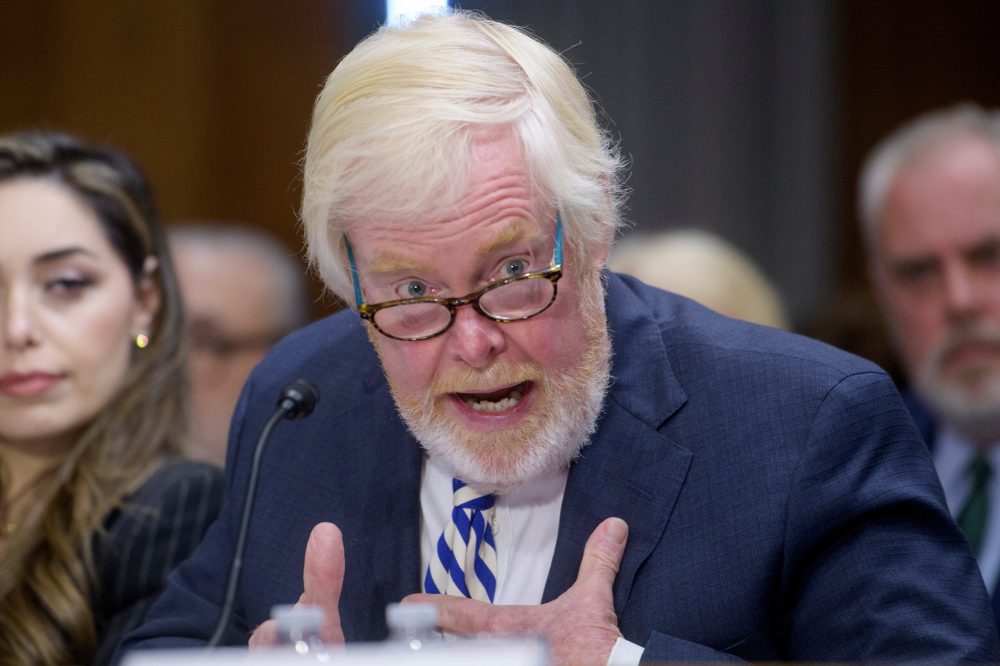
JOHANNESBURG (AP) — The new U.S. ambassador to South Africa has been summoned to explain his criticism, the country’s foreign minister said Wednesday, as a diplomatic rift continues over foreign policy that the Trump administration describes as anti-American and domestic policies it calls anti-white.
Ambassador Leo Brent Bozell III was summoned after speaking at a meeting of business leaders on Tuesday, where he challenged the South African government over its diplomatic ties with Iran and its affirmative action laws that advance opportunities for Black people ahead of other races.
The rift has grown between the former allies since President Donald Trump returned to office. Ties have plunged to their lowest point since the end of apartheid, or white minority rule, in 1994. Trump has been critical of South Africa’s Black-led government.
Bozell, a conservative activist appointed by Trump, took up his role in Pretoria last month.
In his first detailed public comments on U.S.-South Africa ties since arriving, Bozell said South Africa should change some of its affirmative action laws that were designed to redress the inequalities of South Africa’s decades of racial segregation under apartheid. He compared the laws to race laws that oppressed Black people during apartheid.
Bozell also called for changing a land law that allows the South African government to expropriate land without compensation in some circumstances.
“While South Africa welcomes active public diplomacy and the strengthening of bilateral ties, we emphasize that such engagements must remain consistent with established diplomatic etiquette and international protocols,” Foreign Minister Ronald Lamola told a press conference. “In this regard, we have called in the ambassador of the United States, Ambassador Bozell, to explain his undiplomatic remarks.”
Foreign ministry director-general Zane Dangor said Bozell met with South African officials on Tuesday and the ambassador “apologized and expressed regret.”
There was no immediate comment from the U.S. government.
Trump’s central allegation against the South African government is his baseless claim that minority white farmers are being targeted in a campaign of violence and killings. Even some conservative white Afrikaner groups denied the Trump administration’s claims.
Trump confronted South African President Cyril Ramaphosa with those claims at a dramatic White House meeting last year that underlined the strained relationship.
Bozell did backtrack on one comment earlier Wednesday. At the meeting of business leaders, he criticized a South African court ruling that decided an apartheid-era chant repeated by a far-left political party was not hate speech, despite it having the phrase “kill the Boer.” Boer refers to a white farmer in South Africa.
The Trump administration has branded the chant as anti-white hate speech. Bozell reiterated that view Tuesday: “I am sorry, I don’t care what your courts say, it’s hate speech.” He said in an X post Wednesday his comment reflected his personal view and “the U.S. government respects the independence and findings of South Africa’s judiciary.”
The Trump administration has taken other extraordinary steps against South Africa — its biggest trading partner in Africa — including expelling its ambassador to Washington last year and barring South Africa from meetings of the Group of 20 rich and developing nations in the U.S. this year.
___
Imray reported from Cape Town, South Africa.
___
AP Africa news:
Brought to you by www.srnnews.com
Sports Minister backs GOC leadership in drive to develop Ghana sports

The Minister for Sports and Recreation, Kofi Adams, has expressed confidence in the leadership of the Ghana Olympic Committee, pledging the government’s continued collaboration with the body to advance sports development in the country.
The minister made the remarks during a working visit to the GOC headquarters at Olympic House in Accra, where he met with officials of the Olympic governing body to discuss key issues affecting Ghanaian sports.
During the meeting, Adams commended the GOC for its role in preparing Ghanaian athletes for international competitions and promoting sports development across the country. He reaffirmed the ministry’s commitment to supporting the committee’s initiatives, including athlete welfare and preparation for major global tournaments.

“I am confident in the leadership of the Ghana Olympic Committee and we will continue to collaborate with them for the development of sports in Ghana,” the minister stated.
He also assured the GOC that the ministry remains ready to provide the necessary resources to support athletes, particularly those currently benefiting from Olympic Scholarship programmes.
Adams further addressed the long-standing OlympAfrica recreational and training centre project at Amasaman, which has reportedly faced encroachment challenges.
“We are aware of your long-standing recreational and training centre project at Amasaman which is being encroached by squatters. I am happy to say that the Ministry of Sports and Recreation will work with the GOC on the OlympAfrica Project at Amasaman to ensure it is completed for use,” he added.
GOC President Richard Akpokavie, speaking on behalf of the board, briefed the minister on the committee’s programmes, achievements and ongoing development initiatives.

He highlighted preparations for upcoming international competitions including the Commonwealth Games and the Youth Olympic Games, as well as efforts to strengthen athlete support systems.
Akpokavie thanked the minister for his continued engagement with the Olympic movement and reaffirmed the GOC’s commitment to working closely with the ministry to strengthen sports development in Ghana.
The meeting also touched on key challenges facing the sector, including funding, infrastructure and athlete support, with both sides agreeing to intensify collaboration to address them.
The visit concluded with a shared commitment between the ministry and the GOC to work together to drive Ghana’s sporting ambitions forward.
MTN launches nationwide self-service SIM swap in Ghana

MTN Ghana has officially introduced its nationwide self-service SIM swap solution, marking a significant milestone in customer convenience and digital transformation.
This new service empowers customers to seamlessly swap their SIM cards on their own using the MTN Mobile App or a dedicated USSD short code, eliminating the need to visit service centres or submit online requests for assistance.
Until now, customers who lost or damaged their SIM cards were required to travel to service centres or initiate requests online, leading to long queues and delays. MTN service centres process an average of over 250,000 SIM swaps each month.
MTN’s self-service SIM swap is expected to reduce reliance on agent-assisted services, both in-store and online, and deliver a secure, consistent, and convenient experience for customers across the country.
From October 2025 to January 2026, over 18,000 customers successfully completed SIM swaps during a pilot phase conducted via the mobile app and USSD channel, with overwhelmingly positive feedback.
The General Manager for MTN Northern Business District, Nii Adotey Mingle, speaking at the event, highlighted the core objectives of the initiative, emphasising the need to provide greater convenience, enhance security, and promote customer independence.
“This initiative seeks to reduce reliance on agent-assisted SIM cards, both in-store and online, deliver a secure and consistent experience for customers and prevent customers from travelling and queuing for SIM swaps,” he stated.
He further highlighted the security of the service, noting that a key feature of the self-service platform is advanced facial verification technology, ensuring that only the rightful SIM owner can authorise a swap, thereby significantly bolstering security.
“Every human being has a unique face, so using your face means that this gives you comfort that the system is very safe. We are also dealing with national identification behind the scenes, making it trustworthy and safe,” he added.
Municipal Chief Executive for Old Tafo, Abubakar Saddick, commended MTN for the initiative and called for continued collaboration between the telecommunications sector and government to deliver secure and reliable services for all Ghanaians.
“I commend MTN for introducing this independent channel which prioritises accessibility, stability, and proficiency”. “I would like to take this opportunity to encourage continued collaboration between telecommunications companies, regulators, and government institutions to ensure that digital services remain secure, reliable, and inclusive for all citizens,” he said.
The launch in the Ashanti Region brought together MTN leadership, representatives from regulatory bodies, branch managers, and staff, underscoring the importance of the initiative.
DISCLAIMER: The Views, Comments, Opinions, Contributions and Statements made by Readers and Contributors on this platform do not necessarily represent the views or policy of Multimedia Group Limited.
DISCLAIMER: The Views, Comments, Opinions, Contributions and Statements made by Readers and Contributors on this platform do not necessarily represent the views or policy of Multimedia Group Limited.
Leonard Owusu eyes big season with Fredrikstad after sealing return – Ghana Latest Football News, Live Scores, Results

Leonard Owusu says Fredrikstad FK still has âunfinished business’ after completing his return to the Norwegian club ahead of the new campaign, with the Ghanaian midfielder confident the side can achieve more this season.
The 28 year old has rejoined Fredrikstad after a successful spell last year when he featured prominently in midfield during a loan stint from Serbian giants FK Partizan.
His energetic displays and leadership quickly made him an important figure in the squad as the club pushed through a competitive campaign.
Owusu made 35 appearances across competitions and scored twice during that period, delivering several decisive moments that strengthened his bond with the club’s supporters.
Among the standout contributions were a late equaliser against HamKam and a derby winner away to Sarpsborg 08, performances that elevated him to fan favourite status.
Now back permanently in the red and white colours, the midfielder says his ambition is to help the team build on last season’s progress.
“It feels so right to be here. Ever since I arrived, I have been treated well and respected by everyone in this city, even though I was only on loan. Fredrikstad and I have unfinished business. I believe we can achieve a lot this year.”
Fredrikstad will hope Owusu’s return provides continuity and leadership as the club prepares for the upcoming season in the Eliteserien.
South Africa deploys troops in streets to tackle crime | The Canberra Times
South Africa has deployed the army several times in recent years to help with outbursts of crime and disorder, including in 2021, when riots and looting in two provinces sparked by the imprisonment of former president Jacob Zuma and frustrations over COVID-19 lockdowns led to the deaths of more than 350 people.
Kenya and Japan join forces to supercharge local medical manufacturing
Wednesday 11th March, 2026 08:54 PM|

Kenya and Japan are intensifying collaboration to boost local production of medical commodities, research capacity, and training of health professionals.
In a statement shared on X on Wednesday, March 11, 2026, Ministry of Health said this partnership aims to make Kenya’s health sector more self-reliant and accessible to all citizens.
“Kenya and Japan are strengthening cooperation in health technology transfer, local manufacturing of medical commodities, research and development, and advanced training for health professionals, in a partnership aimed at building a more self-reliant health sector and expanding access to essential health technologies,” the statement reads.
Principal Secretary for Medical Services, Ouma Oluga, explained that increasing local production of health commodities is a key component of the Government’s Bottom-Up Economic Transformation Agenda. The move also supports the national commitment to Universal Health Coverage, ensuring healthcare is affordable and accessible for all Kenyans.

“Speaking in Nairobi, Principal Secretary for Medical Services Ouma Oluga said Kenya’s push to increase local production of health commodities aligns with the Government’s Bottom-Up Economic Transformation Agenda (BETA) and the national commitment to Universal Health Coverage (UHC), which seeks to ensure all citizens access quality healthcare services without financial hardship,” the statement reads.
Oluga made the remarks while hosting the Second Kenya–Japan Health Sector Joint Technical Working Group Meeting at Afya House. Officials from the Ministry of Health and a Japanese delegation, led by Ambassador Matsuura Hiroshi, attended the meeting to review progress and plan joint initiatives.
“Oluga made the remarks while hosting the Second Kenya–Japan Health Sector Joint Technical Working Group Meeting at Afya House, which brought together officials from the Ministry of Health and a Japanese delegation led by Ambassador Matsuura Hiroshi,” the statement reads.
The discussions highlighted Kenya’s growing health innovation ecosystem, including institutions supporting research, intellectual property protection, and technology development. Key institutions such as the Kenya Medical Research Institute (KEMRI) are driving new health technologies, while the government invests in vaccine technology transfer through Kenya BioVax Institute and the global mRNA Technology Transfer Programme.

“Discussions highlighted Kenya’s growing health innovation ecosystem, including institutions supporting research, intellectual property protection, and technology development. The Kenya Medical Research Institute (KEMRI) continues to play a key role in advancing health research and developing new technologies, while the Government is also investing in vaccine technology transfer through the Kenya BioVax Institute and participating in the global mRNA Technology Transfer Programme coordinated by the World Health Organization and the Medicines Patent Pool,” the statement reads.
Officials noted that the partnership will strengthen Kenya’s health system, enhance regional health security, and support the development of resilient pharmaceutical manufacturing capacity. Both countries also committed to deepening collaboration through research, specialised training, and technology transfer.
“The partnership is expected to strengthen Kenya’s health system and contribute to regional health security across Africa. Both countries reaffirmed their commitment to deepen collaboration through joint research, specialised training, and expanded pharmaceutical manufacturing capacity to support resilient and sustainable health systems,” the statement reads.
GOC board members donate to Ghana Sports Fund during minister’s visit – Ghana Latest Football News, Live Scores, Results
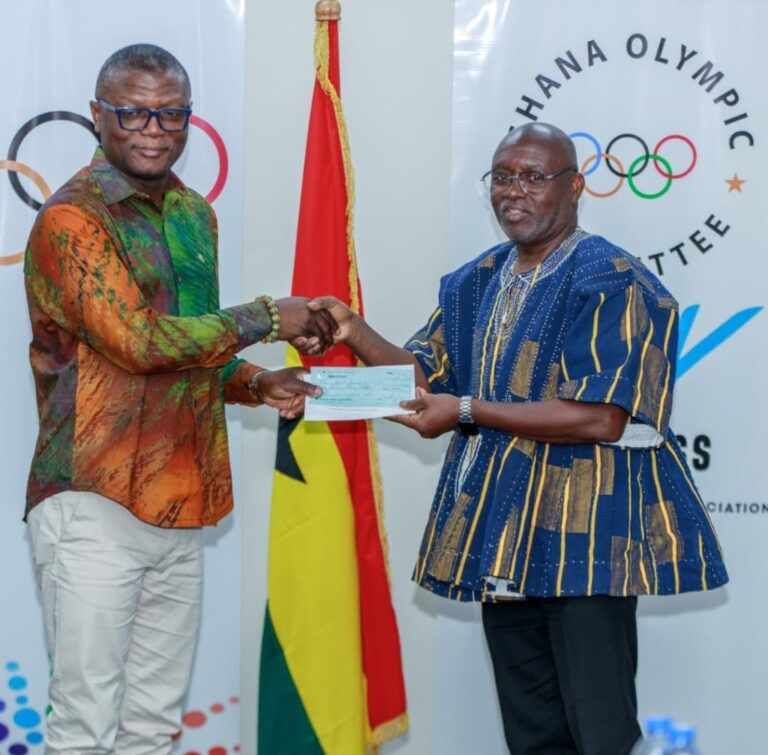
Board members of the Ghana Olympic Committee (GOC) have donated to the newly established Ghana Sports Fund during a working visit by the Minister for Sports and Recreation, Kofi Adams, to the Olympic House in Accra.
The visit marked a rare move by the minister, who chose to meet the GOC leadership at their offices rather than host them at the ministry, a gesture seen as respect for the autonomy of the Olympic movement.
The GOC delegation was led by its president, Richard Akpokavie, who welcomed the government team and held discussions on preparations for major international competitions, including the 2026 Commonwealth Games.
During the meeting, both sides stressed the need for long-term investment in athlete development and preparation, moving away from the practice of last-minute planning for international tournaments.
The highlight of the engagement came when GOC board members announced a personal donation to support the Ghana Sports Fund. The contribution, presented during the meeting, was intended to encourage wider support for the initiative from the private sector.
Akpokavie said the fund would help reduce Ghana’s heavy reliance on government funding and provide greater support for a wider range of sporting disciplines.
Minister Adams welcomed the gesture and assured that the fund would be managed with transparency to support infrastructure development, athlete welfare and grassroots talent identification.
The path to gender equality requires collaboration — Vice President
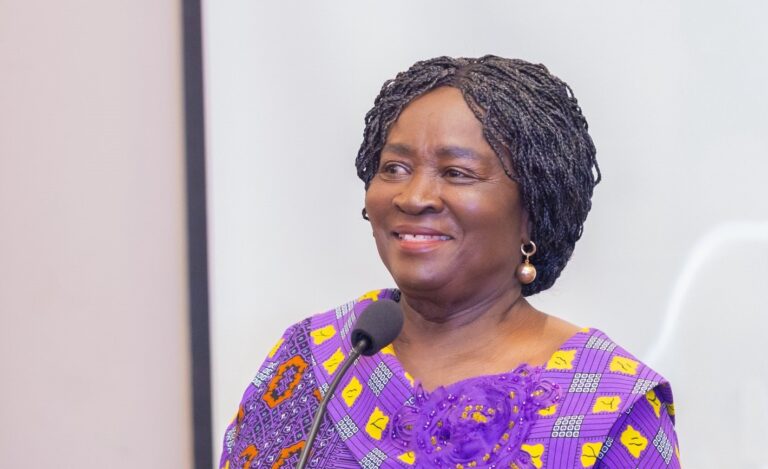
By Iddi Yire, GNA
Accra, March 11, GNA – Vice President Professor Jane Naana Opoku-Agyemang has stated that the path to gender equality requires collaboration, dedication and courage.
She reiterated that it calls for men and women to break down barriers, challenge stereotypes, and create opportunities for others.
The Vice President said this in her opening remarks during a day’s workshop organised by the Presidency to mark this year’s International Women’s Day on the theme: “Rights, Justice, Action For ALL Women and Girls”.
“As we commemorate this important day, let us remember our shared responsibility to build workplaces where equity, respect, dignity, and opportunity are a reality for every woman, and let me add, for every man too,” she said.
She added: “You don’t agree to that, do you? We can continue to build institutions and a nation where talent, competence, and leadership are recognized and rewarded without limitation.”
Vice President Prof Opoku-Agyemang said, “when they say the workplace, let them not only think of those of them in the offices with predictable schedules, salaries and benefits.
“The vast majority of our women don’t have this. They are also in the workplace in the markets. They are in the workplace on the streets. They are in the workplace in their homes. They also matter. In all of this, let us always be mindful that it can never be about us only
“And when we have voices, let us use the voices in the interest of those who don’t have the voices. I’ve never heard them go on strike because nobody will listen to them. And yet they have needs.”
Vice President Prof Opoku-Agyemang said she used to tell her students that, the day they went on strike, in the interest of their siblings, cousins, the people in their communities, who did not have it as good as they were having, she would join them.
She said: “In fact, I’ll sponsor the brass band. Because you have been telling me that you are using your privilege in the interest of those who don’t have it. Your cousins at home don’t have anything, you know, do they go on strike?
“I’m not saying that a strike is a reason or that I’m calling for strikes. I’m just saying that we should use our voice not only for ourselves, but also for those who don’t have voices. That’s all the point I’m trying to make on the issue of the workplace.”
She said they were at the workshop to celebrate their progress as a nation, but they were also there to reflect on the work that remains.
She reiterated that International Women’s Day wwas a reminder that a nation’s advancement could not be separated from the advancement of its women.
Vice President Prof Opoku-Agyemang said across their communities, institutions, and workplaces, women exhibit resilience, innovation, professionalism, and leadership.
She said they were educators, policy makers, entrepreneurs, caregivers, administrators, and change makers.
She added that their dedication and service contribute to inclusivity, dynamism, and prosperity.
She said the theme for this year’s International Women’s Day challenges them to go beyond words and focus on real, measurable actions that promote equity and create supportive environments where women can grow, lead, and succeed.
“At the presidency, we recognise the vital importance of promoting gender equity within our institutions and throughout the broader public service,” Vice President Prof Opoku-Agyemang said.
She noted that by backing inclusive policies, promoting women’s leadership, and making sure e
GNA
Edited by Benjamin Mensah
South Africa summons US ambassador after controversial remarks about ‘Kill the Boer’ chant
South Africa’s Department of International Relations and Cooperation has summoned the United States ambassador to South Africa, Leo Brent Bozell III, following controversial remarks he made about the chant “Kill the Boer” and broader issues affecting relations between Pretoria and Washington.
The move comes after Bozell stated that the chant should be regarded as hate speech. He made the remarks while delivering a keynote address at an event in Hermanus in the Western Cape. His comments have since sparked political backlash and renewed debate about diplomatic conduct and the role of foreign representatives in domestic political matters.
Speaking during a media briefing on Wednesday, Minister of International Relations and Cooperation Ronald Lamola said South Africa supports active public diplomacy and continued engagement with international partners. However, he stressed that these engagements must respect diplomatic norms and international protocol.
Lamola confirmed that the government had asked the ambassador to explain statements that it believes crossed the line of acceptable diplomatic conduct.
“We have called in the ambassador of the United States, Ambassador Bozell, to explain remarks that we regard as undiplomatic,” Lamola said.
The minister added that the ambassador had previously visited several historical sites across South Africa where he engaged with the country’s past and the legacy of apartheid. These visits included the Apartheid Museum and the District Six Museum.
“In those engagements and visits to various sites in South Africa he acknowledged that, given our history, South Africa requires redress and that he is willing to work with us constructively in this regard,” Lamola said.
At the centre of the controversy is the chant “Kill the Boer,” which has been the subject of legal and political debate for several years. Bozell argued during his speech that the chant should be considered hate speech regardless of how South African courts have interpreted it.
“I am sorry. I do not care what your courts say. It is hate speech,” he said.
His comments have drawn criticism from the Economic Freedom Fighters, which has accused the ambassador of undermining South Africa’s judiciary. The party has called on Mandisa Maya to condemn what it describes as attacks on the courts by the US envoy.
The EFF said Bozell’s remarks ignore the legal findings of several South African courts that have previously ruled on the chant. According to the party, the Equality Court, the Supreme Court of Appeal and the Constitutional Court of South Africa have examined the chant and determined that it forms part of the country’s historical and political context.
The courts found that the chant is linked to the history of resistance during the struggle against apartheid and should not be interpreted as a literal call for violence when used in its political context.
The EFF said the ambassador’s remarks reflect what it described as an irresponsible right wing narrative that seeks to undermine the authority of South Africa’s legal institutions.
“Bozell has joined a right wing chorus in South Africa that has undermined judgments by the Equality Court, the Supreme Court of Appeal and the Constitutional Court which have affirmed that the liberation chant ‘Kill the Boer, Kill the Farmer’ constitutes free speech,” the party said.
The party added that the courts had made it clear that the chant must be understood within the context of South Africa’s struggle history and not as a direct incitement to violence.
The EFF also warned that the ambassador’s comments could set a concerning precedent in which a foreign government openly questions the legitimacy of South Africa’s judiciary.
“Bozell’s comments are a direct insult to South Africa’s judicial system and constitute a worrying example of a foreign nation disregarding the integrity and standing of our courts,” the party said.
The political party also raised concerns that economic pressure could be used to influence South Africa’s legal system. It warned that linking threats of disinvestment with criticism of court rulings could be interpreted as an attempt to intimidate judges.
“If the US ambassador is not called into order for linking threats of disinvestment with a disregard for our courts and legislation, it raises concern about whether such tactics could be used to intimidate our courts and judges into making decisions that align with the domestic and foreign policy demands of the United States,” the party said.
The EFF has called for diplomatic consequences and reiterated its position that Bozell should be expelled and declared persona non grata in South Africa.
The ambassador’s remarks also come amid broader tensions between South Africa and the United States over foreign policy and domestic legislation. Bozell suggested that Washington is losing patience with the South African government because it has not addressed several issues that the United States has raised.
Among the matters reportedly raised are calls for South Africa to reconsider the Expropriation Act and its policies related to broad based black economic empowerment. The United States has also urged South Africa to condemn the “Kill the Boer” chant and to prioritise investigations into farm murders to protect white farmers.
In addition, Washington has reportedly called for South Africa to adopt a more neutral stance in global affairs. It is also understood that the United States would like South Africa to reconsider its participation in BRICS and withdraw its case against Israel at the International Court of Justice.
Bozell also criticised South Africa’s message of condolence after Iranian leader Ali Khamenei was reportedly killed in joint United States and Israeli strikes. Referring to the diplomatic message, Bozell said the gesture reflected poorly on relations between the two countries.
Meanwhile Fikile Mbalula has pushed back against suggestions that the United States could pressure South Africa economically.
Mbalula said threats that major American companies may withdraw investment from the country are unfounded. He pointed to the continued presence of multinational corporations operating in South Africa as evidence of investor confidence.
According to Mbalula, companies such as Amazon, Google, Visa and Microsoft remain active in the country.
He also noted that Walmart recently expanded its presence in South Africa, demonstrating that international investors continue to view the country as a viable destination for business.
Mbalula said South Africa remains open for business and committed to maintaining strong economic ties with partners around the world.
He added that the country believes in a global system where power is shared among several international partners and where nations work together through institutions that uphold international law and cooperation.