1.2 C
London
Saturday, January 10, 2026
Home Blog Page 52

Vice Pres urges students to be disciplined

0

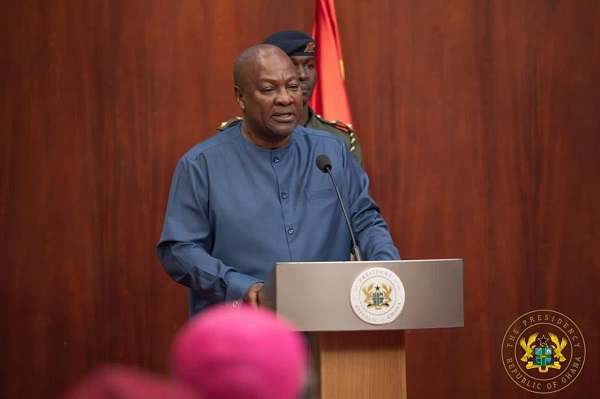
THE Vice President of Ghana, Professor Naana Jane Opoku-Agyemang, has urged students to shun dishonesty and commit themselves to disciplined learning as future leaders of Ghana.

She made the call at the 2026 Pentecost Students and Associates (PENSA) Gospel and Power Conference, which brought together thousands of young Christians from across the country. The atmosphere at the event was both vibrant and reverent, with participants engaging in songs of praise and worship that reflected the unity and diversity of the youth of the Church of Pentecost, the organisers of the conference.

Addressing the gathering, Professor Opoku-Agyemang encouraged the students to see themselves as agents of positive change in society and to pursue ambition guided by strong values. She stressed that habits formed in school often shape future professional conduct and warned against academic dishonesty, describing it as an early sign of deeper problems.

She noted that university education goes beyond the acquisition of knowledge and must also focus on character building. According to her, academic life is filled with moments of exhaustion, confusion and self-doubt, but these challenges should be seen as part of the training that prepares students for excellence, not as setbacks.

The Vice President cautioned that shortcuts taken in school can easily carry over into working life. She explained that a system reveals its values not only by what it promotes but also by what it tolerates, adding that dishonesty in academics should never be treated as a minor issue.

She also encouraged students to recognise leadership opportunities in their everyday campus activities. “How students handle group work, manage responsibilities and treat others, especially the vulnerable,” she said, were all early signs of leadership. She advised those entrusted with roles such as managing dues or coordinating activities to always prioritise fairness and inclusion.

Professor Opoku-Agyemang highlighted the importance of using education, whether intellectual, moral or spiritual, to uplift others. She urged students to be mindful of the less privileged, persons with disabilities and those facing abuse, reminding them that supporting others was a meaningful way of serving God and society.

Again, she addressed the issue of ambition, saying it was not dangerous on its own and encouraged students to turn ideas into businesses, research into practical solutions and skills into value, noting that true resilience is built through discipline and purposeful learning.

The Vice President shared common traits she has observed among successful leaders, including the willingness to learn from others, respect for time, openness to constructive challenge and an understanding that habits have long-term consequences.

Moreover, speaking directly to young women at the conference, Professor Opoku-Agyemang reminded them that their positions and opportunities are not accidental. She then urged them not to be discouraged by unfair standards or uneven expectations, stressing that leadership does not require sacrificing one’s beliefs or integrity for acceptance.

BY AGNES OPOKU SARPONG
Dr Ayine cautions NDC against early flagbearer jostling

0

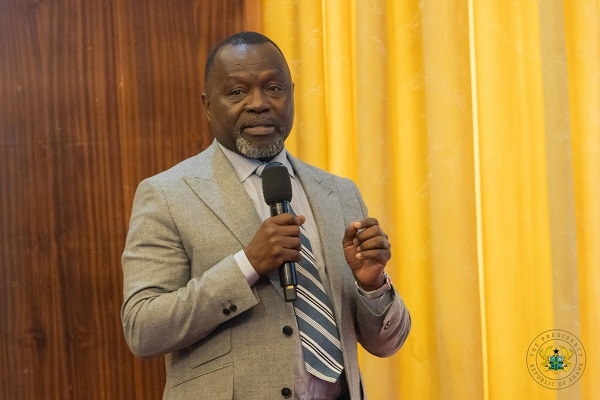
Dr Dominic Akuritinga Ayine is the Attorney General and Minister of Justice Dr Dominic Akuritinga Ayine is the Attorney General and Minister of Justice

The Attorney General and Minister of Justice, Dr Dominic Akuritinga Ayine, has cautioned members of National Democratic Congress (NDC) against engaging in early internal maneuvering over the party’s future flagbearership, describing it as a needless distraction from national development.

According to him, the immediate priority of government officials and party members should be the effective delivery of governance programmes, rather than premature debates about succession.

Speaking in an interview on Bolgatanga-based A1 Radio, Dr Ayine stressed that President John Dramani Mahama has served only one year of his mandate and should be given the space to focus fully on governing without political speculations.

Ghana Federation of Labour warns NDC against premature campaigns

“I am more interested in working to be a good Attorney General and serving the people of this country. I am not very keen on who succeeds the president. In fact, it is not something I think about regularly because I believe it is a distraction. The president has done just one year. We should allow him to continue working,” he said.

Dr Ayine explained that discussions about succession should only arise at the appropriate time, after the party has concluded its internal elections at the branch, constituency, regional and national levels.

He further urged party members to concentrate on policies and programmes that improve the welfare of Ghanaians, rather than speculating about who may succeed President Mahama in the future.

“We should be more interested in the welfare-enhancing programmes of the government than in who is going to succeed His Excellency,” he emphasised.

MRA/AE

Meanwhile, watch President John Dramani Mahama’s 2026 full New Year Message below:

‘I Dey Go University Soon’

0

Popular Nigerian TikToker and online streamer, Habeeb Hamzat, Peller, has expressed regret over his inability to speak fluent English, revealing plans to return to school to improve himself academically.

Naija News reports that Peller made the disclosure during a recent live-stream session with fellow content creator, Enzo, in a conversation that has since gone viral on social media.

During the live interaction, Enzo asked Peller to formally introduce himself in English.

“Just tell them in English that your name is Peller,” Enzo requested.

However, the TikTok star declined, admitting his discomfort with the language. “In English? E no go go,” Peller responded.

The conversation took a humorous turn when Enzo teased Peller about a possible meeting with popular internet personality, Speed.

“So you’re telling me that if Speed comes, you are not going to talk to him? Because he just called me now that he’s coming tomorrow,” Enzo said.

Peller, however, doubled down on his concern, stating that his limited English would prevent him from engaging confidently.

“I no go even see am. My English is very bad, but I dey go university soon to study Arts,” he said.

Peller’s comment confirmed earlier reports that the content creator had decided to return to school, with plans to pursue a university education in the Arts.

Naija News reports that Peller’s decision to resume his education came shortly after his reported breakup with his older girlfriend, Jarvis.

The development sparked widespread discussions online, with many of his fans praising his decision to pursue personal growth despite his success as a social media influencer.

Peller’s candid admission has continued to draw mixed reactions, with supporters applauding his honesty and determination to improve himself, while others see it as a reminder of the importance of education in the digital age.

Watch the video clip below.

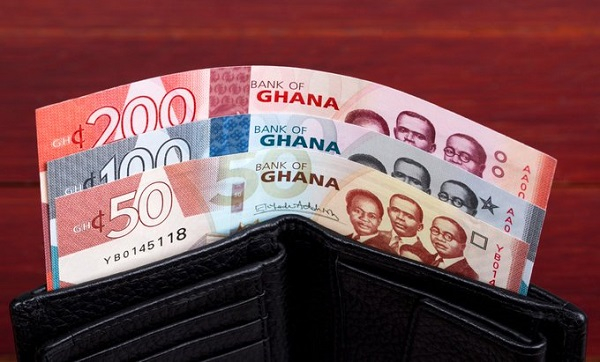
Cedi begins first Monday of 2026 trading at GH¢10.50 to $1

0

This is a slight increase from the GH¢10.45 to $1 rate recorded on January 2, 2026 This is a slight increase from the GH¢10.45 to $1 rate recorded on January 2, 2026

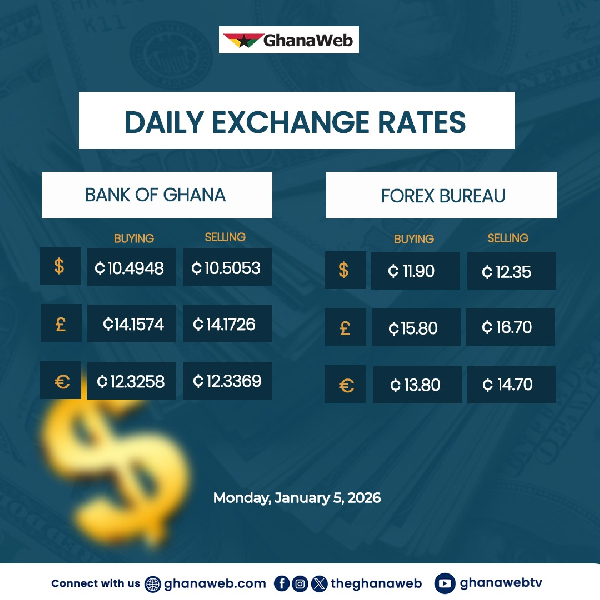
The cedi opened the first trading Monday of the new year at an average selling rate of GH¢10.5053 to the US dollar on the Bank of Ghana’s interbank foreign exchange market.

This is a slight increase from the GH¢10.45 to $1 rate recorded on January 2, 2026.

Data released by the Bank of Ghana on Monday, January 5, 2026, showed the dollar buying at GH¢10.4948 and selling at GH¢10.5053 to US$1.

The euro traded at GH¢14.1574 (buying) and GH¢14.1726 (selling), while the pound sterling was quoted at GH¢12.3258 (buying) and GH¢12.3369 (selling).

Cedi holds steady at GH¢10.45 to $1 on the second day of 2026

At forex bureaus, the dollar was being bought at GH¢11.90 and sold at GH¢12.35, a much wider margin than the Bank of Ghana’s 1.05 pesewa spread.

Other major currencies also showed big differences at bureaus as the euro traded between GH¢15.80 and GH¢16.70, and the pound sterling between GH¢13.80 and GH¢14.70.

The slightly higher rates reflect strong demand for foreign currency and limited supply, especially as the new financial year begins.

The Bank of Ghana is expected to continue its interventions in the coming months to manage volatility, with market watchers anticipating the potential impact of upcoming monetary policy decisions and external inflows on the currency’s performance.

Exchange Rates:

Bank of Ghana interbank market rates:

– Dollar: Buying at GH¢10.494, Selling at GH¢10.503

– Pound: Buying at GH¢14.157, Selling at GH¢14.172

– Euro: Buying at GH¢12.325, Selling at GH¢12.336

Forex bureau rates:

– Dollar: Buying at GH¢11.90, Selling at GH¢12.35

– Pound: Buying at GH¢15.80, Selling at GH¢16.70

– Euro: Buying at GH¢13.80, Selling at GH¢14.70

See the image below:

ID/AE

South African rand steady after Venezuela shock

0

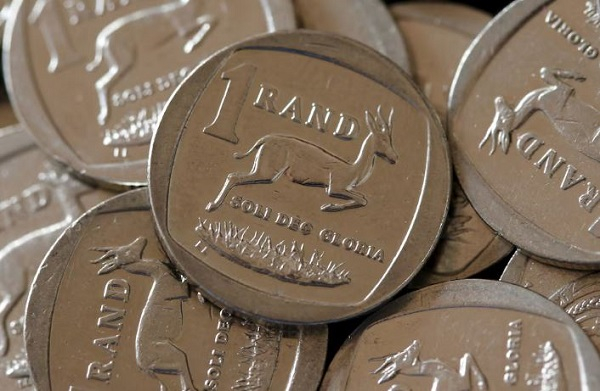
The South African rand was steady in early trade on Monday, as investors considered the implications of U.S. military action in Venezuela, escalating geopolitical tensions and lifting safe-haven demand.

At 0657 GMT the rand traded at 16.5050 against the dollar , a whisker away from Friday’s closing level of 16.5075.

The United States captured Venezuelan President Nicolas Maduro over the weekend to face drug-trafficking charges, while President Donald Trump announced that he was putting Venezuela under temporary American control.

Trump said as part of the takeover, major U.S. oil companies would move into Venezuela, which has the world’s largest oil reserves, and refurbish badly degraded oil infrastructure, a process experts said could take years.

“So far, the ZAR has not responded negatively to this weekend’s news. The oil price has not moved significantly, given Venezuela’s substantial reduction in oil exports and production. If anything, it might slide further if investors believe that the US might oversee a revitalisation of Venezuela’s oil industry,” ETM Analytics said in a research note.

South Africa has called for an urgent United Nations Security Council session following the unilateral military action by the United States in Venezuela.

“Investors might want to price in some consequences of SA’s hardening stance against the US and what that might mean for relations with the US, but even on that front, there has been so much that has come from the existing breakdown of relations with the US that it is unclear whether there is much more for the US to do,” ETM Analytics said.

South Africa’s benchmark 2035 government bond was firm in early deals, as the yield fell 2 basis points to 8.22%.

Why Is Nunoo-Mensah Rejecting His Own Bloody Handicraft This Late In The Game?

0

I have always found Brigadier-General Joseph Nunoo-Mensah (Ret) to be peevishly funny, if also because the Winneba native, from the Central Region, has always come off to me as an old man who is so scandalously out of touch with the practical reality on the ground not to recognize the stark fact that he lost his relevance in Ghanaian political and public life and culture well over two decades ago.

And this was primarily because even as a senior military officer, the former Chief of the Defense Staff (CDS) of the Ghana Armed Forces (GAF) so woefully lacked a moral and a courageous sense of professionalism that he fecklessly opted to do the bidding of a civically transgressive scofflaw like Flight-Lieutenant Jeremiah “Jerry” John Rawlings-led junta of the Provisional National Defense Council (PNDC), rather than honorably resign and jealously defend and protect his integrity, almost like those 18th-century French military officers who allowed themselves to be literally led by the nose by Lieutenant Napoleon Bonaparte, whose politically unorthodox “revolutionary” adventure ironically and farcically culminated in the artless dynastic replication of the very monarchical dynasty from whose stranglehold he had sought to salutarily liberate his countrymen and women.

This is the kind of feckless professional military personnel that I have dubbed as “Toy Soldiers,” the most typical and strikingly embarrassing example of which was the late Lieutenant-General Arnold Quainoo, the Ghana Army Chief of Staff who royally and epically bungled the ECOMOG Peacekeeping Mission in Liberia that culminated in the brutal and the barbaric execution of Master-Sergeant Samuel Doe during the Liberian Civil war. Yours Truly has absolutely no respect for this sorry-assed breed of Ghanaian soldier; and any soldier of the latter breed and kind, to be precise.

Brigadier-General Nunoo-Mensah would eventually regain the full use of his senses or cranial cream-puff, but only after his own recently retired Army Major uncle or blood relative by the name of Mr. Samuel “Sam” Acquah had been savagely abducted and brutally executed by Chairman Rawlings and his cousin, the President Nkrumah-cashiered Captain (Ret) Kojo Tsikata, and literally slip himself into a self-imposed internal exile and into virtual oblivion for quite a considerable while, perhaps with trepidation, as was quite common those days.

And then like the congenital coward that he was then and, apparently, still is, shamelessly cross ideological lines and carpets, with both hands tucked into the cavity of his crotch, to truck with the man who had executed and criminally cremated the remains of Major Sam Acquah, partially and inadvertently, after having been seismically trounced in the polls on the ticket of a strategically self-destructive New Patriotic Party (NPP).

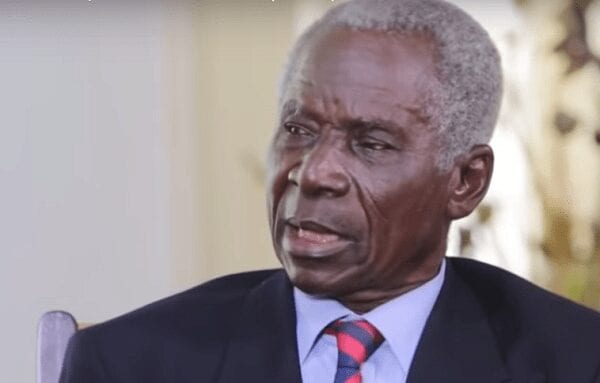
In short, this is a wishy-washy unctuous political buffoon completely bereft of any remarkable modicum of both personal and professional integrity who has absolutely no right to be lecturing the rest of us, in particular Ghanaian youths, about how “nasty” the political climate and culture of the global community have become. You see, the fact of the matter is that unless he has been dead-drunk and asleep with both eyes closed over the past 90 years, the man who was born in either 1937 or 1938 cannot smugly tell his countrymen and women about having been born and grown up at a time when the world was far more pleasant and socioeconomically, culturally and politically comfortable than it is presently.

It also goes without saying that over the past half century, during most of which period it has been the Rawlings-led juntas of the erstwhile Armed Forces Revolutionary Council (AFRC) and the Provisional National Defense Council (PNDC), as well as the faux-civilianized institutional establishment of the Rawlings-founded National Democratic Congress (NDC). that have literally held us, bona fide Ghanaian citizens, by the throttle – at least the overwhelming majority of us – who have experienced more hardships and leadership “nastiness” and naked repression and criminal immiseration than at anytime through most of the Twentieth Century and the First Quarter of the Twenty-First Century, including the latter two decades of British Colonial Imperialism.

Any man or woman or anybody, for that matter, born in the last two or three years of the 1930s cannot deny the apocalyptic and the catastrophic turbulence of much of the 1940s and well into the 1950s, when the Continental African Liberation Struggle also began to register some remarkable results, in critical consonance with the African Diaspora Struggle for human and civil rights. These were absolutely no “pleasant” years or decades the way that a morbidly self-absorbed Brigadier-General Nunoo-Mensah would have the rest of us believe (See “ ‘The World I Came to Meet Was Not Nasty Like This, I Want to Die Now’ – 86-Year-Old Former Security Advisor Cries” Modernghana.com 12/24/25).

It is quite obvious that this dotard is having a very difficult time coming to grips and terms with his mortality and ascent or descent into what former US President Barack Hussein Obama prefers to characterize as “The Ages.” But this funk of inevitable wistfulness and apparent manic depression is no license for this old fogey to cavalierly and pontifically presume that he has any right to even metaphorically muddy the waters for the rest of us who, by the way, are not significantly farther away from the constant and the perennially insistent reminder of our universal and natural mortality. For even as Yours Truly’s maternal grandfather, The Rev. Theodore Henry (TH) Yawbe Sintim-Aboagye (1896-1982) was fond of saying at about the same age that Brigadier-General Nunoo-Mensah presently finds himself: “Neither Fresh Leaves Nor Dry Leaves Have a Monopoly Over Perennially or Eternally Hanging on to the Branches of Any Tree.”

Sooner than later, we all of us, to a person, are wont to fall along the trail of this life by lottery, as the globally and the temporally immortalized Good, Old Bard of Avon would have so mellifluously and resplendently cast the same. Now, I edge or wedge into the foregoing the dictum inherited from Grandpa Yawbe Sintim-Aboagye of Akyem-Asiakwa, Asante-Juaben and Asante-Mampong, among a couple of other places and geographical locations as well, because it was this “most locally extensively traveled” and professionally selfless and indefatigable clergyman of the Presbyterian Church of Ghana who also led the morally and the culturally and the intellectually edifying mission and initiative that culminated in the establishment of the Winneba Presbyterian Primary School, in 1945, the very first batch of whose pioneering class of students included – you guessed right, Dear Reader, Our Beloved Uncle Joseph Nunoo-Mansah. So much for historiographical mendacity.

By Kwame Okoampa-Ahoofe, Jr., PhD
Professor Emeritus, Department of English
SUNY-Nassau Community College
Garden City, New York
E-mail: [email protected]

ZEN Petroleum appoints Frank Adu as Board Chairman

0

ZEN Petroleum Limited has announced the appointment of seasoned corporate leader Frank Adu as its new Board Chairman, effective January 1, 2026.

The appointment was disclosed in a press release issued on Monday, January 5, 2026.

Mr. Adu succeeds Tutu Agyare, who steps down after nine years of service as Board Chairman.

Mr. Adu brings decades of executive and board-level leadership experience to ZEN Petroleum, particularly within the financial services sector, where he is widely regarded for his strategic insight, disciplined approach to corporate governance, and people-centred leadership style.

He served as Managing Director of CAL Bank PLC for 20 years, overseeing a period of significant transformation, sustained growth, and institutional resilience.

He currently serves as Chairman of the National Investment Bank and has held leadership and board roles across several corporate and not-for-profit organisations, including Legacy Bonds Limited, Quality Insurance Company Limited, University of Ghana Enterprises Limited, the FOCOS Foundation, and the Ghana Stock Exchange. His experience spans corporate governance, strategy formulation, risk management, and leadership development.

Beyond corporate leadership, Mr. Adu is actively involved in education and civic initiatives. He is Chairman and Co-Founder of The Roman Ridge School and was recently appointed the first Chancellor of the African University of Communications and Business.

He also plays an active role in sports administration, serving as President of the Achimota Golf Club and having previously served as Captain and President of the Accra Polo Club.

Mr. Adu holds a Bachelor of Arts (Honours) degree in Geography and an MBA in Finance. He was awarded an Honorary Doctorate by the University of Ghana in 2013, is an Honorary Fellow of the Chartered Institute of Bankers, and is an alumnus of the Oxford Strategic Leadership Programme at the Saïd Business School, University of Oxford.

He takes over from Mr. Tutu Agyare, under whose leadership ZEN Petroleum recorded significant growth, strengthened its governance framework, and deepened its commitment to safety, people development, and community impact. The Board and Management expressed appreciation for Mr. Agyare’s steady leadership and invaluable contribution to the company.

Commenting on the appointment, Managing Director of ZEN Petroleum, William Tewiah, said Mr. Adu’s experience and leadership credentials align strongly with the company’s values and long-term vision.

“Frank’s extensive experience, proven leadership, and governance expertise ensure continuity while positioning the company for its next phase of growth,” Mr. Tewiah stated.

As Board Chairman, Mr. Adu will work closely with the Board and Management to advance ZEN Petroleum’s strategic objectives, strengthen governance practices, and support the company’s focus on operational excellence, safety leadership, and sustainable value creation across its retail, mining, and fuel infrastructure businesses.

DISCLAIMER: The Views, Comments, Opinions, Contributions and Statements made by Readers and Contributors on this platform do not necessarily represent the views or policy of Multimedia Group Limited.

DISCLAIMER: The Views, Comments, Opinions, Contributions and Statements made by Readers and Contributors on this platform do not necessarily represent the views or policy of Multimedia Group Limited.

‘Being broke almost killed my confidence’ – Wizkid

0

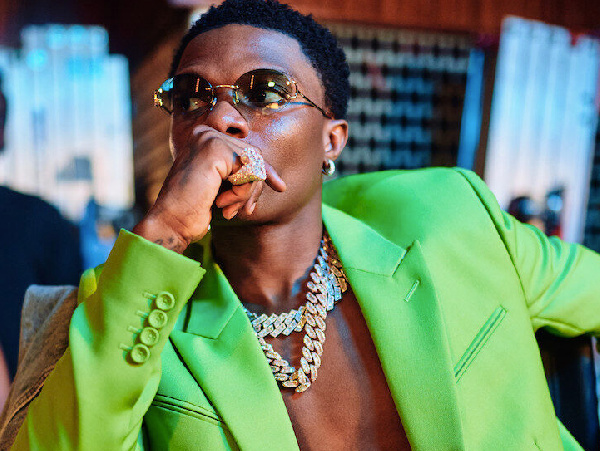
Wizkid is a Nigerian singer Wizkid is a Nigerian singer

Nigerian singer Wizkid has shared how being broke almost ruined his confidence as a young and upcoming artiste in the music industry.

In a video shared on Instagram on January 5, 2025, Wizkid recounted how people did not believe in him despite his talent and vision.

According to Wizkid, despite the life-troubling challenges he was battling, he remained focused on his vision, hoping that the universe would align in his favour.

“Being broke almost killed my confidence, but it never killed my dream. There was a time I had nothing but belief; no money, no connections, just hunger.

“I watched people doubt me because my bank balance didn’t match my ambition, but I learned early: money comes and goes, discipline stays,” he said.

Asake will perform at my wedding – Wizkid

The acclaimed musician further urged individuals battling similar challenges to stay focused and hope for the best.

According to the ‘Essence’ singer, panic makes one quit; hence, staying determined and consistent will help one achieve one’s goals.

“I focused on the craft when nobody was watching, while others were partying. I was building quietly. That season taught me patience. If you’re broke right now, don’t panic.

“Panic makes you quit. That pressure is shaping you. Stay focused. Your story is loading,” he added.

Watch the video below:

JHM/AE

Watch Sarkodie’s electrifying performance at Promiseland 2025:

President Mahama graces 50th National Delegates Conference of GNAT

0

President John Dramani Mahama is at the 2025 GNAT conference President John Dramani Mahama is at the 2025 GNAT conference

President John Dramani Mahama is in attendance at the 2025 National Delegates Conference of the Ghana National Association of Teachers (GNAT) in Accra on January 5, 2025.

The conference, which is the 50th, is expected to deliberate on issues pertaining to education, including policies and other matters that need to be addressed.

Discussions will also focus on the welfare of teachers, with the aim of improving their working conditions.

Dignitaries such as President Mahama, Minister of Education Haruna Iddrisu, his Deputy Dr Clement Apaak, and others are present to address the delegates.

Watch the streaming below:

SB/AE

January Economic Reality Strips Ghana Households Of December Optimism

0

2026
2026

Ghana enters 2026 with households confronting the stark arithmetic of January finances as festive spending gives way to immediate obligations spanning school fees, rent payments and transport costs that arrive simultaneously while salaries remain unchanged from December. The month functions as an annual financial pressure point where delayed price adjustments take effect after traders, transport operators and service providers hold back increases through the holiday period.

University of Ghana students face fee increases exceeding 25 percent for the current academic year, with College of Humanities freshers now paying 3,110 cedis compared to 2,319 cedis previously. Continuing students at the same college saw their fees rise from 1,777 cedis to 2,253 cedis, representing a 27 percent jump. The increases affect all university colleges despite administration officials yet to provide detailed explanations for the sharp adjustments that strain household budgets already stretched thin by December expenditures.

The cedi opened 2026 trading around 10.51 cedis per United States dollar after appreciating approximately 41 percent during 2025, marking its strongest annual performance since at least 1994 when Bloomberg began tracking exchange rate data. The currency emerged as the second-best performer globally among 144 currencies monitored by Bloomberg, trailing only the Russian ruble. Despite this stability, households question whether macroeconomic gains translate into tangible relief when basic consumer goods continue climbing in price.

Inflation reached 6.3 percent in November 2025, the lowest level since February 2019, continuing an eleven-month deceleration streak from crisis conditions that saw rates hit 54 percent in December 2022. The Bank of Ghana (BoG) reduced its monetary policy rate by 350 basis points to 18 percent in November, completing a cumulative 1,000 basis points in cuts across three decisions as disinflation momentum strengthened. Despite these favorable indicators, January brings utility tariff increases that ripple through household operating costs.

The Public Utilities Regulatory Commission (PURC) approved electricity tariff increases of 9.86 percent and water tariff hikes of 15.92 percent effective January 1 under its 2026 to 2030 Multi-Year Tariff Order. Residential lifeline consumers using zero to 30 kilowatt hours monthly now pay 88.37 pesewas per kilowatt hour, up from 80.43 pesewas. Households consuming 301 kilowatt hours and above face rates of 264.56 pesewas per kilowatt hour compared to the previous 240.81 pesewas.

January typically brings reduced foreign exchange pressure as import-heavy December demand subsides, yet Ghana’s currency market remains influenced as much by psychology as fundamentals. Precautionary hedging by businesses and households can generate pressure absent clear triggers, making the Bank of Ghana’s communication particularly crucial. Markets value predictability, with steady actions and clear messaging carrying more weight than dramatic interventions during this sensitive period when calm itself becomes effective policy.

Labour market dynamics sharpen as businesses reopen following the holidays, with December optimism measured against January cash flow realities. Employers shift emphasis from expansion to endurance, implementing adjustments through hiring freezes, reduced hours and deferred bonuses rather than headline layoffs. These quiet changes shape household anxiety more effectively than official employment statistics capture, creating uncertainty that compounds financial pressure from rising costs and fixed incomes.

Government spending patterns follow similar restraint after year-end looseness, with payments slowing and arrears forming quietly as contractors wait for funds. While fiscal authorities frame this as discipline and consolidation, the ground-level effect involves delayed cash flow that ripples through businesses, workers and families dependent on government contracts or services. The pattern repeats annually, yet its impact on household finances remains consistently disruptive.

Credit offers minimal relief as banks maintain cautious lending postures despite policy rate reductions. Interest rates stay elevated, with lending favoring short maturities and strong collateral requirements that exclude most small businesses. January becomes a month for survival rather than expansionary borrowing, with enterprises prioritizing cash flow protection over growth investments. This conservative approach by financial institutions reflects persistent uncertainty about economic sustainability despite improved macroeconomic indicators.

Technology and policy analyst Bright Simons cautions that currency stability represents a starting point rather than completion, emphasizing that sustained industrial transformation and job creation remain necessary for meaningful development. His analysis of Unilever Ghana across three decades reveals concerning trends despite consistent local investment, with revenue measured in dollars declining from 111 million in 1994 to just over 65 million in 2024. These figures underscore how currency volatility historically positioned Ghana as risky for global multinationals, limiting manufacturing growth despite investment commitments.

January strips away December emotion and replaces it with unforgiving calculation that rewards financial discipline while punishing denial. For households, the month underscores budgeting importance. For businesses, cash flow protection becomes paramount. For policymakers, credibility matters more than promises as stakeholders evaluate whether stability translates into sustainable improvement or merely provides temporary relief before familiar patterns reassert themselves.

The month offers clarity rather than miracles, forcing honest assessment of whether recent gains in currency stability and inflation reduction can withstand pressure from rising utility costs, education fees and everyday expenses. Ghana’s economy faces this annual test as households navigate the gap between macroeconomic statistics and lived financial reality, determining whether improved indicators signal genuine recovery or simply mask persistent structural challenges awaiting resolution.