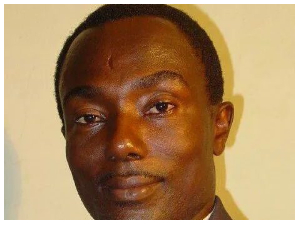
Ebo Noah was arrested over his claim that the world will end on December 25, 2025
The mother of embattled social media personality Ebo Noah has appealed to Ghana’s leaders and the Ghana Police Service to show mercy and pardon her son over his recent legal troubles.
Speaking in a video posted on social media on January 5, 2026, the concerned mother pleaded with traditional leaders, political figures and public personalities to intervene on her son’s behalf.
“Nana Osei Tutu, Nana Akufo-Addo, President Mahama, Nana Ama McBrown, I’m pleading with you all. IGP and Ghana Police, we can see the good work you are all doing,” she said.
According to her, although Ebo Noah acted wrongly, he has regretted his actions and is remorseful.
“I know Ebo Noah didn’t do the right thing. He has regretted and he doesn’t have money to pay the court,” she stated.
She admitted that her son’s actions negatively affected the emotions of many people on social media, stressing that he is genuinely sorry.
link text
“He played with everyone’s emotions on social media and he’s sorry about that,” she shared.
Ebo Noah’s mother further explained that her son is not mentally unstable but is unemployed and may have been influenced by the success of others using social media platforms to make money.
“He’s not a mad person, he’s jobless so maybe he thought he could use TikTok to make some money as others are doing,” she noted.
She further appealed by asking influential individuals in the country to help plead for leniency.
“People who have a voice in the country should kindly help plead on his behalf. Please have mercy on me and pardon my son for his actions,” she added.
FG/AE
Watch the quiet, sad scenes from the late Ayawaso East MP, Naser Toure Mahama’s house following his death:
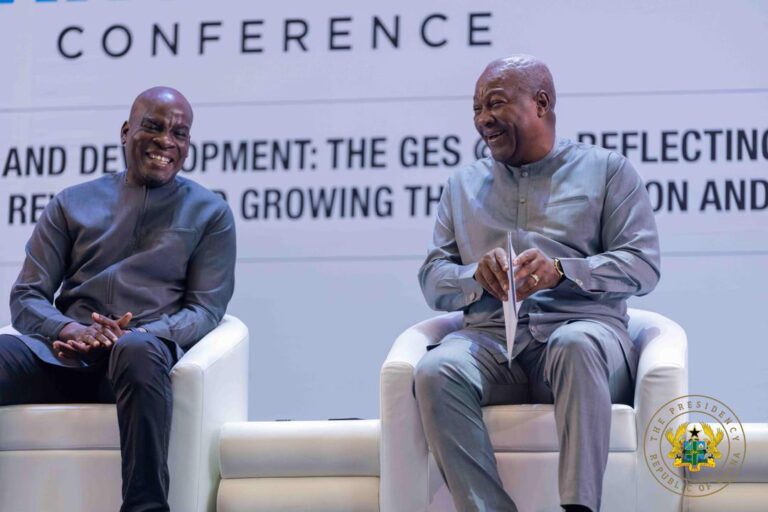
Accra, Jan 05, GNA – President John Dramani Mahama has pledged to carry out a review of the Single Spine Salary Structure (SSSS) and Pensions, as part of Government’s efforts to address concerns of public sector workers.
The President made the promise in his address at the opening of the Ghana National Association of Teachers (GNAT) 54th National Delegate Congress and Seventh Quadrennial Conference in Accra, on the theme “Education and Development: The Ghana Education Service (GES) at 50: Reflecting, Reviewing, Revising, and Growing the Profession and the Unions”.
The SSSS is a public sector pay system, aiming to standardize wages for fairness and transparency by grouping jobs onto unified salary scales.
It was introduced by the Kufuor Administration, however, negotiation was not complete, when Professor John Evans Atta Mills won the 2008 election with Mr Mahama as his Vice President.
President Mahama said the Kufuor administration prior to leaving office threw a lump sum increment and dumped a single spine on Ghanaians.
He said however, organised labour, led by the Trades Union Congress (TUC) decided that they were not going to accept it and that they would negotiate with the new government.
“And so it took quite a while for the negotiations to take place. But eventually, we managed to get a spine that was working. It was not exactly straight, a bit crooked, but at least everybody got something,” he said.
“And so we started paying the arrears and all that and we managed to get through all that before we left office in 2016. Since then, a few things have happened. The spine is very crooked now and everybody is unhappy. Everybody is unhappy with the spine.”
President Mahama said the TUC raised concerns about the SSSS it with the Government and asked if they could look at the whole salary structure again.
The President reiterated that they were very willing to review the SSSS, so that they would be able to remunerate people better,
This, he said would enable workers to give off their best in terms of what they asked them to do.
Concerning pensions, President Mahama recalled that a few years ago, they did a new pension reform; saying “Everybody was happy, Tier 2, Tier 3. It looks like the time has come for us to look at it again”.
He said the TUC, as a leader of organized labor, raised the issue with Government.
He noted that he had told Mr Joshua Ansah, the TUC Secretary-General and his team that the Government was prepared to put together a working team to look at the whole pension reform and come up with some suggestions and see how they could improve it; so that everybody was happy and feels secured going into retirement.
Reverend Isaac Owusu, the National President of GNAT, in his welcome remarks, appealed to the President for an immediate review of the single-spine pay policy within this year to reflect the Government’s Resetting Agenda.
“We are resetting Ghana and so the pay policy must reflect that Resetting Agenda. It is essential that we advocate improved salaries and benefits that recognize critical role teachers play in shaping our society, he stated.
“A well-motivated teacher, your Excellency, is more motivated and this directly translates into better learning outcomes for our students.”
George Kofi Arthur is a former Member of Parliament for Amenfi Central
Former Member of Parliament for Amenfi Central, George Kofi Arthur, has declared his intention to contest the Western Regional Chairmanship position of the National Democratic Congress (NDC), setting the stage for a closely watched internal party contest.
Arthur, a seasoned politician with a background in engineering, education, and governance, in a statement issued on January 5, 2025, stated that he aims to serve his people within the Western Region as its chairman.
“My aim is to serve my own people and help our party in general,” he said.
He represented the Amenfi Central Constituency in Parliament from 2005 to 2017, during which time he served on several key parliamentary committees.
New poll shows Ato Forson overtaking Asiedu Nketiah in 2028 NDC succession
Born on February 24, 1969, at Wassa Agona Amenfi in the Western Region, Hon. Arthur began his education at Wassa Agona Amenfi Catholic School before continuing at Opoku Ware Preparatory School in Kumasi.
He later attended Asankragwa Senior High School, where he pursued science and emerged as the school’s top science student.
He holds a Diploma in Education from the Presbyterian College of Education, Akuapem Akropong, and a Bachelor’s Degree in Engineering Technology from the University of Education, Winneba.
He also earned a Master’s Degree in Governance and Leadership from the Ghana Institute of Management and Public Administration (GIMPA).
Why is Mahama so popular in NDC but Jane Naana is not? – Dr Zaato on vice’s omission from 2028 polls
In Parliament, Arthur served on committees including Roads and Transport, Privileges, Agriculture, Housing, Employment and Social Welfare, and Public Accounts, where he was Deputy Ranking Member from 2006 to 2017.
He also chaired the Defence and Interior Committee, a role in which he advocated measures aimed at improving efficiency and communication among Members of Parliament.
Beyond Parliament, Arthur has held various leadership positions within the NDC, including General Secretary of the Mpohor Constituency and a member of the party’s National Communications Team.
These roles, party sources say, have contributed to his understanding of grassroots organisation and internal party dynamics.
MRA/BAI
Meanwhile, watch President John Dramani Mahama’s 2026 full New Year Message below:
The IMANI Centre for Policy and Education (CPE) has released its 2025 Annual Report, revealing a year marked by unprecedented campus outreach, strategic policy interventions, and decisive influence on national governance decisions.
The Accra-based think tank engaged 650 students across eight campus visits in 2025, tripling its reach compared to previous years. The organisation also convened five major stakeholder dialogues addressing climate finance, green business development, fiscal governance, and mining sector accountability. IMANI’s Founding President Franklin Cudjoe described the year as one requiring courage, perseverance, and shared purpose.
Board Chairman Sam Poku praised staff dedication throughout what he characterised as a year of both challenge and progress. He issued what he termed a clarion call for Ghanaians to embrace integrity as a transformed national mindset. The report documents IMANI’s expanding influence across policy, media, and public discourse.
The organisation partnered with University College London (UCL) in March to examine how Ghana can leverage International Monetary Fund (IMF), World Bank, and African Development Bank budget support for climate objectives. A separate May dialogue with the Africa Centre for Energy Policy (ACEP) identified policy incoherence, weak institutional coordination, and limited long-term finance access as barriers constraining green enterprise growth.
IMANI collaborated with the Climate Compatible Growth (CCG) Programme at Loughborough University in August to explore financing mechanisms for sub-national clean energy initiatives. Another August engagement focused on implementing Ghana’s proposed Fiscal Council, drawing lessons from earlier oversight arrangements. November brought discussions on governance and accountability frameworks affecting climate resilience in the mining sector.
Campus engagements centred on promoting economic freedom and examining government market interventions. IMANI partnered with the Atlas Network to visit the University of Environment and Sustainable Development, University of Ghana, and University of Professional Studies Accra. Sessions analysed the Cement Pricing Legislation and Cylinder Recirculation Model (CRM), with student reflection sessions fostering policy literacy among emerging leaders.
The organisation launched the Critical Analysis of Governance and Economic Issues (CAGEI) initiative providing weekly evidence-driven examination of governance and economic developments. IMANI published comprehensive reports on green business constraints, nuclear diplomacy in the Middle East, port clearance delays at Tema, and constitutional reform proposals submitted to Ghana’s Constitutional Review Committee.
IMANI’s most consequential intervention came in December when Parliament withdrew a proposed lithium mining agreement following the organisation’s high-level engagement with the Presidency. Franklin Cudjoe met President John Dramani Mahama on December 2nd to provide independent assessment of lithium sector governance issues. Parliament halted the legislative process on December 10th after IMANI submitted its detailed policy position.
President Mahama also selected Cudjoe in May to serve on a four-member team gathering input for a proposed Governance Advisory Council aimed at strengthening transparency across public institutions. The President separately engaged Cudjoe for candid discussion on governance lessons and the administration’s 120-day performance ahead of IMANI’s televised assessment.
IMANI’s financial position strengthened considerably in 2024, the most recent year for which complete figures are available. Total income reached 5.29 million cedis, up from 1.21 million cedis in 2023. Grant income grew to 3.56 million cedis from 800,000 cedis. Total expenses increased to 4.12 million cedis from 1.31 million cedis as the organisation scaled operations.
The organisation maintained robust media presence throughout 2025. Facebook following reached 47,000 with 1,125 new followers gained during the year. The platform known as X reached 45,100 followers. YouTube generated 4,400 watch hours with 191 new subscribers and 10,500 total views. Instagram following stood at 2,300.
IMANI participated in the 2025 Atlas Liberty Forum where Programme Manager Josephine Adjei Tenkorang presented on broadening African think tank reach beyond traditional audiences. Vice President Selorm Branttie contributed to democracy discussions highlighting youth-led civic movements and constitutional term limits. Multimedia Administrator David Kukuia-Galley completed strategic communications training focused on messaging, audience targeting, and impact measurement.
The organisation explored strategic collaboration with the University of Professional Studies Accra to co-host the 2026 Student and Young Professional African Liberty Academy (SYPALA). IMANI and UPSA plan year-long programming including public lectures, masterclasses, policy clinics, and applied projects through UPSA’s Centre for Public Accountability (CPA).
Franklin Cudjoe led visits to Tamale and Salaga engaging universities, local authorities, and traditional leaders. IMANI explored collaboration with the University for Development Studies, engaged metropolitan assemblies on service delivery, and highlighted infrastructure challenges including the Dalun Water Treatment Plant.
Branttie represented IMANI at the 2025 Fintech Stakeholder Forum hosted by MobileMoney Limited, emphasising that Ghana risks stifling digital finance potential without clear frameworks and regulatory collaboration. The forum explored regulatory approaches to digital credit and digital assets under the theme of harnessing Ghana’s fintech potential.
IMANI’s vision positions the organisation as Africa’s most influential think tank promoting peace and prosperity through rigorous research, analysis, and advocacy. The mission focuses on subjecting government policies with systematic development implications to value for money, due diligence, and rational choice analysis.
Looking toward 2026, Cudjoe expressed optimism about expanding research frontiers, deepening collaborations, and embracing new tools positioning IMANI as architects of change rather than observers. He emphasised the organisation’s commitment to inspiring trust, sparking necessary conversations, and influencing decisions shaping national and continental destiny.
The organisation continues operations from its Kutunse location in Accra, supporting its mission through grants and public donations via mobile money platform.
Mayo Clinic in Rochester, Minnesota has been named the world’s best hospital for the seventh consecutive year according to Newsweek’s World’s Best Hospitals 2025 ranking compiled in partnership with global data research firm Statista. The prestigious recognition evaluated over 2,400 healthcare facilities across 30 countries using comprehensive methodology including surveys of more than 85,000 medical professionals, patient satisfaction data, hospital quality metrics and implementation of Patient Reported Outcome Measures (PROMs).
The 2025 global top ten showcases healthcare excellence concentrated primarily in North America and Europe, though Singapore’s presence demonstrates Asian facilities competing at elite levels. Cleveland Clinic claimed second place, reinforcing American dominance in global healthcare rankings. Toronto General Hospital, part of Canada’s University Health Network, secured third position as the highest ranked Canadian facility. The Johns Hopkins Hospital in Baltimore, Maryland placed fourth, continuing its historic role shaping modern medical practice and education.
Sweden’s Karolinska Universitetssjukhuset rounded out the top five, representing European excellence while maintaining its distinguished affiliation with the Karolinska Institute that awards the Nobel Prize in Physiology or Medicine. Massachusetts General Hospital in Boston captured sixth place, recognized globally for powerhouse biomedical research contributions particularly in neuroscience, cancer care and precision medicine. The hospital’s research legacy spans centuries, establishing fundamental medical knowledge still applied worldwide.
Charité Universitätsmedizin Berlin claimed seventh position as Europe’s largest university hospital, distinguished by combining research, teaching and patient care in translational medicine approaches. The German institution has remained at the forefront of medical breakthroughs for more than a century, contributing significantly to European healthcare advancement. Sheba Medical Centre in Israel secured eighth place, earning recognition as the hospital of the future through digital health innovation, medical technology deployment and international collaboration attracting global attention.
Singapore General Hospital placed ninth as Southeast Asia’s leading medical facility, demonstrating clinical excellence, operational efficiency and strong patient outcomes that establish models for urban healthcare systems worldwide. The hospital’s integration with national healthcare planning creates synergies between institutional excellence and population health management. Rounding out the global top ten, Universitätsspital Zürich in Switzerland combines cutting edge research with high quality patient care while excelling in specialized medicine, medical education and clinical innovation.
The ranking methodology reflects growing sophistication in evaluating healthcare quality beyond traditional metrics. Newsweek and Statista’s approach incorporates four primary data sources providing comprehensive assessment frameworks. The online survey component invited tens of thousands of medical experts including doctors, hospital managers and healthcare professionals in 30 participating countries to evaluate institutions both domestically and internationally, generating peer recognition reflecting professional consensus about institutional excellence.
Hospital quality metrics and patient satisfaction data drawn from publicly available sources provide objective performance indicators including patient safety records, infection rates, readmission statistics and clinical outcome measurements. These quantifiable metrics complement subjective expert opinions, creating balanced assessments recognizing both technical competence and patient centered care delivery. The integration of multiple data types prevents single dimension evaluations that might miss crucial aspects of healthcare quality.
The Patient Reported Outcome Measures survey represents innovative recognition that patient perspectives on functional wellbeing and quality of life constitute essential healthcare quality indicators. PROMs are defined as standardized, validated questionnaires completed by patients measuring their perception of treatment outcomes beyond clinical measurements alone. This emphasis on patient voices acknowledges that technical success means little if patients experience poor quality of life or functional limitations after treatment.
Bibliometric data reflecting research output and influence completes the methodology, recognizing that leading hospitals contribute to advancing medical knowledge through published research guiding clinical practice worldwide. Institutions producing high impact research establish themselves as thought leaders shaping how medicine is practiced globally, justifying their inclusion among elite facilities. The combination of peer recognition, quality metrics, patient perspectives and research contributions provides robust frameworks for identifying true healthcare excellence.
Mayo Clinic’s continued dominance stems from its integrated, team based approach to medicine emphasizing research driven care, complex case management and patient first philosophy that sets gold standards for healthcare excellence. The institution’s model coordinates specialists across disciplines to address complex medical conditions requiring comprehensive expertise. Patients benefit from seamless care coordination where multiple experts collaborate rather than working in isolation, reducing fragmentation that plagues less integrated healthcare systems.
The Rochester facility’s emphasis on research integration ensures clinical practice reflects latest medical knowledge while contributing to advancing that knowledge through ongoing investigations. This bidirectional relationship between research and clinical care creates continuous improvement cycles where discoveries rapidly translate into patient benefits while clinical observations generate new research questions. The Mayo model has been replicated globally as healthcare systems recognize integrated care’s advantages over fragmented approaches.
Cleveland Clinic’s second place ranking reflects its global leadership in cardiac care and specialized surgery, with reputation built on innovation, efficiency and transparency in outcomes. The Ohio institution pioneered public reporting of surgical outcomes, allowing patients and referring physicians to evaluate performance data when selecting providers. This transparency, once controversial, has become healthcare standard as consumers demand accountability from providers. Cleveland Clinic’s willingness to openly share performance data demonstrated confidence in quality that competitors have been forced to match.
Toronto General Hospital’s third place finish highlights Canadian healthcare’s capacity for world class performance despite different financing models than American institutions. As part of Canada’s largest hospital network, Toronto General excels in transplant medicine and cardiology while maintaining strong academic foundations supporting medical education and research. The facility demonstrates that publicly funded healthcare systems can achieve excellence rivaling private American institutions when properly resourced and managed.
Johns Hopkins Hospital’s fourth place ranking continues the institution’s historic role in modern medicine development. Closely linked to Johns Hopkins University, the hospital has trained generations of physicians and researchers while contributing landmark discoveries that transformed medical practice. From pioneering surgical techniques to establishing public health as academic discipline, Johns Hopkins’ influence on contemporary medicine extends far beyond its Baltimore campus, shaping healthcare delivery and medical education worldwide.
Massachusetts General Hospital’s sixth place position reflects its status as one of America’s oldest and most respected medical centers, founded in 1811. The Boston institution functions as principal teaching hospital for Harvard Medical School, creating synergies between medical education, research and clinical care. Massachusetts General’s contributions to biomedical research span numerous disciplines, with particular strength in neuroscience where groundbreaking work has advanced understanding of brain function and neurological disorders.
Sheba Medical Centre’s eighth place ranking as Israel’s premier healthcare facility demonstrates how focused investment in digital health innovation and medical technology can rapidly elevate institutional standing. The facility has gained international attention for aggressive adoption of artificial intelligence driven healthcare solutions, robotics assisted surgery and telemedicine platforms extending specialist access beyond traditional geographic limitations. Sheba’s future oriented approach positions it as laboratory for healthcare innovations that will shape medicine’s next decade.
Singapore General Hospital’s ninth place finish reflects the city state’s broader success building world class institutions through strategic planning and resource allocation. As Southeast Asia’s leading hospital, Singapore General demonstrates how middle income countries can achieve healthcare excellence through sustained commitment and intelligent investment. The facility’s efficiency and strong patient outcomes establish benchmarks for other developing nations seeking to improve healthcare quality without American or European resource levels.
The 2025 rankings cover 30 countries selected based on comparability factors including standard of living, life expectancy, population size, number of hospitals and data availability. Participating nations span continents, including Australia, Austria, Belgium, Brazil, Canada, Chile, Colombia, Denmark, Finland, France, Germany, India, Israel, Italy, Japan, Malaysia, Mexico, Netherlands, Norway, Saudi Arabia, Singapore, South Korea, Spain, Sweden, Switzerland, Taiwan, Thailand, United Arab Emirates, United Kingdom and United States.
Notably absent from the evaluated countries is any representation from the African continent, highlighting persistent gaps in healthcare infrastructure and data systems that prevent African institutions from competing in global rankings. While South Africa, Egypt, Kenya and other African nations have reputable medical centers, the lack of comprehensive data systems, inconsistent quality metrics and limited international peer recognition exclude them from consideration in rankings like Newsweek’s assessment.
For Ghana and other African countries, the absence from global hospital rankings reflects broader challenges facing healthcare systems on the continent. Limited resources, infrastructure deficits, healthcare workforce shortages and fragmented health information systems combine to prevent African institutions from achieving recognition levels that leading Asian, European and American facilities enjoy. However, centers of excellence do exist across Africa, including Ghana’s Korle Bu Teaching Hospital, providing specialized care and training future healthcare professionals.
The rankings emphasize that access to high quality healthcare represents one of society’s strongest wellbeing indicators. Beyond treating illness, world class hospitals drive medical innovation, train future health professionals, advance research and set global benchmarks for patient safety and outcomes. In an era when many countries face ageing populations, complex diseases, pandemics and rapid technological change, top tier hospitals’ role has become increasingly critical as engines of progress influencing worldwide medical practice.
American hospitals’ dominance in the top ten, with four facilities represented, reflects substantial healthcare investments, robust research infrastructure and competitive markets incentivizing excellence. However, this dominance masks significant healthcare access inequalities within the United States, where uninsured and underinsured populations lack access to elite facilities whose services remain affordable primarily for well insured patients. The rankings measure institutional excellence rather than healthcare system effectiveness or population health outcomes.
European facilities’ strong showing, with three hospitals in the top ten, demonstrates that different healthcare financing models can achieve world class results. Charité in Germany, Karolinska in Sweden and Universitätsspital Zürich in Switzerland all operate within universal healthcare systems yet compete effectively against American private institutions. These European examples challenge assumptions that market based competition necessarily produces superior outcomes, suggesting that adequate resources and professional autonomy matter more than specific financing mechanisms.
Looking ahead, hospital rankings will likely place increasing emphasis on technology adoption, particularly artificial intelligence integration, telemedicine capabilities and digital health platforms. The COVID-19 pandemic accelerated healthcare digitization, with facilities rapidly deploying remote consultation, digital monitoring and virtual care coordination that previously faced implementation barriers. Hospitals effectively leveraging these technologies to improve access, efficiency and outcomes will gain competitive advantages in future rankings.
Patient reported outcome measures’ inclusion in ranking methodology signals important shift toward patient centered evaluation frameworks. Traditional healthcare metrics focused primarily on clinical outcomes and process measures, sometimes neglecting patient experiences and quality of life considerations. PROMs integration acknowledges that successful treatment requires not just clinical cure but restoration of function and wellbeing that patients themselves consider meaningful.
The rankings also highlight growing importance of research contributions in defining institutional excellence. Hospitals producing high impact research advance medical knowledge while enhancing their reputations, attracting top talent and generating funding supporting continued innovation. This creates virtuous cycles where research excellence enables clinical excellence, which generates cases and data supporting further research, continuously elevating institutional capabilities.
Dr. Theo Acheampong, Technical Advisor at the Ministry of Finance, has expressed optimism about Ghana’s economic outlook for 2026, describing 2025 as a positive year for citizens and predicting further improvements in the coming year.
Speaking on Channel One TV’s The Point of View on Monday, January 5, he said, “If you were to ask me, has 2025 been a good year for Ghanaians? Absolutely, it has been.”
Dr. Acheampong highlighted that government measures outlined in the national budget, alongside initiatives planned after Ghana exits the International Monetary Fund (IMF) programme, will underpin continued economic progress.
He explained that key policies aimed at stabilising the economy, boosting growth, and improving livelihoods will support these gains. He also noted that Ghana’s anticipated exit from the IMF programme around mid-year could open further opportunities for expansion and development.
“Will 2026 be even better? I think so. If you look at what the government has put in place in terms of some of the measures that are contained within the budget and some of the things that were being done when we leave the IMF programme in the middle of the year,” he said.
Dr. Acheampong’s comments underscore the government’s confidence in steering Ghana towards economic stability and enhanced prosperity for its citizens in the new year.
Bright Simons: Stability of exchange rate critical for businesses
Nigeria swept into the quarter-finals of the 2025 Africa Cup of Nations (Afcon) with a commanding 4-0 victory over Mozambique in Fes.
The Super Eagles were on top from the off, and talisman Victor Osimhen had an effort ruled out for offside within the first two minutes.
Their pressure eventually told in the 20th minute as Ademola Lookman curled home from Akor Adams’ cutback to break the deadlock.
Five minutes later Osimhen doubled the advantage, turning in after Alex Iwobi’s incisive play through midfield released Lookman and his ball across took a deflection off Adams.
Mozambique, making their first appearance in the knockout stage, struggled to contain Nigeria’s relentless attack and offered little threat going forward.
Osimhen made it 3-0 early in the second half, tapping in from Lookman’s clever ball across from the left at the back post to score his second of the night.
Adams then capped a fine individual display, firing in Nigeria’s fourth in the 75th minute after more good work by Lookman.
Nigeria, who could have added more, now await Algeria or DR Congo in Saturday’s quarter-final tie in Marrakech (16:00 GMT).
Government says that this year it is committing GHS500 million into a revolving housing fund for teachers, and next year it will commit GHS1 billion to the fund for a housing scheme in partnership with the Ghana National Association of Teachers, GNAT.
President Mahama, at the 54th National Delegates Conference of GNAT said that the government is actively exploring arrangements to make suitable lands available to support the housing project. All districts will provide land to help implement the initiative.
More photos below:
DISCLAIMER: The Views, Comments, Opinions, Contributions and Statements made by Readers and Contributors on this platform do not necessarily represent the views or policy of Multimedia Group Limited.
Tags:
GNAT
Mahama
Photos
DISCLAIMER: The Views, Comments, Opinions, Contributions and Statements made by Readers and Contributors on this platform do not necessarily represent the views or policy of Multimedia Group Limited.
Related to this story
GNAT declares zero tolerance for assault on teachers
Mahama assures teachers of single spine pay and pension scheme review
GNAT pushes salary review, safer working conditions for teachers
Mahama condemns attacks on teachers, demands justice in Kade SHS assault case
Manhyia South MP urges Mahama to tread cautiously on constitution review proposals
No meaningful change in galamsey strategy under Mahama – Awal Mohammed
Togbi Sri III urges Volta appointees in Mahama administration to serve with diligence
Public reflects on President Mahama’s first press conference in year-end review
Former MMDCEs appeal to President Mahama over delayed end-of-service benefits
GLICO General petitions Mahama over insurance industry concerns
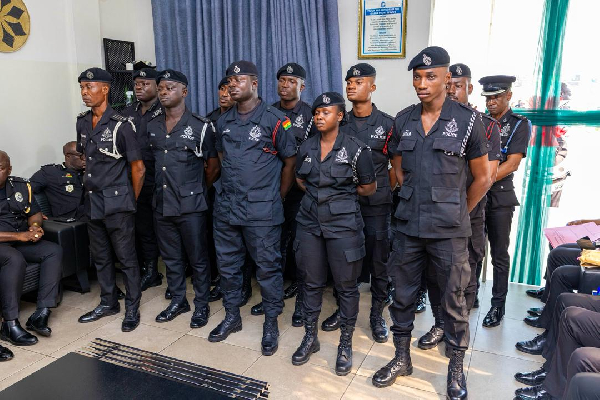
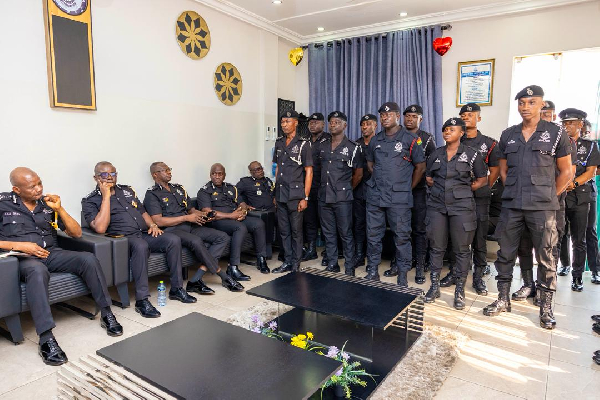
The Inspector-General of Police (IGP), Christian Tetteh Yohuno, on January 5, 2026, has promoted thirty (30) officers to their next ranks.
The promotion was made in recognition of their distinguished conduct during operations that led to the retrieval of 2,600 AK-47 ammunition at the Kantanso Asankare Police Barrier in the Ashanti Region and the dismantling of a robbery syndicate at the Antoakrom-Manso Nkwanta stretch during the Christmas season.
The promotions acknowledge the officers’ professionalism, vigilance, and commitment to duty.
Officers promoted in connection with the Kantanso Asankare operation include C/Inspr Tibim Acheampong Solomon, Inspr Sarfo Adu Daniel, No. 58311 G/L Cpl Saeed Frimpong, No. 621467 G/Const Sremsei Simon, No. 15413 PW/Const Kissi Dorcas Serwaah, No. 65450 G/Const Arthur Emmanuel Nkrumah, No. 65457 G/Const Dennis Danquah, No. 65503 G/Const Philip Lawer Nyarko, No. 66427 G/Const Owusu Kenneth, and No. 66841 G/Const Christian Buaben Kwadzo Addo.
During the operation at the Kantanso Asankare Police Barrier, the officers conducted a thorough search of the bus and uncovered two concealed containers holding 2,600 rounds of AK 47 ammunition, as well as a bag hidden under the driver’s seat containing two bulletproof plates, a black crushed helmet, and a pair of long boots.
Additionally, twenty other personnel from the Intelligence department of the Ashanti and Ashanti South Regional Police Commands were promoted in connection with related intelligence-led operations at Manso Nkwanta, Antoakrom, and surrounding areas, which resulted in the recovery of firearms and ammunition, the disruption of armed robbery activities, and the prevention of planned attacks on commuters.
The IGP and members of the Police Management Board (POMAB) commended the officers for their courage and alertness, noting that their actions prevented dangerous weapons from falling into criminal hands.
He encouraged all personnel of the Service to continue to demonstrate the highest standards of professionalism in the discharge of their duties, noting that the Police Administration will acknowledge, appreciate and reward hard work.
Ghana is pressing ahead with wide ranging reforms in its oil and gas sector as government seeks to revive investment, tighten governance and align petroleum development with the country’s long term energy transition agenda. The Ghana Extractive Industries Transparency Initiative (GHEITI) revealed these developments in its latest Oil and Gas Sector Reconciliation Report, which reconciles production and revenue data for 2023 while emphasizing current reforms shaping the sector’s outlook.
The report arrives at a critical juncture when declining output, fiscal pressures and global decarbonization trends are forcing a fundamental rethink of Ghana’s petroleum strategy. Government faces the dual challenge of attracting investment to reverse production declines while simultaneously positioning the sector to align with climate commitments and the global energy transition away from fossil fuels.
A key development centers on government’s ongoing review of the Petroleum (Exploration and Production) Act, 2016, known as Act 919. Investors have long raised concerns about Ghana’s fiscal terms, particularly the scope of carried interest obligations borne by contractors without reimbursement. These financial burdens have made Ghana less competitive compared to other oil producing nations in West Africa and globally.
According to GHEITI, the Ministry of Energy and Green Transition is working with the Attorney General’s Department, the Petroleum Commission and Ghana National Petroleum Corporation (GNPC) to revise the law. The goal is making the fiscal regime more flexible, predictable and competitive in a tightening global investment climate where capital flows increasingly favor jurisdictions offering better terms and lower regulatory uncertainty.
The reforms are being driven partly by approval of the Onshore Petroleum Exploration and Production Policy, 2024, which aims to unlock Ghana’s onshore sedimentary basins. The policy introduces a production sharing system for onshore operations, replacing the offshore style hybrid royalty tax framework that has governed the sector since commercial production began. This shift recognizes that onshore operations face different cost structures and risk profiles than offshore developments.
The onshore policy proposes overriding payments to support local content development, host communities, decommissioning and data acquisition. These provisions address concerns that petroleum wealth has not adequately benefited communities where extraction occurs, while also ensuring sufficient funding for eventual field closures and ongoing geological research. Legislative amendments are currently underway to align existing petroleum laws with the new policy framework.
Institutional clarity has emerged as another urgent priority requiring government attention. The GHEITI report highlights ongoing overlap between GNPC and Ghana National Gas Company over the national gas aggregator role, a situation that continues creating regulatory uncertainty and investor risk. Multiple entities claiming responsibility for gas market functions without clear delineation of authority undermines efficient sector governance.
GHEITI’s Multi Stakeholder Group (MSG) has renewed calls for government to formally clarify responsibilities between the two state owned enterprises. The MSG argues that stabilizing gas market governance and reducing policy ambiguity is essential for attracting investment into gas infrastructure and downstream utilization projects. Without clarity on which institution holds ultimate authority, investors face unnecessary legal and operational risks.
State participation and revenue assurance remain under intense spotlight following troubling findings in the reconciliation report. GHEITI reports that GNPC and its subsidiary Explorco have not paid corporate income tax on revenues from their interests in the Jubilee and TEN fields since 2021. The non payment stems largely from non compliance with ring fencing provisions designed to prevent cost pooling across different petroleum operations.
Addressing this corporate tax gap has become a priority as government seeks to protect public revenues amid fiscal consolidation and International Monetary Fund (IMF) supported reforms. The failure of state owned enterprises to meet tax obligations while private sector partners comply creates equity concerns and deprives the treasury of significant revenue. Government now faces pressure to enforce tax compliance across all operators regardless of ownership structure.
Environmental regulation is tightening significantly following enactment of the Environmental Protection Act, 2025, designated as Act 1124. The new law strengthens oversight of petroleum activities, including emissions control, waste management and decommissioning obligations. Petroleum operators will face stricter requirements for managing their environmental footprint throughout project lifecycles from exploration through eventual field abandonment.
Draft Environmental Protection (Petroleum) Regulations are being finalized to curb gas flaring, improve environmental permitting and strengthen emergency response frameworks across upstream and midstream operations. Gas flaring has remained a contentious issue in Ghana’s oil fields, with environmental advocates arguing that burning associated gas wastes valuable resources while contributing unnecessarily to greenhouse gas emissions. The new regulations aim to capture and utilize more gas rather than flaring it.
These regulatory changes coincide with Ghana’s broader energy transition push toward cleaner energy sources. Government has adopted the Ghana Energy Transition and Investment Plan, targeting net zero emissions by 2060, ten years earlier than previously projected. This ambitious timeline reflects international pressure on developing nations to accelerate climate action despite their relatively smaller historical contributions to global emissions.
The renaming of the Energy Ministry to the Ministry of Energy and Green Transition reflects this strategic shift in policy priorities. The name change signals government’s intention to balance continued petroleum development with expanding renewable energy deployment. Alongside this rebranding, initiatives such as renewable energy mini grids, smart solar street lighting and the proposed establishment of a Renewable Energy Authority demonstrate concrete steps toward diversifying Ghana’s energy mix.
To revive upstream activity that has stagnated in recent years, government has withdrawn earlier unitization directives that stalled exploration work across multiple blocks. Unitization requires operators from adjacent fields to coordinate development when reservoirs cross block boundaries, but premature directives before fully understanding reservoir characteristics can freeze activity. The withdrawal removes obstacles that prevented companies from advancing appraisal and development programs.
Government has reopened appraisal of discoveries such as Afina in the West Cape Three Points Block 2, which had been in limbo for years. Appraisal work determines whether discoveries contain sufficient commercial volumes to justify expensive development infrastructure. By clearing regulatory pathways, government hopes to encourage operators to invest in proving up additional reserves.
Memoranda of understanding have been signed with Jubilee and TEN partners to extend petroleum agreement timelines. These extensions provide operators additional time to fulfill contractual obligations without risking license termination, addressing concerns that rigid timelines discouraged investment when projects faced unforeseen delays. The flexibility helps maintain investor confidence while protecting Ghana’s interests in seeing discoveries developed.
Discussions are underway to construct a second gas processing plant to deepen domestic gas utilization and reduce reliance on crude oil exports. Ghana currently processes gas at the Atuabo Gas Processing Plant, but additional capacity would enable greater monetization of associated gas from oil fields. Increased domestic gas use for power generation could reduce electricity costs while generating employment and industrial development opportunities.
The reconciliation report itself demonstrates Ghana’s continued commitment to transparency in extractive sector governance. GHEITI’s annual reports reconcile payments from oil companies against revenues received by government, identifying discrepancies and ensuring accountability. The 2023 report confirmed that Ghana’s transparency and reconciliation systems remain robust, providing reliable data for policy decisions.
However, GHEITI concludes that while generating quality data is important, the insights now demand decisive action from government. Resolving fiscal and institutional ambiguities that have accumulated over years of incremental policy changes has become urgent. Enforcing state owned enterprise tax compliance without exception sends important signals about rule of law and equitable treatment of all sector participants.
Aligning petroleum development with climate commitments represents perhaps the most complex challenge facing policymakers. Ghana cannot simply abandon petroleum revenues that fund significant portions of the national budget, yet continuing business as usual contradicts international climate goals and risks stranding assets as global demand shifts. The policy balance requires maximizing value from remaining petroleum development opportunities while rapidly scaling renewable alternatives.
Critics argue that developing countries like Ghana should not bear equal responsibility for addressing climate change created primarily by industrialized nations. However, international climate finance and development assistance increasingly conditions support on recipient nations demonstrating commitment to energy transitions. Ghana’s accelerated net zero timeline likely aims partly to position the country favorably for climate funding access.
The report identifies several continuing challenges beyond those addressed by current reforms. Production from Ghana’s three producing fields has declined from peak levels, raising questions about reserve replacement and exploration success rates. New discoveries have not kept pace with depletion, and several high profile exploration wells have come up dry, dampening investor enthusiasm.
Licensing round outcomes have disappointed, with fewer bids submitted than anticipated and some blocks receiving no interest despite promotion efforts. Global trends favor jurisdictions with proven basins and established infrastructure, leaving frontier areas like Ghana’s deeper waters struggling to compete for scarce exploration capital. The fiscal reforms aim partly to overcome this competitive disadvantage.
Local content requirements, while important for maximizing Ghanaian participation in petroleum development, have sometimes increased costs and timelines. Finding the right balance between supporting domestic industry development and maintaining project economics that attract investment remains an ongoing policy challenge. The onshore policy’s local content provisions will test whether government has improved this balance.
GHEITI emphasizes that Ghana’s long term economic interests and intergenerational equity depend on getting petroleum governance right. Current revenues must be managed responsibly to benefit future generations who will inherit depleted resources. The reconciliation data provides essential accountability, but policy reforms and enforcement actions determine whether transparency translates into sustainable development outcomes.
The reforms reflect recognition that Ghana’s petroleum sector has reached an inflection point requiring strategic decisions about its future direction. Incremental adjustments will no longer suffice in addressing accumulated governance gaps, changing investment dynamics and the imperative of energy transition. Success requires coordinated action across multiple fronts simultaneously: fiscal reform, institutional clarity, environmental protection, tax enforcement and strategic planning.
Stakeholders across government, industry and civil society will watch closely whether ambitious reform agendas translate into implementation. Ghana has strong policy frameworks that often struggle with execution gaps. Demonstrating that this reform wave produces tangible improvements could restore confidence and unlock the investment needed to stabilize production and revenues during the transition period.

 Ebo Noah was arrested over his claim that the world will end on December 25, 2025