3.6 C
London
Friday, January 9, 2026
Home Blog Page 51

Ace musician Akosua Agyapong honoured

0

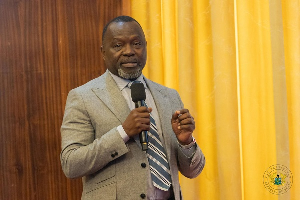
Okronkronyi Nyame Somafo Yawoh presenting the citation to Akosua Agyapong Okronkronyi Nyame Somafo Yawoh presenting the citation to Akosua Agyapong

In an industry long dominated by men, Akosua Agyapong stood her ground and carved a lasting legacy for herself.

The celebrated Highlife musician and television personality has been honoured for her remarkable contributions and unwavering commitment to Ghana’s music industry.

Akosua Agyapong rose to prominence in the 1990s at a time when very few women dared to venture into hi-life music.

Her bold entry into the genre not only challenged stereotypes but also paved the way for many women to follow their musical dreams.

Now 56 and a mother of six, Akosua Agyapong became a household name after her hit songs “Meye Obaa” and “San Behwe W’Omba” took over the music scene in 1990 and 1992 respectively.

Her music resonated strongly with audiences and positioned her as a symbol of female empowerment and perseverance.

In a rare show of appreciation, she was presented with an award, a citation, and an undisclosed cash amount in recognition of her impact.

The presentation took place before an audience of over 35,000 diasporans who gathered for the annual Ogyebea Afahye festival, organised by the Ntontom Nkabom Som of the Temple of Rabbi at Ekumfi Otuam in Ghana’s Central Region.

The week-long festival was held from December 25, 2025, to January 1, 2026.

The ceremony was graced by notable personalities including veteran actor Kofi Adjorlolo and several Kumawood actors.

Traditional leaders from the Central Region were also in attendance.

The Dormaahene, Dr Agyeman Badu II, was represented by the Chief of Abese and Kyidomhene, Nana Barimah Kumi Achaw III.

Presenting the award, the Leader of the Temple of Rabbi, Okronkronyi Nyame Somafo Yawoh, praised Akosua Agyapong’s influence, stating that “Her impactful music in a male-dominated industry created opportunities and inspiration for many women to pursue careers in music.”

Although she is no longer actively recording music, the “Frema” hitmaker remains a strong presence in the entertainment industry.

She has served as co-judge on popular music reality shows such as TV3’s Mentor and Adom TV’s Nsromma talent show.

With nearly four decades in the industry, Akosua Agyapong continues to enjoy widespread admiration and respect from Ghanaians, cementing her status as one of the nation’s most influential female musicians.

Immigration officer arrested in suspected transport of 2,600 AK-47 ammunition to Walewale

0

Ghana Immigration Service handed over the suspect to the Ghana Police Service Ghana Immigration Service handed over the suspect to the Ghana Police Service

The Ghana Police Service has announced the arrest of AICO1 Ahmed Abdul Samad, an officer of the Ghana Immigration Service, who is suspected of being behind the transportation of over 2,000 rounds of live AK-47 ammunition and bulletproof vests recently intercepted in the Ashanti Region.

According to a statement by the police cited by GhanaWeb, the Upper East Police requested the release of AICO1 Samad from the Ghana Immigration Service after its investigations pointed to him as the main suspect in the illicit transfer of the ammunition.

It said that the suspect, who is currently based in Paga in the Upper East Region, was handed over by the Regional Provost of the Bolga Regional Immigration Office.

The police indicated that the suspect denied knowledge of the 2,000 rounds of live AK-47 ammunition, stating that he only asked his colleague in Accra to send some personal items he left behind through the driver who was arrested with the ammunition.

“During interrogation, the suspect disclosed that he was a dispatch rider at the Tema Regional Immigration Head Office. That, in the month of June 2025, he was transferred to Paga Sector Command and left his body armour plate and old black long boots behind.

“On 26/12/2025, he asked one Isaac, also an Immigration officer at the main headquarters, Accra, to send the body armour to him. That Isaac agreed and parcelled body armour plate, long black boots, ballistic helmet, electric diffuser and disco bulb, and gave them to OA Bus with registration number GT 5771-18,” part of the statement read.

The suspect reportedly said that he called one Siso at Walewale to take delivery of the parcel, but later heard that the police had arrested Siso.

Police intercept over 2,000 rounds of AK-47 ammunition, bulletproof vests bound for Walewale

The police, in a post shared on Tuesday, announced the interception of the 2,600 rounds of ammunition heading for Walewale in the North East Region by its officers in the Ashanti Region.

It also said that it arrested three people, including the driver of the vehicle transporting the items.

“The Ashanti South Regional Police Command has arrested two suspects for unlawful possession of 2,600 AK-47 ammunition and related accoutrements at the Kantanso–Asankare Police Barrier in the Ashanti Region.

“The suspects, Kwame Afram, a bus driver, and Godfred Essel, a mate, were arrested on 26th December 2025 when police officers on duty intercepted a Kia Granbird bus with registration number GT 5771-18 at the Kantanso–Asankare Police Barrier while travelling from Accra towards Walewale en route to Paga,” part of the statement reads.

It added, “A thorough search conducted on the bus revealed two containers concealed in the vehicle, which contained a total of two thousand six hundred (2,600) AK-47 ammunition. A further search of the bus led to the recovery of a bag hidden under the driver’s seat containing two bulletproof plates, one black crushed helmet, and a pair of long boots.”

BAI

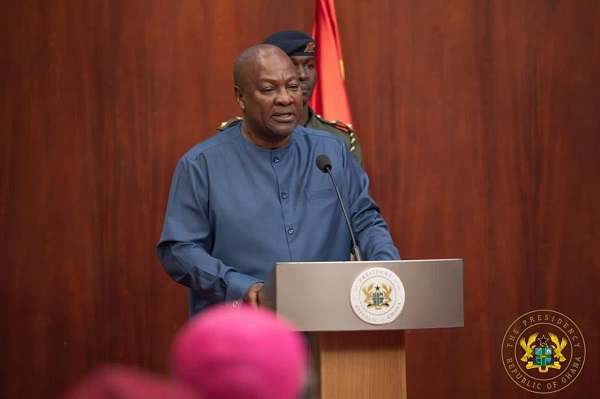
Meanwhile, watch President John Dramani Mahama’s 2026 full New Year Message below:

Meanwhile, watch as Rev Owusu-Bempah drops major prophecies for 2026

Gold price rises after US captures Venezuela’s Maduro

0

Precious metal prices have risen after the US capture of Venezuelan President Nicolás Maduro increased investors’ concerns about geopolitical risks.

In Monday morning trade in Asia, gold was about 1.8% higher at around $4,408 (£3,282) an ounce, while silver was up close to 3.5%, as money was moved into so-called “safe-haven” assets.

Meanwhile, crude oil prices were little changed and share prices in the region were mostly higher.

Both gold and silver hit record highs in 2025 before losing ground in the last few days of the year.

Despite dipping at the end of last year, gold still saw its best annual performance since 1979 after rising by more than 60%, reaching an all-time high of $4,549.71 on 26 December.

Those gains were driven by several factors, including expectations of more interest rate cuts, major purchases of bullion by central banks and investor concerns about global tensions and economic uncertainty.

Oil fluctuated in early trade and was a little lower by mid-morning as investors weighed whether Washington’s intervention in Venezuela would affect crude supplies.

US President Donald Trump has vowed to tap into Venezuela’s vast oil reserves after seizing Maduro and said that the US will “run the country until we can do a safe, proper and judicious transition”.

But industry analysts have said the move is unlikely to have an immediate impact on how much people and businesses pay for energy.

Experts have also said it would cost billions of dollars to fix Venezuela’s oil infrastructure, which has been in sharp decline since the early 2000s.

Venezuela’s crude production has been “lacklustre” for years and now only accounts for around 1% of global oil output, said investment strategist Vasu Menon from OCBC bank.

The former chief executive of BP, Lord Browne, told the BBC’s Today programme that for Venezuela to revive its oil production would take “a tremendous amount of skill investment and time”.

While there might be a “quick pick up” of some production, he added, output might actually fall while the industry is reorganising.

Share markets in the Asia-Pacific also made gains as investors focused on news unrelated to developments in Venezuela.

Japan’s Nikkei 225 was up by 2.6% on the first day of trading of the year and new data showed that manufacturing activity stabilised in December.

Major indexes in South Korea and China were also higher.

The jumps reflect confidence that the fallout from events in Venezuela will remain distant, said Zavier Wong from investment firm eToro.

Shigeto Nagai from Oxford Economics said strong share price gains in Japan and South Korea today “mainly reflect the AI-led rally in the US on Friday.”

Ignatius.K. Acheampong: Ghana’s Most Contested Nation-Builder

0
Ignatius.K. Acheampong: Ghana’s Most Contested Nation-Builder

More than four decades after his death, General Ignatius Kutu Acheampong remains one of the most debated figures in Ghana’s political history. To some, he was a nationalist soldier-statesman who restored pride, discipline, and self-reliance after economic decline. To others, he presided over economic hardship, corruption, and an ill-fated attempt to dilute democratic rule. Yet even his critics concede one fact: Acheampong’s era left deep and lasting imprints on Ghana’s national life.

The question many Ghanaians still ask, quietly or openly, is whether Acheampong belongs in the company of Ghana’s great leaders, perhaps even as primus inter pares after Kwame Nkrumah. Answering this requires moving beyond nostalgia and hostility, and grounding the discussion in verifiable history.

The Context: A Soldier Enters Politics

On 13 January 1972, Colonel Acheampong led a military coup that overthrew the Progress Party government of Dr. K.A. Busia. Ghana at the time was burdened by currency devaluation, austerity measures, rising unemployment, and public dissatisfaction. Acheampong justified the takeover as a rescue mission to halt economic decline and restore national dignity. The new regime, first known as the National Redemption Council (NRC) and later the Supreme Military Council (SMC), rejected orthodox economic prescriptions and embraced a nationalist, state-led development approach. This orientation defined both Acheampong’s achievements and his failures.

A Developmental State: Projects That Shaped Daily Life

Unlike some military regimes that ruled largely by decree, Acheampong’s government invested heavily in visible, mass-impact projects, many of which still affect Ghanaian life today.

  1. Operation Feed Yourself (OFY): Perhaps the most iconic Acheampong policy was Operation Feed Yourself, launched to achieve food self-sufficiency and reduce imports. Citizens were encouraged to farm, from backyard gardens to commercial agriculture, while state support for irrigation and mechanization expanded. OFY succeeded in mobilizing national consciousness around agriculture and restoring dignity to farming. However, while food production improved in certain periods, the programme did not achieve sustained national self-sufficiency. Structural weaknesses, such as poor storage, pricing distortions, limited extension services, and transport challenges, undermined long-term impact. Still, OFY remains one of Ghana’s most ambitious agricultural mobilization efforts.
  2. Housing and Urban Development: Acheampong’s era witnessed one of Ghana’s most significant public housing drives. The Dansoman Housing Estate in Accra, widely documented as one of the largest housing projects in West Africa at the time, was initiated under his government. Additional housing projects were developed in Teshie-Nungua and other urban centers. These projects reflected a commitment to state-led social infrastructure, aimed at middle- and lower-income households, a contrast to later market-driven housing policies.
  3. Energy and Industrial Foundations: The Kpong Hydroelectric Project was initiated during Acheampong’s tenure to complement Akosombo, expand power generation, and support irrigation. Though completed later, Kpong stands as part of his administration’s long-term infrastructure vision. This emphasis on foundational infrastructure aligned with Acheampong’s belief that economic sovereignty required energy security.
  4. Healthcare Expansion: Several regional and specialized hospitals were expanded or modernized during the 1970s, including facilities in Ho, Winneba, Pantang, and Tamale. While documentation varies by institution, the broader record confirms increased state investment in public health infrastructure during the period.
  5. Two Quiet Revolutions: Keep Right and Metrication: Two reforms introduced under Acheampong continue to shape everyday life. Operation Keep Right, which switched Ghana from left-hand to right-hand traffic, aligning the country with most of the world, and adoption of the Metric System, replacing imperial measurements. Both were logistically complex but successfully implemented, demonstrating the regime’s capacity for nationwide coordination and public education.

Economic Nationalism and the “Yentua” Doctrine

Acheampong’s economic philosophy was unapologetically nationalist. His government repudiated portions of Ghana’s external debt, arguing that the loans were unjust and strangling development. The popular slogan “Yentua” (“We won’t pay”) resonated with many citizens. However, this stance had serious consequences. Ghana’s international creditworthiness deteriorated, access to external financing declined, and shortages of essential goods worsened. While debt repudiation boosted short-term domestic morale, it contributed to long-term economic isolation. It is historically accurate to state that Ghana’s external debt problem evolved across multiple administrations, with restructuring, rescheduling, and repayments spread over decades. Assigning later debt settlements solely to any one president oversimplifies a complex fiscal history.

Union Government (UNIGOV): Vision without Trust

Acheampong’s most controversial legacy remains the Union Government (UNIGOV) proposal. Introduced in 1976, UNIGOV sought to abolish party politics and replace it with a non-partisan governance system combining military officers, civilians, professionals, and traditional authorities. Supporters argued that party politics had deepened ethnic and regional divisions, and that a consensus-based system could promote stability. But then Ghana needed development, not adversarial politics. These arguments resonated with some traditional leaders and segments of the public fatigued by political rivalry. Critics countered that UNIGOV lacked clear constitutional safeguards. It blurred the line between military and civilian authority, and appeared designed to entrench military influence indefinitely.

The 1978 referendum on UNIGOV was deeply contested. Allegations of manipulation, suppression of opposition groups, and restrictions on dissent damaged the credibility of the process. Rather than uniting the nation, UNIGOV intensified resistance, particularly among students, professionals, and labour unions. In hindsight, many scholars argue that UNIGOV failed not because inclusive governance is inherently flawed, but because trust, transparency, and genuine civilian transition mechanisms were absent. A potentially laudable idea collapsed under authoritarian execution.

Decline, Ouster, and Tragic End
By the late 1970s, economic hardship, corruption (popularly referred to as kalabule), and political repression had eroded Acheampong’s legitimacy. On 5 July 1978, he was removed in a palace coup led by Lt. Gen. F.W.K. Akuffo. Less than a year later, in June 1979, the Armed Forces Revolutionary Council (AFRC) executed Acheampong alongside other senior officers. His execution remains one of the most traumatic episodes in Ghana’s post-independence history — a reminder of how violently politics can turn on its own architects.

Acheampong as Primus Inter Pares?

Does Acheampong qualify as first among equals after Nkrumah? The answer depends on the criteria. In nationalist intent, Acheampong clearly echoed Nkrumah — self-reliance, state intervention, and resistance to external domination. In infrastructural ambition, his regime delivered tangible, visible projects that many Ghanaians still remember. In governance, however, his suppression of dissent and flawed political engineering weakened democratic culture. Acheampong was neither a simple hero nor a caricatured villain. He was a leader shaped by Cold War politics, post-colonial economic pressures, and military institutional culture. His greatest strength, decisiveness, also became his greatest weakness.

What History Ultimately Says
General I.K. Acheampong belongs to a rare category in Ghanaian politics. Leaders whose intentions were nationalist, whose actions were consequential, and whose outcomes were mixed. He restored confidence in agriculture, expanded infrastructure, and pursued economic sovereignty with conviction. Yet he also presided over economic decline, tolerated corruption, and misjudged the public’s appetite for non-democratic governance. If Kwame Nkrumah was Ghana’s foundational visionary, Acheampong was its most assertive nationalist corrector — bold, flawed, and unforgettable. History, as it should, remembers him not with slogans, but with evidence.

FUSEINI ABDULAI BRAIMAH
+233208282575 / +233550558008
[email protected]

DDEP-affected road projects being reactivated – Agbodza

0

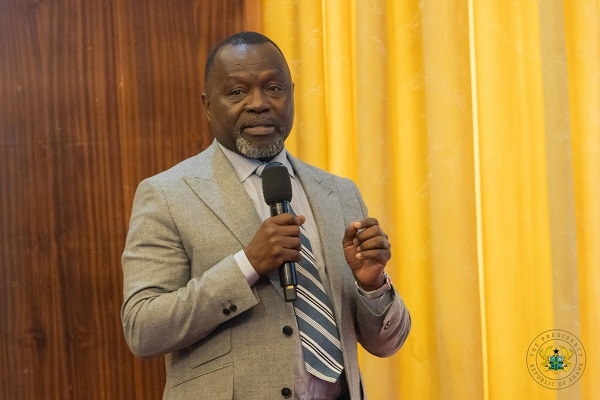
The Minister for Roads and Highways, Governs Kwame Agbodza, has announced that road projects affected by Ghana’s Domestic Debt Exchange Programme (DDEP) are being reactivated following the near completion of the country’s debt restructuring process.

He said several major road projects were stalled under the previous government due to the debt restructuring exercise, citing the Pokuase–Amasaman road project and other critical roads across the country as examples.

Speaking on the Citi Breakfast Show on Monday, January 5, 2026, Mr. Agbodza said the government had made significant progress in resolving the financial constraints that halted the projects.

“We are almost 100 per cent through with the debt restructuring. So, almost all the roads that have been stalled because of the debt restructuring are now being reactivated,” he said.

The minister explained that even projects financed under special arrangements, including Sinohydro-funded works, had been addressed.

“Even the Sinohydro projects that were stalled, like the interchange in Takoradi, have all been resolved, and we are in the final stages. If the contractors want to go to the site today, they can do that,” he said.

Mr. Agbodza further revealed that work had already resumed on some projects, including the Ashaiman Roundabout to Atimpoku road, where the contractor has started drawing down funds.

He also disclosed that issues surrounding the Dome–Ketaase road project had been resolved, although the scope of work had increased.

“The Dome–Ketaase situation has been resolved. Even though the scope of the project has increased, the government is committed to paying for the extra scope from the Government of Ghana sources,” he added.

The minister assured the public that the government remains committed to completing stalled road projects nationwide to improve transportation, boost economic activity, and ease the burden on road users.

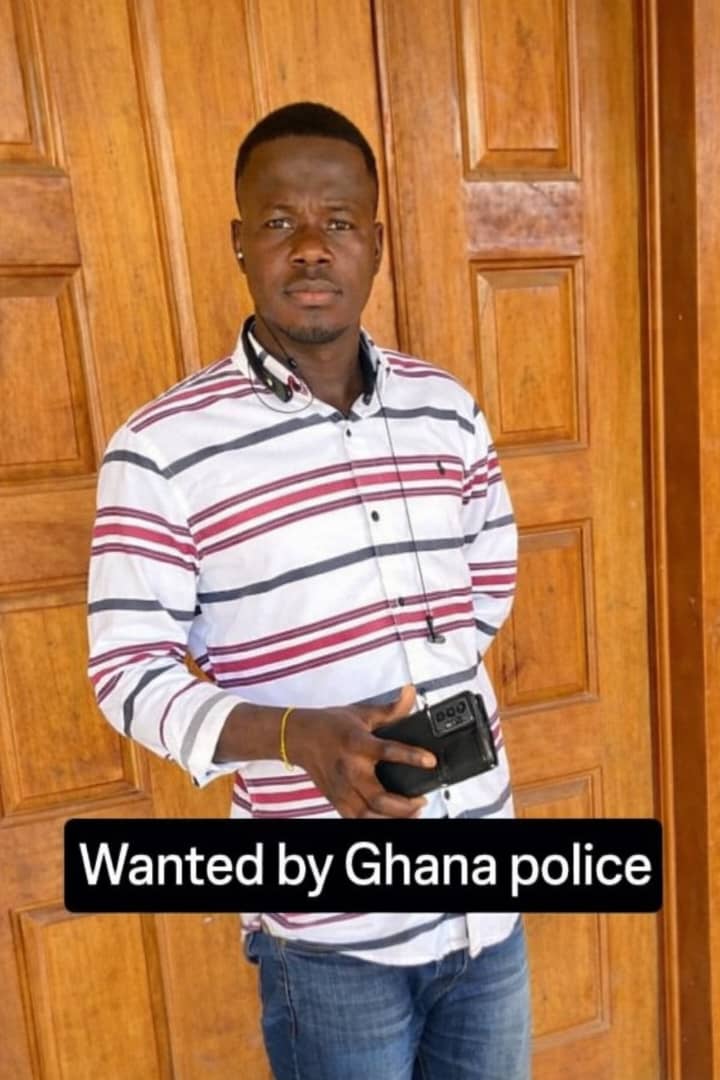
Police launch manhunt for third suspect in assault of 12-year-old girl

Family of Ehiamenkyene murder victim petitions IGP for justice as she is laid to rest

0

'James Bond' is currently on the run after allegedly killing his fiancée ‘James Bond’ is currently on the run after allegedly killing his fiancée

Correspondence from the Eastern Region

The grieving Ehiamenkyene community on Saturday, January 3, 2026, turned the burial of Evelyn Osakonor into a public appeal for justice, accusing the police of delays and warning of rising fear and tension as the prime suspect in her November murder 2025 murder remains at large.

The Borboryo family and residents of Ehiamenkyene in the Fanteakwa District of the Eastern Region have renewed calls on the Inspector General of Police (IGP), (COP) Christian Tetteh Yohuno, to urgently intervene in the investigation into the murder of Evelyn Osakonor, popularly known as Koryo or Koryotsu, following what they describe as months of slow and inconclusive police action.

The appeal was made on Saturday, January 3, 2026, during the burial and funeral rites of the deceased, which drew scores of residents, youth and family members, many of whom expressed frustration and fear over the continued freedom of the prime suspect.

Evelyn Osakonor, a market food vendor and mother of a three-year-old daughter, was allegedly murdered in the early hours of November 13, 2025.

Her lifeless body was later discovered in a pool of blood at the corridor of a guest house said to belong to her boyfriend, Teye James, also known in the community as “James Born” or “James Bond,” who has since gone into hiding.

Speaking on behalf of the community, the President of the Ehiamenkyene Youth Association, Raphael Odonkor, read a petition addressed to the IGP at a press conference held as part of the funeral activities.

The petition accused the local police of failing to act decisively despite multiple reports from residents claiming to have sighted the suspect at various locations.

“The slow pace and apparent lack of urgency in this investigation has created fear, anxiety and growing dissatisfaction among residents, while undermining public confidence in law enforcement,” the petition stated, adding that “justice delayed is justice denied.”

According to the family, Evelyn was reported missing on the morning of November 13, 2025, after repeated attempts to locate her proved futile. The search eventually led relatives and friends to the residence and guest house of her boyfriend, where her body was found.

The matter was reported to the police, and her body was deposited at the morgue for autopsy.

However, the family says that since the autopsy was conducted, there has been little visible progress in arresting the suspect or providing updates on the status of investigations.

Family head, Anthony Freeman Narh, described Evelyn as calm, respectful and well-loved in the community, noting that her death had left the family devastated.

He disclosed that the family had earlier disapproved of her relationship with the suspect due to concerns about his character and had even rejected a marriage proposal.

“We didn’t like the boy’s character, so we disapproved of the relationship. Evelyn was very peaceful and on good terms with everyone. Her death is very painful,” he said.

In a separate interview, Odonkor alleged that the suspect had a history of violence against Evelyn, including previous physical assaults that were reported to the police, resulting in him signing a bond of good behaviour.

“There were multiple stab wounds on her body. He had beaten her on several occasions before. We kept reporting sightings of him to the police, but nothing happened.

“The community is living in fear,” he said, warning that youth in the area were growing impatient and threatening to take matters into their own hands if no arrests are made.

The petition, copied to the President of the Republic, the Minister of the Interior, the Eastern Regional Minister and police commanders at the regional and district levels, calls for professionalism, transparency and regular updates from the Ghana Police Service.

The family and community are demanding swift action to apprehend the suspect and restore calm to Ehiamenkyene.

As mourners laid Evelyn Osakonor to rest, the dominant message was not only grief, but a firm demand for justice — and a plea that her death should not be added to the list of unresolved crimes.

Gyamfi, Forson, Asiama are ‘true patriots’; Ghana should start lending to IMF

0

Economic analyst and president of policy think-tank IMANI Africa, Franklin Cudjoe Economic analyst and president of policy think-tank IMANI Africa, Franklin Cudjoe

Economic analyst and president of policy think-tank IMANI Africa, Franklin Cudjoe, has lauded GoldBod CEO Sammy Gyamfi, Finance Minister Dr Cassiel Ato Forson and BoG Governor Dr Asiama as “true patriots”, noting the substantial foreign exchange reserves Ghana has accumulated through their efforts.

In a series of posts on X on January 4, 2026, Cudjoe acknowledged improvements in economic policy compared with past initiatives such as the Gold-for-Oil (G4O) strategy and policies implemented by the three key figures.

He singled out Dr Forson, particularly, for his efforts in reducing the debt of Ghana from 61% of GDP to 45% within 2025.

According to him, Ghana should begin loaning money to the IMF.

“Sammy Gyamfi, Ato Forson and Dr Asiama are true patriots. The GoldBod has brought us substantial reserves which have not only helped absolve the huge losses Ghana incurred through the G4O programme, but also helped with our debt service obligations. It is instructive to note that the Finance Minister has diligently reduced the debt of Ghana from 61% of GDP to 45% in a year!!

“I think we should be loaning money to the IMF, so they can help other less endowed countries,” he said.

NPP’s 3% withholding tax on small-scale gold contributed to 2021 financial woes – Sammy Gyamfi

However, Cudjoe backed calls for clear accounting and accountability following contentious claims of significant losses linked to Ghana’s gold-reserve strategy.

“I can understand why GoldBod wouldn’t acknowledge that the losses should be classified as such on their books, because it thinks they are just playing an intermediate role between the Bank of Ghana and the aggregators of gold since it is the bank that provides the cedis for gold purchases and ultimately receives proceeds of gold sold abroad in dollars.

But they are losses, transactional or trade losses. A $214m loss is large enough for us to understand how it occurred, the period it occurred and where it occurred (as in with which buyers of our gold and the quantum of loss per buyer),” he wrote.

He warned that relying on external entities like the IMF to surface such information before domestic disclosure indicates weaknesses in governance and public financial management.

“I think the Bank of Ghana should provide answers to how the $214m loss happened and what they will do to minimise it in future transactions.

“My worry though is that it had to take the IMF to receive this information and then publish it for us to knock our heads discussing what name to call it,” he added.

Cudjoe’s remarks come amid scrutiny over US$214 million in reported G4R losses in the first nine months of 2025, figures disclosed in the International Monetary Fund’s Fifth Review report under Ghana’s Extended Credit Facility.

The International Monetary Fund (IMF) in its Fifth Review report under Ghana’s Extended Credit Facility cited operational costs and trading shortfalls associated with gold transactions as the principal drivers of these losses.

In response to calls from the parliamentary Minority Caucus for a bipartisan enquiry into the alleged $214 million and other loss claims, GoldBod’s CEO, Sammy Gyamfi, argued that the institution itself has not made losses and is on track to post a surplus; he maintains that any losses attributed to gold trading relate to broader central bank programmes, not GoldBod’s operations.

See the post below:

ID/BAI

Ghana’s economy stronger after one year of Mahama’s return – Kwakye Ofosu

0

The Minister for Government Communications, Felix Kwakye Ofosu, has asserted that Ghana’s economy has undergone a significant turnaround within President John Dramani Mahama’s first year back in office.

He argues that the country is now in a far healthier position than it was at the time the National Democratic Congress (NDC) assumed power.

Speaking in an interview on TV3 on Sunday, January 4, Mr Kwakye Ofosu said key economic indicators show consistent improvement, reflecting stronger performance and renewed stability.

According to him, economic management was the foremost concern of voters during the 2024 general elections, making recent gains particularly important.

“Any objective observer would agree that the country is in a much better position than when we took over. If you consider the economy, which was the single most important issue for voters barely a year ago, all the indicators now point in the right direction,” he said.

The Government Communications Minister maintained that the NDC administration has fulfilled its commitments to the electorate, stressing that the progress made is measurable and evident.

“We have acquitted ourselves creditably. It is not difficult to assess our performance; one only needs to compare where the country was a year ago with where it stands today,” he noted.

Mr Kwakye Ofosu further highlighted tangible improvements in living conditions, pointing to a reduction in the cost of living, falling prices of goods, and a notable strengthening of the cedi.

He said the currency, which had long been a source of concern, is projected to record an annual appreciation of nearly 30 per cent — a development he described as unprecedented in recent years. “This stability has translated into lower prices across several sectors of the economy,” he added.

DISCLAIMER: The Views, Comments, Opinions, Contributions and Statements made by Readers and Contributors on this platform do not necessarily represent the views or policy of Multimedia Group Limited.

DISCLAIMER: The Views, Comments, Opinions, Contributions and Statements made by Readers and Contributors on this platform do not necessarily represent the views or policy of Multimedia Group Limited.

Why Africa’s unity is key to escaping dollar control after US-Venezuela saga – Nigeria, South Africa could be next

0

For decades, the continent’s leading nations have debated pathways toward genuine economic sovereignty. Today, amid Washington’s aggressive displays of power, the case for unity, financial, monetary, and political, has never been stronger.

The Venezuelan episode is more than a regional crisis as it represents a contemporary expression of a long historical pattern in which global powers leverage economic and military might to shape resource distribution, political alignment, and global governance.

For Africa’s heavyweights, this moment demands reflection and action to break the structural constraints of economic dependency, particularly on the United States dollar and Western financial institutions, while striving to fulfil aspirations once championed by visionary leaders like Muammar Gaddafi.

The administration justified this intervention through allegations of narco-terrorism and national security threats, but critics argue that real motivations lie in securing access to Venezuela’s vast oil reserves and reasserting US geopolitical dominance.

The broader context includes warnings from US leadership that other regional governments, including Mexico and Cuba, could face similar pressure if they do not align with US priorities, particularly on drug trafficking and political cooperation.

This has prompted strong condemnation across Latin America, with governments such as Mexico’s framing the actions as violations of the UN Charter and threats to regional peace.

International legal scholars and diplomatic voices have underscored that the operation contravenes widely accepted norms of state sovereignty and non-intervention, principles enshrined in the United Nations Charter.

Many Latin American leaders have drawn parallels to historical interventions that served strategic economic interests rather than humanitarian or security rationales.

If Washington is prepared to bypass diplomatic norms to influence its hemisphere, what might it do in other parts of the world where vital natural resources and emerging markets abound?

The global financial system is deeply anchored in the US dollar. Oil trade, the world’s most strategically traded commodity, overwhelmingly uses the dollar as the medium of exchange, tying exporter and importer economies alike to the currency’s dominance.

Africa’s best-resourced nations, including Nigeria, South Africa, Egypt, and Kenya, remain structurally intertwined with this system. Their foreign reserves, trade finance, and international debts are denominated in dollars.

Currency volatility, debt servicing pressures, and external financial shocks continuously squeeze policy space.

United Africa proponents argue that a common currency and integrated economic institutions would reduce reliance on external currencies, enable greater control over fiscal and monetary policies, and foster cross-border investment within the continent.

Gaddafi’s broader campaign for continental unity sought to tie Africa’s abundant natural resources and growing markets through shared institutions, a collective bargaining approach, and a diminished dependency on former colonial powers.

While critics debated the feasibility of his proposals, the underlying rationale remains relevant: structural transformation requires financial sovereignty.

Africa has a wide range of economies, political systems, and levels of development. But powerful patterns emerge when viewed through the lens of external economic influence.

Raw materials are often exported in unprocessed form, while finished goods are imported. Trade within Africa remains limited compared to trade with Europe, the US, and China.

External debt burdens and conditions attached to financial assistance continue to erode policy autonomy in key areas of development.

In this context, unity is not about political homogenisation; it is about strategic cooperation that reinforces each member’s economic resilience.

A continental free trade area, deepened infrastructure links, and coordinated industrial policies would empower African economies to leverage their collective market size as a bargaining chip rather than remain fragmented targets of external conditionalities.

The fatal consequences of fragmentation were evident in Libya after NATO intervention in 2011. The overthrow of Gaddafi, followed by protracted instability, showcased how vulnerable African states can be when external powers intervene under pretexts that mask deeper economic interests.

This underscores the importance of building continental mechanisms capable of deterring or responding to such interventions, based on shared diplomatic, economic, and security frameworks.

Latin American responses to the US invasion of Venezuela reveal a mix of condemnation and caution, dialogue and solidarity. Mexico’s insistence on peaceful conflict resolution and respect for international law reflects a long tradition of non-interventionist principles that could inform African diplomatic positions.

Regional institutions seek to hold external powers accountable to legal norms because failure to do so sets a precedent that could be invoked elsewhere.

For African heavyweights, these developments reinforce vital truths. First, global power dynamics are competitive and sometimes coercive. Second, dependence on external financial structures constrains national agency. Third, coordinated regional strategies can elevate collective bargaining power and secure more equitable terms in international relations.

The dream of a United Africa, long articulated by leaders and reformers, might not be fully realisable in the short term. But its core principles, economic autonomy, monetary innovation, intra-continental trade expansion, and cooperative security, are attainable and urgently needed.

In a world where power is exercised through both complex and economic instruments, unity is not an idealistic luxury; it is a strategic necessity.