


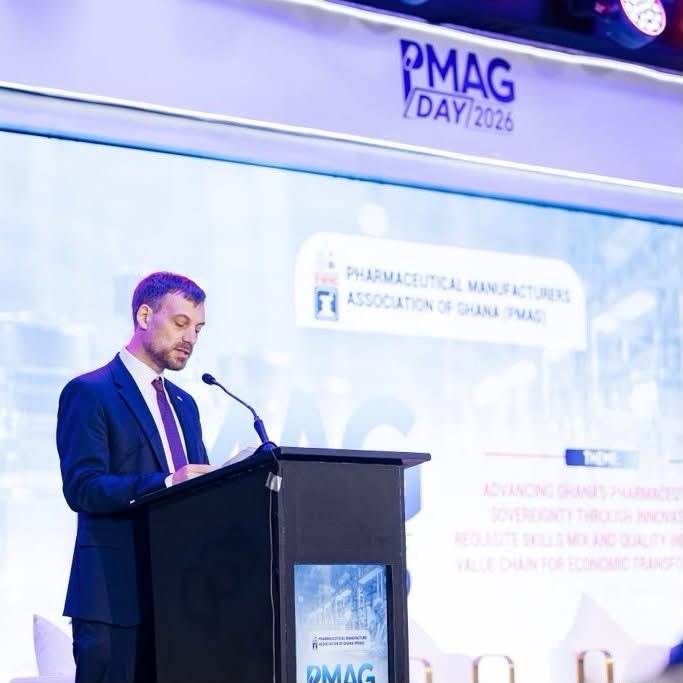
Ghana’s pharmaceutical sector is at a critical juncture, with stakeholders emphasizing the urgent need for pharmaceutical sovereignty to fortify the nation’s health security and drive industrial growth. The 2026 Pharmaceutical Manufacturers Association of Ghana (PMAG) Day, held in Accra to commemorate the association’s 27th anniversary, served as a platform for in-depth discussions on how a robust domestic pharmaceutical industry can enhance medicine accessibility, health system resilience, and Ghana’s broader economic transformation.
Under the thematic focus of “Building a Resilient and Competitive Pharmaceutical Industry,” the event brought together policymakers, industry leaders, researchers, and international partners to explore strategic solutions for overcoming challenges in local drug production. Key priorities included innovation acceleration, skill development, quality assurance, foreign investment attraction, and cross-sector collaboration to strengthen Ghana’s position in the global pharmaceutical landscape.
The Imperative of Pharmaceutical Sovereignty
The discussions underscored that reducing reliance on imported pharmaceuticals is not merely an economic necessity but a health security imperative. Ghana, like many African nations, faces supply chain vulnerabilities, where disruptions—whether due to geopolitical tensions, pandemics, or logistical challenges—can severely impact access to essential medicines. By investing in local manufacturing, Ghana can ensure consistent availability, cost-effectiveness, and compliance with international quality standards, thereby safeguarding public health during crises.
Key Themes and Strategic Initiatives
-
Expanding Local Vaccine and Medicine Production
A significant portion of the dialogue centered on scaling up domestic production of vaccines and critical medicines to mitigate dependency on foreign suppliers. Experts highlighted that localized manufacturing would not only reduce costs but also boost Ghana’s preparedness for future health emergencies, such as outbreaks of infectious diseases or antibiotic-resistant strains. -
Strengthening Research and Development (R&D)
To foster innovation, stakeholders called for increased funding for pharmaceutical research, particularly in disease-specific treatments and biotechnology. Collaborations between academia, private sector firms, and research institutions were identified as vital for developing homegrown solutions to Ghana’s most pressing health challenges, including malaria, non-communicable diseases (NCDs), and emerging infectious threats. -
Upskilling the Workforce
The pharmaceutical industry’s growth hinges on a skilled and adaptable workforce. The event emphasized the need for targeted training programs in pharmaceutical engineering, quality control, regulatory compliance, and modern manufacturing techniques. Partnerships with technical and vocational education institutions (TVETs) were proposed to bridge the skills gap and ensure a steady pipeline of competent professionals to drive the sector forward. -
Enhancing Quality Standards and Regulatory Frameworks
For Ghana’s pharmaceutical industry to gain regional and global credibility, adherence to stringent quality standards is non-negotiable. Discussions included strengthening regulatory bodies such as the Food and Drugs Authority (FDA) to enforce Good Manufacturing Practices (GMP) and Good Clinical Practices (GCP). Additionally, harmonizing regulations with international bodies like the World Health Organization (WHO) and African Medicines Agency (AMA) was deemed essential for market access and investor confidence. -
Attracting Foreign and Domestic Investment
To accelerate manufacturing capabilities, stakeholders advocated for tax incentives, streamlined business registration processes, and infrastructure development to attract both local and foreign investors. The event highlighted success stories from neighboring countries, such as South Africa and Kenya, where pharmaceutical hubs have emerged due to favorable policy environments and robust supply chains. -
Deepening Public-Private and International Partnerships
Collaborations between government agencies, private pharmaceutical companies, and development partners were identified as critical enablers for sustainable growth. International organizations, such as the European Union (EU) and Germany, were recognized for their commitment to supporting Ghana’s pharmaceutical ecosystem through structured programs.
International Support: The PharmaVax Ghana Programme
The German Embassy and the European Union reaffirmed their long-term partnership with Ghana through the PharmaVax Ghana Programme, implemented by GIZ (Deutsche Gesellschaft für Internationale Zusammenarbeit). This initiative is a key component of the Team Europe Initiative on Manufacturing and Access to Vaccines, Medicines, and Health Technologies in Africa (MAV+).
The PharmaVax Ghana Programme aims to:
– Strengthen Ghana’s pharmaceutical infrastructure through modernized manufacturing facilities.
– Enhance vaccine and medicine production capacity, reducing reliance on imports.
– Promote innovation by supporting local research and development in critical health areas.
– Build a resilient supply chain to ensure timely availability of essential medicines during emergencies.
The German Embassy’s deputy head of cooperation, Daniel Boehme, congratulated PMAG for facilitating this critical dialogue and pledged continued technical and financial support to help Ghana achieve pharmaceutical self-sufficiency. The EU Ambassador, Rune Skinnebach, echoed these sentiments, emphasizing that international cooperation remains indispensable in addressing transnational health threats that transcend borders.
Government and Industry Leadership
The event was graced by high-level dignitaries, including:
– Kwabena Mintah Akandoh, the Minister for Health, who reiterated the government’s commitment to industrializing the pharmaceutical sector as part of Ghana’s Vision 2072 and AfCFTA (African Continental Free Trade Area) objectives.
– Augustus Goosie Tanoh, the Presidential Advisor on the 24-Hour Economy, who highlighted the synergy between pharmaceutical manufacturing and Ghana’s broader economic diversification efforts, particularly in job creation and export revenue generation.
The Path Forward: A Call to Action
The PMAG 2026 Day served as a clarion call for urgent and coordinated action from all stakeholders. Key takeaways included:
– Accelerating policy reforms to create a business-friendly environment for pharmaceutical investors.
– Investing in cutting-edge technology to enhance production efficiency and product quality.
– Fostering stronger ties between academia and industry to drive homegrown medical innovations.
– Leveraging international partnerships to access funding, expertise, and best practices from global pharmaceutical leaders.
As Ghana continues to navigate health security challenges in an increasingly interconnected world, pharmaceutical sovereignty is not just an aspiration but a necessity. By empowering local manufacturing, fostering innovation, and strengthening collaborations, the nation can build a resilient pharmaceutical industry that protects public health, boosts economic growth, and positions Ghana as a regional leader in medicine production.
The PMAG 2026 Day marked a turning point—one where visionary discussions translate into actionable strategies, ensuring that Ghana’s health security is built on a foundation of self-reliance and excellence.
