


A New Frontier in African Geoscience: Why Ghana’s Conference Could Spark a Continental Mining Revolution
The global demand for gold, lithium, cobalt, and rare earth minerals has never been higher, accelerating the race for Africa’s vast untapped mineral wealth. Yet, despite holding some of the world’s most promising geological formations, the continent has historically struggled to fully capitalize on its resources. A recent International Association for Structural Geology and Tectonics (IASGT) conference held in Accra, Ghana, has emerged as a pivotal moment—one that could redefine Africa’s mining trajectory by positioning the continent as a global leader in geoscience research, exploration innovation, and sustainable mineral development.
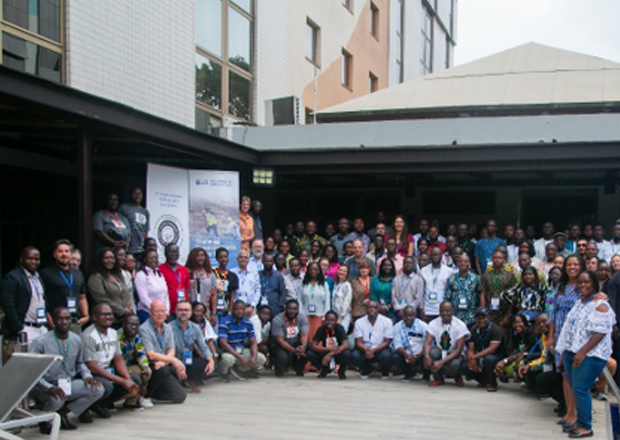
Hosted by the University of Ghana’s Department of Earth Science, in collaboration with the Centre for Exploration Targeting (CET) at the University of Western Australia and Agate Project, the conference brought together international geoscientists, mining executives, and policymakers to discuss how advanced geological research, AI-driven exploration, and capacity building can unlock Africa’s mineral potential. The event underscored a critical truth: Africa’s future in mining is not just about what lies beneath its soil—it’s about the scientific expertise and technological innovation that can reveal it.
Closing the Geological Knowledge Gap: Why Africa Needs World-Class Research
For decades, structural geology and tectonics research—the study of how Earth’s crust deforms and how minerals accumulate—has been dominated by North American and European institutions. This imbalance has left African scientists and mining companies dependent on foreign expertise, limiting their ability to discover and develop high-value mineral deposits independently.
Professor Manish Mamtani, a leading structural geologist from the Indian Institute of Technology (IIT) Kharagpur, emphasized that the IASGT conference is deliberately shifting the global scientific landscape by bringing high-level research directly to Africa.
“One of our major objectives is to promote structural geology research, particularly in developing countries. Many international scientific meetings have historically been concentrated in Europe and North America, limiting participation from Africa, South America, and parts of Asia. By hosting this conference in Ghana, we are ensuring that local researchers, students, and industries have access to cutting-edge knowledge and networking opportunities.”
This initiative aligns with a broader global trend—one where emerging economies are investing in domestic scientific capacity to secure their mineral futures. Ghana, already Africa’s top gold producer, is now positioning itself as a regional hub for geoscience innovation, attracting international collaborations that could accelerate mineral discoveries and reduce exploration risks.
The Role of Structural Geology: Unlocking Hidden Mineral Deposits
At the heart of Africa’s mining potential lies structural geology—the science of understanding rock deformation, fault systems, and fluid movement in the Earth’s crust. These factors determine where and how minerals accumulate, making them critical for exploration success.
Professor Prince Ofori Amponsah, Head of the University of Ghana’s Department of Earth Science, highlighted how structural geology is indispensable for modern mining:
“Structural geology underpins virtually every natural resource we have—whether gold, base metals, or even oil. Understanding rock deformation helps geologists predict where mineral-rich fluids have traveled through the crust, allowing us to identify concealed ore bodies that traditional methods might miss.”
In West Africa, particularly Ghana, fault systems and shear zones have long been key pathways for gold and lithium enrichment. By studying these structures, geologists can pinpoint high-potential exploration targets, reducing the need for costly, trial-and-error drilling.
The conference featured case studies from Ghana’s goldfields, where advanced structural mapping has already led to new discoveries in areas previously deemed uneconomic. This demonstrates how investing in geological research can extend mine life, improve recovery rates, and attract foreign investment—all while reducing environmental risks associated with poorly planned exploration.
AI and Machine Learning: The Future of Mineral Exploration
While structural geology remains foundational, the integration of artificial intelligence (AI) and machine learning (ML) is revolutionizing mineral exploration. Companies like AngloGold Ashanti, Asante Gold, and Turaco Gold—major participants in the conference—are already leveraging AI-driven geospatial analysis, remote sensing, and predictive modeling to identify hidden mineral deposits.
However, Professor Mamtani warned that technology alone cannot replace geological expertise:
“Fieldwork remains extremely important. AI and machine learning can process vast datasets, but they still depend on accurate geological interpretations. A geologist’s ability to read rock formations, identify deformation patterns, and understand fluid flow is irreplaceable.”
This synergy between human expertise and digital innovation is what Ghana—and Africa as a whole—must embrace to stay competitive in the global mining industry. The conference saw demonstrations of AI tools that analyze satellite imagery, seismic data, and geological surveys to predict mineral-rich zones, while also training local geoscientists in these cutting-edge techniques.
Industry-Academia Collaboration: Building Ghana’s Geoscience Ecosystem
One of the most transformative outcomes of the IASGT conference was the strengthened partnership between Ghana’s universities and the mining industry. Companies like Asante Gold Corporation and AngloGold Ashanti actively participated, recognizing that sustainable mining depends on scientific research.
Daniel Apau, a senior geologist at Asante Gold, reflected on the practical benefits of such collaborations:
“This conference is not just about academic discussions—it’s about applying knowledge to real-world exploration challenges. The discussions on structural analysis, AI integration, and sustainable mining practices are directly influencing how we approach new projects. The more we invest in local expertise, the more we can reduce dependency on foreign consultants and accelerate discoveries.”
The University of Ghana’s Department of Earth Science is now expanding its research facilities, including laboratories for geochemical analysis, remote sensing, and structural modeling, to support industry-driven projects. Additionally, joint research initiatives with institutions like the University of Western Australia’s Centre for Exploration Targeting (CET) are helping Ghana develop its own exploration models, tailored to West Africa’s unique geological settings.
Beyond Mining: Geoscience for Disaster Resilience and Infrastructure Development
While mineral exploration remains the primary focus, the conference also highlighted geoscience’s broader societal impact. Professor Tolulope Olugboji, a geophysicist from the University of Rochester, emphasized how Earth science research can protect communities from natural hazards.
“Geophysics is not just about finding minerals—it’s about understanding Earth’s movements to prevent disasters. Ghana, while not as seismically active as East Africa, still lies near active fault systems that could pose risks in the future. Investing in seismic monitoring, fault mapping, and hazard assessment is just as important as mineral exploration.”
His call for government investment in scientific infrastructure resonates with Ghana’s long-term development goals. By strengthening geophysical research, the country can improve infrastructure planning, water resource management, and disaster preparedness—while simultaneously boosting its mining sector.
Ghana’s Ambition: Becoming Africa’s Geoscience Leader
The IASGT conference in Accra was more than an academic gathering—it was a strategic declaration that Ghana intends to lead Africa’s geoscience revolution. Professor Ofori Amponsah outlined a clear vision:
“We want Ghana to be recognized as Africa’s premier center for geoscience research. If the world wants to understand how mineral systems form, how to explore them sustainably, and how to train the next generation of geoscientists, they should look to Ghana. This conference is just the beginning—we are building a self-sustaining ecosystem where research, industry, and education work together to secure Ghana’s mineral future.”
This ambition is already gaining traction. The University of Ghana’s Department of Earth Science is attracting international collaborations, while mining companies are increasing R&D investments in local geological research. If sustained, this knowledge-driven approach could transform Ghana from a raw material exporter into a high-value geoscience and mining innovation hub**—a model for the rest of Africa.
The Path Forward: A Continental Mining Renaissance?
As global demand for critical minerals continues to rise, Africa’s untapped potential is becoming increasingly valuable. However, success will not come from luck or traditional methods—it will come from scientific innovation, technological adoption, and institutional capacity building.
Ghana’s IASGT conference was a turning point—one that proved Africa can lead in geoscience rather than merely following developed nations. By investing in structural geology, AI-driven exploration, and industry-academia partnerships, Ghana is not just securing its own mineral future—it’s positioning itself as the regional leader that could spark a new mining boom across Africa**.
The message is clear: The next great mineral discoveries in Africa will not be found by chance—they will be revealed by science. And if Ghana succeeds in becoming a geoscience powerhouse, the entire continent stands to benefit.
