
Saturday 06th June, 2026 12:31 PM|

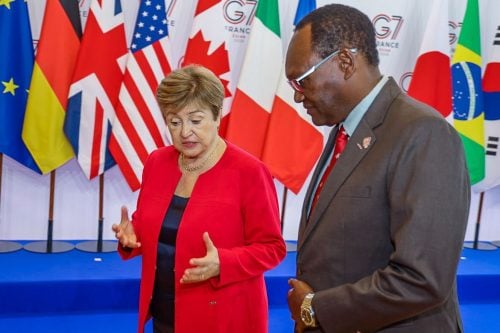
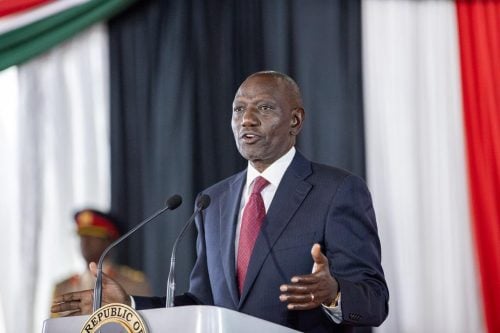
President William Ruto’s planned participation in the G7 Summit in Évian, France, has placed Kenya among a select group of countries invited to engage with some of the world’s most powerful economies on critical global issues.
But what exactly happens during a G7 Summit, and why does Kenya’s presence matter?
What is the G7?
The Group of Seven, commonly known as the G7, is an informal bloc made up of seven of the world’s largest advanced economies: the United States, the United Kingdom, France, Germany, Italy, Canada, and Japan.
The European Union also participates in the meetings.
The summit is held annually and serves as a platform where leaders discuss major global challenges, including economic growth, trade, security, climate change, energy, technology, health crises, and geopolitical tensions.
Although the G7 has no legal authority to enforce decisions, its influence is significant because member countries collectively account for a large share of the global economy and international financial systems.
What happens during the G7 summit?
The summit involves several layers of high-level diplomacy.
At the centre are meetings between heads of state and government, where leaders hold formal discussions on global priorities and emerging crises.
The sessions typically include negotiations on issues such as inflation, debt, global conflicts, climate financing, energy security, and international trade.
Leaders also hold bilateral meetings on the sidelines to discuss country-specific partnerships, investment opportunities, and diplomatic relations.
In addition to the core G7 members, selected non-member countries and international organisations are often invited to participate in some sessions depending on the host country’s priorities.
These invited nations contribute perspectives on regional and global issues affecting developing economies.
The summit usually concludes with a joint communiqué outlining shared positions, commitments, and policy directions.
Why was Kenya invited?
Kenya’s invitation reflects the country’s growing diplomatic visibility and its increasing role as one of Africa’s influential voices in global affairs.
Under President William Ruto, Kenya has actively positioned itself as a leading advocate on issues such as climate justice, debt restructuring, development financing, and reform of international financial institutions.
Kenya has also emerged as a key regional economic and diplomatic hub in East Africa, with strategic importance in trade, peacekeeping, renewable energy, and technology innovation.
The G7 Summit also comes weeks after Kenya successfully hosted the Africa Forward Summit in Nairobi.
Kenya’s participation demonstrates growing international recognition that African countries must be involved in discussions shaping the global economy and future development policies.
The invitation also aligns with broader efforts by major economies to deepen engagement with African nations amid shifting geopolitical competition and growing interest in Africa’s economic potential.
What Kenya hopes to gain
For Kenya, participation in the G7 Summit presents both diplomatic and economic opportunities.
The country is expected to push for increased climate financing to help vulnerable economies cope with the effects of climate change.
Kenya has repeatedly argued that African nations contribute the least to global carbon emissions yet suffer disproportionately from climate-related disasters such as droughts and floods.
Debt sustainability is also likely to feature prominently in Kenya’s agenda, with African governments seeking fairer financing mechanisms and reforms within institutions such as the International Monetary Fund and the World Bank.
Trade and investment discussions are equally important, particularly as Kenya seeks to attract manufacturing investments, technology partnerships, infrastructure financing, and green energy support.
The summit also allows Kenya to strengthen bilateral relations with major economies through side meetings and diplomatic engagements.
