



Ghana Confronts Reputational Risk as Fraud Prosecutions Rise
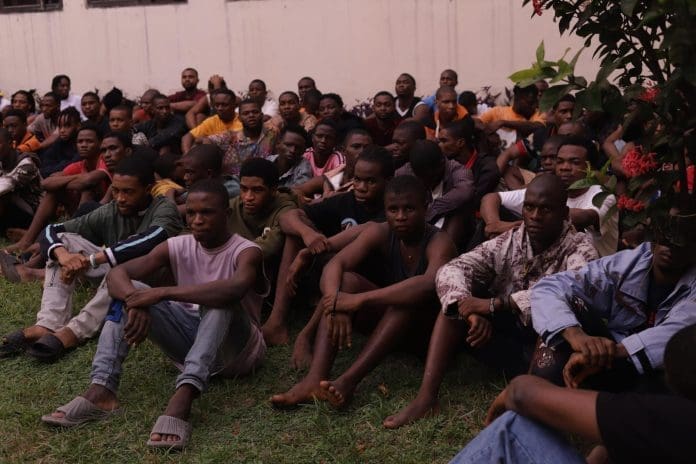

A series of high-profile fraud prosecutions in the United States involving Ghanaian nationals has intensified scrutiny of Ghana’s international image, prompting renewed debate among policy analysts and government officials about the diplomatic consequences of cybercrime beyond enforcement alone.
The cases span a widening range of schemes. Derrick Van Yeboah, a 40-year-old Ghanaian national extradited to the United States in August 2025, pleaded guilty in March 2026 to conspiracy to commit wire fraud for his role in a large-scale operation that stole over $100 million from American victims through business email compromise attacks and romance scams between 2016 and 2023. He agreed to pay more than $10 million in restitution. Most recently, on May 14, 2026, federal prosecutors charged three individuals Jamal Abubakari, Kamal Abubakari, and Amanda Joy Opoku-Boachie with conspiracy to commit wire fraud and money laundering, alleging the group used fake personas on dating sites and social media to defraud elderly Americans between July 2024 and April 2026.
The prosecutions sit within a broader enforcement pattern. The December 2025 arrest of Frederick Kumi, a Ghanaian socialite known as Abu Trica, on charges of romance fraud amounting to $8 million, was the result of a joint operation between the Federal Bureau of Investigation (FBI) and several Ghanaian security agencies, a detail that reflects the deepening cooperation framework between Accra and Washington on cybercrime.
That cooperation has taken an institutional form. In February 2026, the United States Department of Justice’s International Computer Hacking and Intellectual Property programme hosted a cybercrime workshop for investigators and prosecutors from Ghana, Kenya, The Gambia, and Nigeria, focused on online fraud, sextortion, cryptocurrency offences, and digital evidence. Ghanaian authorities have also described ongoing domestic operations as aimed at strengthening cyber enforcement capacity and improving inter-agency coordination.
Despite the cooperation, policy analysts warn that the volume and visibility of fraud cases linked to Ghanaian nationals carries a separate risk that enforcement alone cannot resolve. In diplomatic discourse, sustained criminal visibility contributes to what analysts describe as reputational risk, not formal sanctions, but a gradual influence on visa scrutiny intensity, bilateral confidence, and trust metrics within immigration systems. Several advanced economies, including the United States, have continued tightening applicant screening procedures under frameworks framed as enhanced vetting rather than country-specific restrictions.
Ghana’s situation is complicated by otherwise strong diplomatic and economic ties with partner countries. Government officials have reiterated commitments to rules-based enforcement cooperation and the prosecution of offenders regardless of nationality. The policy challenge ahead is whether enforcement actions, legal cooperation frameworks, and public communication strategies can align quickly enough to preserve international confidence while the caseload continues to grow.
 WhatsApp
Comments (0)
No comments yet. Be the first to share your opinion!