


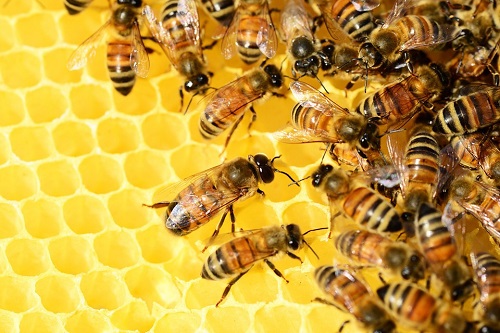
A swam of bees
Ghana is facing a quiet but deadly environmental threat—one that is increasingly claiming lives and disrupting communities. Recent bee attacks across the country have exposed a growing crisis that demands urgent national attention.
On March 17, 2026, a final-year student of A.M.E. Zion Senior High School in Winneba, Emmanuella Quainoo, lost her life after a swarm of bees attacked students on campus.
Days earlier, at Agona Wawase near Agona Swedru, a three-year-old boy, Christopher Amponsah, also died under similar circumstances. Several others in both incidents sustained injuries.
Disturbingly, this pattern is continuing. A bee invasion was also recently reported on the campus of the Kwame Nkrumah University of Science and Technology, triggering panic among students and raising fresh concerns about safety in our institutions.
These are not isolated, unfortunate events. They are warning signs—clear evidence of a deeper environmental problem that we can no longer afford to ignore.
What is driving this surge in bee invasions?
The answer lies largely in the way we are treating our environment. Climate change, driven by rising temperatures and erratic rainfall, is disrupting ecosystems across the country. Flowering plants that bees depend on are becoming scarce, forcing them to migrate in search of food and water. Increasingly, that search brings them into our schools, homes, and communities.
At the same time, human activities are making matters worse. Deforestation for farming, urban expansion, and illegal mining (galamsey) continue to destroy the natural habitats where bees thrive. Bush burning and pollution further degrade the environment, leaving bee colonies with few safe places to go.
The result? Bees are pushed into closer contact with humans—often with tragic consequences.
The human cost of these invasions is already evident. Bee attacks can cause severe injuries, allergic reactions, and in extreme cases, death.
Children and the elderly are especially vulnerable. Beyond the physical harm, these incidents are creating fear in communities and disrupting daily life, particularly in schools where safety should be guaranteed.
Yet, there is another side to this issue that must not be overlooked. Bees are not the enemy. They are essential pollinators, critical to agriculture, food production, and biodiversity. Destroying them in response to attacks may provide short-term relief, but it creates long-term environmental risks that could threaten our food systems.
So, what must be done?
First, public awareness is crucial. Many bee attacks escalate because people panic or unknowingly provoke swarms. Communities must be educated on how to respond—remain calm, avoid sudden movements, seek shelter, and alert authorities such as the Ghana National Fire Service.
Second, we must take environmental protection seriously. Reforestation, enforcement of laws against illegal mining, and sustainable land use practices are not optional—they are necessary steps to restore balance to our ecosystems.
Third, institutions, especially schools, must be proactive. Regular inspections for hives, emergency preparedness plans, and basic safety training can make the difference between life and death.
Finally, there is a need for professional handling of bee colonies. Instead of destroying them, trained experts should be engaged to safely remove and relocate hives. This approach protects both human lives and the environment.
The deaths of Emmanuella Quainoo and Christopher Amponsah must serve as a turning point. The incident at KNUST reinforces that no community or institution is immune.
Ghana cannot continue to react to these incidents without addressing their root causes.
Bee invasions are a symptom of a larger problem—environmental neglect. If we fail to act now, we risk facing more tragedies in the future.
The message is clear: protecting our environment is not just about nature. It is about protecting ourselves.
Ghana must act—before the next swarm strikes.
About the Author
Daniel Fiase is a Level 400 student at the University of Cape Coast pursuing a Bachelor of Education in Social Sciences. He is passionate about environmental sustainability and public policy.
By Daniel Fiase
