


By Murtala Issah
Government has stepped up efforts to strengthen Ghana’s shea industry, with a new intervention aimed at improving productivity, reducing post-harvest losses and easing the burden on women who dominate key activities across the shea value chain.
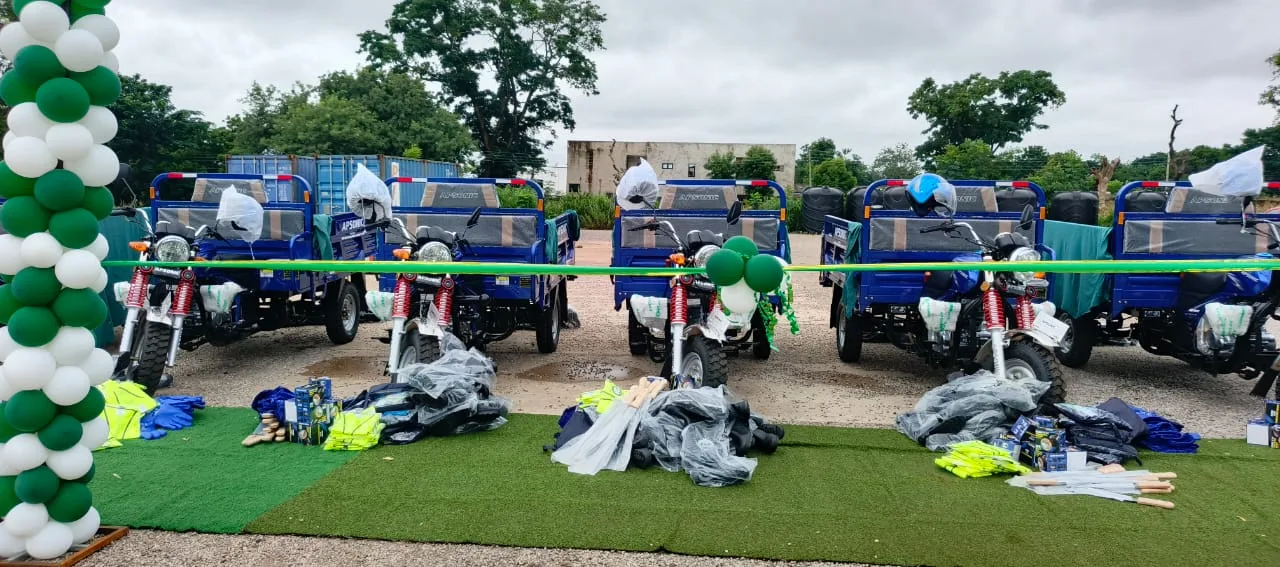
The Tree Crops Development Authority (TCDA) has provided 10 tricycles, 528 field tools and a range of protective equipment to women’s shea associations, collectors and other stakeholders in the sector.
The intervention, implemented on behalf of President John Dramani Mahama and the Ministry of Food and Agriculture, forms part of broader government efforts to develop Ghana’s tree-crop sector and improve the livelihoods of people who depend on it.
The Chief Executive Officer of the TCDA, Andy Osei Okrah, said the support reflects government’s commitment to investing in tree crops as a source of rural employment, household incomes and economic development.

He said several tree-crop sectors, including rubber, cashew, coconut and oil palm, had benefited from government interventions since the new administration assumed office in January 2025, with the shea sector becoming the latest to receive targeted support.
Mr Okrah said the intervention should be viewed beyond the distribution of equipment, describing it as an investment in productivity, safety, mobility, quality and service delivery within the shea value chain.
The equipment includes 10 tricycles to facilitate the transportation and aggregation of shea nuts, alongside 500 pairs each of Wellington boots, hand gloves, headlamps, raincoats and reflective jackets to improve the safety and working conditions of collectors.
The policy significance of the intervention lies particularly in addressing some of the structural constraints facing women involved in shea collection, many of whom operate in remote communities where transportation remains a major challenge.
Speaking on behalf of the Ghana Shea Workers Union, Joanna Naab said women often have to transport heavy loads of shea nuts over long distances from harvesting areas to processing centres and markets.
She said the provision of tricycles could reduce the physical burden on collectors while improving the speed and efficiency with which nuts are moved from harvesting locations.
According to her, improved transportation could also help reduce post-harvest losses, facilitate the movement of nuts to processing and storage centres, and enable cooperatives to save time and energy. Shea stakeholder Esther Naanbir said transportation delays could affect the quality of harvested nuts, particularly when nuts remain exposed for extended periods after collection.
She explained that deterioration could contribute to higher levels of Free Fatty Acids, potentially reducing the attractiveness and market value of shea products.
The intervention therefore addresses not only mobility and occupational safety but also an important part of the value chain: ensuring that harvested shea nuts reach processing and storage facilities in good condition.
More stories here
