


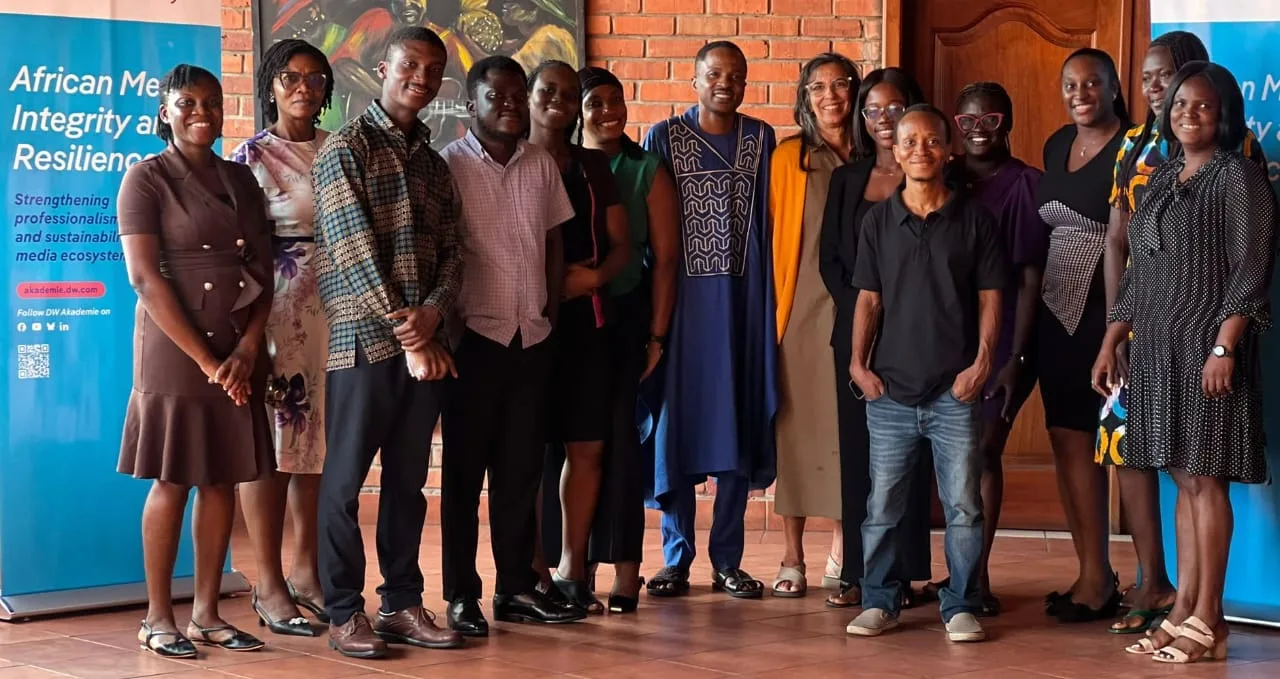
By Emelia B. Addae/Jesse Ampah Owusu, GNA
Accra, Sept. 9, GNA – DW Akademie Ghana has begun a five-day training workshop on gender-sensitive reporting for journalists under the African Media Integrity and Resilience (AMIR) Programme-Ghana.
The European Union-funded workshop commenced in Accra on Monday, September 7, and is expected to end on Friday, September 11.
Mr Cecil Ato Kwamena Dadzie, Project Manager for AMIR at DW Akademie Ghana, said the training was designed to equip media professionals with the knowledge and skills needed to challenge harmful stereotypes, reduce bias, and promote fair representation of all genders in public discourse.
The initiative would also strengthen journalists’ capacity to identify and address gender stereotypes in their reporting, he said.
Madam Sheila Mysorekar, Senior Consultant at DW Akademie Germany, explained that gender-sensitive reporting was not solely about reporting on women but about improving the quality and fairness of journalism for everyone.
She noted that journalists must consider the power relations between men and women in society and report on such issues in ways that contributed to positive social change.
“Journalists need to be aware of the stereotypes that are part of society and culture, particularly perceptions about what men and women can or cannot do,” she said.
Madam Mysorekar observed that journalists, like other members of society, sometimes reproduced such stereotypes unintentionally, adding that even seemingly harmless statements could reinforce negative perceptions about gender roles.
She cited the common assertion that “women cannot drive” as an example, noting that such narratives persisted despite the achievements of many women in driving and other traditionally male-dominated fields.
“Repeated stereotypes can discourage women and girls from pursuing certain careers because they may begin to believe they are incapable of succeeding in those areas,” she said.
Madam Mysorekar described such perceptions as harmful to society, explaining that they could deprive communities of the talents and skills women could contribute to fields such as politics, science, and other professions.
“We are losing out on a lot of talent. Women could be capable and good at being in politics, science or whatever, but they may never dare to go there because they are discouraged,” she added.
Madam Mysorekar urged journalists to become more conscious of the narratives and stereotypes surrounding the abilities of men and women and ensure that their reporting did not reinforce such perceptions.
She said responsible and gender-sensitive reporting could help raise awareness, challenge harmful beliefs, and contribute to building a more inclusive society.
GNA
Edited by Agnes Boye-Doe
