


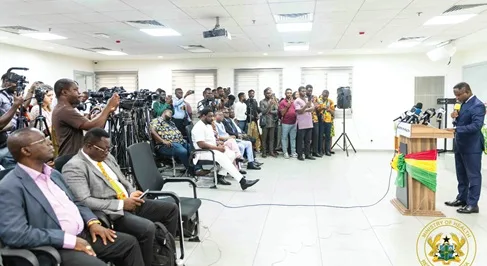
The Free Primary Healthcare Programme has started in 135 out of the 216 districts across all 16 regions, the Minister of Health, Kwabena Mintah Akandoh, has announced.
With priority given to deprived districts, the minister said the government was targeting implementation in 150 districts identified for the health policy by the end of the year.
At a press conference in Accra yesterday, Mr Akandoh said there were eight implementing districts in the Ashanti Region, five in the Bono Region, six in Bono East, eight in Eastern, seven in Greater Accra and 11 in the Volta Region.
The others are seven in the Western Region, 11 in the Central Region, two in Ahafo, 14 in the Northern Region, six in North East, six in Savannah, 15 in Upper East, 11 in Upper West, nine each in Oti and Western North.
The Minister of Health said 4,574 health facilities across the country were currently participating in the programme, and they included 3,781 Community-based Health Planning and Services (CHPS) compounds, 746 health centres and 48 polyclinics.
He stated that facilities belonging to the Christian Health Association of Ghana (CHAG) and the Ahmadiyya Muslim Mission were participating to ensure that no community was left behind in the implementation of the programme.
Mr Akandoh said the ministry’s broader goal was for every part of the country to benefit from free primary healthcare by the end of 2027.
Equipment
The Health Minister disclosed that more than 24,500 pieces of hospital equipment had been distributed to primary healthcare facilities, including CHPS compounds, health centres and polyclinics.
He said the government had also taken delivery of about 5,000 health worker bags containing basic equipment to support health workers undertaking house-to-house visits.
Mr Akandoh said to facilitate the movement of health workers from health facilities into communities, the government was working to provide not less than 7,000 motorbikes and tricycles.
He added that the ministry had also introduced health posts, with 30 of them strategically established at lorry stations and market areas.
Mr Akandoh said the government intended to establish an additional 217 across the regions and districts to bring basic healthcare services closer to people.
He said health professionals and their support staff had also been trained with the knowledge and skills required to deliver preventive, promotive and curative healthcare services at the community level.
Early impact
The Minister of Health said early impact stories were already emerging from communities where the programme had started, citing the example of the Mother Charles Walker Catholic Clinic, where health workers were collaborating with the Ghana Private Road Transport Union (GPRTU) to screen drivers and passengers for basic ailments.
He said drivers found to have systolic blood pressure above 200 millimetres of mercury were prevented from driving that day.
Mr Akandoh, however, indicated that people in the implementing districts would not be required to have a National Health Insurance Scheme (NHIS) card to access services under the programme, stating that beneficiaries could walk into any participating facilities, register and receive the appropriate services.
Illegal charges
Mr Akandoh cautioned health workers against demanding illegal payments from beneficiaries for services covered under the programme, stressing that the ministry would investigate reports of illegal payments and take appropriate disciplinary actions where necessary.
He urged Ghanaians in the participating districts to make use of the programme by seeking preventive care and screening rather than waiting until illnesses became severe.
The Minister of Health also announced dedicated outlines for the public to report complaints and concerns regarding the Free Primary Healthcare Programme.
Ghanaians using Telecel can call 06447, while MTN users can call 0544446447 for assistance and to lodge complaints.
