


By Rebecca Ampah
Africa’s youth must take greater responsibility for shaping the continent’s economic and political future, speakers at an International Youth Forum on Debt Cancellation and Reparations in Accra have said.
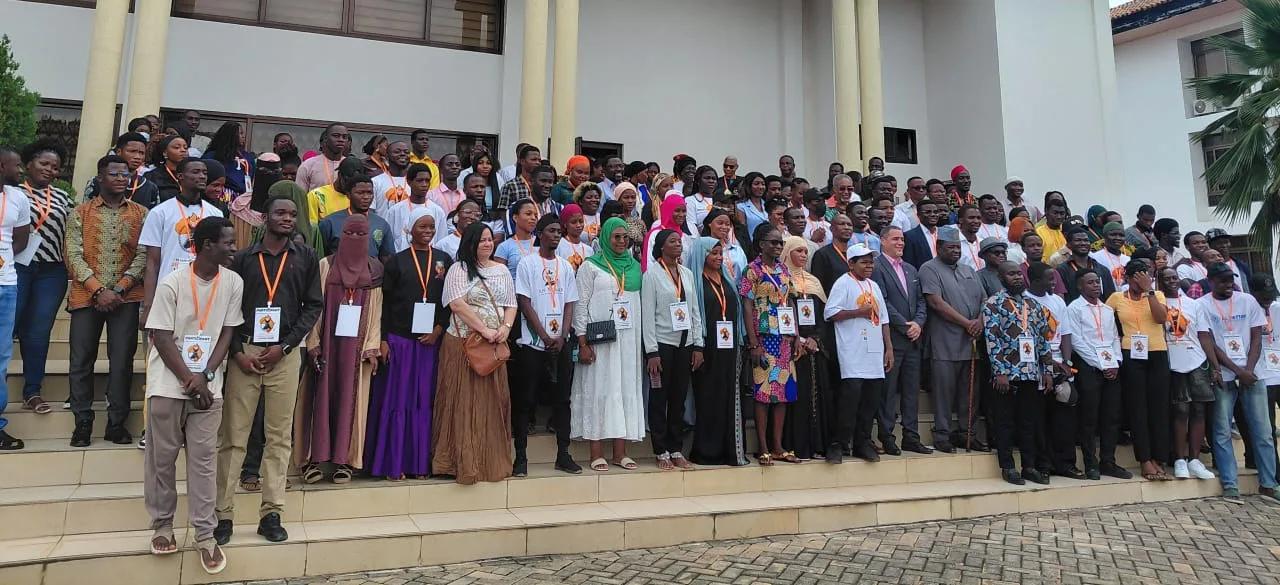
The forum, organised by the Pan-African Progressive Front (PPF), brought together young people from Ghana and other parts of Africa, diplomats, activists and Pan-African thinkers to discuss economic sovereignty, debt cancellation and reparations.
Held in Accra on September 5, 2026, under the theme “Reclaiming Africa’s Wealth, Resisting Neocolonial Bondage”, the forum examined the links between Africa’s colonial history, current economic challenges and calls for reparative justice.
Participants included the Ambassadors of Cuba and other African countries, as well as representatives connected to Mali, Burkina Faso and Niger.
Also present were the General Secretary of the Socialist Movement of Ghana, Kwesi Pratt Jnr., and Francis Danti Kotia, Coordinating Director for Multilateral and International Organisations at the Ministry of Foreign Affairs.
The forum was chaired by Dr Abu Sakara Foster.
Youth and economic emancipation
Addressing the gathering, Dr Abu Sakara Foster urged Africa’s youth to take advantage of changes in the global economic and geopolitical order to push for greater economic emancipation.
He argued that although colonialism no longer existed in its traditional form, economic and political structures continued to constrain Africa’s ability to control its resources and determine its own future.
According to him, African countries must develop mechanisms to address their economic, political and social challenges rather than simply wait for circumstances to change.
Dr Abu Sakara said young Africans must also think seriously about the role they would play in shaping the continent’s economic, geopolitical and social future.
Reparations beyond compensation
Speakers at the forum said the discussion on reparations should go beyond financial compensation to address the broader systems that continue to disadvantage African countries.
Kwesi Pratt Jnr. linked reparative justice to economic independence, arguing that Africa’s resources, technology, trade and financial systems should form part of the reparations debate.
He said the continent’s ability to determine how its resources are managed and how its economies are structured was central to achieving meaningful economic sovereignty.
Cuba backs African sovereignty
The Cuban Ambassador to Ghana also stressed the importance of economic independence, arguing that political independence could not be complete if countries did not control their resources, trade, technology and key economic decisions.
“Africa must decide Africa’s future,” he said, stressing the right of peoples to determine their own path without external pressure or interference.
Drawing on Cuba’s experience, the Ambassador highlighted education, healthcare, science and technology as important pillars of national sovereignty.
He urged young people to move beyond being spectators and become active participants in shaping their societies.
He said young Africans faced a range of challenges, including climate change, technological dependence, unequal trade, migration, resource extraction and external interference.
According to him, the responsibility of the current generation was to make political independence meaningful by pursuing economic and technological sovereignty.
He said Cuba’s solidarity with Africa demonstrated that international cooperation could be based on mutual support rather than extraction.
Ghana’s role in reparations debate

Representing the Minister for Foreign Affairs, Francis Danti Kotia outlined Ghana’s role in advancing the reparations agenda at the international level.
He said Ghana had been working with the African Union and Caribbean partners to advance discussions on reparative justice.
According to Mr Kotia, the United Nations General Assembly adopted Resolution A/RES/80/250 on March 25, 2026, concerning chattel slavery and the enslavement of Africans.
He said the resolution received the support of 123 UN member states, while 52 abstained and three voted against it.
Mr Kotia said the adoption of the resolution created the need for practical measures to advance the reparations agenda.
He said the conference had produced what was described as the Next Steps Commitment.
He also cited developments in Europe, including apologies and commitments relating to historical involvement in slavery and colonialism, as well as discussions on the return of African cultural heritage, as signs of growing international attention to reparative justice.
Call to Africa’s youth
For the organisers, the forum was not only about addressing Africa’s past but also about shaping its future.
The PPF called on young Africans to become more actively involved in their communities and to use schools, community organisations and digital platforms to advance discussions on Africa’s development and sovereignty.
The organisation said its work was inspired by the Pan-African vision of Dr Kwame Nkrumah and focused on African unity, political independence and economic sovereignty.
The youth forum also built on earlier PPF activities, including an international conference held in Accra in November 2025 to commemorate the 80th anniversary of the Fifth Pan-African Congress.
The conference brought together delegates from several countries and produced declarations focused on Africa’s liberation, resource sovereignty, industrialisation, agricultural development and financial independence.
The youth forum ended with a call for young Africans to take greater responsibility for the continent’s future.
Speakers said Africa’s natural resources, knowledge and economic opportunities must be harnessed to create prosperity for its people.
The central message was clear: Africa’s freedom and future depend on the choices and actions of its people, particularly its younger generation.
More Stories Here
