


Saturday 05th September, 2026 01:00 AM|
Kenya’s push to tighten pharmacy standards is exposing a difficult question for the health system: can the country raise professional requirements without creating staffing gaps that make medicines harder to access at health centres?
The question has emerged after the Kenya Pharmaceutical Association (KPA) rejected Draft 11 of the proposed Good Pharmacy Practice (GPP) Guidelines, saying the rules would remove pharmaceutical technologists from responsibility for Level 3 facilities and restrict their access to some controlled medicines.
The association says the changes would have consequences beyond professional roles because pharmaceutical technologists make up a large share of Kenya’s pharmacy workforce.
KPA says there are about 10,533 licensed pharmaceutical technologists compared with 2,931 pharmacists, while Kenya has 2,559 Level 3 facilities. It argues that requiring degree-qualified pharmacists to take responsibility for all such facilities could prove difficult to implement.
“Even before accounting for pharmacy professionals required in Level 4, Level 5 and Level 6 hospitals, specialised services, industry, academia, regulatory institutions, research, wholesale and other areas of practice,” KPA said, “the numbers make an exclusively pharmacist-dependent superintendency model for Level 3 facilities operationally impractical.”

Access is the concern
The dispute is therefore not simply about which cadre should supervise a pharmacy.
KPA argues that limiting who can take responsibility for pharmaceutical services could affect patients, particularly in facilities where pharmaceutical technologists currently provide much of the day-to-day service.
The association has also objected to proposed restrictions involving narcotic and psychotropic medicines. Such medicines include drugs used in severe pain management and in treating some mental-health conditions.
“A regulatory framework should never make a medicine legally available in principle but practically inaccessible because the health system has unnecessarily restricted the category of professionals capable of facilitating its lawful and safe access,” KPA president Chitechi Amboka said.
KPA says it does not oppose tighter controls on such medicines but objects to what it describes as a blanket exclusion of pharmaceutical technologists.
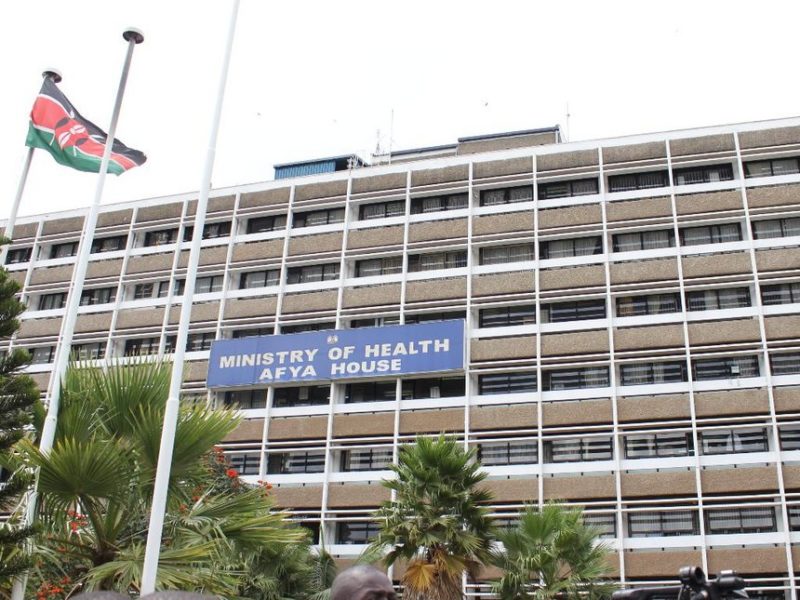
The concern comes against a broader backdrop of weaknesses in pharmaceutical services. A Ministry of Health assessment found gaps in medicine availability, supply-chain oversight and pharmacy governance, including frequent stock-outs of tracer medicines in some facilities.
Earlier reporting has highlighted concerns around patients’ access to medicines and the availability of qualified pharmacy professionals in health facilities.
Safety versus capacity
The proposed standards are intended to strengthen professional practice and patient protection, rather than simply redraw responsibilities between cadres.
The Pharmacy and Poisons Board (PPB), which regulates pharmacy practice, says its reforms are aimed at improving the safety, quality and availability of pharmaceutical services. The regulator says it has licensed 15,679 pharmaceutical professionals and 11,141 pharmaceutical premises and assessed 605 facilities across 43 counties as part of its efforts to improve compliance.
The PPB has also identified human resource gaps as one of the issues affecting the implementation of its regulatory mandate. In July, the board told Parliament’s Health Committee that addressing such gaps was among the areas requiring support.
That creates a potential implementation challenge if the proposed GPP rules require responsibilities currently performed by technologists to be transferred to pharmacists.
But the case for stronger professional standards is backed by the Pharmaceutical Society of Kenya (PSK), whose president, Wairimu Njuki, said the objective should remain patient protection.
“Supporting the guidelines does not mean stakeholders cannot raise questions or propose practical improvements,” Njuki said. “However, any review, clarification or implementation guidance should preserve the overall objective of strengthening professional standards and protecting patients.”

Rules still evolving
The disagreement also centres on consultation.KPA says it was excluded from substantive engagement after an earlier draft and has rejected Draft 11 “in its entirety”. The association is calling for another review involving the affected professional groups.
PPB’s own regulatory framework recognises stakeholder participation in developing and reviewing guidelines and says public involvement is a critical part of good regulatory practice.
The distinction matters because the current PPB-published GPP document dates from 2024 and explicitly says it applies to pharmacists, pharmaceutical technologists, pharmacy specialists and other healthcare professionals providing pharmaceutical-related services.
The proposed 2026 revision would therefore represent a significant change in how some pharmacy responsibilities are allocated if the provisions described by KPA are adopted.
For patients, the crucial test will be whether tighter professional controls improve medicine safety without creating new shortages of qualified personnel at the facilities where many Kenyans receive basic healthcare.
For the regulator and policymakers, the unresolved question is one of capacity: whether Kenya has enough pharmacists and a workable deployment system to enforce higher standards without disrupting access to medicines.
