


Human Immunodeficiency Virus/Acquired Immunodeficiency Syndrome (HIV/AIDS) remains an important public health and developmental issue in Ghana, particularly among young people.
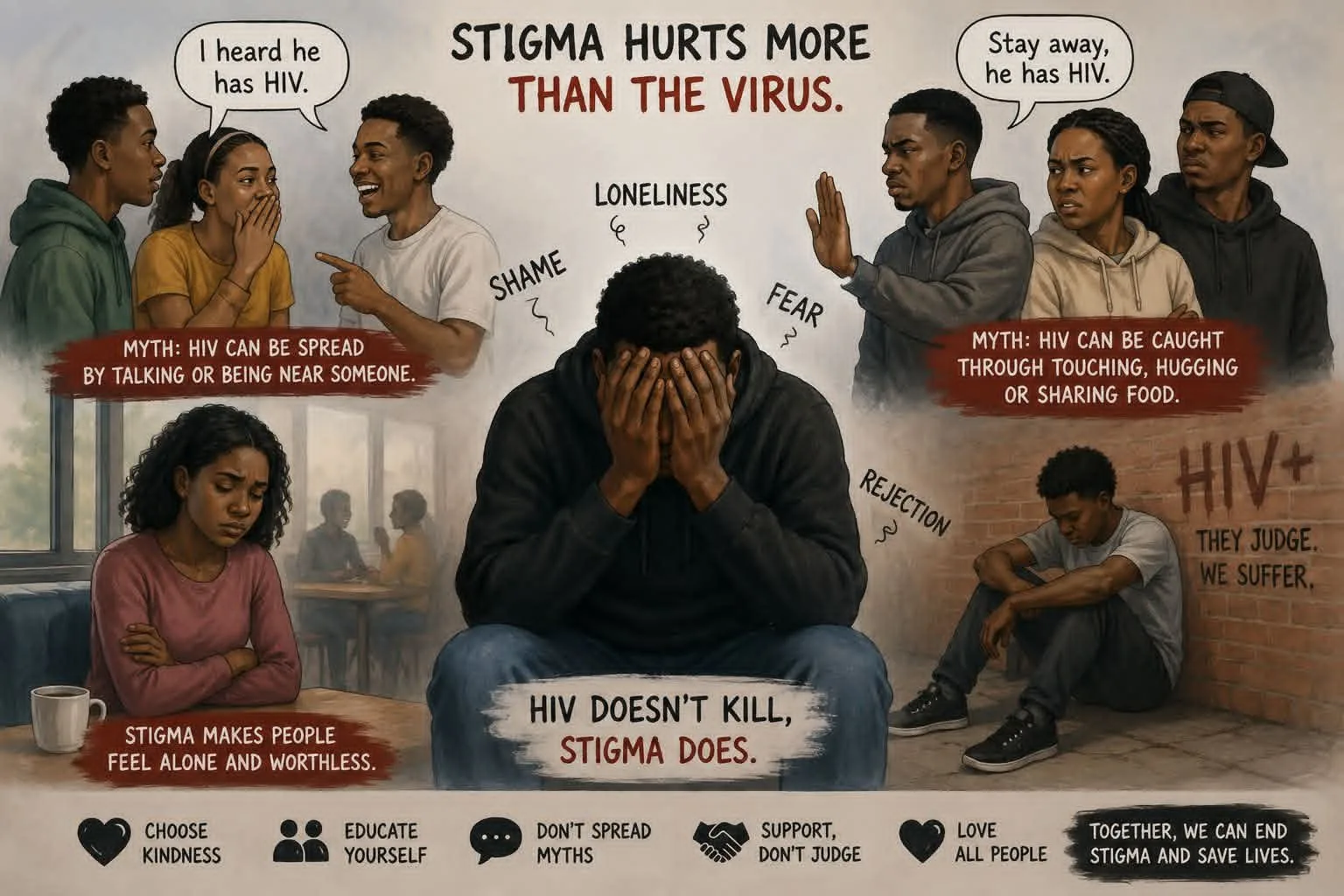
Although advances in treatment have made it possible for people living with HIV to live longer and healthier lives, stigma and myths continue to pose serious challenges.
For many young Ghanaians, HIV is not just a medical diagnosis. It is the beginning of a life interrupted.
Although treatment has improved dramatically and people living with HIV can now live long, healthy lives, new infections among young people are still happening. And behind each infection are stories of misinformation, fear, and limited access to the right information and care.
More Than a Health Issue
Young people are navigating some of the most important decisions of their lives — about relationships, sex, and their future. But many are doing so without accurate information.
Myths about how HIV is transmitted persist. Unsafe sexual practices continue. For some, the fear of being judged is greater than the fear of not knowing their status. They avoid testing because they believe HIV only affects certain types of people, or because they dread what friends and family will say if they test positive.
According to the Ghana AIDS Commission, HIV remains a significant public health concern in Ghana. Its response has focused on four pillars — prevention, testing, treatment, and education — but uptake among young people remains a challenge.
When Illness Becomes a Development Problem
When a young person becomes ill without timely treatment, the impact ripples outward.
Education is interrupted. The ability to work and earn a living is reduced. Families face financial strain as scarce resources are diverted to healthcare and caregiving. Children and young people who are affected by HIV, whether infected or supporting a family member, often carry an emotional burden made heavier by stigma and loss of support.
This is why HIV cannot be treated as a health issue alone. It is a development issue. It affects Ghana’s classrooms, workplaces, and households. It affects the country’s future workforce.
Knowledge is Prevention
If there is one tool that works, it is education.
Young people do not need fear-based messages. They need accurate, age-appropriate information — how HIV is and is not transmitted, how it can be prevented, where to get tested, and that treatment is available and effective.
And the media has a critical role to play.
Radio, television, print and social media shape how young people understand HIV. Responsible reporting can correct myths, encourage testing, and normalize treatment. Irresponsible reporting — language that blames, shames, or spreads fear — does the opposite. It drives people away from services and deeper into silence.
The Way Forward
Schools must provide comprehensive sexuality education. Parents must be willing to have honest conversations. Health facilities must offer youth-friendly services where young people feel safe, not judged. Government, civil society, health professionals and the media must work together.
Testing must be encouraged, not feared. People living with HIV must receive care and support without discrimination.
Ghana’s progress against HIV should not be measured only by falling infection numbers. It should be measured by whether a 19-year-old girl in Winneba or a 22-year-old apprentice in Kumasi has the knowledge to protect herself, the confidence to get tested, and the support to live a full and productive life if she tests positive.
In the end, fighting HIV among young people is not just about saving lives.
It is about protecting Ghana’s future.
By: Ophelia Donkor
Level 300 Journalism and Media Studies Student at the University of Education, Winneba (UEW)
