


Wednesday 02nd September, 2026 12:53 AM|
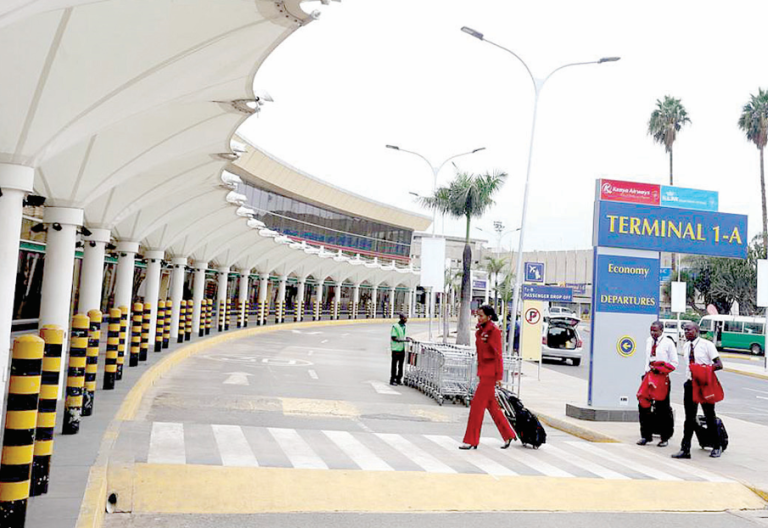
Kenya’s latest aviation workers’ strike has exposed a costly vulnerability in the country’s fresh produce export industry: its heavy dependence on Jomo Kenyatta International Airport (JKIA) to move perishable goods to overseas markets.
The two-day industrial action, which began on Sunday and disrupted flights and airport operations before workers returned to duty on Tuesday, put shipments of flowers, fruits, vegetables, meat, herbs and spices at risk of delays and missed connections.
For an industry built around tight delivery schedules, the disruption quickly translated into financial losses.
The Fresh Produce Consortium of Kenya (FPC) estimates exporters lost between $2 million and $3 million a day, equivalent to about Ksh259 million to Ksh388 million, during the disruption.
“Every aircraft departing JKIA carries substantial quantities of Kenya’s fresh produce, including flowers, fruits, vegetables, meat, herbs and spices, to markets across the world,” FPC chief executive Okisegere Ojepat said.
“This is cargo that cannot wait. When flights and cargo operations are disrupted, consignments miss connections, exporters lose money, orders are cancelled, produce risks deterioration and, ultimately, farmers, workers and the wider economy pay the price.”
The workers, mainly air traffic controllers, ended the strike after the union, government and aviation authorities signed a return-to-work agreement on Tuesday, September 1, 2026. The agreement allows negotiations over outstanding labour issues to continue.

Millions at risk
JKIA handles between 5,500 and 7,000 tonnes of export cargo a week, according to industry figures cited during the disruption.
For exporters, the financial damage does not stop when a flight is delayed. Shipments can incur additional cold-storage and handling costs while exporters face the possibility of cancelled orders or deteriorating produce.
Ogayo Ogambi, chief executive of the Shippers Council of Eastern Africa, said the immediate financial impact was already substantial.
“The exporters are experiencing huge losses, running into millions of shillings,” he said.

Industry estimates put additional storage charges at between $0.10 and $0.20 per kilogramme per day, equivalent to approximately Ksh13 to Ksh26 per kg.
Those costs can become significant when large volumes of fresh produce remain at the airport instead of moving to their intended markets.
But exporters say the bigger risk is losing the confidence of international buyers who depend on Kenya to deliver within strict windows.
“More seriously, these disruptions are eroding the confidence of international buyers in Kenya as a reliable trading partner,” Ojepat said.
“We cannot afford to lose hard-won markets because our primary export gateway cannot guarantee predictable operations.”

Seven-day exposure
The latest disruption lasted about two days, but the industry’s daily loss estimate illustrates the potential exposure from a longer interruption.
If the FPC estimate of Ksh259 million to Ksh388 million a day were sustained for seven days, the implied financial exposure would be approximately Ksh1.81 billion to Ksh2.72 billion.
That is a scenario rather than a forecast. Actual losses would depend on how much cargo could be rescheduled, stored, diverted or sold through alternative channels.
The calculation nevertheless highlights why uninterrupted cargo operations matter to exporters.
Kenya’s fresh produce supply chain extends far beyond the airport. Farmers, packhouses, trucking companies, freight forwarders, cold-storage operators and overseas buyers all depend on shipments moving according to schedule.
A prolonged disruption could therefore magnify losses across the wider value chain.

Where is the backup?
The latest strike also raises a strategic question for Kenya’s horticulture industry: how much of the country’s perishable export trade could continue if JKIA were severely disrupted for a week?
Alternative airports exist, but shifting large volumes of horticultural cargo would require sufficient aircraft capacity, cargo handling, cold storage, customs processing and reliable road links from farms and packhouses.
For highly perishable products, simply having another airport is not enough.
The government and aviation authorities now face pressure to ensure that future labour disputes do not repeatedly threaten the country’s main international cargo gateway.
Transport Cabinet Secretary Davis Chirchir said on Tuesday that mechanisms were being put in place to address outstanding collective bargaining agreements, some of which date back to 2015.
For exporters, however, the lesson from the latest disruption is immediate.
“Every hour counts,” the Fresh Produce Consortium said as the disruption entered its second day.
The aviation dispute may have ended, but it has exposed a wider business risk: Kenya’s ability to compete in global fresh produce markets depends not only on what farmers grow, but on whether the country can reliably get that produce onto aircraft and to buyers on time.
