


Wednesday 02nd September, 2026 12:28 AM|
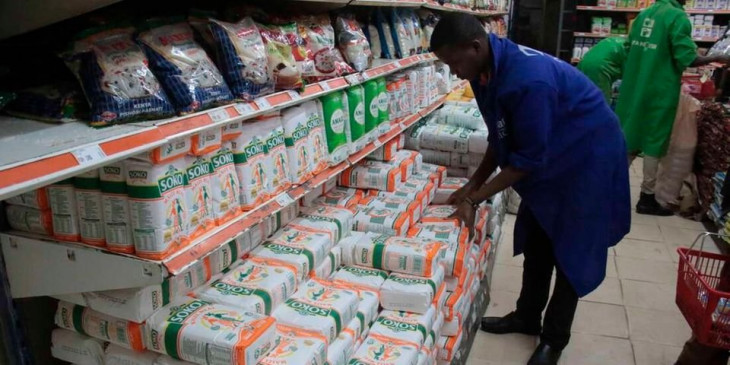
Kenya’s food prices continued to put pressure on household budgets in August even as the price of a 2kg packet of sifted maize flour fell, with the Kenya National Bureau of Statistics (KNBS) reporting 9.0 per cent annual food inflation.
The latest KNBS Consumer Price Index report shows that a 2kg packet of sifted maize flour fell from Ksh157.15 in July to Ksh152.89 in August, a decline of 2.7 per cent. Tomatoes also became cheaper, falling 2.2 per cent during the month.
But the cheaper maize flour did not translate into broad relief for shoppers. Several other everyday foods became more expensive, with some recording sharp monthly and annual increases.
Sukuma wiki recorded the biggest monthly increase among the selected food items, rising 4.3 per cent to Ksh121.21 per kilogramme. Irish potatoes followed, increasing 4.1 per cent to Ksh118.05 per kilogramme. Mangoes rose 3.6 per cent to Ksh155.56 per kilogramme, while beef with bones increased 1.2 per cent to Ksh777.36 per kilogramme.
The result is a mixed picture for Kenyan consumers: one of the country’s most closely watched staples became cheaper, while a range of fresh foods and meat became more expensive.

Food inflation remains high
KNBS said food and non-alcoholic beverages recorded 9.0 per cent inflation in the year to August 2026, well above the 6.6 per cent overall inflation rate. Food was also the largest contributor to the annual increase in consumer prices, adding 2.6 percentage points to overall inflation.
The agency said, “Over the twelve months until August 2026, the prices under Food and Non-Alcoholic Beverages division increased by 9.0 per cent.”
That means the monthly decline in maize flour prices needs to be viewed against a much broader basket of food items.
Food and non-alcoholic beverages have the largest weight in Kenya’s Consumer Price Index, accounting for 32.9094 per cent of the basket used to measure changes in consumer prices.
Which foods cost more?
The annual price changes are particularly important for households because several common foods were considerably more expensive than they were a year earlier.
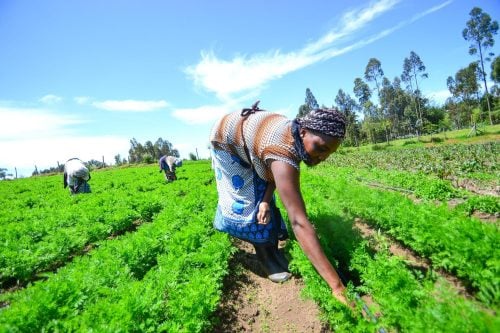
Irish potatoes were 32.7 per cent more expensive in August than in August 2025, while sukuma wiki prices increased by 29.8 per cent. Cabbages rose 21.7 per cent, oranges 18.8 per cent and beef with bones 12.1 per cent over the same period.
Other food prices also increased during the month. Onions and leeks rose 0.8 per cent, fresh packeted cow milk increased 0.3 per cent, while white wheat flour rose 0.2 per cent.
At the same time, there were signs of relief in some basic food items.
Besides sifted maize flour, tomatoes fell 2.2 per cent between July and August, while fortified maize flour declined 2.0 per cent. Sugar fell 0.6 per cent, and cooking oil declined 0.4 per cent.

Why the basket matters
The contrasting movements show why Kenya food prices cannot be judged by the price of a single staple.
A household buying maize flour may have received some relief in August, but the same shopper could have paid more for potatoes, sukuma wiki, mangoes, meat or other foods.
The KNBS data also shows that some of the sharpest increases were in foods commonly purchased by households. Irish potatoes were up nearly one-third from a year earlier, while sukuma wiki was almost 30 per cent more expensive.
This helps explain why the cost of a household shopping basket can continue to rise even when an important staple becomes cheaper.
The August report therefore offers no simple “food prices are rising” or “food prices are falling” picture. Instead, it shows a market in which prices are moving in different directions.
For Kenyan households, the distinction matters. Maize flour became cheaper in August, but the wider food basket remained under pressure, with food inflation at 9.0 per cent and food contributing 2.6 percentage points to the country’s overall inflation rate.
The cheaper maize flour is welcome relief for consumers. But the latest KNBS figures show that it is not enough, on its own, to bring down the overall cost of putting food on the table.
