


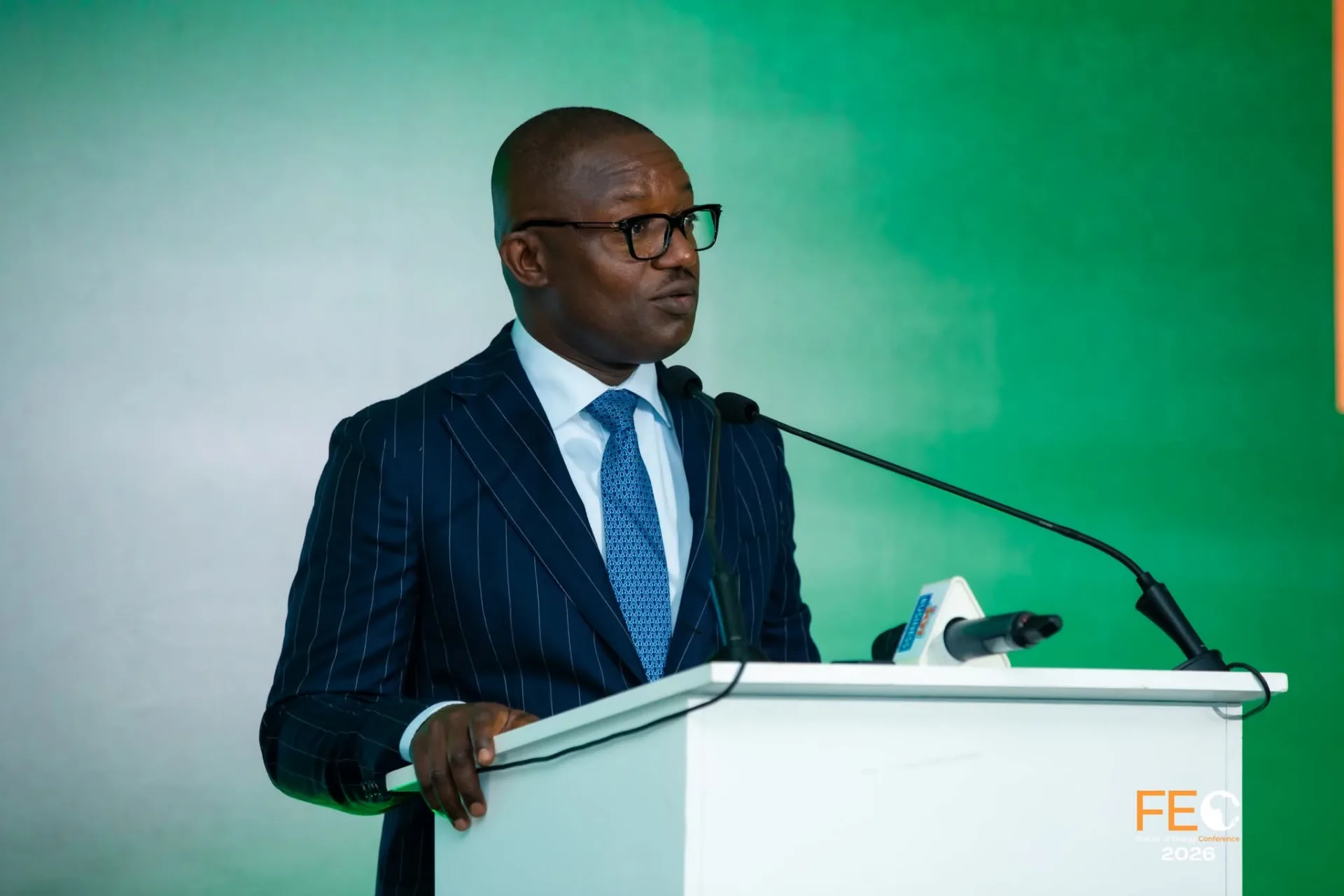
By Mabel Adorkor Annang
Government’s planned 1,200-megawatt combined-cycle thermal power generation project is expected to be completed by 2029.
Speaking at the 2026 Future of Energy Conference, the Minister of Energy and Green Transition, Dr. John Abdulai Jinapor, said the project will provide Ghana with additional generation capacity and strengthen the stability of national power supply.
Dr. Jinapor, said the 1,200-megawatt combined-cycle thermal power project, when completed, will reduce the country’s reliance on expensive power arrangements and help lower the cost of electricity generation.
“We have taken an ambitious policy to procure 1,200 megawatts of thermal capacity with combined cycle on our own as a country, so that it can reduce the cost of power. When we did the analysis, we are confident that by 2029, we should be done with that project, and that will be a game-changer.”
The Minister further called for innovative financing mechanisms to lower the cost of capital for energy projects, noting that high financing costs continue to undermine Africa’s renewable energy potential and industrial competitiveness.
He said Ghana currently has about 90 percent electricity access and is targeting universal access by 2030.
The Executive Director of ACEP, Ben Boakye called for innovative financing and better structuring of energy projects, rather than relying solely on the construction of new power plants.
“Reducing the cost of energy does not always require another power plant. Significant savings can sometimes be found in contracts, financing arrangements, risk allocation, and the assumptions and opinion infrastructure that already exists,” he explained.

Mr. Boakye argued that better risk allocation and financing arrangements can help balance the interests of government and investors while ultimately reducing the cost burden on consumers.
Mr. Boakye also cautioned against exaggerated assumptions about the risks associated with investing in African energy markets.
“Some risks are real and must be properly managed, but some assumptions about Africa’s market can also be exaggerated and may not accurately reflect the risks that actually exist. We therefore need better data, stronger institutions, and a more rigorous risk assessment,” he added.
Africa must develop reliable, affordable and competitive energy systems to support industrialisation and unlock greater value from the continent’s abundant mineral and renewable energy resources.
This was the focus of the 2026 Future of Energy Conference (FEC), which opened in Accra under the theme, “Powering Africa’s Industrial Transformation: Energy Systems for Value Addition and Competitiveness.”
The two-day conference, organised by the Africa Centre for Energy Policy, ACEP, is examining the structural factors driving energy costs, infrastructure gaps and industrial competitiveness on the continent.
Speakers at the conference agreed that Africa’s mineral wealth, including resources critical to renewable technologies, batteries and green hydrogen, presents an opportunity for the continent to move beyond exporting raw materials and capture higher-value segments of global supply chains.
Discussions at the FEC2026 also highlighted repositioning Africa’s energy systems for financing competitive industrial energy systems and determining who should pay and invest in the continent’s energy infrastructure.
More stories here
