


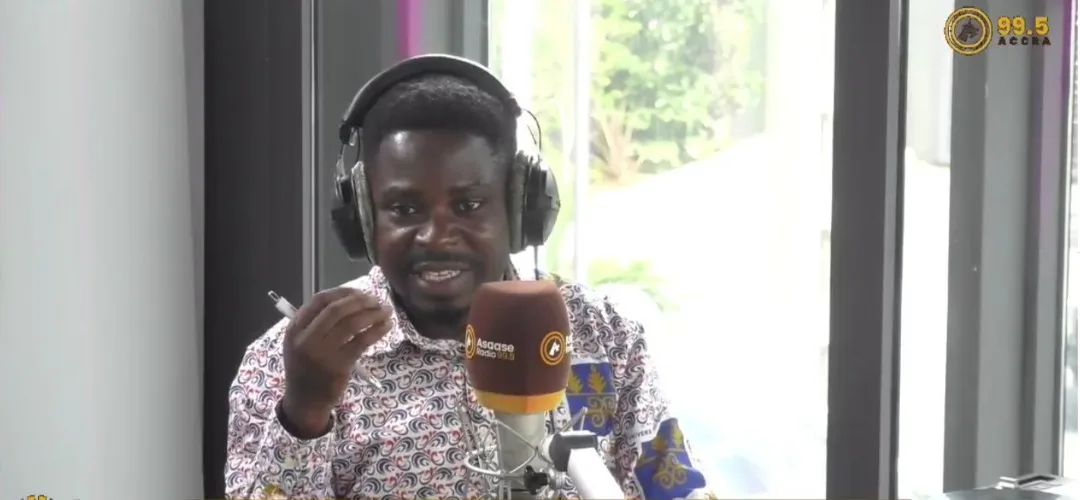
Ghana’s economic recovery remains incomplete until improvements in key macroeconomic indicators translate into better living conditions for households, the Director of Research and Administration at Africa Policy Lens, Hayford Mensah Ayerakwa, has said.
Ayerakwa said recent improvements in macroeconomic stability had not sufficiently reached ordinary Ghanaians, with high living costs, weak income growth and fragile employment continuing to undermine household economic security.
“The most important message” from the World Bank’s recent findings and Africa Policy Lens’ own Ghana Well-being Tracker, he said, was that “macroeconomic recovery is incomplete until it becomes household recovery.”
Speaking on the Asaase Breakfast Show on Thursday (27 August), Ayerakwa said both reports pointed to persistent cost-of-living pressures and weak employment and income outcomes despite improvements in the broader economy.
He said Africa Policy Lens’ Well-being Tracker found that Ghana’s economy was “stabilizing, but not thriving”, reflecting a situation where macroeconomic improvements had not translated sufficiently into household welfare.
According to him, the World Bank’s findings similarly showed that the sectors driving economic growth were not generating enough employment, raising concerns about the employment intensity of Ghana’s recovery.
Ayerakwa said Africa Policy Lens’ employment and income security index scored 59.3, indicating moderate stability in labour market conditions, but cautioned that the figure should not be interpreted as evidence of a strong labour market.
Rather, he said, the result pointed to a labour market that remained functional but was characterised by structural vulnerabilities, particularly among people working in self-employment and the informal sector.
He said many economically active households continued to face uncertain incomes, inadequate earnings and weak employment protection.
Ayerakwa therefore called for a shift in the way Ghana measures economic recovery, arguing that policymakers should pay greater attention to whether growth was improving the economic well-being of households.
“The question should be, is the recovery improving the economic well-being of Ghanaian households? And who is still being left behind?” he said.
He said this would require complementing conventional economic indicators with measures that capture citizens’ lived experiences.
Africa Policy Lens plans to launch the second phase of its Well-being Tracker for 2026, with the findings expected to contribute to discussions around the 2027 national budget, Ayerakwa said.
Asaase 99.5 Accra, Asaase 98.5 Kumasi, Asaase 100.3 Cape Coast, AsaasePa 107.3 (Accra)
Affiliates: Bawku FM 101.5, Bead FM 99.9 (Bimbilla), Mining City Radio 89.5 (Tarkwa), Nandom FM 101.9, Nyatefe Radio 94.5 (Dzodze), Sissala Radio 96.3 (Tumu), Somuaa FM 89.9 (Gushegu), Stone City 90.7 (Ho) and Wale FM 106.9 (Walewale)
Listen online: asaaseradio.com, Sound Garden and TuneIn
Follow us:
X: @asaaseradio995, @Asaase985ksi, @asaase1003, asaasepa1073
Instagram: asaaseradio99.5, asaase985ksi, asaase100.3, asaasepa107.3
LinkedIn: company/asaaseradio995. TikTok: @asaaseradio99.5
Facebook: asaase99.5, asaase985ksi, Asaase100.3, AsaasePa107.3
YouTube: AsaaseRadioXtra
Join the conversation. Accra: call 020 000 9951/050 009 0121, WhatsApp 020 000 0995. Kumasi: call 059 415 7985 or call/WhatsApp 020 631 5260. Cape Coast: call/WhatsApp 059 388 2652.
#AsaaseRadio
#AsaasePa
#TheVoiceofOurLand
