


Henry Nana Boakye
The New Patriotic Party (NPP) says it fully supports the Minority’s demand for a transparent account of the reported GH¢22 billion Ghana Gold Board (GoldBod) losses reported by International Monetary Fund (IMF) under the Domestic Gold Purchase Programme (DGPP).
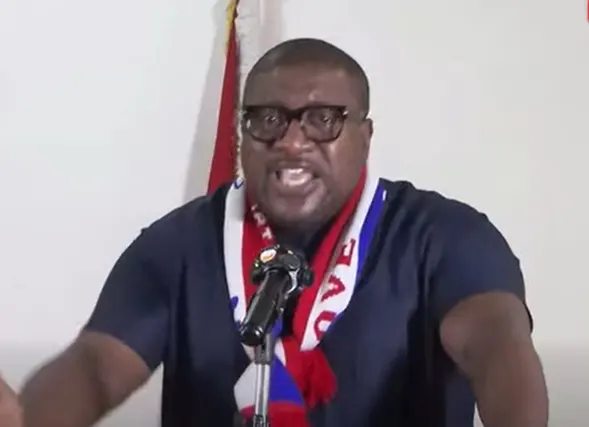
Speaking at a press conference yesterday in Accra, the National Organiser of the party, Henry Nana Boakye, said public officials were accountable to citizens for every resource entrusted to them, hence the NPP supports the Minority’s questions and demand for explanation of how a gold purchasing programme could reportedly result in losses of such magnitude.
“Whoever governs this country is answerable to the people who elected them. They are answerable for every dollar of the people’s money that passes through their hands. The New Patriotic Party stands fully, completely, and unreservedly behind our mighty Minority Caucus in Parliament, led by Honourable Alexander Afenyo-Markin.
“We wholeheartedly support each member of our Minority Caucus in this struggle. We back their questions. We back their scrutiny. We back their demand for a full, transparent account of how a state institution charged with buying and protecting Ghana’s gold ended up presiding over losses of this magnitude,” he stated.
Nana Boakye indicated that the NPP’s demand was not “a partisan luxury but a national duty,” stressing that the party will continue to use every available parliamentary procedure, including questions, committee hearings and requests for documents, to seek answers.
“And let me be equally plain about what comes next. We are not backing off. Not now. Not next month. Not until every question is answered in full, in public, and under proper scrutiny. We say this to our Minority Leader and to every member of our caucus,” he added.
He, therefore, urged the Minority to utilise every relevant tool provided by the Standing Orders of Parliament until Ghanaians receive all the answers they deserve from the reported losses.
The NPP also accused the National Democratic Congress (NDC) government of attempting to shift attention from the reported losses through what he described as attacks on the Minority and its leadership, as the reported US$1.7 billion losses, equivalent to about GH¢22 billion, required urgent answers due to the potential implications for taxpayers.
According to him, the Domestic Gold Purchase Programme introduced under the previous administration was intended to strengthen the local currency and support economic stability, but had allegedly been mismanaged under the current government.
The National Organiser of the NPP accused the Chief Executive Officer of GoldBod, Sammy Gyamfi, of failing to adequately address concerns raised by the Minority, arguing that instead of responding with explanations and documents, he resorted to what he described as political attacks.
He, however, mentioned that the key issue required by Ghanaians is the need for clarity on the reported losses and “the circumstances that led to them, who is responsible, and what measures are being taken to prevent it from recurring.”
Mr. Boakye questioned whether the losses were caused by foreign exchange movements, pricing differences between gold purchases and sales, or management decisions surrounding the transactions, stressing that the Minority’s demand was aimed at protecting public interest and ensuring accountability in the management of state resources.
“Whether every cedi of blame sits with GoldBod, or the Bank of Ghana, or both institutions acting together, that is precisely the question the Minority is demanding answers to. The Ghanaian people deserve those answers in full. It was not a press conference of insults,” the party stated.
The NPP alleged that the NDC government had failed to adequately address illegal mining, popularly known as galamsey, which it claimed had affected water bodies, farmlands and forest reserves, and continue to celebrate increased gold production figures without addressing the environmental challenges posed by galamsey.
The NPP further called on authorities to provide clear information on gold sourcing, purchasing systems and measures being taken to ensure that gold traded through state channels were obtained from legitimate sources, adding that Ghanaians had a right to know how public resources were being managed.
By Ebenezer K. Amponsah
