


As the media and social media debate around the Ghana Standards Authority (GSA) directive begins to settle, it is important to clarify some of the issues being raised by those arguing for and against it.
This is my second submission on the directive.
One of the most common arguments is that a well-maintained, high-mileage car can be better than a poorly maintained, low-mileage one. Others argue that a vehicle driven mainly on highways will be in better condition than one that has spent its life in stop-and-go city traffic.
In isolation, these arguments sound reasonable. But dig a little deeper, and they begin to fall apart.
Buying a Salvage Car Is Often a Gamble
The true condition of a salvage vehicle sitting at an auction yard in a distant country can be difficult to establish, even for the most experienced buyer in Ghana.
A low-mileage car that has been parked for a long time may have its own problems. But how do you verify how long it has been sitting?
A high-mileage, one-owner vehicle may have been carefully maintained. But again, how do you verify that?
In many cases, buyers are making decisions based on a few photographs, a short auction description and limited vehicle-history information. That is a huge gamble.
Mileage Still Matters
You can reduce the importance placed on mileage when buying a used car, but you cannot completely remove it from the discussion. Mileage is one of the main indicators of how much a vehicle has been used, although it must never be considered on its own.
Vehicle servicing and maintenance are largely determined by mileage. Manufacturers provide schedules showing when specific maintenance work must be carried out.
The most common and relatively inexpensive items include engine oil, air filters, fuel filters and cabin filters. At higher mileage, however, vehicles may require far more expensive repairs and replacements.
These can include major engine, transmission, suspension, emissions-control and electronic components. In some cases, the combined cost of parts, labour and servicing may be higher than the value of the vehicle itself.
Such a car may be accident-free, but it could still be a financial time bomb.
Truly good, high-mileage cars are like diamonds. They exist, but they are not as common as people make them sound.
Depending on where and how a car has been used, a 10-year-old vehicle can easily have covered between 120,000 and 200,000 kilometres or more. At that stage, even a properly maintained car may become expensive to own.
It may be cheap to buy, but costly to keep. With such a vehicle, your mechanic could quickly become your best friend.
Maintenance Is the Missing Ingredient
A high-mileage car can be good. A low-mileage car can be bad.
The factor that can change either situation is maintenance.
The real question is: How do you establish the maintenance history of a vehicle you are buying without seeing or inspecting it properly?
How much confidence can you place in a few pictures on an auction website?
This is why age and mileage alone cannot tell the complete story. The history of the vehicle, how it was used, how it was maintained and the quality of previous repairs are equally important.
The 10-Year Limit Is a Reasonable Compromise
In my view, the 10-year limit is a reasonable compromise, although it needs carefully considered exemptions for categories such as vintage, exotic, enthusiast and motorsport vehicles, as stated in my previous article.
The real secret sauce is inspection.
If Ghana gets the inspection process right, the directive could protect buyers, improve the quality of vehicles entering the country and reduce the carnage on our roads.
Inspection must be rigorous, transparent and professionally managed. It should not become another system filled with bottlenecks, inconsistencies or opportunities for corruption.
Where the Real Fight Should Be
Instead of fighting only about the age of imported vehicles, we should encourage and support our leaders to focus on two important areas.
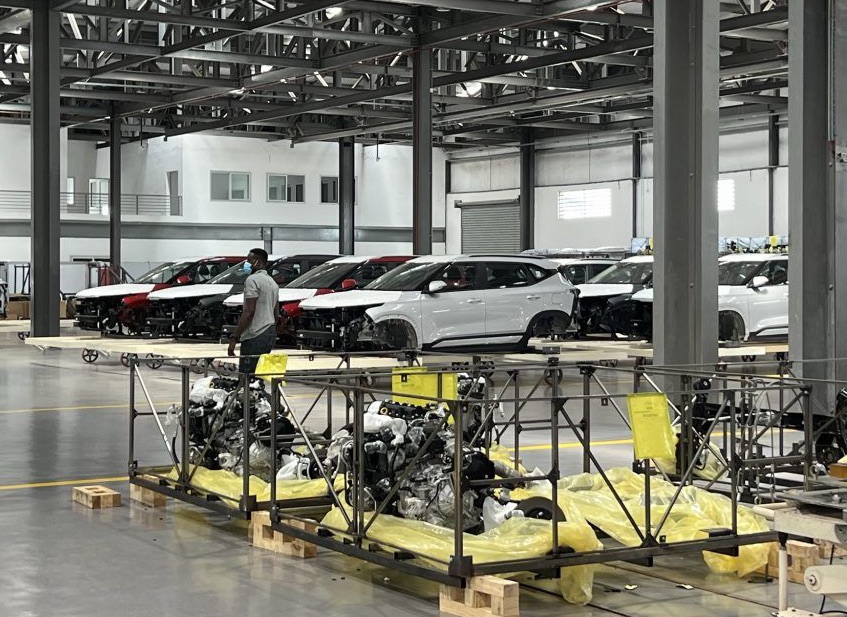
First, support companies assembling vehicles in Ghana.
The current policy should be fine-tuned to gradually move the industry from vehicle assembly to local component production, with a clear long-term target of full vehicle manufacturing.
Second, introduce government-backed, locally driven vehicle leasing.
Ghanaians need affordable and accessible financing options for new and locally assembled vehicles.
No one should have to pay cash for a new car in 2026.
Without proper financing and leasing systems, locally assembled vehicles will remain beyond the reach of many ordinary Ghanaians, no matter how good the policy sounds on paper.
Salvage Dealers Must Prepare for the Future
To dealers who currently depend on imported salvage vehicles: support the directive.
The world as you know it is changing, really fast.
Use your networks and associations to advocate for stronger local vehicle assembly and affordable financing. This can create a new and more sustainable source of vehicles for your customers.
Do not automatically see the directive as an attempt to destroy your businesses.
Every new car sold today will eventually become a used car. Within five years, many of these vehicles will enter the secondary market, and experienced used-car dealers will be well positioned to sell them.
Mechanics who specialise in rebuilding imported salvage vehicles should also begin diversifying. There will be opportunities in maintaining and repairing locally assembled vehicles, supporting dealerships and serving the growing secondary market.
The industry is not necessarily disappearing. It is changing.
The Bottom Line
Whatever vehicle you are buying, its history matters more than age or mileage alone.
What matters is how the car was used, how it was maintained, whether it was properly repaired and whether its condition can be independently verified.
The GSA directive is not perfect, but it is a step in the right direction. The conversation should now move beyond simply supporting or opposing the age limit.
The real questions are whether Ghana can build a trustworthy inspection system, make locally assembled vehicles affordable and create financing options that give ordinary people access to safer cars.
That is where the debate should be.
DISCLAIMER: The Views, Comments, Opinions, Contributions and Statements made by Readers and Contributors on this platform do not necessarily represent the views or policy of Multimedia Group Limited.
DISCLAIMER: The Views, Comments, Opinions, Contributions and Statements made by Readers and Contributors on this platform do not necessarily represent the views or policy of Multimedia Group Limited.
