


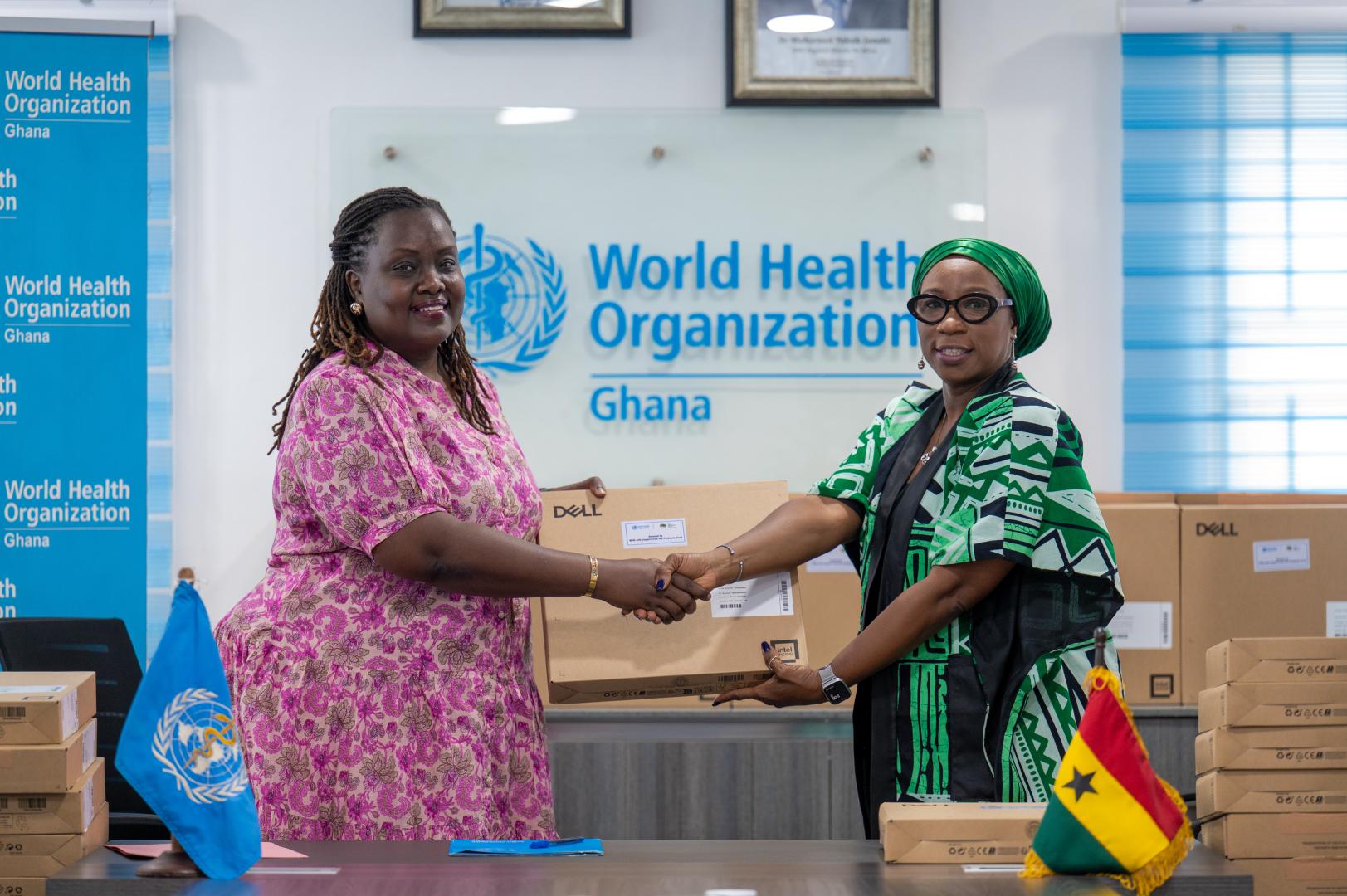
The World Health Organization (WHO) Regional Office for Africa has taken a significant step to bolster Ghana’s health surveillance capabilities by donating high-performance laptops to key health institutions across the country. This initiative, part of a broader effort to modernize and strengthen Ghana’s public health infrastructure, aims to improve real-time disease monitoring, data management, and emergency response coordination.
A Strategic Investment in Digital Health Infrastructure
Ghana’s health sector has long relied on traditional paper-based systems for disease surveillance, which often present challenges such as slow data processing, human errors, and limited accessibility—particularly in remote regions. Recognizing these limitations, the WHO has introduced a digital transformation strategy to enhance the efficiency and accuracy of health data collection, analysis, and dissemination.
The donated laptops are equipped with specialized software tools designed to integrate seamlessly with Ghana’s existing health information systems. These tools enable health workers to:
– Track disease outbreaks in real time using electronic case reporting systems.
– Analyze epidemiological trends with advanced data analytics software.
– Share critical health alerts with regional and international health authorities promptly.
Empowering Frontline Health Workers
One of the most impactful aspects of this initiative is its focus on empowering frontline health workers—doctors, nurses, and community health volunteers—who often operate in resource-constrained environments. By providing them with portable, reliable computing devices, the WHO aims to:
– Reduce reliance on manual record-keeping, minimizing the risk of lost or misplaced data.
– Enable remote data entry, allowing health workers in rural areas to submit reports without needing to travel to district health offices.
– Facilitate continuous professional training through digital learning platforms, ensuring health workers stay updated on the latest protocols and best practices.
Integration with Ghana’s Health Information Systems
The laptops are not standalone devices but are designed to interface with Ghana’s national health information systems, such as the District Health Information Management System (DHIMS-2). This integration ensures that data collected at the grassroots level is automatically synchronized with central databases, enabling policymakers to make data-driven decisions with greater precision.
Additionally, the initiative includes training programs to ensure that health workers are proficient in using the new technology. WHO experts are conducting workshops to teach users how to:
– Navigate the surveillance software.
– Input and verify data accurately.
– Troubleshoot common technical issues.
Broader Implications for Public Health in Ghana
Beyond immediate operational benefits, this laptop donation program aligns with Ghana’s National Health Information Strategy (NHIS), which seeks to achieve a fully digital health ecosystem by 2030. By investing in digital tools today, the WHO is helping Ghana:
– Strengthen its response to infectious disease outbreaks, such as COVID-19, Ebola, and Lassa fever.
– Improve maternal and child health monitoring through better data tracking.
– Enhance cross-border health security by ensuring timely sharing of health intelligence with neighboring countries.
A Model for Regional Health Digitalization
Ghana’s experience with this laptop donation initiative serves as a case study for other African nations grappling with similar challenges in health surveillance. The WHO’s approach—combining hardware provision with capacity-building—demonstrates how digital tools can be effectively deployed to bridge gaps in healthcare delivery without overwhelming existing systems.
As Ghana continues to implement this technology, the long-term goal is to create a resilient, adaptive health surveillance system that can quickly detect and respond to public health threats, ultimately saving lives and reducing the burden of preventable diseases.
Looking Ahead: Sustainability and Scalability
While the initial donation marks a critical first step, the WHO emphasizes the need for sustainable funding and maintenance to ensure the laptops remain functional and relevant. Future phases of the program may include:
– Expanding the initiative to additional districts with high disease burdens.
– Introducing mobile health (mHealth) applications for even greater accessibility.
– Collaborating with local tech firms to develop tailored software solutions for Ghana’s unique health challenges.
By taking this proactive approach, Ghana is not only improving its current health surveillance capabilities but also laying the foundation for a healthier, more connected future.
Note: This initiative underscores the power of technology in public health, proving that even in resource-limited settings, strategic investments in digital infrastructure can yield transformative results.
