


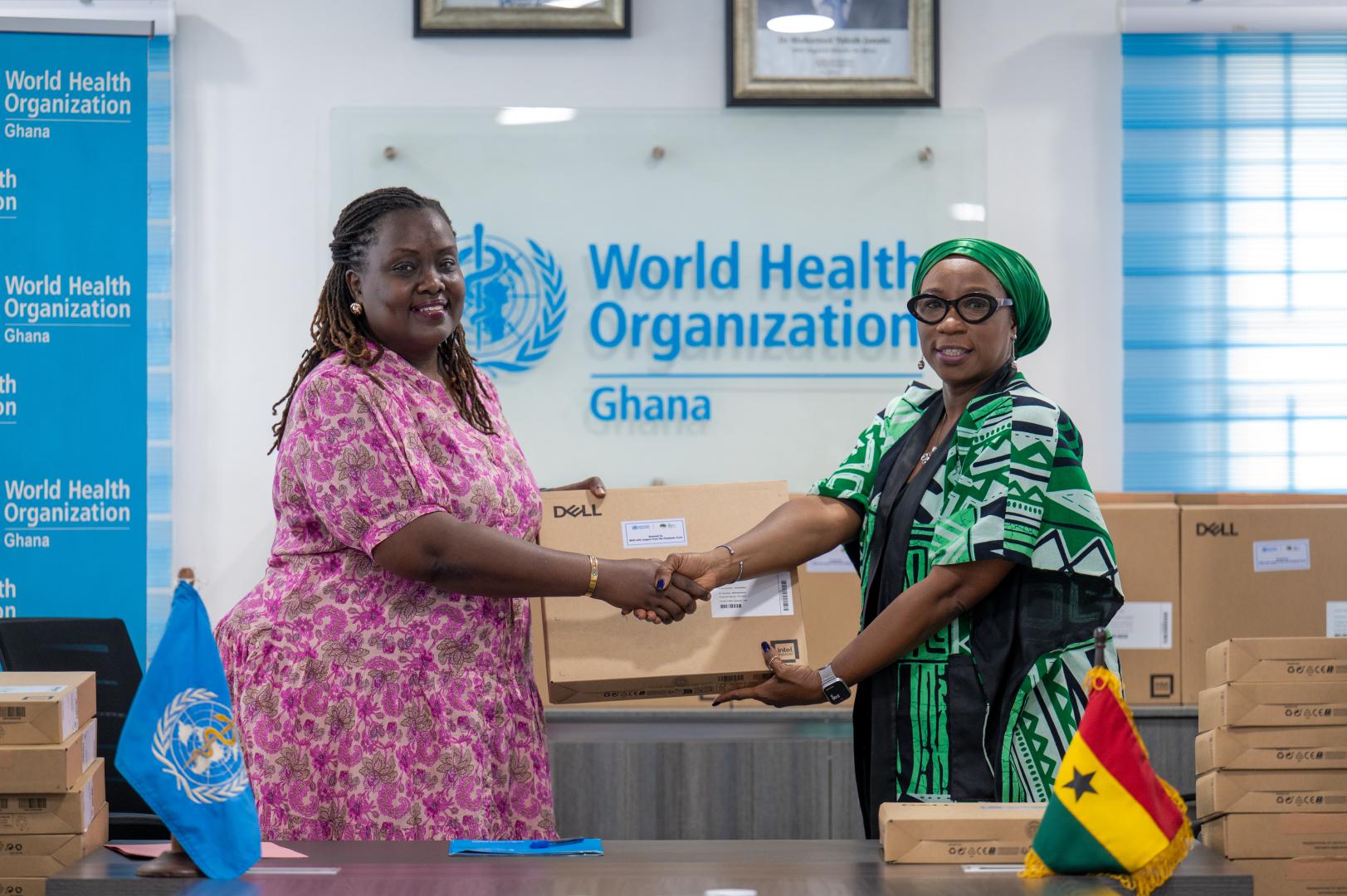
The World Health Organization (WHO) Regional Office for Africa has taken a significant step to bolster Ghana’s health surveillance capabilities by donating a batch of laptops to key health institutions across the country. This initiative, part of a broader effort to modernize and strengthen Africa’s health systems, aims to improve real-time disease monitoring, data management, and public health response mechanisms.
A Strategic Move to Digitalize Health Surveillance
Ghana’s health sector has long relied on traditional paper-based systems for disease tracking and reporting. While effective in some contexts, these methods are often slow, prone to errors, and lack the scalability needed for rapid outbreaks or large-scale health emergencies. Recognizing these challenges, the WHO Regional Office for Africa has prioritized digital transformation as a cornerstone of its health strategy for the continent.
The donated laptops are equipped with specialized health surveillance software, enabling health workers to:
– Record and analyze disease outbreaks in real-time.
– Share critical data with regional and international health authorities seamlessly.
– Access updated guidelines and protocols from the WHO and other global health bodies.
– Enhance early warning systems for infectious diseases, pandemics, and other public health threats.
Targeted Distribution and Implementation
The laptops have been distributed to key health facilities, including district hospitals, regional health directorates, and the Ghana Health Service (GHS) headquarters. The selection process ensured that high-priority areas—such as Accra, Kumasi, Tamale, and other major urban centers—were prioritized, given their higher disease burden and population density.
Health officials in Ghana have expressed optimism about the initiative, emphasizing that digital tools will reduce delays in reporting and improve the accuracy of health data. For instance, during the COVID-19 pandemic, Ghana’s health system faced challenges in tracking cases and managing contact tracing efficiently. The new laptops are expected to mitigate such issues by providing secure, cloud-based platforms for data storage and sharing.
Long-Term Benefits for Ghana’s Health System
Beyond immediate operational improvements, the laptop donation aligns with Ghana’s National Health Information System (NHIS) strategy, which seeks to integrate digital health solutions into routine service delivery. Key long-term benefits include:
- Improved Disease Detection and Response
- Health workers can now monitor trends in diseases like malaria, Lassa fever, and yellow fever with greater precision.
-
Automated alerts for unusual spikes in cases can trigger rapid investigations and containment measures.
-
Enhanced Data Accuracy and Accessibility
- Digital records eliminate human errors associated with manual data entry.
-
Authorities can generate real-time dashboards to track health indicators, aiding in policy-making and resource allocation.
-
Strengthened Regional and Global Health Security
- Ghana’s health surveillance system will now be better integrated with WHO’s Global Outbreak Alert System (GOAS), ensuring faster responses to cross-border health threats.
-
The country’s ability to report to the WHO and other partners in compliance with international health regulations will be significantly improved.
-
Capacity Building for Health Workers
- Training programs accompanying the laptop distribution will equip health professionals with digital literacy skills, ensuring sustainable adoption of the new systems.
- Future upgrades and software updates will keep the tools relevant to evolving health challenges.
Challenges and Considerations
While the initiative is a major leap forward, its success hinges on several factors:
– Infrastructure Stability: Reliable internet connectivity remains critical for remote areas where health facilities may lack consistent power or network access.
– Training and Uptake: Ensuring all health workers—especially those in rural districts—are adequately trained to use the laptops will be essential.
– Data Security: Protecting sensitive health information from cyber threats requires robust encryption and access controls.
– Sustainability: Beyond the initial donation, Ghana will need to explore funding mechanisms for software maintenance, hardware replacements, and technical support.
Global Precedent and African Health Digitalization
Ghana is not alone in its push for digital health solutions. Across Africa, countries like South Africa, Rwanda, and Senegal have invested heavily in electronic health records (EHRs) and mobile health (mHealth) platforms to improve healthcare delivery. The WHO’s laptop donation to Ghana is part of a larger African strategy to reduce the continent’s vulnerability to health crises by leveraging technology.
For instance:
– Rwanda’s District Health Information Software (DHIS2) has revolutionized data collection and reporting.
– South Africa’s National Health Laboratory Service (NHLS) uses digital systems to streamline laboratory results and disease tracking.
– Senegal’s e-Sante platform integrates telemedicine and health information exchange.
Ghana’s adoption of these technologies positions it as a regional leader in health digitalization, setting a model for other African nations.
Next Steps and Future Outlook
The WHO’s laptop donation is just the first phase of a broader digital health transformation in Ghana. Key upcoming initiatives include:
– Expanding the network to include primary healthcare centers and community health workers.
– Developing mobile applications for off-grid health reporting.
– Collaborating with private sector partners to enhance telemedicine and digital diagnostics.
Health Minister Dr. Kwaku Agyeman-Manu has reiterated Ghana’s commitment to leveraging technology to achieve Universal Health Coverage (UHC) by 2030. The laptop donation, therefore, is not merely an equipment transfer but a strategic investment in building a resilient, data-driven health system capable of withstanding future pandemics and health emergencies.
Conclusion
The WHO’s laptop donation to Ghana marks a pivotal moment in the country’s health sector modernization. By bridging the gap between traditional and digital health surveillance, Ghana is taking a proactive step toward improving public health outcomes, reducing disease burdens, and ensuring faster responses to health threats. As the initiative unfolds, its success will serve as a blueprint for other African nations seeking to harness technology for stronger health systems.
This move underscores the critical role of international partnerships in Africa’s health development, demonstrating how global organizations like the WHO can support local efforts with targeted, high-impact resources. For Ghana, the laptops are more than just devices—they are tools for saving lives, empowering health workers, and building a healthier future for all citizens.
