


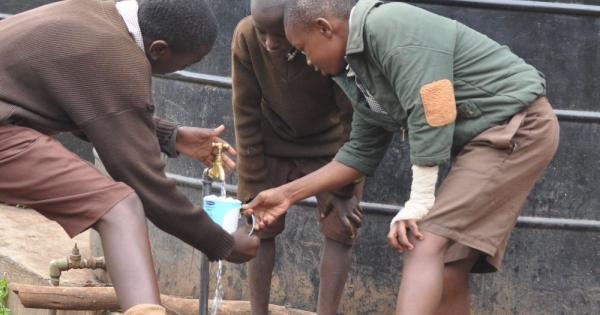
A group of children at Precious Blood Amani Primary School in Nairobi, Kenya, gather around a basin of clean water, a daily necessity made possible by the school’s dedicated hygiene programs. (Lourine Oluoch)
In the bustling heart of Nairobi, Kenya, a quiet revolution is unfolding—one led by nuns who are not only educating children but also ensuring their fundamental needs for survival are met. At Precious Blood Amani Primary School and the Precious Blood Children’s Family Rehabilitation Centre, a team of dedicated sisters is breaking barriers to provide water, sanitation, and hygiene (WASH)—three pillars that are often overlooked yet critical to a child’s well-being.
For many of the 325 children under their care, the school is not just a place of learning but a lifeline. These children, many rescued from the streets of Nairobi’s informal settlements, arrive with little more than the clothes on their backs. Yet, thanks to the compassionate efforts of the Missionary Sisters of the Precious Blood, they receive more than an education—they receive dignity, health, and hope.
A Morning Routine Built on Cleanliness
Every morning at Amani School, a large pot of hot water simmers over a fire in the kitchen—not for cooking, but for personal hygiene. Children who wake up without the means to bathe at home are given the opportunity to clean themselves before classes begin. A simple routine—water, soap, and body jelly—is provided by the school’s social workers, ensuring that no child starts the day feeling unclean or ashamed.
But the school’s commitment to hygiene extends far beyond morning baths. Clothes washing is also accommodated, whether before school or after. The institution provides:
– Clean water (from two dedicated tanks)
– Basins and detergents
– A change of school uniform
– A designated drying area
“Our children come from very difficult environments where water is scarce,” explains Sr. Teresa Vienda, a trained social worker and administrator of the rehabilitation center. “Some families cannot even afford the 5 or 10 shillings needed to buy a jerrycan of water. For them, the school becomes their primary source of cleanliness.”
Vienda oversees the social department, which rescues children from poverty, neglect, and street life before reintegrating them into education. Meanwhile, Sr. Mary Joyce leads as principal, and Sr. Irene Ngina manages the school’s supply store, ensuring every child has access to essentials.
More Than Just Education: A Holistic Approach
The school does not stop at academics. It provides:
– Three meals a day (breakfast, lunch, and supper)
– School uniforms and textbooks
– Hygiene kits (soap, toothpaste, toothbrushes, sanitary towels)
– Clean drinking water
But perhaps the most transformative aspect is teaching children responsibility. Every day, under the guidance of teachers and social workers, students participate in environmental cleanliness, maintaining:
– The kitchen
– The toilets
– The classrooms
– The entire school compound
“We give them the tools to keep their environment clean,” says Vienda. “This instills discipline and ensures they carry these habits into their homes and communities.”
Sanitary Needs: A Barrier to Education
For many girls in Kenya, menstruation is a silent but devastating obstacle to education. Without access to sanitary towels, girls often miss school, fall behind, or—worse—engage in risky behaviors to secure pads.
At Amani School, Sr. Irene Ngina ensures no girl is left without protection. Each month, every student receives three packets of sanitary towels. If a girl forgets hers or stains her uniform, the school has emergency supplies:
– Spare uniforms for quick changes
– Body jelly and soap for cleaning
– A dedicated social worker to assist in emergencies
“Some girls leave their pads at home,” Ngina explains. “If they stain their clothes, they can change immediately, bathe, and return to class. This keeps them in school and out of trouble.”
Alice Kerubo, 17, the school’s head girl, speaks from experience. “The sanitary towels help girls stay in school. Without them, a girl might end up in a bad relationship just to get pads. The sisters have prevented that.”
Beyond the School Walls: Community Impact
The sisters’ work extends beyond the school gates. During Day of the African Child 2026, themed “Ensuring Universal Access to Water, Sanitation, and Hygiene for Every Child in Africa,” their efforts were highlighted.
“We visit families to educate them on hygiene,” says Ngina. “But they don’t always take it seriously. Hearing the message repeated during the Day of the African Child made it clearer—this is not just a school issue; it’s a community responsibility.”
The Association of Sisterhoods of Kenya, of which these nuns are part, is now collaborating with Catholic Care for Children to expand WASH access across congregations. Sr. Hedwig Muse, a program manager, emphasizes that safe water, sanitation, and hygiene are fundamental human rights.
“When we care for children—whether in homes, foster care, or adoption—we must act in their best interest,” she states. “Child protection is not just about safety; it’s about ensuring they have food, water, and a clean environment to grow into healthy, productive adults.”
A Call for Collective Action
While the Kenyan government is implementing the National Water, Sanitation, and Hygiene in Schools Strategy (2024-2029), Sr. Vienda argues that community involvement is equally crucial.
“The government must build infrastructure, but parents and communities can fill gaps through fundraisers and volunteer labor,” she says. “Investing in children’s health today is investing in Africa’s future.”
She warns that poor sanitation leads to preventable diseases—diarrhea, typhoid, and skin infections—which can stunt a child’s development. “We risk losing future leaders because of something as simple as a lack of clean water.”
Conclusion: Nuns as Agents of Change
In Nairobi’s informal settlements, where one in three children lacks access to basic sanitation, the sisters of Precious Blood are proving that compassion and action can change lives. Through water, sanitation, and hygiene, they are not just educating children—they are saving lives, preventing disease, and empowering the next generation.
Their work is a testament to what happens when faith meets action. In a world where many children are left behind, these nuns are ensuring that no child is forgotten.

A social worker assists a young girl with her hygiene supplies at Precious Blood Amani Primary School, reinforcing the school’s commitment to comprehensive care. (Lourine Oluoch)
