


A Beacon of Hope: How Nuns Are Bridging the Water and Sanitation Gap for Kenya’s Most Vulnerable Children
In the bustling yet often overlooked neighborhoods of Nairobi, Kenya, a quiet revolution is unfolding. Behind the walls of Precious Blood Amani Primary School and the Precious Blood Children’s Family Rehabilitation Centre, a dedicated team of Missionary Sisters of the Precious Blood is not just educating children—they are saving lives by ensuring access to clean water, sanitation, and hygiene (WASH) for some of the most marginalized kids in the country.
For hundreds of children rescued from the streets of Nairobi’s informal settlements, the school is more than an institution—it is a lifeline. Here, daily struggles like lack of bathing water, inadequate toilets, and hygiene neglect are replaced with structured care, dignity, and hope.
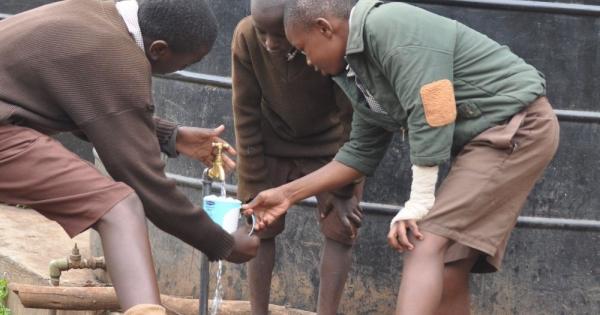
A Moment of Resilience: Children at Precious Blood Amani Primary School
(Lourine Oluoch)
Every morning at Amani School, a large steaming pot of water sits over a fire in the kitchen—not for cooking, but for bathing. Children who arrive dirty, unwashed, and often malnourished from homes without running water are given warm water, soap, and body jelly before classes begin. Those who need to wash their clothes can do so before school starts or after classes end. The school provides basins, detergent, spare uniforms, and drying space, ensuring no child leaves the premises without being clean and presentable.
“Our children come from extremely difficult environments where water is not just scarce—it’s a luxury,” explains Sr. Teresa Vienda, a Missionary Sister of the Precious Blood and administrator of the Precious Blood Children’s Family Rehabilitation Centre. “Many families cannot afford even the 5 or 10 shillings needed to buy a jerrycan of water. This means our children often go days without bathing.”
Vienda, a trained social worker, leads the rehabilitation program that rescues children from the streets, provides them with psychological and physical care, and reintegrates them into formal education. Alongside her, Sr. Mary Joyce (school principal) and Sr. Irene Ngina (store manager) ensure that 325 children receive not just education, but a foundation for healthy living.
A Holistic Approach: Beyond Textbooks to Basic Human Needs
The Precious Blood Children’s Family Rehabilitation Centre and Amani Primary School operate on a holistic model, addressing five critical pillars that most schools in Kenya’s informal settlements overlook:
- Nutrition – Breakfast, lunch, and supper are provided daily.
- Education – Uniforms, books, and school supplies are given free of charge.
- Hygiene & Sanitation – Soap, toothbrushes, toothpaste, body jelly, and sanitary towels are distributed monthly.
- Clean Water – Two large drinking water tanks ensure every child has access to safe, uncontaminated water.
- Clothing & Emergency Supplies – Spare uniforms, shoe polish, and first-aid kits are always available.
“Every child here has access to clean drinking water,” Vienda emphasizes. “They simply pick a cup from the kitchen and drink from our designated tanks. No child goes thirsty.”
But water alone is not enough. Sanitation and hygiene education are equally critical. The school mandates daily cleaning routines, where children—under teacher supervision—scrub the kitchen, toilets, hallways, and compound. This not only teaches responsibility but also reduces disease transmission by maintaining a sanitary environment.
More Than Just Clean Water: The Sisters’ Commitment to Child Well-Being
(Lourine Oluoch)
Sr. Irene Ngina, the store manager, ensures the supply closet is always stocked with essentials:
– Bathing soap, toothpaste, and toothbrushes (replenished weekly).
– Detergent and body jelly for personal hygiene.
– Sanitary towels—three packets per girl, every month—to prevent school absenteeism due to menstruation.
– Spare uniforms for emergencies (e.g., stained clothes, lost items).
– Shoe polish to keep children presentable.
“Some girls forget their sanitary towels at home,” Ngina explains. “If they stain their uniforms, they can change into a spare, bathe, and return to class without shame. This keeps them in school and out of risky situations.”
Alice Kerubo, 17, the head girl of Amani School, speaks from experience. “Without the sanitary towels provided by the sisters, girls like me would either skip school during their periods or risk relationships with older men who might offer them pads in exchange for favors. The sisters have prevented this—they’ve given us dignity and a future.”
Breaking the Cycle: Education on Hygiene and Community Change
The sisters’ work extends beyond the school walls. During home visits, they educate parents on basic hygiene practices, but many families dismiss the advice as irrelevant.
“We’ve been telling them for years about the dangers of open defecation, contaminated water, and poor sanitation,” Ngina says. “But when the Day of the African Child 2026 theme—‘Ensuring Universal Access to Water, Sanitation, and Hygiene for Every Child in Africa’—was announced, it resonated deeply. Hearing the same message from different leaders finally made them listen.”
This aligns with Kenya’s National Water, Sanitation, and Hygiene in Schools (WASH) Strategy (2024-2029), which aims to improve WASH infrastructure in schools—a goal the Association of Sisterhoods of Kenya is actively supporting.
Sr. Hedwig Muse, a Little Sister of Mary Immaculate from Gulu and Program Manager for Catholic Care for Children in Kenya, stresses that WASH is not just a service—it’s a human right and a child protection issue*.
“When we care for children—whether in our convents, foster homes, or even their biological families—we must ensure they have safe water, proper toilets, and hygiene education,” she states. “This is not optional. It’s mandated by Kenya’s constitution under child rights and safeguarding. A child cannot grow into a healthy, productive adult if they are constantly exposed to disease, neglect, and unsanitary conditions.”
A Call to Collective Action: Government, Community, and Individuals Must Step Up
While the Kenyan government plays a critical role in funding and constructing WASH facilities in schools, Sr. Vienda argues that sustainable change requires a multi-sectoral approach.*
“The government must invest in large-scale sanitation projects, but parents and communities must also contribute,” she says. “Fundraisers, community clean-up drives, and building basic toilets in homes can fill the gap where government resources fall short.”
She warns that neglecting WASH today means losing future leaders tomorrow. *”Children are the leaders of Africa’s future. If we don’t provide them with clean water, proper sanitation, and hygiene education, we risk diarrhea, typhoid, and other preventable diseases wiping out bright young minds* before they even start their careers.”
Conclusion: The Sisters’ Legacy—One Drop of Water at a Time
The Missionary Sisters of the Precious Blood in Nairobi are not just running a school—they are building a movement.* Through unwavering dedication, they have turned a basic human necessity—water, sanitation, and hygiene—into a transformative force for 325 children and counting.
Their work is a testament to what happens when compassion meets systems change.* By ensuring that no child goes to bed dirty, no girl misses school due to menstruation, and no boy suffers from preventable diseases, these nuns are rewriting the narrative of poverty and neglect—one clean uniform, one full water tank, and one educated child at a time**.
As Kenya moves forward with its WASH strategy, the sisters’ model serves as a blueprint: when faith, education, and hygiene converge, vulnerable children are not just surviving—they are thriving*.
Final Thought:
“In a world where basic needs are often taken for granted, these sisters remind us that dignity is not a privilege—it is a right.”
