


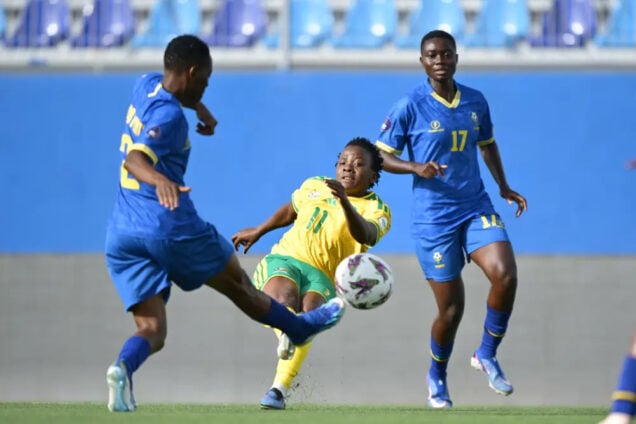
The opening round of the 2026 Women’s Africa Cup of Nations (WAFCON) has already delivered unforgettable moments, dramatic upsets, and performances that will shape the tournament’s narrative. In Group B, Tanzania’s historic victory over South Africa—once an unbeatable force in African women’s football—paired with Ivory Coast’s dominant return after a 12-year absence, has sent shockwaves through the competition. The matches, played at Casablanca’s Moulay Rachid Stadium and Larbi Zaouli Stadium, were not just contests but statements of intent, proving that WAFCON 2026 is already a tournament of surprises.
Tanzania’s Historic Triumph Over South Africa: A David vs. Goliath Story
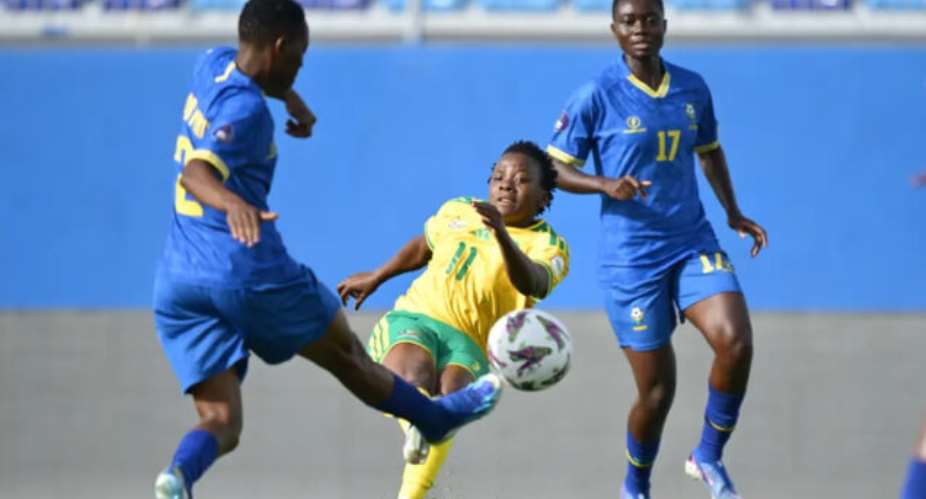
Tanzania’s Hasnath Ubamba celebrates after scoring the late winner against South Africa, marking a historic victory for the Twiga Stars.
For decades, South Africa’s Banyana Banyana have been the gold standard in African women’s football, with a WAFCON title and a reputation for clinical efficiency. But on the opening day of WAFCON 2026, Tanzania’s Twiga Stars dismantled that legacy with a 2-1 victory, their first-ever win over South Africa in the tournament’s history. The match, played at the Moulay Rachid Stadium, was a masterclass in resilience, tactical discipline, and individual brilliance.
A Match of Two Halves: From Deadlock to Drama
The first half was a statistical masterclass for South Africa, who dominated possession (52%) and created 18 shots, six of which were on target. Their midfield, anchored by Linda Motlhalo (who earned her 100th cap in this match), controlled the tempo, and their attacking trio of Janine van Wyk, Andile Dlamini, and Janine van Wyk (again) pressed relentlessly. Yet, Tanzania’s defensive organization—led by captain Susan Msuva—held firm, limiting South Africa to just 13 defensive clearances and 29 defensive interventions, a testament to their structured approach.
The breakthrough came in the 38th minute when Diana Msewa, Tanzania’s clinical striker, capitalized on a defensive lapse to slot home a low drive past South Africa’s goalkeeper. The Twiga Stars had answered, but the momentum was short-lived.
South Africa struck back injury time (89th minute) when Bambanani Mbane, a towering defender, equalized with a header after a corner kick. The crowd at Casablanca erupted, but the match was far from over.
The Late Winner: Ubamba’s Genius Saves the Day
The second half was physically demanding, with the referee issuing two yellow cards to Tanzania in the final 20 minutes—one for a desperate tackle and another for a last-man challenge. Yet, Tanzania’s tactical resilience paid off.
In the 82nd minute, substitute Hasnath Ubamba—a 20-year-old midfielder making her international debut—executed a flawless through ball from Neema Namanga before curling the ball past South Africa’s goalkeeper with her right foot. The goal, a masterpiece of individual skill, sent the stadium into chaos. Tanzania’s players flooded the pitch, celebrating with their fans, while South Africa’s bench looked stunned.
The final whistle marked a historic moment for Tanzania:
– First-ever WAFCON win over South Africa (previously, they had drawn once and lost twice).
– Joint-top of Group B with Ivory Coast, on 3 points.
– A proof of concept that African football’s underdogs can compete at the highest level.
South Africa’s Struggles: A Team in Crisis?
For Banyana Banyana, the loss was more than just a setback—it was a psychological blow. They had been favorites to win the tournament, but their lack of clinical finishing (only 4 shots on target in the second half) and defensive vulnerabilities (allowing 7 shots on target in total) exposed weaknesses.
Linda Motlhalo, despite her 100th cap milestone, admitted post-match that the team needed to regroup quickly. Their next match against Burkina Faso will be crucial—any loss could see them eliminated before the knockout stages.
Ivory Coast’s Dominant Return: A Statement of Intent
While Tanzania stunned the football world, Côte d’Ivoire’s Lady Elephants made their triumphant return to WAFCON after 12 years with a 4-1 demolition of Burkina Faso at the Larbi Zaouli Stadium. The match was a masterclass in possession, movement, and finishing, proving that the Ivorian women’s team is back in business under new head coach Reynald Pedros.
A One-Sided Affair from Start to Finish
From the first whistle, Ivory Coast dictated the tempo. They controlled 59% of possession, registered 16 shots (9 on target), and stretched Burkina Faso’s defense with their wing play. The Lady Elephants moved the ball with precision, using quick transitions to overload Burkina Faso’s midfield.
The goals came rapidly:
1. 12th minute: Aïssatou Tounkara (Ivory Coast’s captain) opened the scoring with a finesse volley after a perfect through ball.
2. 23rd minute: Berthe Etone doubled Ivory Coast’s lead with a low drive, exploiting a Burkina Faso backline stretched too wide.
3. 35th minute: Sarah Ouahabi sealed the half-time lead with a clinical finish after a quick counter.
Burkina Faso, despite their defensive efforts, could only muster 7 shots (3 on target) and 24 defensive interventions—a stark contrast to Ivory Coast’s efficiency.
Burkina Faso’s Fightback and Late Drama
In the second half, Burkina Faso tried to regain composure, but Ivory Coast’s speed and movement made it nearly impossible. However, in the 68th minute, Burkina Faso equalized when Fatima Ouattara converted a penalty after a handball controversy (which the referee allowed).
The match settled down after that, but Burkina Faso’s desperation led to two yellow cards in the final 15 minutes, including one for dangerous play. The Lady Elephants finished the match with clinical composure, ensuring a 4-1 victory.
What This Means for Ivory Coast’s WAFCON Campaign
This win was more than just a statement—it was a proof of Pedros’ tactical genius. The Ivorian team has reclaimed its status as Africa’s best, combining possession-based football with explosive attacking options.
With 3 points (same as Tanzania), Ivory Coast now faces South Africa in their next match—a clash of titans that could define Group B’s eventual winner.
Group B Standings After Matchday 1: A Wide-Open Group
The opening day of WAFCON 2026 has left Group B in a state of flux, with no team truly safe yet:
| Position | Team | Played | Won | Drawn | Lost | GF | GA | GD | Points |
|————–|——————-|————|———|———–|———|——-|——-|——-|————|
| 1 | Tanzania | 1 | 1 | 0 | 0 | 2 | 1 | +1 | 3 |
| 2 | Ivory Coast | 1 | 1 | 0 | 0 | 4 | 1 | +3 | 3 |
| 3 | South Africa | 1 | 0 | 0 | 1 | 1 | 2 | -1 | 0 |
| 4 | Burkina Faso | 1 | 0 | 0 | 1 | 1 | 4 | -3 | 0 |
Key Takeaways:
- Tanzania have shocked the football world, proving that consistency and discipline can overcome favorites.
- Ivory Coast have reasserted their dominance, showing that they are back to their best.
- South Africa must regain their composure—a loss to Burkina Faso could see them eliminated early.
- Burkina Faso, despite the heavy defeat, fought hard and could still pull off upsets in their remaining matches.
The Road Ahead: What’s Next for Group B?
With two matches remaining in Group B, the dramatic nature of the tournament is far from over.
- South Africa vs. Burkina Faso – A must-win for Banyana Banyana to stay in the race.
- Tanzania vs. Ivory Coast – A clash of the two top teams, where the winner will effectively secure Group B.
Predictions:
- Tanzania will keep their momentum, but Ivory Coast’s experience could see them top the group.
- South Africa must improve their finishing—otherwise, they could be out of the tournament before the knockout stages.
- Burkina Faso could surprise again, but their defensive frailties make it unlikely they’ll advance.
Conclusion: WAFCON 2026 is Already Unforgettable
The opening day of the 2026 Women’s Africa Cup of Nations has delivered history, drama, and unexpected triumphs. Tanzania’s victory over South Africa is one of the greatest upsets in WAFCON history, while Ivory Coast’s dominant return has reinforced their status as Africa’s best.
As the tournament progresses, more surprises are expected. The knockout stages promise to be even more intense, with every match carrying massive stakes.
One thing is certain: WAFCON 2026 is not just a tournament—it’s a revolution in African women’s football.
