


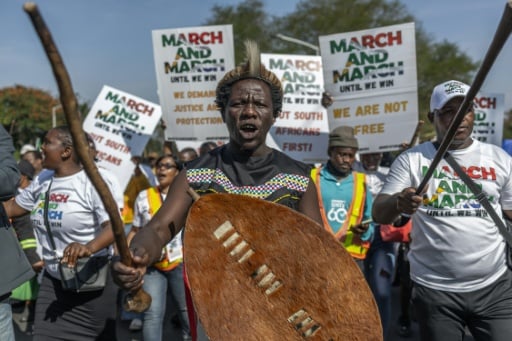
South Africa’s President Cyril Ramaphosa has issued a urgent call to African nations to collaborate in addressing the escalating migration crisis, as his government grapples with widespread anti-migrant violence that has plunged the country into turmoil. Speaking at a session of the Pan-African Parliament—the legislative arm of the African Union (AU)—Ramaphosa emphasized that unregulated cross-border movement poses a threat to regional stability, security, and social cohesion, warning that no single nation can tackle the issue alone.
A Growing Crisis: Xenophobia and Forced Exodus
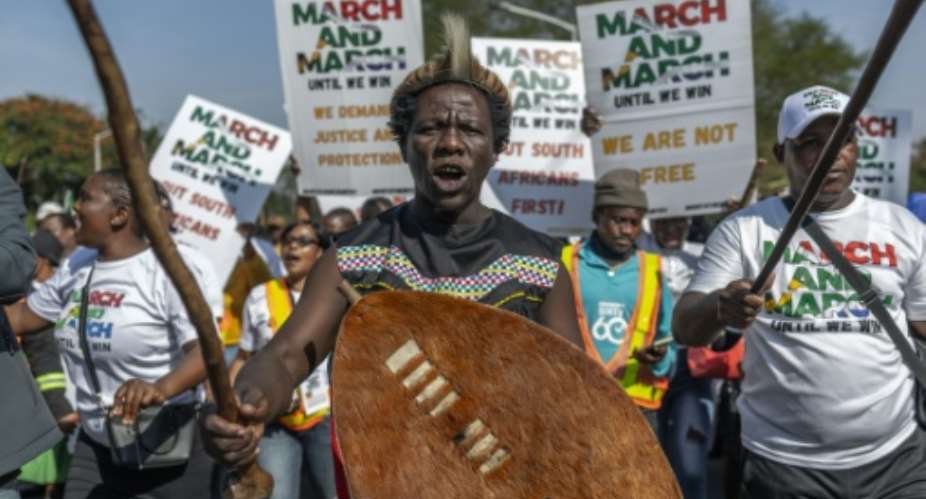
The president’s plea comes amid weeks of violent protests targeting foreign nationals, particularly undocumented migrants from neighboring African countries. Xenophobic groups—some fringe, others with organized support—have blamed migrants for crime, unemployment, and strain on public services, fueling a climate of hatred and fear. Demonstrations, which began intensifying in 2023, have escalated into systematic attacks, with protesters demanding the forced expulsion of all undocumented migrants by June 30, 2024.
According to AFP reports, over 160,000 foreign nationals have voluntarily left South Africa in the past two months—one of the largest mass exoduses in the country’s recent history. The violence has already claimed at least four lives, though diplomatic sources suggest the death toll may be higher. Ramaphosa condemned the attacks as “sad and abhorrent,” stating that “South Africa deeply regrets and mourns the loss of lives” during these incidents.
Root Causes and Collective Responsibility
In his address to the Pan-African Parliament, Ramaphosa acknowledged the systemic factors driving migration, urging African leaders to address the root causes rather than merely reacting to symptoms. He highlighted conflict, political instability, governance failures, poverty, and social discord as primary drivers of forced displacement across the continent.
“As African countries, we must recognize that migration is not just a border issue—it is a development and governance challenge,” Ramaphosa declared. “We cannot afford to turn a blind eye to the conditions that push people out of their homelands. If we fail to act collectively, we risk deepening instability and further destabilizing our economies.”
His remarks align with long-standing AU policies that advocate for regional cooperation on migration, including the Kampala Convention (2014), which aims to harmonize migration governance across Africa. However, Ramaphosa’s call carries extra weight given South Africa’s history of xenophobic violence, which has flared up periodically over the past two decades.
A Pattern of Violence: From 2008 to 2024
South Africa, as the continent’s wealthiest nation, has long been a magnet for migrants seeking economic opportunities. Yet, anti-immigrant sentiment has erupted in cycles of violence, most notably in:
– 2008: 62 people killed, thousands displaced in nationwide riots.
– 2015 & 2016: Multiple outbreaks of xenophobic attacks, targeting market stalls, homes, and businesses owned by foreign nationals.
– 2019: At least 12 deaths, including South African citizens, in sustained clashes between locals and migrants.
This year’s crisis, however, marks a new phase—one where multiple African governments have coordinated voluntary repatriations for their citizens, a precedent not seen in previous outbreaks. Countries like Ghana, Nigeria, and Zimbabwe have facilitated large-scale returns, often under pressure from local authorities and public outcry.
International Condemnation and Legal Challenges
The violence has drawn strong condemnation from the international community, particularly from Ghana, which has publicly criticized South Africa’s handling of the crisis. Two Ghanaian citizens have filed a petition with the International Criminal Court (ICC), accusing South African authorities of complicity in “repeated xenophobic attacks.” Pretoria has dismissed the ICC move as opportunistic, insisting that its government is actively working to curb violence while protecting migrant rights.
Ramaphosa, however, rejected calls for blanket expulsions, stating that “we must distinguish between undocumented migrants and those who contribute positively to our society.” He reiterated South Africa’s commitment to upholding human rights, including the right to asylum and fair treatment for all residents, regardless of origin.
The Way Forward: Regional Solidarity Over Isolation
Experts warn that unchecked xenophobia could destabilize South Africa’s economy, which relies heavily on migrant labor in sectors like construction, agriculture, and domestic work. The forced exodus of skilled workers could further strain an already fragile job market, while public health and social services may face additional burdens if migrants are suddenly removed without proper integration policies.
Ramaphosa’s appeal to the Pan-African Parliament signals a shift toward regional diplomacy, urging African nations to:
1. Strengthen border cooperation to prevent human trafficking and smuggling.
2. Invest in economic development in conflict-prone and impoverished regions to reduce push factors.
3. Establish legal migration pathways to channel movement in a controlled, regulated manner.
4. Promote cultural exchange programs to foster inter-African solidarity and reduce stereotypes.
Conclusion: A Test for African Unity
As South Africa navigates this humanitarian and political crisis, the response of the African Union and individual member states will determine whether the continent can move beyond reactive measures and embrace a unified migration policy. Ramaphosa’s call is not just a plea for calm—it is a strategic imperative to prevent a humanitarian disaster that could undermine decades of African integration efforts.
For now, the clock is ticking, with June 30, 2024, looming as a deadline for mass deportations. The question remains: Will Africa act in time to prevent further bloodshed—or will the cycle of violence continue unchecked?
