


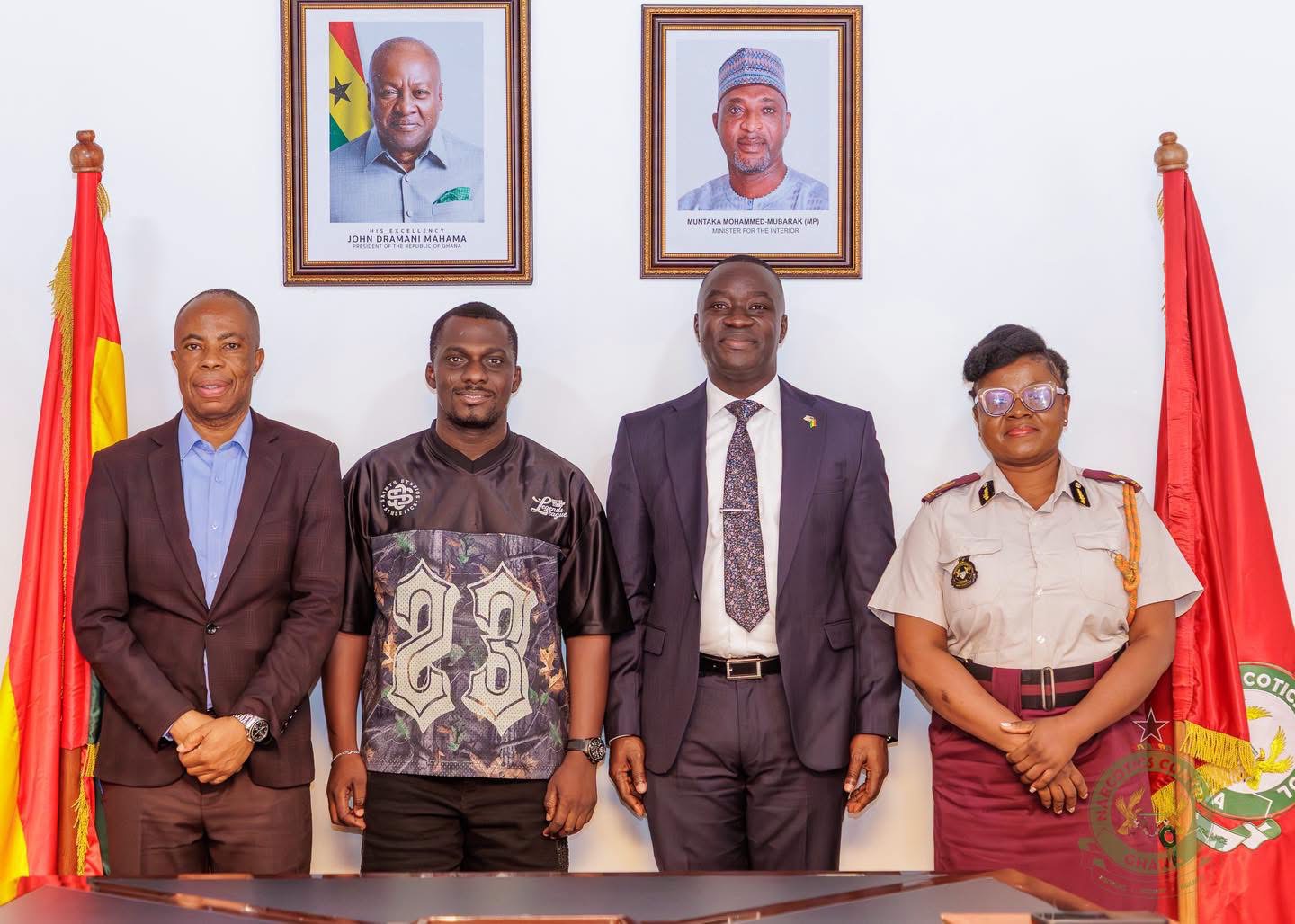
Accra, July 28 – In a significant stride toward fostering a drug-free society, the Narcotics Control Commission (NACOC) has formally engaged Zion Felix, one of Ghana’s most influential digital content creators and media personalities, to spearhead public education campaigns targeting youth substance abuse. The collaboration, announced through a statement to the Ghana News Agency (GNA), marks a strategic alliance between the Commission and Ghana’s digital sphere to combat the rising tide of drug dependency among young people.
A Strategic Push for Prevention Through Influence
The initiative was spearheaded by Mr. Alexander Twum-Barimah (Esq.), the Deputy Director-General in charge of Enforcement, Control, and Elimination at NACOC. In a meeting held to discuss the partnership, Twum-Barimah emphasized the critical role of social media influencers and digital content creators in shaping the attitudes and behaviors of Ghana’s youth. He highlighted how these platforms—with their vast reach and engaging formats—can serve as powerful tools for disseminating evidence-based, life-saving messages about the dangers of drug abuse.
“Prevention is the cornerstone of our fight against drug abuse,” Twum-Barimah stated. “By partnering with influential voices like Zion Felix, we can amplify our public education efforts and ensure that young Ghanaians receive clear, compelling, and actionable information about the risks of substance misuse. This collective effort is essential to safeguarding the future of our nation’s youth.”
Leveraging Digital Influence for Social Change
Zion Felix, known for his massive online following and relatable content, expressed enthusiasm for the collaboration. In a statement following the meeting, he pledged to utilize his platforms—including his popular blog, social media channels, and digital content—to educate audiences on the physical, psychological, and social consequences of drug abuse. Felix underscored the importance of empowering young people with knowledge so they can make informed, healthy choices that align with their long-term well-being.
“As someone who connects with a diverse and engaged audience, I see this as an opportunity to contribute meaningfully to Ghana’s public health,” Felix remarked. “Drug abuse is a silent epidemic that affects families, communities, and the nation as a whole. By sharing real stories, facts, and prevention strategies, I hope to inspire my followers to prioritize their health and reject harmful substances.”
Strengthening NACOC’s Multi-Faceted Approach
The meeting also included key stakeholders from NACOC, including:
– PNCO Ernestina Adjei, the Acting Director of Drug Demand Reduction, who oversees programs aimed at reducing substance abuse through education and community engagement.
– Mr. Felix Agariga, the Director of Intelligence, whose role involves monitoring trends and emerging threats in the drug trade.
– The Head of the Public Affairs Department, responsible for managing NACOC’s communication strategies and public outreach initiatives.
Together, these leaders discussed tactical ways to integrate digital advocacy into NACOC’s broader prevention, treatment, and rehabilitation frameworks. The Commission’s strategy is rooted in the belief that early intervention and awareness are far more effective than reactive measures, such as enforcement alone.
The Broader Impact of Youth Engagement
Ghana’s youth—comprising a significant portion of the population—are particularly vulnerable to drug abuse due to peer pressure, stress, and limited access to constructive alternatives. Studies have shown that social media and digital content play a pivotal role in shaping youth behavior, making influencers like Zion Felix ideal partners in delivering preventive messages.
By collaborating with digital creators, NACOC aims to:
1. Demystify drug abuse through engaging, fact-based content.
2. Promote healthy coping mechanisms such as sports, arts, and mental health support.
3. Encourage open dialogue about substance abuse, reducing stigma and fostering support networks.
4. Leverage storytelling to highlight success stories of recovery and the long-term damage caused by drug dependency.
A Call to Collective Action
Twum-Barimah reaffirmed that this partnership is just the beginning of a broader movement involving government agencies, civil society, parents, and influencers working together to protect Ghana’s youth. “No single entity can combat this challenge alone,” he said. “We need a unified front—one that combines enforcement, education, and empowerment—to ensure that our youth grow up in a society where healthy choices are the norm.”
Zion Felix’s involvement is expected to amplify NACOC’s messages through viral content, live discussions, and interactive campaigns, ensuring that critical information reaches young Ghanaians where they spend the most time—online.
Looking Ahead: A Drug-Free Future for Ghana
As Ghana continues to grapple with the growing scourge of drug abuse, initiatives like this partnership between NACOC and Zion Felix represent a proactive step toward prevention. By tapping into the power of digital influence, the Commission is not only raising awareness but also shifting cultural narratives around substance use.
For now, the focus remains on sustaining momentum and expanding such collaborations to include more influencers, educators, and community leaders. The ultimate goal? A Ghana where drug-free lifestyles are the default choice for every young person.
NACOC’s Deputy Director-General, Mr. Alexander Twum-Barimah, addresses stakeholders during the partnership meeting with Zion Felix.
Zion Felix engages with NACOC officials, discussing strategies for youth drug prevention campaigns.
A visual representation of NACOC’s drug prevention initiatives, emphasizing community and digital engagement.
Head Office Location: Opposite Registrar General’s Department, Dodoo Lane, Ministries, Accra
Digital Address: GA–144–5449
