


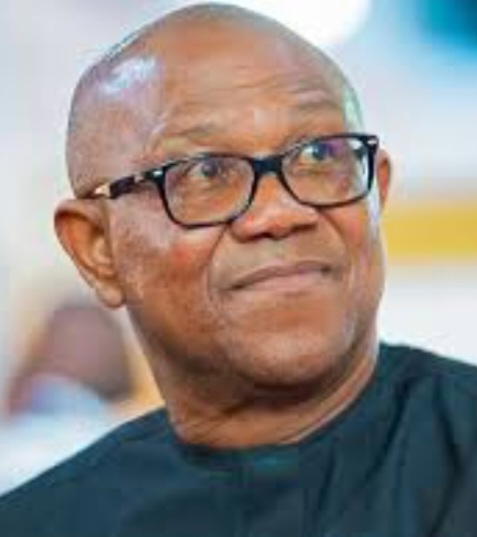
In a recent, candid interview, Peter Obi, the former Governor of Anambra State and current presidential candidate for the Labor Party (LP), has reiterated his vision for Nigeria’s future, emphasizing that meaningful change is achievable within four years. His remarks, delivered with uncharacteristic clarity, underscore a single-term pledge—a stance he reinforces with an offer to legally bind himself to this commitment. This declaration has sparked renewed conversations about leadership accountability, governance reform, and the feasibility of transformative policies in Nigeria’s political landscape.
A Vision for Nigeria: Four Years to Redefine the Nation
Obi’s assertion that Nigeria can be fundamentally altered in four years is rooted in a structured, results-driven approach to governance. Unlike traditional political campaigns that often rely on vague promises, Obi’s strategy appears to prioritize tangible outcomes in critical sectors such as economic stability, infrastructure, education, and security.
- Economic Revival and Job Creation
One of Obi’s central arguments is Nigeria’s economic stagnation, exacerbated by inflation, unemployment, and foreign exchange volatility. He proposes a multi-pronged economic strategy, including: - Agro-industrialization: Leveraging Nigeria’s agricultural potential to reduce import dependence and create jobs.
- Manufacturing revival: Incentivizing local production through tax breaks and infrastructure investments.
- Digital transformation: Expanding internet access and fostering a tech-driven economy to attract foreign investment.
- Currency stabilization: Implementing monetary policies that curb speculative capital flight and restore investor confidence.
Obi has repeatedly criticized Nigeria’s over-reliance on oil revenues, advocating for diversification to mitigate economic shocks. His plan includes streamlining bureaucratic hurdles for small and medium enterprises (SMEs) to thrive, a move he believes could double Nigeria’s non-oil GDP growth within the first term.
- Infrastructure as a Catalyst for Growth
Nigeria’s crumbling roads, unreliable electricity, and inadequate healthcare facilities have long been cited as major impediments to progress. Obi’s vision includes: - Massive infrastructure overhaul: Prioritizing road networks, rail systems, and port modernizations to reduce logistics costs.
- Universal electricity access: Accelerating the National Integrated Power Project (NIPP) and private-sector partnerships to ensure 24/7 power supply in key cities.
- Digital infrastructure: Expanding fiber-optic networks and 5G connectivity to bridge the digital divide.
He argues that poor infrastructure stifles productivity, and his administration would allocate at least 20% of the national budget to critical infrastructure projects, funded through public-private partnerships (PPPs) and debt restructuring.
- Education Reform: Building a Skilled Workforce
Nigeria’s education system remains a national embarrassment, with low literacy rates, brain drain, and a curriculum outdated for the 21st century. Obi’s education reform plan includes: - Free, quality primary and secondary education: Eliminating fees in public schools and improving teacher training.
- Vocational and technical education: Partnering with global institutions to offer industry-relevant skills training.
- Digital literacy programs: Ensuring every Nigerian, especially youth, gains basic computer and coding skills.
- University reform: Reducing corruption in admissions, improving research funding, and attracting global academic collaborations.
He warns that without educational transformation, Nigeria risks losing its demographic dividend to countries with better systems.
- Security and Governance Reforms
The insurgency in the North East, banditry in the North West, and kidnappings across the country have eroded public trust in security institutions. Obi’s security strategy involves: - Strengthening the Nigeria Police Force (NPF): Professionalizing recruitment, improving training, and reducing corruption in police operations.
- Community-based policing: Empowering local vigilante groups under state police oversight to combat rural insecurity.
- Counter-terrorism reforms: Enhancing intelligence-sharing with regional partners and targeting foreign funding for extremist groups.
- Judicial independence: Reforming the legal system to ensure swift justice for crimes, reducing impunity.
He also proposes decentralizing security command, allowing states to tailor responses to local threats rather than relying solely on the federal government.
A Single-Term Pledge: Binding Obedience to Accountability
What sets Obi apart in Nigeria’s highly contested 2023 election is his unwavering commitment to a single term. Unlike many politicians who pursue re-election at all costs, Obi has publicly declared that he will not seek a second term, even if his administration delivers on its promises.
To legally enforce this pledge, he has offered to sign a legally binding affidavit—a move that could set a precedent for future Nigerian leaders. This non-negotiable stance has been met with both skepticism and admiration:
– Supporters argue it reduces political fatigue and encourages long-term planning.
– Critics question whether one term is sufficient for structural reforms, given Nigeria’s decades of governance failures.
Obi counters this by emphasizing focused execution. He believes that four years is enough to lay the foundation for sustainable development, after which new leadership can build upon his achievements.
The Legal Affidavit: A Bold Step Toward Transparency
The proposal to legally bind himself to a single term is unprecedented in Nigerian politics. While political will declarations are common, enforceable affidavits are rare. Obi’s approach suggests:
– A commitment to term limits, which could reduce power struggles and encourage merit-based leadership.
– A mechanism for accountability, where future governments must either continue his policies or explain deviations.
– A signal to investors and donors that Nigeria is serious about governance reform.
However, legal experts have raised concerns:
– Constitutional challenges: Nigeria’s current constitution does not mandate term limits, and enforcing an affidavit could be contested in court.
– Enforcement gaps: Without strong institutional oversight, such pledges may remain symbolic rather than binding.
– Precedent risks: If Obi backtracks, it could undermine public trust in future political commitments.
Despite these challenges, Obi’s boldness in proposing this reflects a desire to distinguish himself from Nigeria’s political elite, many of whom prioritize power retention over national progress.
Public and Political Reactions: A Divided Nation
Obi’s remarks have polarized opinions across Nigeria:
- The Optimistic Camp
- Youth and urban professionals see his anti-corruption stance and economic plans as long-overdue.
- Business leaders appreciate his pro-business policies, particularly tax reforms and ease of doing business.
-
Academics and civil society groups praise his education and healthcare focus, calling it a much-needed shift from petroleum-centric governance.
-
The Skeptical Camp
- Traditional political elites dismiss his single-term pledge as naïve, arguing that Nigeria’s problems require multi-decade solutions.
- Regional power brokers in the North and South-South question whether Anambra’s success model can be scaled nationally.
-
Some supporters of rival candidates (such as Bola Ahmed Tinubu and Atiku Abubakar) accuse Obi of overpromising without a clear exit strategy.
-
The Neutral Observers
- Economists note that while his plans are ambitious, execution risks—such as bureaucratic resistance and funding gaps—remain significant hurdles.
- Security analysts warn that insurgency and banditry cannot be solved in four years, requiring long-term counterterrorism strategies.
- Legal scholars debate whether an affidavit alone can legally bind a president, given Nigeria’s judicial system’s reputation for delays.
Challenges on the Path to Transformation
Despite Obi’s optimistic outlook, several structural and political challenges threaten his vision:
- Political Instability and Power Struggles
- Nigeria’s federal system is fragmented, with state governors and legislators often prioritizing local interests over national unity.
-
Ethnic and religious tensions could derail economic reforms, as seen in past fuel subsidies protests and farmland conflicts.
-
Economic Constraints
- Nigeria’s debt burden (exceeding $100 billion) limits fiscal flexibility.
-
Oil revenue volatility means budgetary unpredictability, making long-term planning difficult.
-
Corruption and Bureaucratic Resistance
- Decades of graft have eroded public trust, and cleaning up institutions will require unprecedented transparency.
-
Civil servants and contractors may sabotage reforms to protect their interests.
-
Global Economic Uncertainty
- Rising interest rates, inflation, and geopolitical tensions could disrupt Nigeria’s economic recovery.
- Dependence on foreign loans may lead to debt traps, as seen with China’s infrastructure projects.
Comparative Analysis: Lessons from Other African Nations
Obi’s four-year transformation plan can be benchmarked against successful African governance models:
- Rwanda’s Paul Kagame (2000–Present)
- Single-term focus: Kagame has consistently won re-elections, but his strongman image has led to criticism of authoritarianism.
- Key success: Rapid infrastructure development (Kigali’s modern cityscape) and strict anti-corruption measures.
-
Lesson: Focused leadership can drive change, but democratic backsliding risks must be avoided.
-
Ethiopia’s Abiy Ahmed (2018–2021)
- Initial optimism: Abiy’s peace deals (e.g., Eritrea) and economic liberalization were praised globally.
- Downfall: Ethnic violence and economic mismanagement led to his resignation in 2021.
-
Lesson: Quick wins must be balanced with sustainable policies to avoid public disillusionment.
-
Ghana’s John Mahama (2012–2016)
- Single-term limit: Mahama honored his pledge not to seek a second term.
- Mixed results: Infrastructure gains (e.g., roads, schools) were outweighed by economic stagnation.
-
Lesson: Four years is enough for visible progress, but deep-rooted issues require multi-party collaboration**.
-
Botswana’s Mokgweetsi Masisi (2018–Present)
- Stable governance: Botswana has avoided coups and maintained democracy for decades.
- Economic challenges: Diamond price fluctuations have strained growth.
- Lesson: Consistency and institutional stability are more important than rapid change.
The Road Ahead: Can Nigeria Really Change in Four Years?
Obi’s bold declaration is not without merit, but realistic expectations must be set:
✅ Potential Wins in Four Years:
– Visible infrastructure improvements (roads, bridges, power).
– Reduction in corruption (if anti-graft agencies are strengthened).
– Economic diversification (if agriculture and manufacturing see real growth).
– Judicial and police reforms (if accountability mechanisms are enforced).
❌ Unrealistic Expectations:
– Ending insurgency completely (requires generational efforts).
– Eliminating poverty overnight (requires global economic stability).
– Overhauling the education system (takes decades of investment).
– Balancing federal and state interests (historically contentious in Nigeria).
Conclusion: A Leader Who Speaks Truth to Power
Peter Obi’s vision for Nigeria is ambitious, detailed, and—most importantly— accountable. His single-term pledge and offer to legally bind himself reflect a rare honesty in a political class often mired in self-interest.
Whether Nigeria can transform in four years depends on multiple factors:
– Obi’s ability to execute without compromising on integrity.
– Public and private sector collaboration to fund and implement reforms.
– International support to stabilize Nigeria’s economy.
– A united Nigerian people willing to demand accountability.
If successful, Obi’s presidency could mark a turning point—proving that Nigeria does not need endless political transitions but focused, principled leadership.
For now, the ball is in his court, and the nation watches closely—not just for promises, but for proof.
