


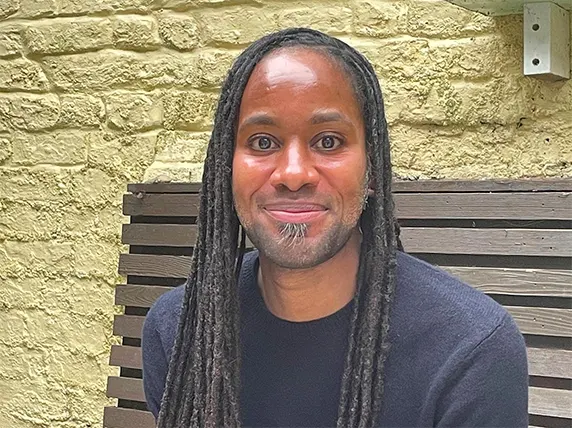
The late Jason Arday
On 14th August, 2026, Jason Arday was found dead at a property in south London, a week after resigning his professorship at the University of Cambridge. He was 41. The Metropolitan Police say his death is being treated as unexpected but not suspicious.
His family has spoken of a campaign of misinformation and harassment that became, in their words, too much for him to bear. What follows is not an attempt to settle the plagiarism allegations that preceded his resignation, nor to speculate on what finally happened in that flat.
It is an attempt to sit honestly with a question that has no comfortable answer on either side: when a university builds a public story around one scholar’s rise, and that scholar is later accused of serious wrongdoing, who actually failed whom?
The case that Cambridge did nothing wrong
Start with the version of events that takes the university’s side, because it deserves to be stated at full strength rather than as a strawman to knock down. Cambridge did not invent the allegations against Arday. The Times reported in July that sections of his 2015 doctoral thesis closely resembled an earlier scholar’s work, and separate questions followed about honorary titles and fundraising claims attached to his public profile. A university that receives credible allegations of this kind has an obligation to investigate, and Cambridge says it did exactly that, through its Misconduct in Research policy, while continuing to offer him support throughout.
On this view, resignation is not evidence of institutional failure; it is evidence of the process working as intended: allegations surfaced, were taken seriously, and the person involved chose to step down rather than contest them publicly. Every profession disciplines senior figures for serious breaches, sometimes abruptly, and the fact that the person involved was well regarded, or symbolically significant, cannot become a reason to slow-walk or soften accountability. To argue otherwise, on this reading, is to suggest that scholars who carry symbolic weight should be held to a lower standard than everyone else, which is its own kind of unfairness.
The case that something failed him
Now take the opposing case with equal seriousness. Arday became Cambridge’s youngest Black professor in 2023, a fact that travelled ahead of almost everything else attached to his name, folded into a public narrative about a working class upbringing, a non-verbal childhood, and a rapid rise against structural odds. A university under real pressure to demonstrate progress on race and inclusion had every institutional incentive to tell that story as often and as loudly as possible, and did.
The argument here is not that the allegations should have been ignored. It is that an institution which elevates someone as proof of its own transformation takes on an obligation that goes beyond the standard employment relationship, an obligation that includes psychological support scaled to the scrutiny the institution itself invited, and a process that does not leak into national newspapers before it concludes. Once the Times story broke, resignation and death followed within three weeks, while Cambridge’s own investigation, by its own account, was still ongoing. On this reading, the university’s public relationship with Arday moved at the speed of a press cycle it had helped create, while its actual duty of care moved at the speed of institutional bureaucracy, and the mismatch between those two speeds is where the harm lives.
What the research can and cannot tell us
There is genuine scholarship behind the second argument, and it is worth naming precisely rather than gesturing vaguely. The sociologist William A. Smith’s concept of racial battle fatigue describes the documented cumulative toll, psychological and physiological, of navigating historically white institutions as a racially minoritised academic. Related research on tokenism describes a pattern of hypervisibility, being simultaneously the most watched and the least supported person in a room, alongside an uncompensated burden some scholars call the Black tax.
None of this research can tell us what specifically happened inside Jason Arday’s mind, and it would be dishonest to claim otherwise. Documented patterns describe populations, not individuals, and applying them to any one person’s death risks explaining more than the evidence can bear.
What the research does establish is that the structural pressure described by the first camp is real and measurable, not merely a rhetorical device deployed after the fact. Whether it was decisive in this case is something none of us, including the people writing about it now, can actually know.
Where this leaves a fair-minded reader
Both cases above are coherent. Both are held by people who are not arguing in bad faith. A university can run a legitimate misconduct process and still have failed to build adequate support around a person it publicly showcased. An institution can also be entirely blameless in its investigation while still being unable to control the disproportionate public reaction that its own earlier promotion helped generate. These are not mutually exclusive claims, and resolving this story into a single villain, whether that villain is Cambridge, the press, or Arday himself, is probably a more comfortable conclusion than the facts currently support.
What can be said without much controversy is narrower: any institution that chooses to build a public narrative of exceptional achievement around an individual should be prepared, before the next crisis rather than during it, to explain what support infrastructure exists to match that publicity, independent of how any future misconduct investigation concludes. That is a policy question every university with a flagship diversity appointment can answer today, and most have not been asked to.
Source: Dominic Senayah
