


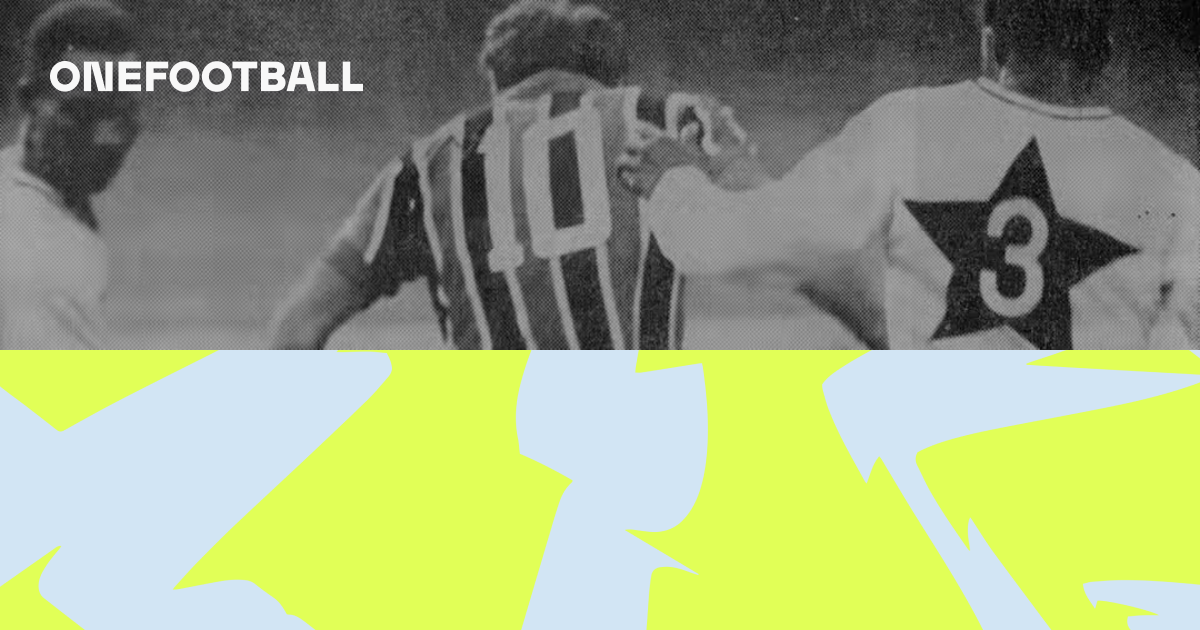
With MorumBIS Stadium practically completed and about to be officially inaugurated on January 25, 1970, São Paulo received a distinguished visitor at the end of the 1969 season: the Ghana national team. As the African side faces England today, June 23, in the 2026 World Cup, the Historical Archive uses this occasion to recall what happened almost 57 years ago.
The year 1969 was fruitful for Tricolor in terms of results and international achievements, such as winning the Troféu Colombino. To close the season on a high note, the club agreed to take part in Ghana’s tour of Brazil. It was the Ghanaians’ fourth match on Brazilian soil (they first lost 2–1 to Desportiva Ferroviária of Espírito Santo, then drew 0–0 with Fluminense de Feira de Santana, and finally beat the Sergipe State Team 5–1).
Ghana (still written as Ghana, according to the spelling of the time), had been eliminated early from the World Cup qualifiers by Nigeria just a few months earlier, after an away defeat and a draw in Accra. In Brazil, they sought to broaden their understanding of football as a way of gaining experience for the 1970 African Cup of Nations, to be held in Sudan — Ghana had won that tournament in 1963 and 1965 and was chasing a third title.
For one member of the Black Stars’ coaching staff (the official nickname of the Ghanaian national team, referring to the black star on the country’s flag), Ben Koufie, what mattered most was contact with new ways of playing. “For him, the cunning and improvisation his players may learn are more important,” reported a journalist from O Estado de S. Paulo on December 6.
“All the players are amateurs. Some work for the government, and our left winger is a truck driver. They all work and only have time for daily training when they are with the national team, because the government makes sure they are released at those times. When they are serving their clubs, they train once or twice a week, after work,” revealed the foreign team’s coach.
Asante Kotoko (African runner-up in 1967 and future champion in 1970) and Hearts of Oak were the backbone clubs of the Ghana team, whose main trait was speed, focused on sharp, direct attacks. São Paulo, meanwhile, under coach Diede Lameiro, was known for its measured tempo.
Tricolor was very much in end-of-year mode, with many players returning from injuries and lacking match rhythm, such as goalkeeper Picasso, midfielder Gérson, and center-forward Toninho Guerreiro. In any case, called up for training camp were Picasso, Sérgio, Arlindo, Nenê, Dias, Tenente, Edson, Gérson, Benê, Nicanor, Zé Roberto, Toninho, Téia, Paraná, Wylherson, Vilela, Lourival, Babá, and Toninho II.
Once the ball started rolling, São Paulo realized from the beginning that an easy rout was very possible, almost expected. In less than five minutes, Gérson opened the scoring after a triangular move with Toninho and Zé Roberto. Five minutes later, Tricolor doubled the lead, this time through Toninho, who received a low cross from Nicanor (who may perhaps have been offside, but who can say…).
Next, Zé Roberto missed on a bicycle kick, with the ball just grazing the post. With the match under control, and other great chances wasted, São Paulo eased off. Near the end of the first half came the punishment, and Ghana, through Owusu — supposedly also offside — on a through ball beat Dias in a footrace and struck hard, almost at crossbar height, straight down the middle of Picasso’s goal. 2–1.
The goal renewed Ghana’s spirit and gave the visitors more energy in the second half. Eager, however, they either ended up being dribbled past easily or committed rough and violent fouls. Trying to conserve themselves, Tricolor slowed the pace and almost stopped posing any danger. In the 20th minute, the African side’s persistence paid off and, after a first-time shot by Acquah from an Owusu cross, Picasso made a mistake and let the goal in, with the ball going under the goalkeeper’s body. 2–2.
Then the Tricolors finally woke up. They began attacking more and stopped avoiding challenges. In one of them, however, Toninho Guerreiro came off worse and left the field injured, with a severe ankle dislocation. Since São Paulo had already made two substitutions by that point (the maximum allowed in an official match at the time), the team was left with one man fewer on the field…
Even so, what followed was heavy São Paulo pressure, forcing goalkeeper Mensah to make a string of saves in just a few minutes. Nenê, however, in the 36th minute, fooled the opposition with a rehearsed free-kick routine with Gérson and put São Paulo back in front on the scoreboard. Near stoppage time, Tricolor found the net once more after a penalty committed by Mingle on Gérson, calmly converted by Zé Roberto into the African goalkeeper’s right corner. São Paulo 4–2!
It was a great experience for Ghana. Days later, the national team would also face Palmeiras at Pacaembu (and lose 3–1). They left Brazil with good stories and experiences, which helped the team reach the final of the 1970 African Cup of Nations once again — they ultimately finished as runners-up to the host nation, Sudan.
SÃO PAULO 4 x 2 GHANA12/06/1969. International Friendly: Single Match.São Paulo (SP), Cícero Pompeu de Toledo Stadium – MorumBIS.
SPFC: Picasso; Arlindo, Roberto Dias (Cláudio Deodato), Nenê and Tenente; Édson Cegonha and Gérson; Nicanor (Valter Zum-Zum), Zé Roberto, Toninho Guerreiro and Paraná. COACH: Diede Lameiro. GOALS: Gérson, 5/1; Toninho Guerreiro, 10/1; Nenê (free kick), 36/2; Zé Roberto (penalty), 45/2.
OPPONENT: Essel Badu Mensah; Edward Boye, Armah Akuetteh, John Eshun and Alex Mingle; Oliver Acquah, Joseph “Joe” Garthey, Cecil Jones Attuquayefio and Robert William Foley; Kwasi Owusu and Abukari Garibah. COACH: Karl-Heinz Marotzke. GOALS: Owusu, 40/1; Acquah, 20/2.
This article was translated into English by Artificial Intelligence. You can read the original version in 🇧🇷 here.
 View publisher imprint