


Let me tell you what keeps me up at night.
A few months ago, I was in yet another TV conversation about artificial intelligence and the creative economy. The usual suspect was there: the host of The Market Place show on JoyNews and business journalist, Daryl Kwawu.
He wanted to know what the future holds for the industry as we entered the New Year, 2026. I suggested that the biggest winners would be platforms that leverage AI to integrate culture and technology to align with sectors outside the norm, such as finance.
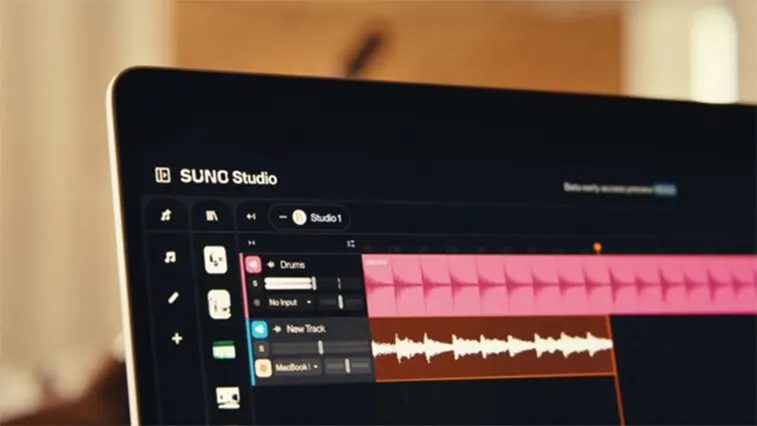
Then, about two days ago, came the news about Suno.
The AI music platform has raised more than $400 million and is now valued at approximately $5.4 billion. Let that sink in.
A company that allows users to generate songs from simple text prompts, no instruments, no vocal training, no years of learning chord progressions, is now worth more than many established music labels.
The truth is that the global creative economy is being rewired in real time, and Africa is not yet in the control room.
The first thing to understand is that investors are no longer treating AI as a supporting tool for human creatives. That ship has sailed. They are now treating AI as core creative infrastructure.
A $5.4 billion valuation is a bet on a future where millions of people create, consume, and personalise content through AI-powered platforms. It is a bet that creativity will become more accessible, more participatory, and more technology-driven. Whether we like it or not, capital is flowing toward companies that lower the barriers to content creation.
And Suno is not alone. This is just the beginning.
But Suno’s rise comes with a storm. The company is facing lawsuits from major record labels over claims that copyrighted music was used to train its models without permission. This is not a minor legal squabble. It is arguably the most important legal battle in the creative industries today.
The courts are being asked to decide whether AI companies can train on copyrighted works without explicit permission. If Suno wins, fair use arguments gain ground, and AI development accelerates. If the labels win, AI companies will have to negotiate licences and compensate rights holders before building these systems.
The outcome will affect music, publishing, film, photography, and journalism. In many ways, this case is helping to write the rules of the AI era.
And where is Africa in this legal conversation? Largely absent. That is a problem.
As Africans, we should see this as both a warning and an opportunity.
The warning is this. If we do not properly document, license, and protect our creative assets, African music, languages, and cultural expressions will become training data for foreign AI models. Our rhythms, our proverbs, our sonic innovations, all fed into algorithms without delivering a single cedi, naira, or rand back to the creators. We will have donated our cultural inheritance to build billion-dollar companies elsewhere.
The opportunity is equally real. AI can help African creators reach global audiences, produce content more efficiently, and unlock new revenue streams. A musician in Accra could use AI to compose, arrange, and distribute a song to the world in hours instead of months. A filmmaker in Lagos could generate soundtracks without a Hollywood budget.
But here is the catch. Realising that opportunity requires stronger copyright systems, better metadata, digital rights management, and, investment in African-owned creative technologies. Without those, we will remain consumers of these platforms, not builders or beneficiaries.
I have covered Africa’s creative economy for years. I have watched us celebrate our cultural exports while ignoring the infrastructure that could monetise them. I have listened to ministers praise our “soft power” while refusing to fund the hard systems that protect intellectual property.
The broader lesson from Suno’s story is this that intellectual property is becoming one of the most valuable economic assets of the digital age. A company valued at $5.4 billion was built around music, creativity, and data. Africa has a richer cultural resource base than most continents, yet we consistently underestimate its economic value.
The future belongs not only to those who create culture but also to those who own the platforms, datasets, and technologies that distribute and monetise it.
So for me, this moment should push African governments, investors, and creative industries to think beyond content creation. We need to focus on ownership, infrastructure, and innovation. We need to stop treating our music and culture as an infinite resource that requires no maintenance or protection.
We need to build or invest in African AI platforms that understand our languages, our rhythms, and our rights.
Because if we do not, the soundtrack of the future will be composed by AI. But the profits will not be sung in our tongues. And that, dear reader, would be the greatest copyright theft of all.
By Kenneth Awotwe Darko
