
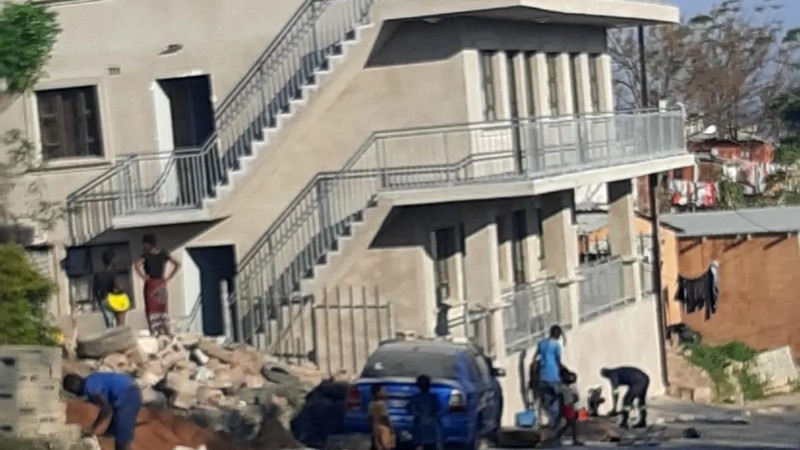
The eThekwini Municipality has approximately 98,452 additional houses, according to Statistics South Africa’s General Household Survey: Selected Development Indicators 2024.
According to Stats SA, the household count rose from 1,240,807 to 1,339,259. The municipality stated that this approval forms a critical part of ongoing efforts to ensure accurate, consistent, and data-driven planning across all areas of governance.
Selvan Govender, an IFP councillor in eThekwini, raised concerns about the large number of informal settlements within the municipality and Stats SA’s effectiveness in this regard.
“The city has approximately 605 informal settlements, and more emphasis should be placed on this,” he said.
On Thursday, at a council meeting, the revised household count, together with the updated indigent household figures, was approved for incorporation into key municipal planning instruments, including the Integrated Development Plan (IDP) and the Service Delivery and Budget Implementation Plan (SDBIP) for the 2025/26 financial year and beyond.
According to the municipality, the updated household count ensures that the municipality’s planning, budgeting, monitoring, and reporting processes align with the most recent and reliable data.
All municipal strategic and planning documents will be updated accordingly to reflect the revised household figures.
During a previous council meeting, the municipality stated that it has a formalised census of residents in the settlements.
“Land monitors conduct an exercise, which is called ring-fencing, during which they allocate house numbers to each informal settlement and compile a list of residents in each informal settlement. This database of residents is updated periodically according to observed expansion, densification, or a new settlement,” a statement read.
Felicia Sithole, Stats SA media spokesperson, stated that the survey shows the percentage of households living in formal dwellings increased from 73.5% in 2002 to 84.1% in 2024. Nationally, three-fifths (60.1%) of households owned the dwelling they lived in. A further 25.1% rented their dwellings.
“The target population of the survey consists of all private households and residents in workers’ hostels across all nine provinces of South Africa. The survey does not cover other collective living quarters such as students’ hostels, old-age homes, hospitals, prisons, and military barracks, and is therefore only representative of non-institutionalised and non-military persons or households in South Africa,” Sithole said.
In the May 2025 report, Statistician-General Risenga Maluleke stated that the survey covered six main areas and was designed to track development over the 22 years since its introduction in 2002. These included early childhood development and education, housing, health and social development, agriculture, basic household services, livelihoods, and food security
[email protected]
