


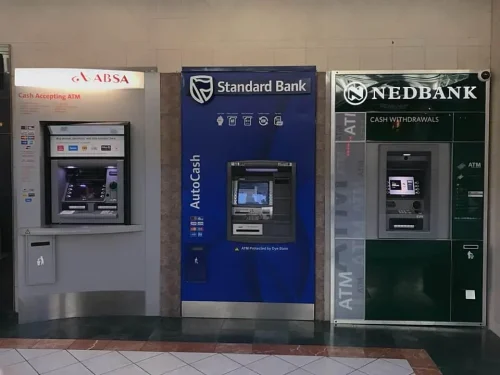
South Africa’s five largest banks are choosing to upgrade and replace ageing automated teller machines (ATMs) rather than accelerate network reductions in 2026, as the sector balances rising digital adoption with persistent cash demand among lower-income communities.
Standard Bank is rolling out new ATMs equipped with higher capacity and additional services, including real-time acceptance, validation, and bulk cash recycling, as part of a broader upgrade strategy. The bank confirmed it will replace 600 older machines with newer models and install 200 additional technology-enabled devices this year, with no planned closures or removals.
First National Bank (FNB) is replacing some of its traditional ATMs with Automated Deposit Taking (ADT) devices, expanding cash deposit access and improving cash recycling within local markets. FNB currently operates 4,781 cash withdrawal and deposit devices, a figure largely stable since 2022.
Nedbank said its ATM footprint will remain broadly stable, with low-use machines relocated rather than simply decommissioned. Absa, which has not disclosed specific 2026 plans, continues to review its network using customer behaviour data, maintaining that ATMs remain critical tools for financial inclusion.
Capitec stands apart from its competitors by planning a net increase in both its branch and ATM network in 2026, extending a pattern in which it has added roughly 3,800 ATMs since 2019, making it the only major South African bank to significantly grow its physical cash infrastructure over that period.
The shifts come against a backdrop of structural change in South Africa’s cash economy. The South African Reserve Bank (SARB) is advancing what it describes as the biggest overhaul of the nation’s cash system in decades, anchored by plans to establish a cash management company and roll out white-label ATMs, inspired by the Netherlands’ Geldmaat model, which operates a unified ATM network jointly owned by multiple banks. The strategy aims to cut the cost of managing cash, which currently burdens consumers with fees that can run five times higher in low-income areas than in wealthier urban centres.
Despite the growing adoption of digital payment channels, cash continues to account for the majority of transaction volumes in South Africa’s informal economy, sustaining demand for accessible ATM infrastructure. Banks have also broadened cash access through partnerships with retailers such as Shoprite and Pick n Pay, allowing customers to withdraw and deposit at supermarket tills.
The industry’s direction in 2026 is modernisation rather than mass withdrawal, with smarter machines, shared infrastructure, and retail partnerships redefining how physical banking reaches South Africans who still depend on cash.
