


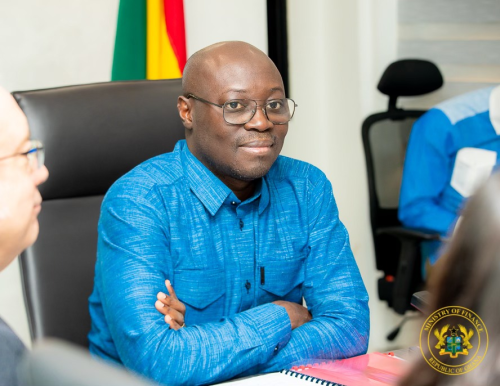
Finance Minister Dr. Cassiel Ato Forson has used investor engagements on the sidelines of the 2026 International Monetary Fund (IMF) and World Bank Spring Meetings in Washington to outline the specific institutional reforms underpinning Ghana’s economic recovery, going beyond headline numbers to explain the structural architecture behind the gains.
At the heart of the presentation was an aggressive expenditure rationalisation programme that has reduced the size of government from 123 ministers to 60, alongside amendments to the Public Financial Management (PFM) Act introducing new fiscal rules, including a 1.5 percent primary surplus target and a 45 percent debt ceiling.
Dr. Forson anchored his case on a distinction between durable reform and temporary intervention. “These are not cosmetic gains. They are outcomes of well-thought-through reforms, backed by laws and disciplined implementation,” he told investors.
Institutions and Oversight
Beyond fiscal rules, the minister pointed to new oversight bodies established to enforce accountability in public spending. These include the Fiscal Council and the Office of Value for Money, both designed to strengthen scrutiny of how public resources are deployed.
On the revenue side, Dr. Forson noted ongoing reforms in tax administration, including adjustments to the revenue refund system, broader value added tax (VAT) and customs reforms to plug leakages, and payroll audits to eliminate inefficiencies. The mining and petroleum sectors have also undergone policy shifts, with royalties restructured and channelled toward large-scale infrastructure financing, while the energy sector has seen the operationalisation of a cash waterfall mechanism to improve financial flows.
Statutory funds have been uncapped to better align spending with national priorities, and reforms in the cocoa sector have also been introduced as part of the broader economic reset.
The Numbers
Ghana’s economic growth reached 6 percent in 2025, up from 5.8 percent in 2024, while inflation fell sharply from 23.8 percent in 2024 to 5.8 percent in 2025, declining further to 3.2 percent by March 2026. The cedi appreciated by more than 40 percent against the United States dollar in 2025, with gains continuing into 2026. Ghana’s debt-to-gross domestic product (GDP) ratio fell from 61.8 percent to 45.3 percent by the end of 2025, ahead of earlier targets, while the country moved from a fiscal deficit of 2.9 percent of GDP to a surplus of 2.6 percent in 2025.
International reserves have also improved, now covering nearly six months of imports.
Debt restructuring is nearly complete and Ghana remains current on all debt service obligations. The country is on course to exit its IMF-supported programme in August 2026.
Investor Response
Investors at the meeting expressed strong admiration for Ghana’s reset agenda, commending both the depth of reforms and the tangible progress achieved in stabilising the economy and restoring credibility.
Dr. Forson confirmed that Ghana is now transitioning from a period of economic stabilisation to a phase centred on growth and expansion, with four priority sectors identified for deepened World Bank collaboration: commercial agriculture and agribusiness, energy, education and human capital, and infrastructure.
The Spring Meetings run from April 13 to 19, 2026. Dr. Forson is accompanied by Bank of Ghana (BoG) Governor Dr. Johnson Asiama and senior officials from both institutions.
