


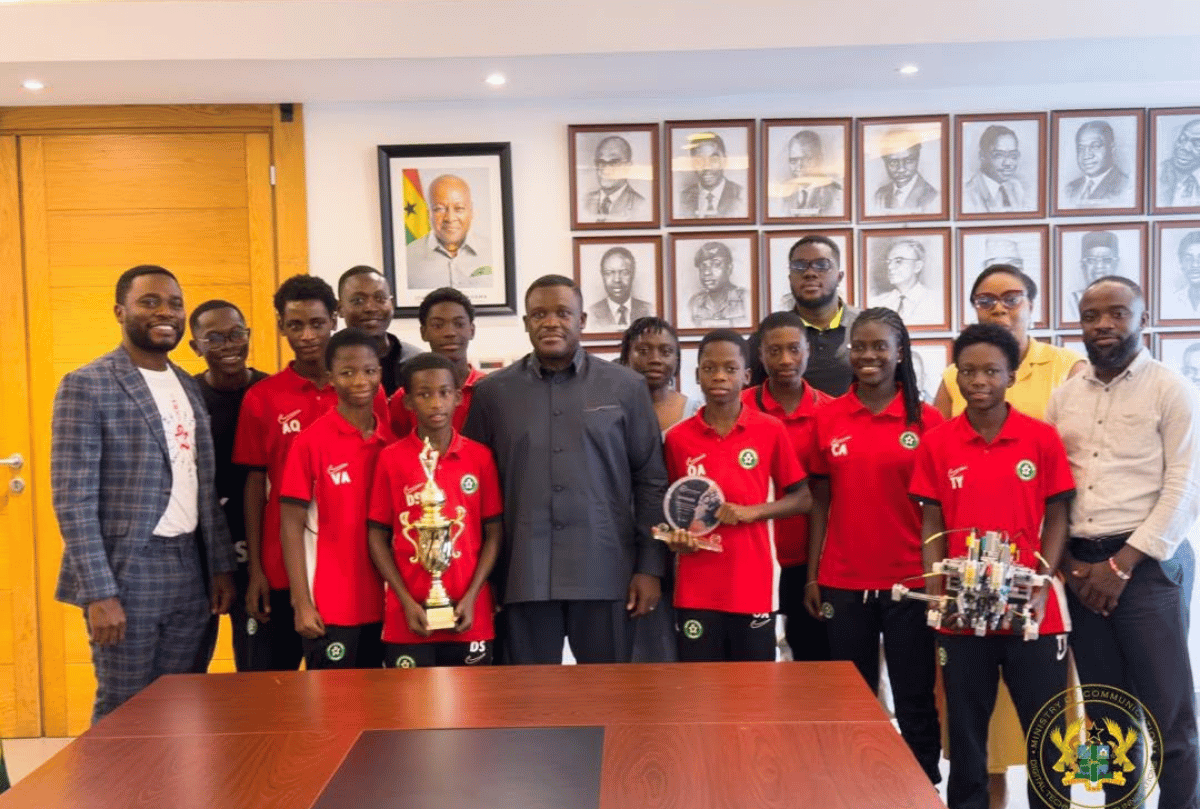
Ghana is making bold strides in redefining youth development by strategically merging athletic prowess with cutting-edge technology and digital skills. This innovative approach, championed by the Ministry of Communication, Digital Technology and Innovations, aims to equip young athletes with a multifaceted skill set that transcends traditional sporting careers. The recent engagement with the Right to Dream Academy underscores this vision, demonstrating how technology and sports can coexist to foster holistic growth and global competitiveness.
A New Paradigm: Sports Meets STEM
The Right to Dream Academy, renowned for nurturing football talent, has emerged as a trailblazer in integrating Science, Technology, Engineering, and Mathematics (STEM) into its curriculum. During a high-profile visit by the Ministry of Communication, Digital Technology and Innovations, students and coaches showcased their groundbreaking achievements in robotics and artificial intelligence (AI)—fields where they have already garnered international acclaim.
Their recent victories highlight this dual focus:
– First place at Ghana’s AI for Good competition, where they presented innovative solutions leveraging AI for societal challenges.
– Second place in the senior category at the Robofest 2026 World Championship, proving their technical prowess on a global stage.
This dual expertise is not merely coincidental but a deliberate strategy to ensure that athletes develop future-proof skills that align with Ghana’s digital transformation agenda.
Ministerial Endorsement: Bridging Gaps for Sustainable Careers
Minister Samuel Nartey George praised the academy’s model, emphasizing that digital literacy and technological fluency are critical for young athletes to explore alternative career pathways. While sports provide physical and mental discipline, technology offers economic resilience, ensuring that athletes are not limited to short-term athletic careers.
“The intersection of sports and technology is not just about excellence in the field; it’s about creating opportunities that last beyond the final whistle.”
The minister’s remarks align with Ghana’s broader goal of cultivating a skilled, digitally literate workforce capable of contributing to the fourth industrial revolution. By embedding coding, AI, and robotics into athletic training, the country is fostering a new generation of hybrid professionals—individuals who excel in both sports and tech-driven industries.
Corporate and Government Synergy: Fueling Global Participation
The success of Ghana’s young technologists is not happening in isolation. Corporate partnerships have played a pivotal role in sustaining their growth. The MTN Ghana Foundation and Telecel Ghana Foundation were recognized for their financial and logistical support, enabling the academy’s team to compete in international competitions, including an upcoming event in Geneva.
This collaboration exemplifies how public-private partnerships can amplify youth development initiatives. By providing resources, mentorship, and exposure, these foundations are ensuring that Ghanaian athletes and tech enthusiasts compete on a global scale, bringing home accolades that elevate the nation’s reputation in innovation and sports.
Expanding Digital Access: Government Initiatives for Long-Term Impact
To further strengthen the academy’s technological infrastructure, the Ministry of Communication, Digital Technology and Innovations has announced two key interventions:
1. Donation of 30 laptops to upgrade the institution’s computer laboratory, ensuring students have access to the latest tools for coding, AI experimentation, and robotics development.
2. Enrollment in the One Million Coders Programme, a flagship government initiative aimed at democratizing digital education across Ghana. This program will provide structured coding and software development training, equipping students with marketable tech skills that can lead to entrepreneurship or employment in high-demand sectors.
These moves are part of Ghana’s National Digital Economy Blueprint, which seeks to reduce digital inequality and boost innovation through accessible education.
A Blueprint for Holistic Youth Development
The Right to Dream Academy’s journey reflects a broader national strategy to merge sports, education, and technology into a cohesive development framework. By doing so, Ghana is not only producing world-class athletes but also tech-savvy innovators who can drive economic growth and social progress.
This integrated approach is particularly relevant in an era where digital fluency is a prerequisite for nearly every career. Whether in AI-driven sports analytics, robotics, or software development, young Ghanaians are being positioned to lead in both traditional and emerging industries.
The Path Forward: Preparing for the Digital Economy
As Ghana accelerates its digital transformation, initiatives like those at the Right to Dream Academy serve as pilots for a new model of youth development. The success of these programs will depend on sustained investment, policy support, and industry collaboration.
The government’s commitment to expanding digital access, fostering innovation, and bridging the skills gap ensures that future generations of Ghanaians—whether athletes or tech enthusiasts—will be well-prepared for the challenges and opportunities of the 21st century.
By fostering a culture of innovation, Ghana is not just nurturing champions on the field but building a nation of problem-solvers, creators, and digital leaders. This vision, if executed with consistency, could redefine the global landscape of youth development, proving that excellence in sports and technology are not mutually exclusive—but complementary forces for progress.
