
CRL leaders and activists openly call for legislation inspired by international anti-cult ideology
by Massimo Introvigne
For years, “Bitter Winter” has tracked the development of South Africa’s Commission for the Promotion and Protection of the Rights of Cultural, Religious and Linguistic Communities (CRL). As Rosita Šorytė pointed out in a previous “Bitter Winter” article, the CRL shifted from its original goal of protecting diversity to a more controlling, regulatory approach. After media reports in 2015 about fringe pastors making their followers eat grass or drink petrol, the Commission positioned itself as an investigator of “harmful” religions. Its 2017 report, based largely on media footage instead of independent research, proposed forcing all religious communities into state-supervised umbrella groups, a model that resembles China’s “patriotic associations.” Parliament rejected this plan, which was a personal defeat for then-Chairperson Thoko Mkhwanazi-Xaluva, but the push to control religion continued.
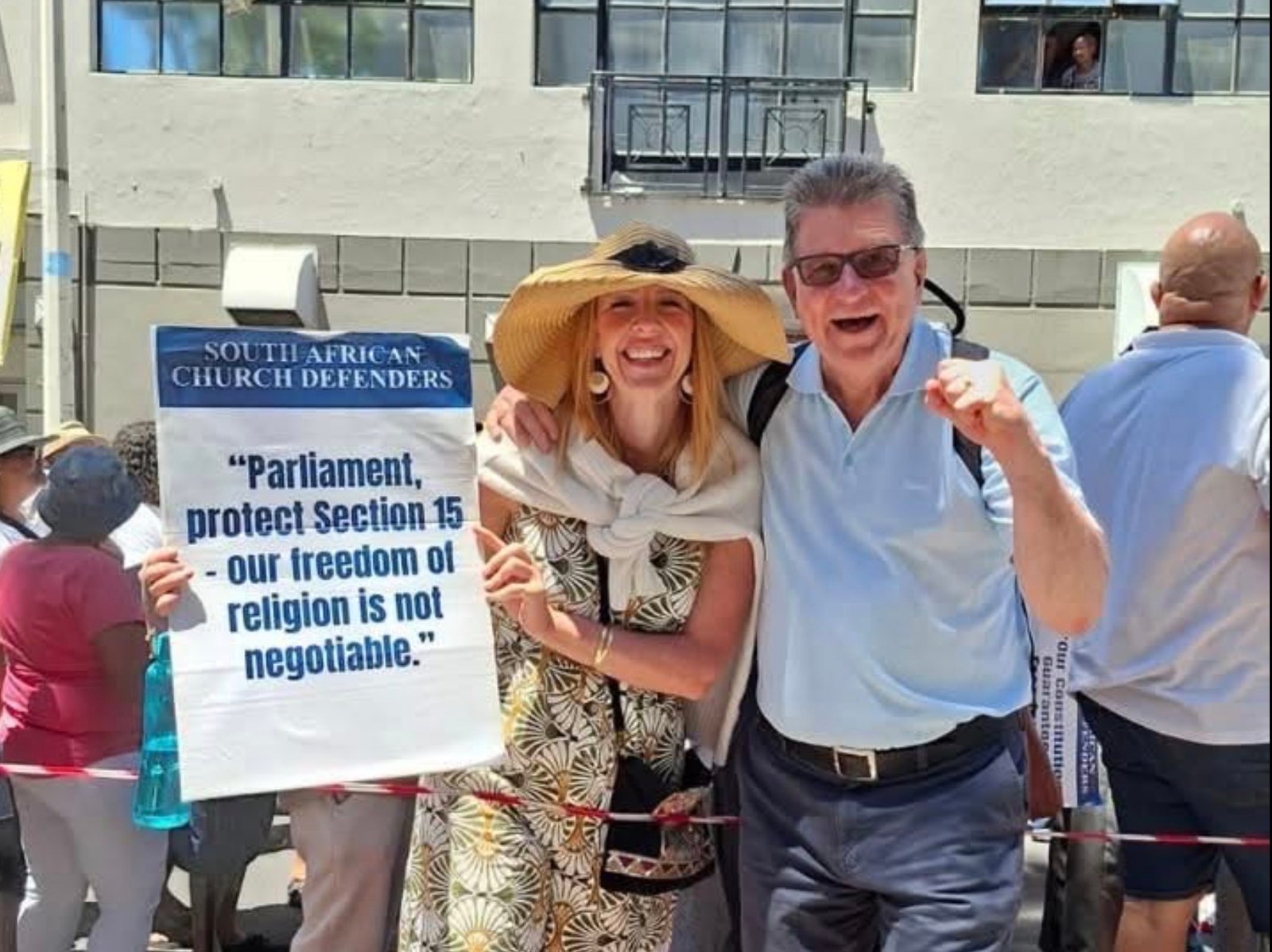
By 2025, the CRL had established a Section 22 Committee, a quasi-judicial body with the power to investigate unspecified misconduct in the “Christian sector.” Legal challenges soon arose, led by the South African Church Defenders, who argued that the committee’s composition and language showed an intent to monitor religious life—especially minority, independent, and charismatic groups—under the guise of “self-regulation.” At a press conference on January 21, 2026, the CRL revealed that it had decided “to commence with the Christian Sector,” a phrase many interpreted as indicating that non-Christian religions would be next.
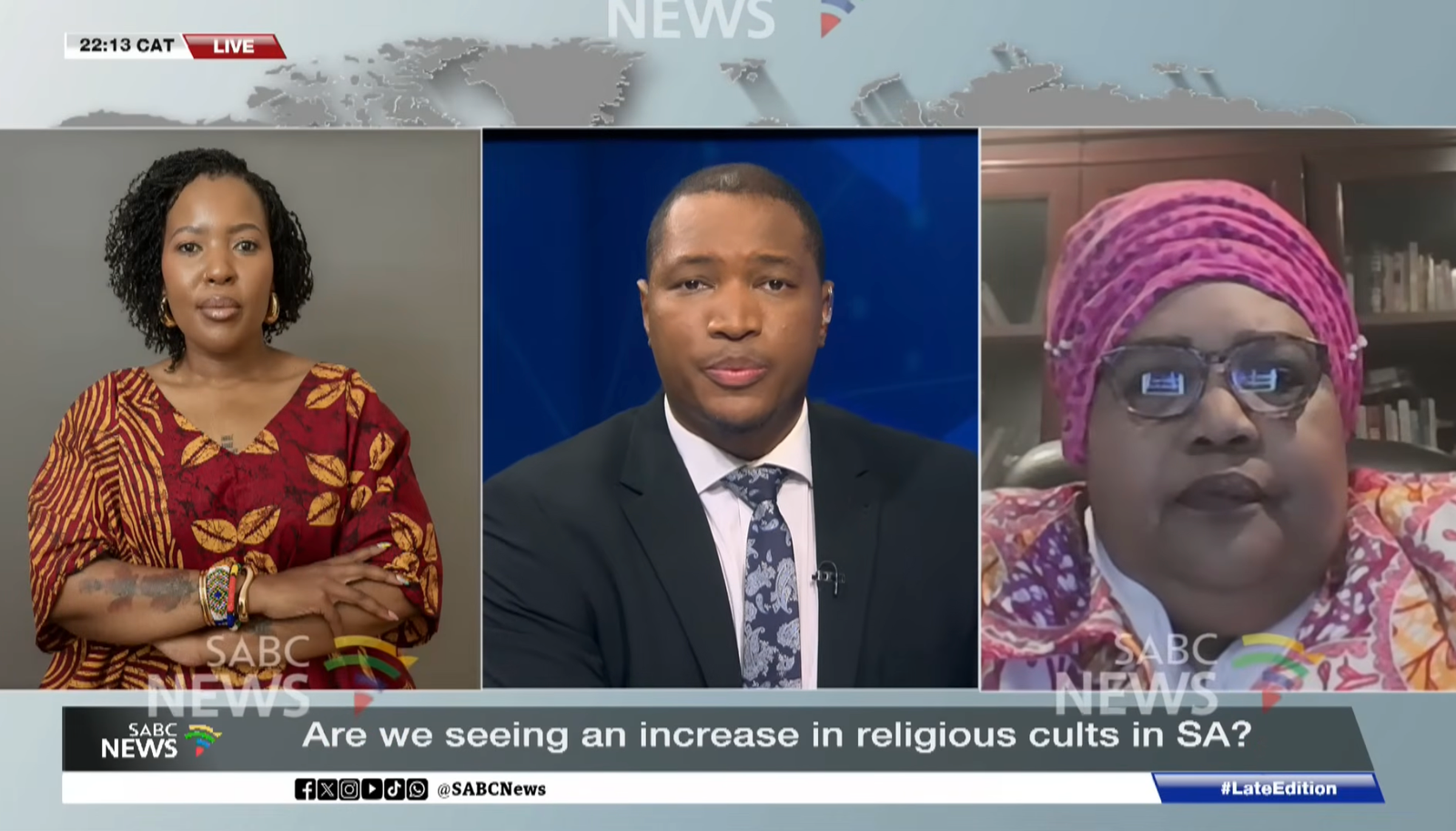
Recent developments show that the push for regulation is speeding up. On April 3, 2026, during an appearance on South Africa’s national broadcaster SABC, CRL Chair Thoko Mkhwanazi-Xaluva and journalist Pontsho Pilane called for a new law based on international anti-cult ideology. Their comments framed religious “abuses” as a widespread issue needing legal action, echoing global anti-cult views that regard some forms of religious authority as inherently suspect. The call for legislation was clear, and the tone suggested that the CRL sees itself as the natural creator of this framework.
These statements followed a CRL press conference on March 25, where Rev. John Maloma, Chair of the Section 22 Committee, claimed that the ongoing process was merely a public, voluntary consultation. He stated that the Committee aimed only to “listen” and “co-create” a framework for accountability with the Christian sector. However, as Michael Swain from Freedom of Religion South Africa (FOR SA) noted, this assurance contradicts the CRL Chair’s televised statement that “there must be a Council for the religious sector, which will then mean there must be an Act [of Parliament] and a Council formed out of that Act.” Swain argues that this is not just a casual remark but “a clear statement of legislative intent,” creating a government-backed body with control over religious life.
The CRL Chair has gone beyond simply calling for legal oversight of illegal actions. She has claimed that the State should intervene not only when something is unlawful, but also when it is “unethical,” and that a Council is necessary to decide such issues.
This shift—from enforcing laws to regulating ethics—significantly escalates the situation. It suggests a system in which the State, through a statutory council, would define what is acceptable in belief and practice, which conflicts with South Africa’s constitutional protections of religious freedom.
In her SABC appearance, Mkhwanazi-Xaluva likened the proposed religious council to legal and medical governing bodies. She suggested it should determine who may “practice” as a religious leader. She noted that peers would inform non-compliant individuals that their “freedom of religion starts here and ends there.” She dismissed claims that existing laws are adequate, insisting that without a council, abusive leaders could not have been stopped in the past.
Documents related to the Section 22 Committee, like the Final Draft Christian Sector Self-Regulatory Framework, seem to align with the CRL Chair’s legislative vision. They propose a Council for Ethics and Accountability, mandatory registration for religious institutions and leaders, a binding Code of Conduct created by the CRL, and penalties including deregistration and public notice. These elements point to a regulatory system rather than voluntary self-regulation. Critics argue that the consultation process is not about whether regulation is necessary, but about securing support for a predetermined legislative plan.
Legal challenges are ongoing. Cases brought by the South African Church Defenders and the Muslim Lawyers Association question the legitimacy and authority of the Section 22 Committee. If the courts rule in their favor, any output from the Committee could be invalidated, raising concerns about wasted public funds and the appropriateness of continuing while litigation is pending.
If legislation passes, it will impact all religious communities, not just Christians. It will also test South Africa’s commitment to democracy. Once a system of state-controlled religious oversight is in place, it will be hard to reverse.

Massimo Introvigne (born June 14, 1955 in Rome) is an Italian sociologist of religions. He is the founder and managing director of the Center for Studies on New Religions (CESNUR), an international network of scholars who study new religious movements. Introvigne is the author of some 70 books and more than 100 articles in the field of sociology of religion. He was the main author of the Enciclopedia delle religioni in Italia (Encyclopedia of Religions in Italy). He is a member of the editorial board for the Interdisciplinary Journal of Research on Religion and of the executive board of University of California Press’ Nova Religio. From January 5 to December 31, 2011, he has served as the “Representative on combating racism, xenophobia and discrimination, with a special focus on discrimination against Christians and members of other religions” of the Organization for Security and Co-operation in Europe (OSCE). From 2012 to 2015 he served as chairperson of the Observatory of Religious Liberty, instituted by the Italian Ministry of Foreign Affairs in order to monitor problems of religious liberty on a worldwide scale.
