


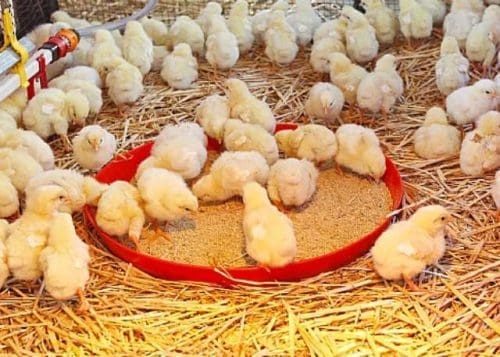
A university lecturer has stepped into the public debate over the government’s Nkoko Nkitinkiti poultry programme, arguing that critics of the initiative misunderstand both its purpose and the scale of the problem it seeks to address.
Dr. Eric Armah-Bempong, a lecturer at KAAF University College in Accra, said the logic behind encouraging Ghanaians to breed and consume locally raised poultry is sound, and that those dismissing it fail to appreciate the economic and health consequences of the country’s heavy dependence on imported frozen chicken.
“Anyone laughing at this policy does not understand it; there is nothing wrong with the idea of breeding and consuming our own poultry,” he stated.
Dr. Armah-Bempong pointed to the supply chain of imported poultry as a particular concern, noting that a bird processed abroad could take more than three weeks to arrive in Ghana, and then spend additional days moving through distribution channels before reaching consumers. He questioned whether such products could be considered genuinely healthy by the time they are eaten, and suggested that some illnesses in the population may be connected to the quality of food being consumed.
His comments come at a time of growing national debate about the programme. President John Dramani Mahama launched the Nkoko Nkitinkiti initiative in Kumasi in November 2025, framing it as a deliberate policy to curb heavy importation of frozen chicken and bring poultry production directly to households, schools, and communities across the country. In 2023 alone, Ghana spent over $350 million importing poultry products, a drain on foreign exchange and a missed opportunity for local farmers.
The programme has not been without controversy. The Minister for Food and Agriculture, Eric Opoku, raised concerns in March 2026 after saying he was unaware of a body called the National Broiler Project Directorate that had been reported to be implementing related programmes, calling for greater coordination across government poultry initiatives to prevent duplication. Reports had also emerged that some beneficiaries received fewer birds than the stipulated 50 per household, prompting investigations.
Despite these implementation questions, Dr. Armah-Bempong maintains that the core rationale is valid. He argued that if Ghanaians had reliable access to fresh, locally raised birds at affordable prices, many would choose them over imported alternatives, creating both a consumer and a commercial case for scaling up domestic production.
The government has set a target of producing over 10 million chicks under the nationwide programme rollout, with sustained scaling expected to cut poultry imports by 50 percent in the medium term.
